Artwork
Girl with a Rose
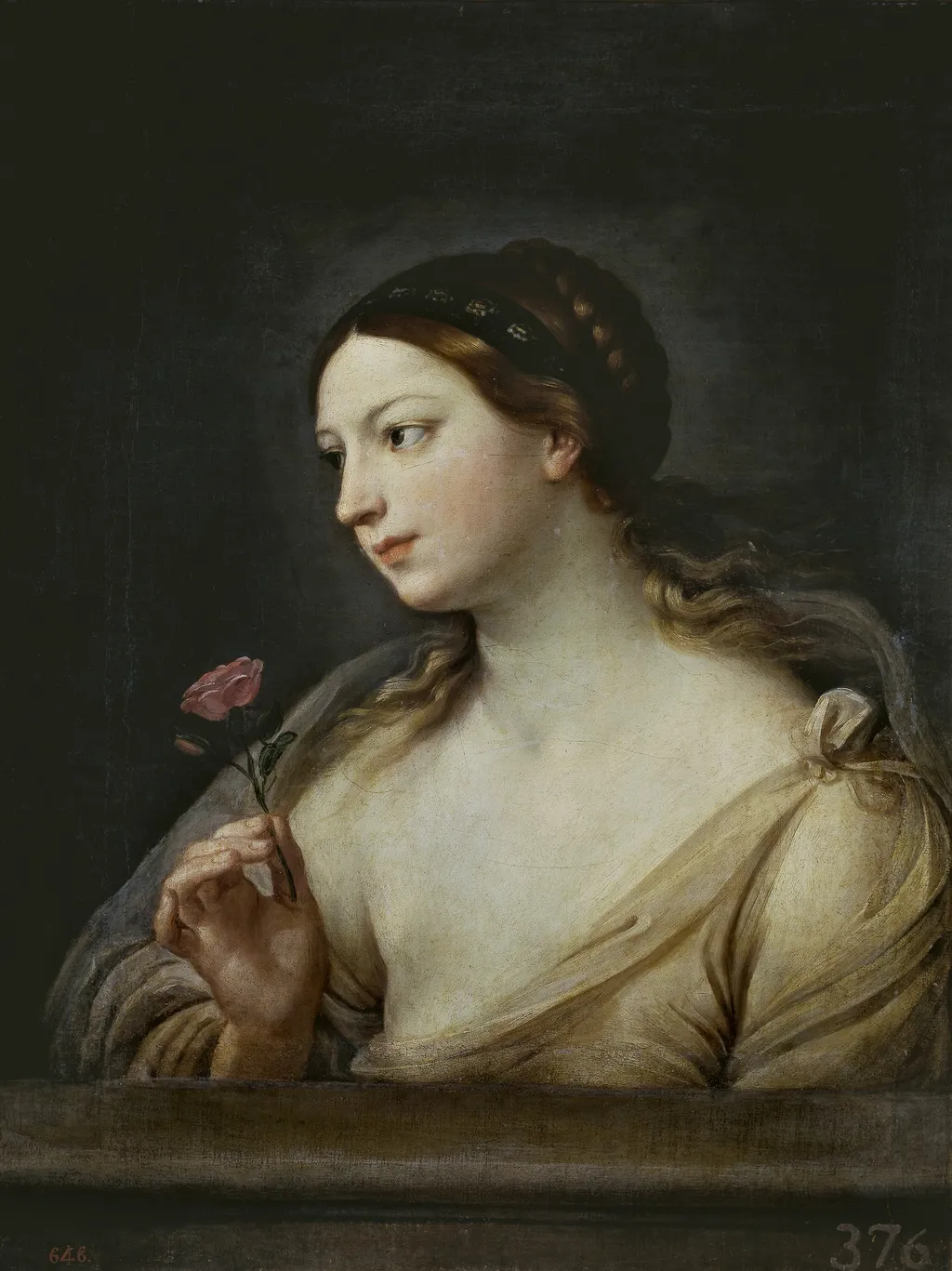
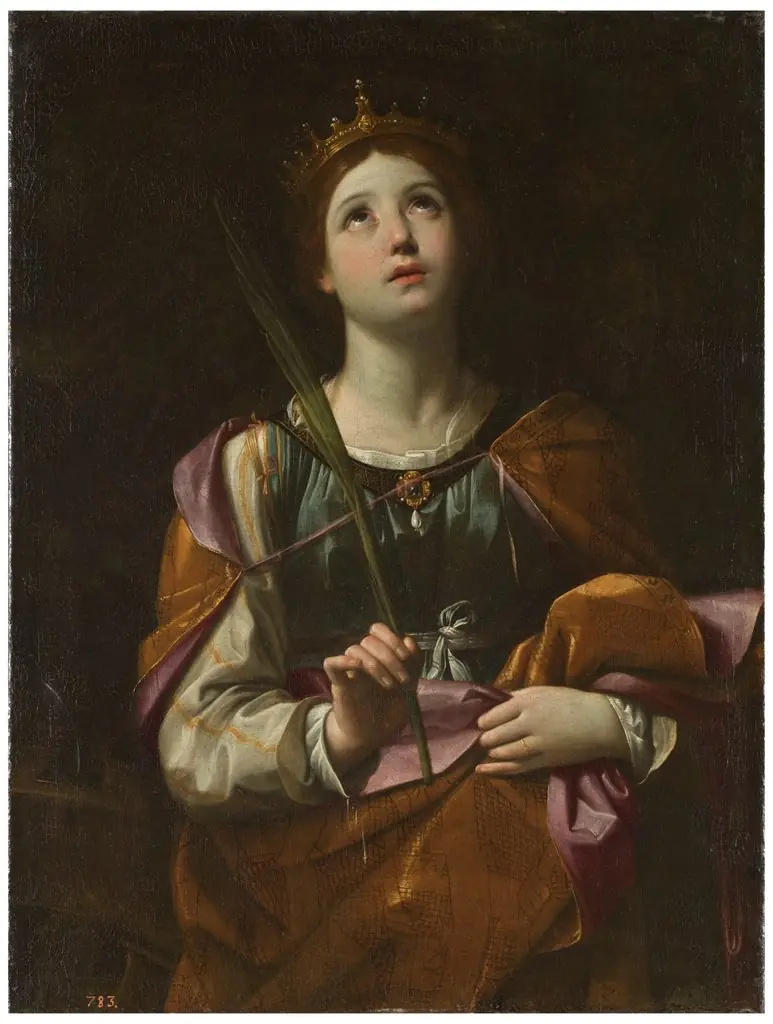
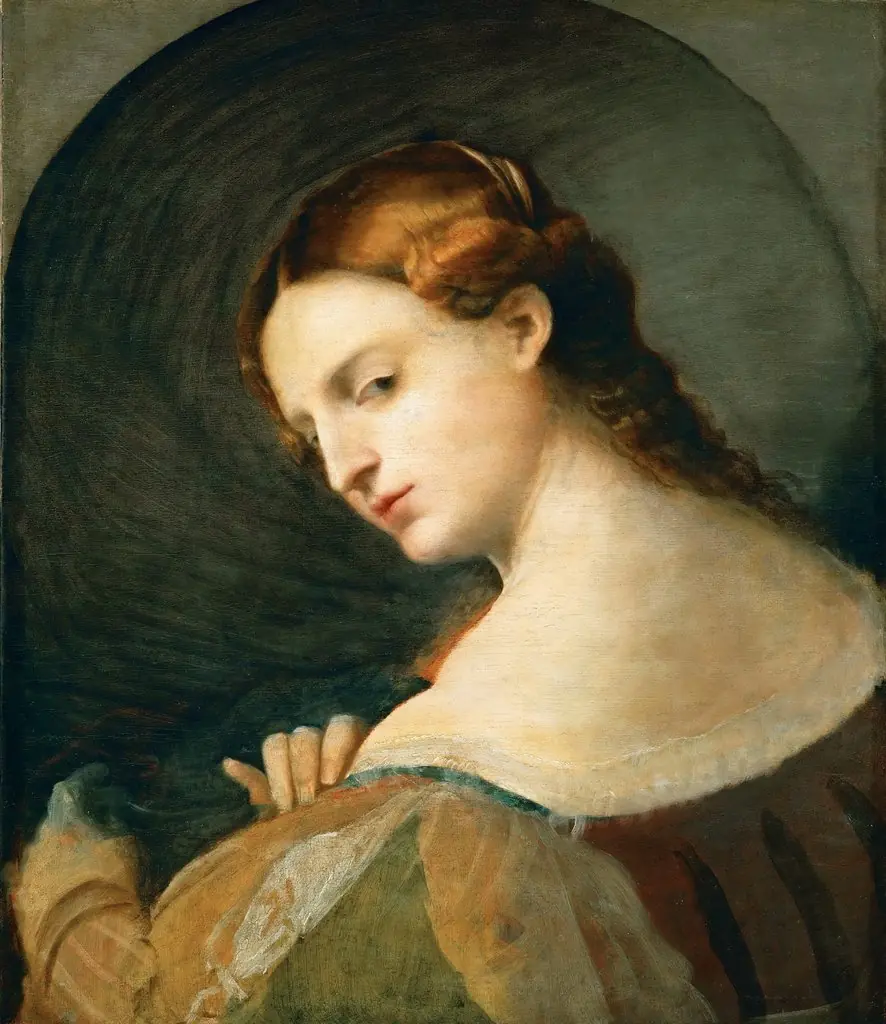
Girl with a Rose is an oil painting by the Early Baroque Italian artist Guido Reni. It dates from 1630 and is held in the collection of the Museo del Prado.
About this work
Overview
Guido Reni’s 1630 oil on canvas, titled Girl with a Rose, is part of the collection at Madrid’s Museo del Prado. The work presents a solitary young woman set against a deep, muted background, her figure illuminated by subtle chiaroscuro. The composition centers on her contemplative pose and the delicate pink rose she cradles, creating a quiet, introspective atmosphere.
Subject & Meaning
The sitter is depicted with long, loosely curled brown hair and an off‑the‑shoulder dress that suggests informal elegance. Her gaze drifts to the left, conveying a sense of inner thought. The rose, rendered in soft pink, functions as a symbol of fleeting beauty and vulnerability, reinforcing the painting’s mood of serene reflection.
Technique & Style
Reni employs a restrained palette, allowing the darkened backdrop to accentuate the luminous flesh tones and the rose’s subtle coloration. The brushwork is smooth and refined, typical of his Baroque sensibility, while the delicate handling of light creates a gentle modeling of the figure’s features and fabric.
History & Provenance
Completed in 1630, the canvas entered the Spanish royal collection before being transferred to the Museo del Prado, where it remains on display. Documentation traces its ownership through the 18th and 19th centuries, confirming its continuous presence in prominent European collections.
Context
Created during the later phase of Reni’s career, the painting reflects the artist’s shift toward intimate portraiture, moving away from grand religious commissions. Its focus on a solitary, thoughtful female figure aligns with contemporary Baroque interests in personal emotion and the nuanced portrayal of everyday subjects.
Own this work as a print
Artist & collection
Artist
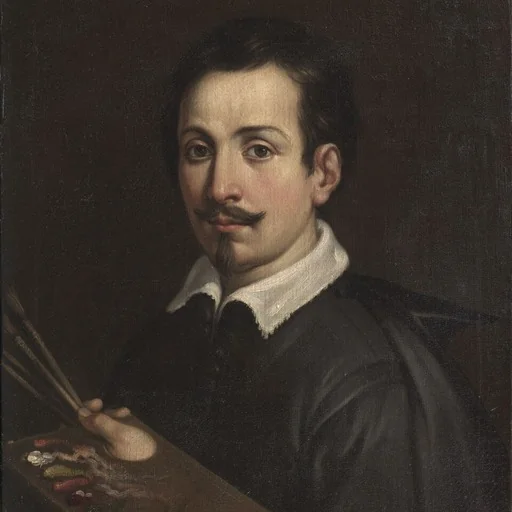
Guido Reni was an Italian Baroque painter, although his works showed a classical manner, similar to Simon Vouet, Nicolas Poussin, and Philippe de Champaigne.