Artwork
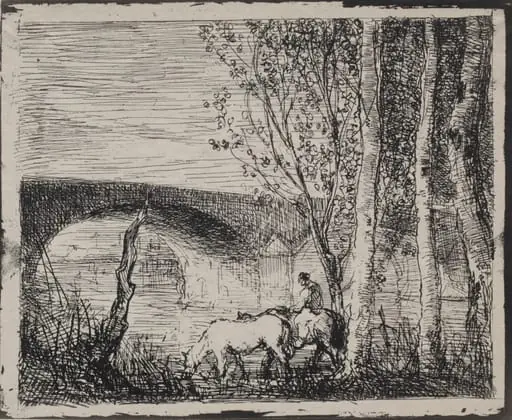
The Wood Bridge, Ostend
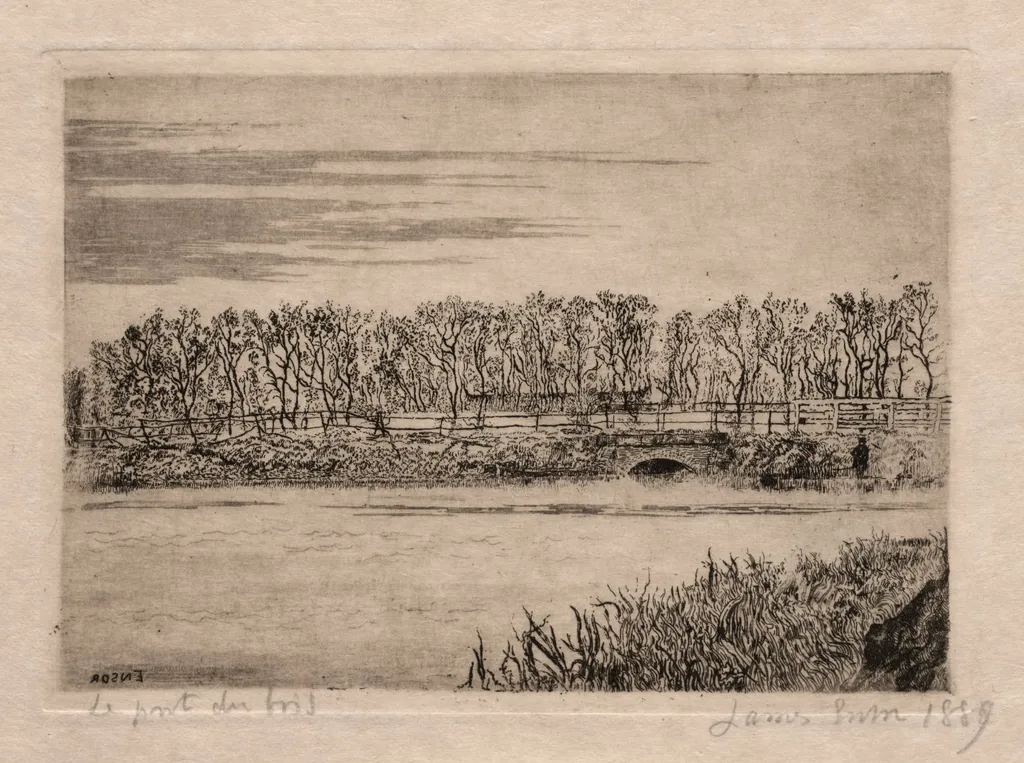
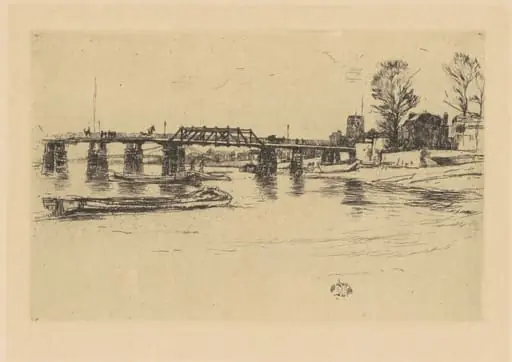
The Wood Bridge, Ostend is a print by the Impressionist artist James Ensor. It dates from 1889 and is held in the collection of the Cleveland Museum of Art.
- Accession no.
- 1984.225
- Credit line
- Gift of Louise S. Richards
About this work
Overview
Created in 1889, The Wood Bridge, Ostend is a print by Belgian artist James Ensor, who lived and worked primarily in the coastal town of Ostend.
Created in 1889, The Wood Bridge, Ostend is a print by Belgian artist James Ensor, who lived and worked primarily in the coastal town of Ostend. Though often linked to Expressionism and Surrealism, this work reflects a quieter phase in his career, focusing on landscape rather than the fantastical or grotesque subjects he later became known for. The piece is part of the collection at The Cleveland Museum of Art.
Subject & Meaning
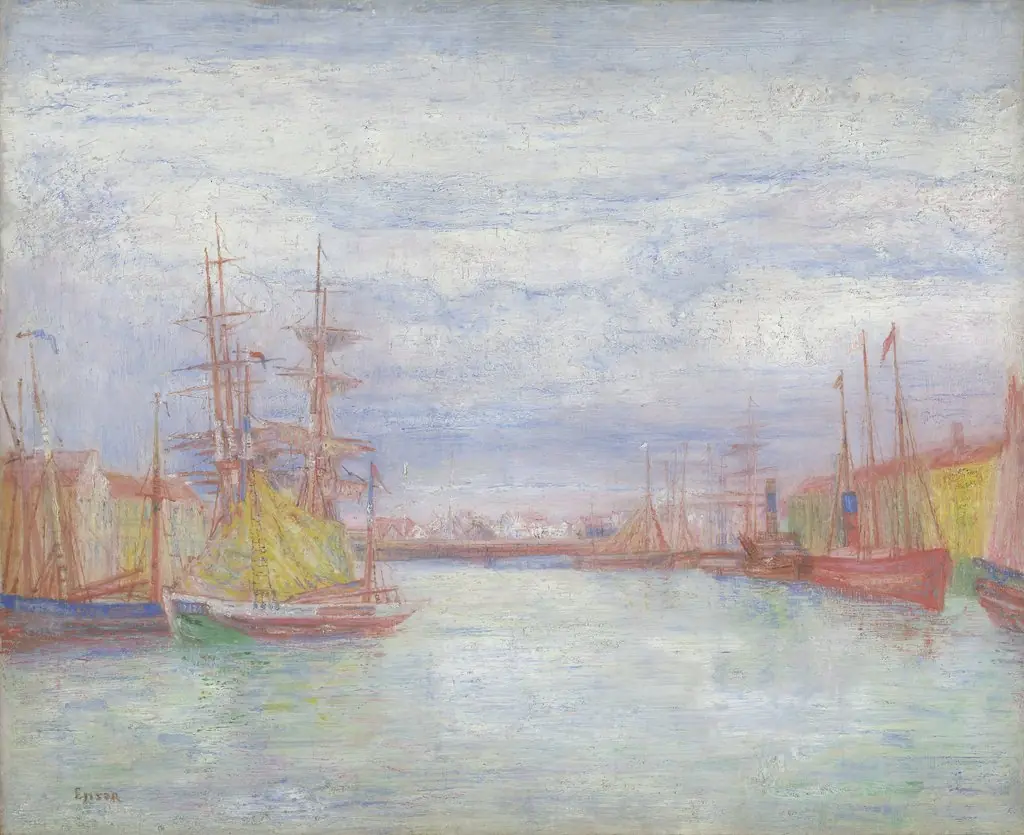
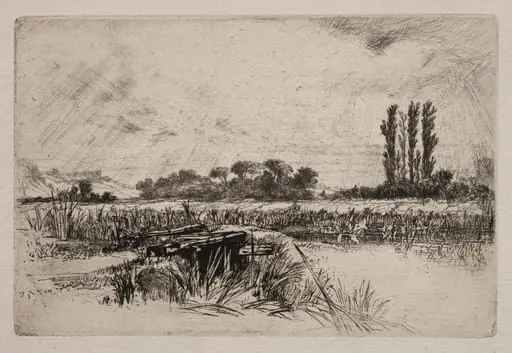
The print portrays a modest wooden bridge crossing a still body of water, flanked by dense vegetation and framed by a muted, overcast sky. Unlike Ensor’s more provocative imagery, this scene offers no figures or symbolic disruption, only the quiet architecture of a local environment. The subject suggests a personal, observational engagement with his hometown, emphasizing place over narrative.
Technique & Style
Ensor employed etching and drypoint to achieve fine, controlled lines that define the bridge’s structure and the soft contours of foliage. The tonal range is restrained, dominated by grays and subtle ink washes, creating a hushed atmosphere. His handling of texture, through delicate hatching in the grasses and brushwork in the sky, reveals a sensitivity to light and atmosphere uncommon in his more stylized works.
History & Provenance
Produced during Ensor’s active years with the avant-garde group Les XX, the print reflects his experimentation beyond painting into printmaking. It remained in private collections before entering The Cleveland Museum of Art’s holdings, where it is now preserved as part of a broader representation of late 19th-century European graphic art.
Context
In 1889, Ensor was navigating between the influence of Impressionism and his own emerging, more personal vision. While contemporaries like Monet captured light with loose brushwork, Ensor used precise printmaking techniques to evoke mood through structure and tone. This work aligns with a broader European interest in intimate, everyday landscapes, even as his later works veered into psychological intensity.
Legacy
Though less known than his grotesque masks or carnival scenes, The Wood Bridge, Ostend demonstrates Ensor’s range and his ability to convey emotional depth through restraint. It stands as a quiet counterpoint to his more dramatic output, offering insight into his connection to place and his technical versatility across media.
Own this work as a print
Artist & collection
Artist
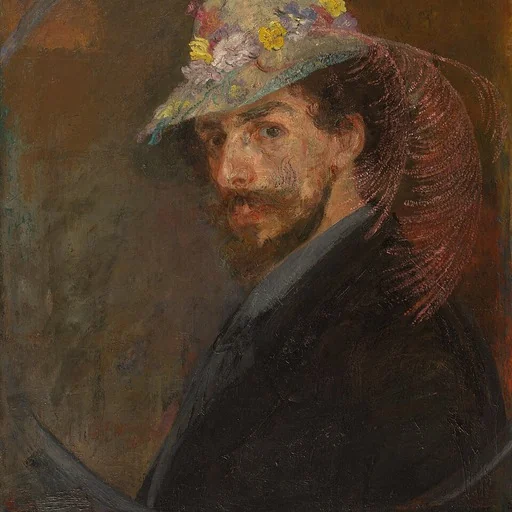
James Sidney Edouard, Baron Ensor (13 April 1860 – 19 November 1949) was a Belgian painter and printmaker, an important influence on expressionism and surrealism who lived in Ostend for most of his life.