Artwork
Still Life with Books
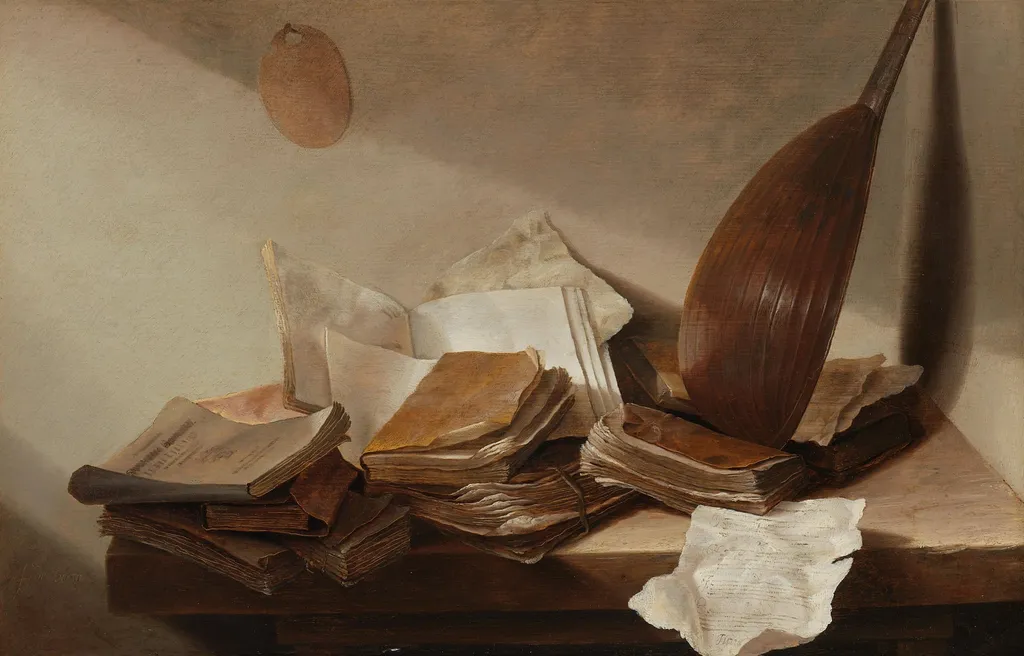
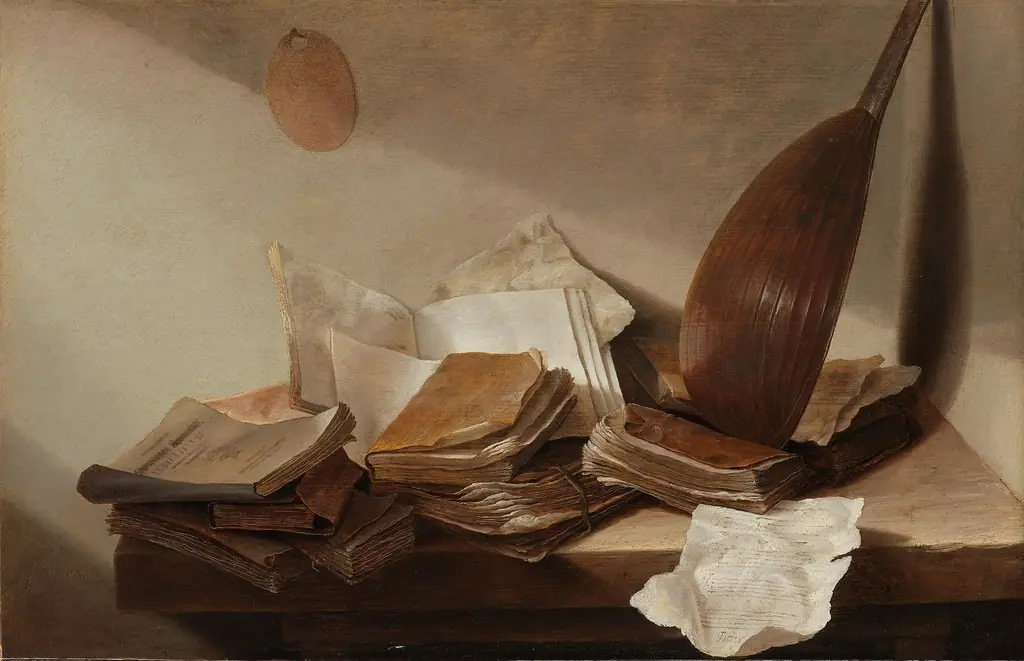
Still Life with Books is an unspecified painting by the Dutch Golden Age artist Jan Davidsz. de Heem. It dates from 1628 and is held in the collection of the Rijksmuseum. The canvas presents a dimly lit tabletop laden with weathered volumes, a lute, and a scrap of paper bearing the word “finis.
About this work
Subject & Meaning
Still Life with Books depicts a tabletop arrangement of books alongside other objects, symbolizing scholarly contemplation and the transience of knowledge within the vanitas tradition common to Dutch Golden Age still lifes. The books function as moralizing attributes, suggesting the futility of material accumulation and the inevitability of death, a theme De Heem reinforced through skulls, wilting flowers, and decaying matter in his compositions. This symbolic use of books aligns with contemporary emblematic literature linking learning to mortality, reflecting the era's preoccupation with mortality and divine judgment.
De Heem's precise rendering of textures and inclusion of subtle vanitas symbols like a coiled snake beneath foliage further underscore the painting's meditation on earthly vanity and spiritual impermanence.
Technique & Style
Compositionally, it arranges books alongside fruit and flowers within a vanitas framework, employing chiaroscuro to model forms and create depth.
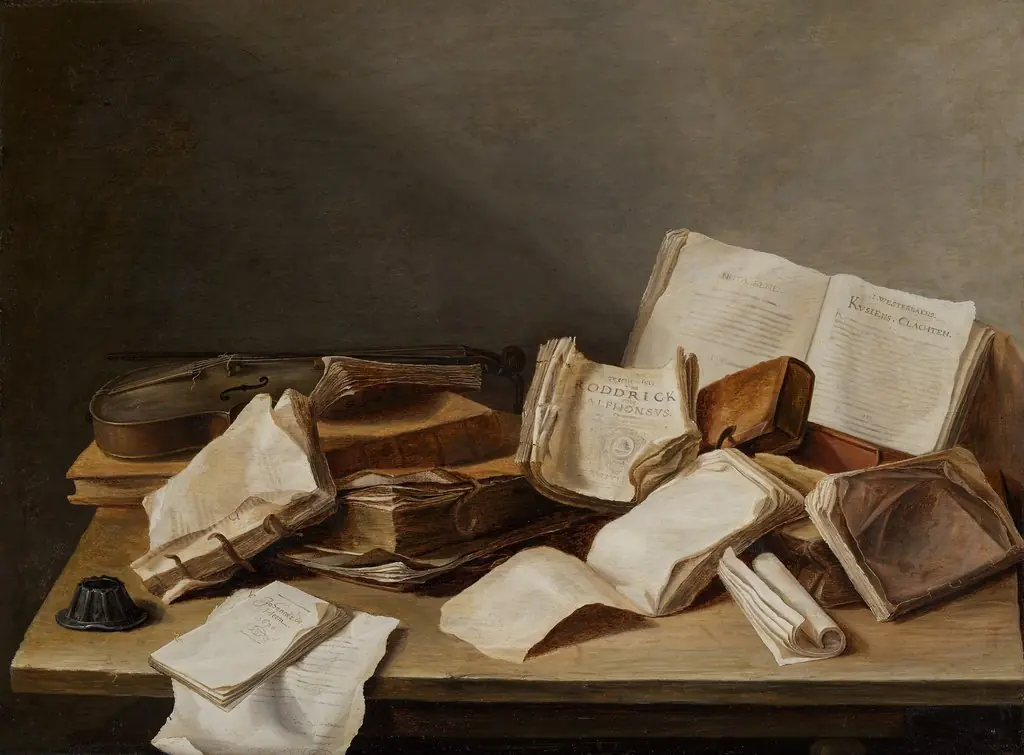
Jan Davidsz. de Heem typically painted Still Life with Books on wood panel using oil paint, a common support for 17th-century Dutch still lifes. The work demonstrates meticulous rendering of textured surfaces including leather bindings, parchment pages, and metal clasps, reflecting his signature focus on material authenticity. Compositionally, it arranges books alongside fruit and flowers within a vanitas framework, employing chiaroscuro to model forms and create depth.
The painting's formal qualities include balanced spatial organization, subtle color harmonies, and precise attention to surface details that exemplify his transition from early monochromatic schemes to later vibrant Baroque opulence.
History & Provenance
Still Life with Books is dated circa 1628–1629 and attributed to Jan Davidsz. de Heem. The painting is recorded in a 1628 listing as a still life of books, oil on wood, measuring 36 × 46 cm and now in the Mauritshuis, The Hague. This early Leiden-period work reflects the monochrome banketje tradition associated with painters such as Pieter Claesz and Willem Claesz Heda, characterized by subdued palette and restrained composition.
The canvas entered the Mauritshuis in 1894 as part of the collection of Victor de Stuers, whose bequest formed the museum’s early holdings.
Jan Davidsz. de Heem's Still Life with Books (c. 1628) is held by the Mauritshuis in The Hague. The work is executed in oil on wood and measures 36 × 46 cm. While the provided sources confirm the painting's location, medium, dimensions, and creation date, they do not list a specific inventory or accession number for this piece. Furthermore, the available documentation does not record any exhibition history for this specific artwork.
Context
Jan Davidsz. de Heem emerged as a leading figure in 17th-century Dutch and Flemish still life painting, bridging regional styles through his innovative compositions and technical mastery. Born in Utrecht around 1606, he trained under his father and Balthasar van der Ast before establishing himself in Antwerp by 1636, where he joined the Guild of Saint Luke and became a burgher in 1637. His career flourished amid the high demand for luxury 'pronkstillevens,' with works like a 1640 tankard painting selling for 2000 guilders, reflecting his esteemed status.
De Heem's signature blend of Dutch detail and Flemish opulence, evident in intricate renderings of flowers, fruits, shells, and symbolic objects, influenced contemporaries and successors, shaping the evolution of vanitas and floral painting. His legacy extends through his sons, who continued the tradition, and his workshops in Antwerp and Utrecht, where he mentored artists like Abraham Mignon. Major collections, including the Rijksmuseum and Mauritshuis, preserve his works, underscoring his enduring impact on Baroque art.
Legacy
Jan Davidsz. de Heem is recognized as a pivotal figure who synthesized Dutch and Flemish still-life traditions, profoundly influencing the genre's development across the 17th century. His ornate pronkstillevens, characterized by sumptuous displays of luxury and intricate detail, set a new standard that shaped artists in Antwerp, Utrecht, and Leiden. As a central figure in the evolution of the pronkstilleven, his work paved the way for later masters such as Willem Kalf and Abraham van Beijeren.
The enduring high regard for his oeuvre is evidenced by the continued admiration of his compositions and the significant market value of his paintings, with a monumental banquet still life from the 1640s selling for nearly 7 million euros at Christie's in 2021. His legacy is further cemented by a large workshop that trained numerous apprentices, including his sons Cornelis and Jan, as well as prominent artists like Abraham Mignon.
Overview
The canvas presents a dimly lit tabletop laden with weathered volumes, a lute, and a scrap of paper bearing the word “finis.” Muted greys and browns dominate, while a gradual shadow stretches across the background, giving the scene a hushed, waning atmosphere.
Own this work as a print
Artist & collection
Artist
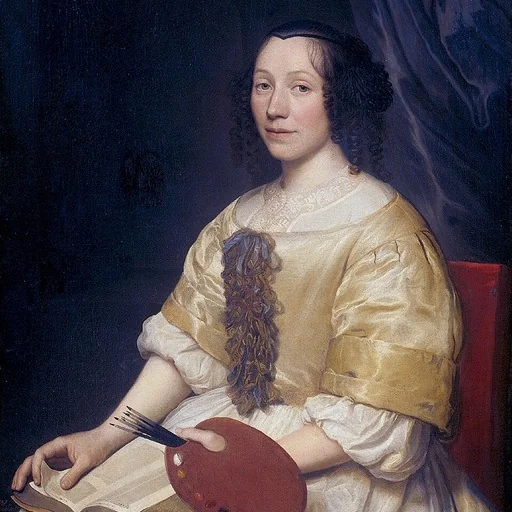
Maria van Oosterwijck (1630–1693), also spelled Oosterwyck, was a Dutch Golden Age painter, specialising in richly detailed flower paintings and other still lifes.

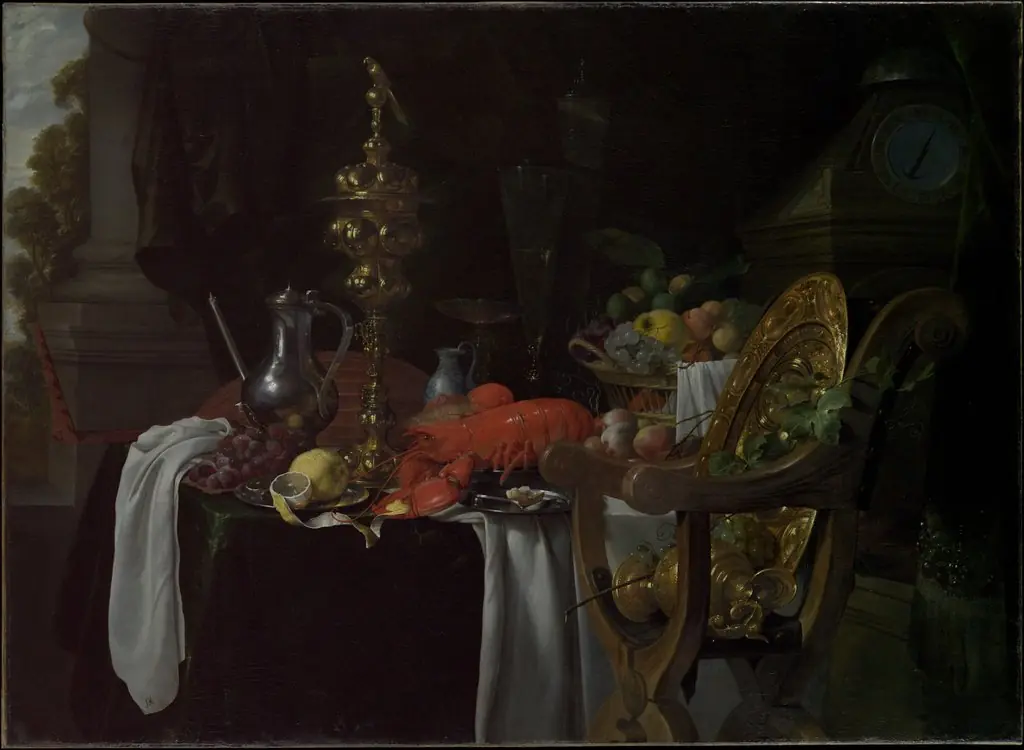
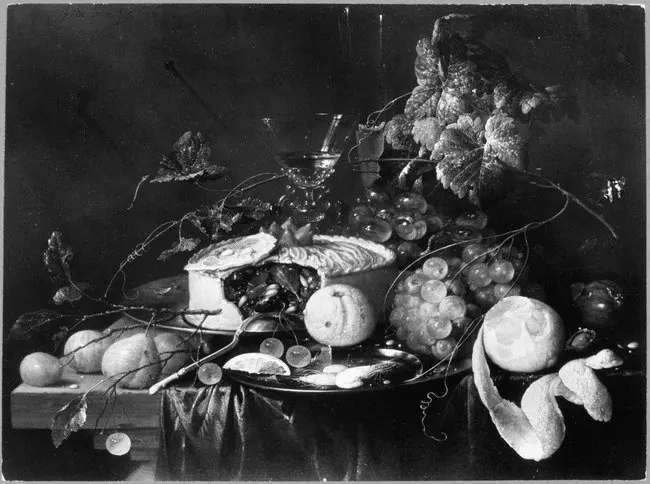
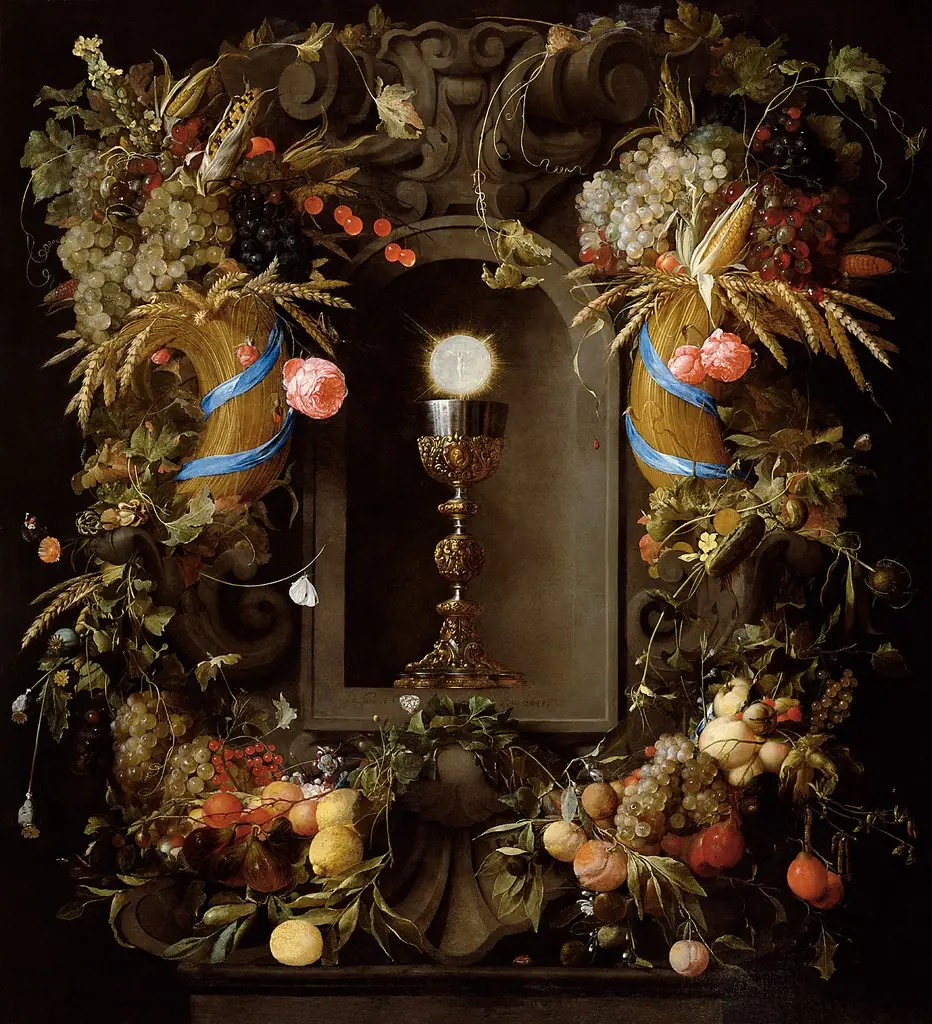
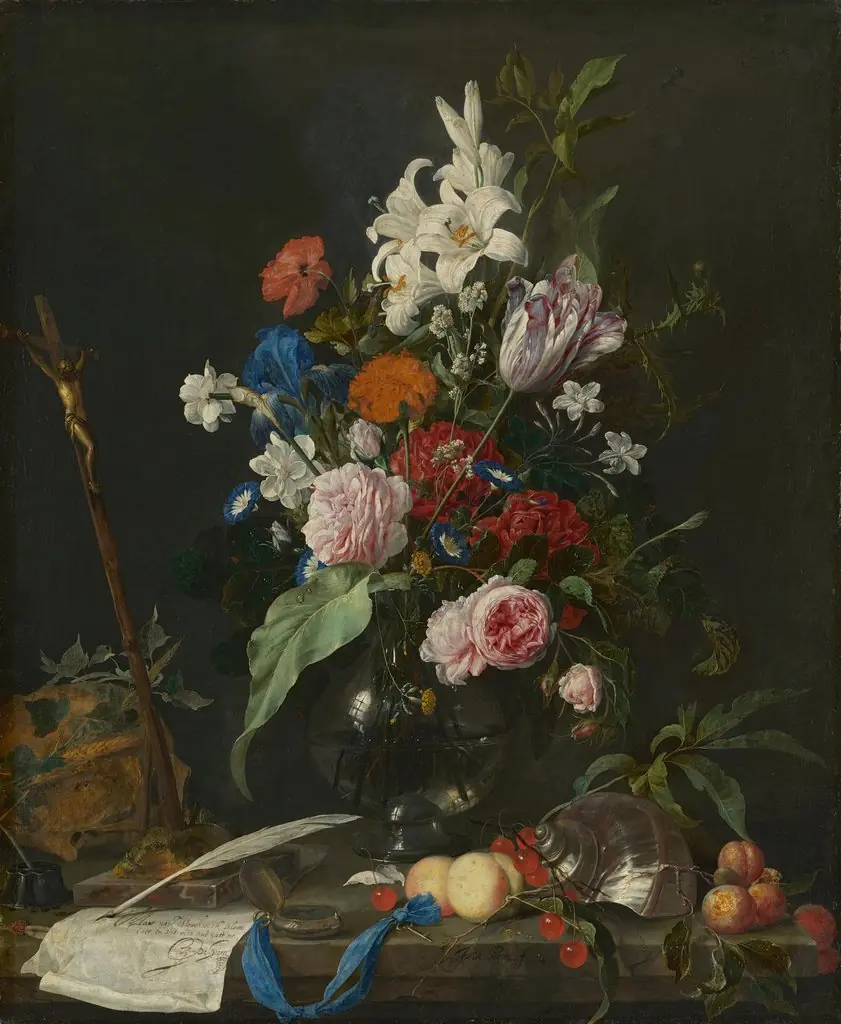
- Still-Life of Books
 Still Life with Books
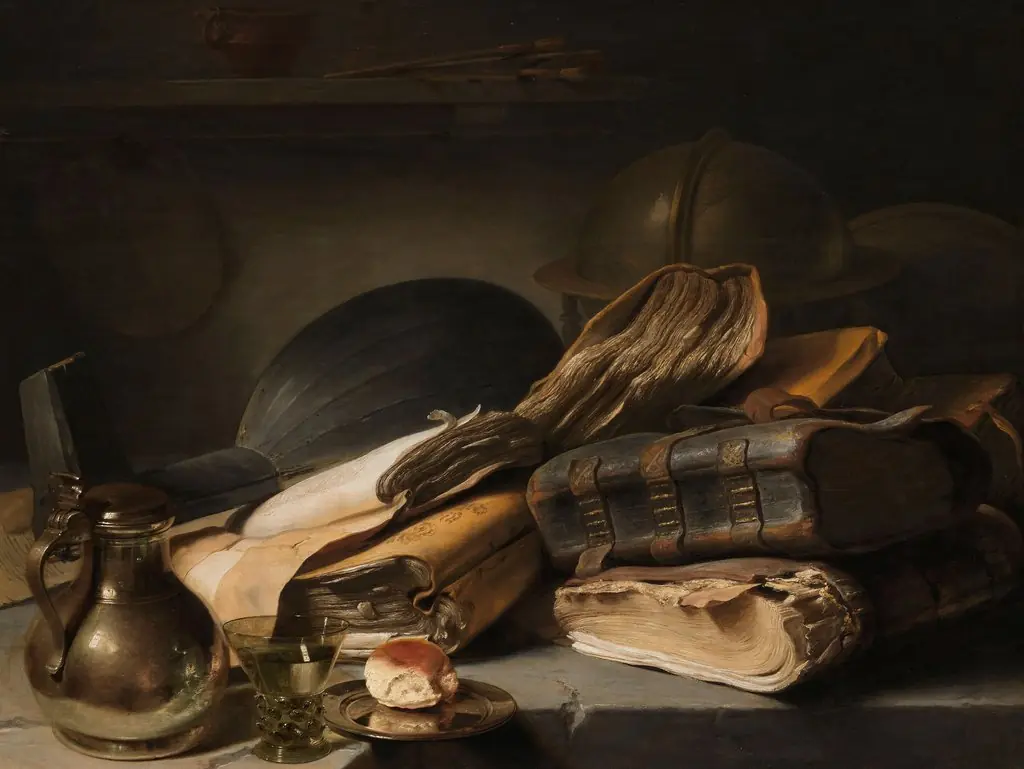 Still Life with Books
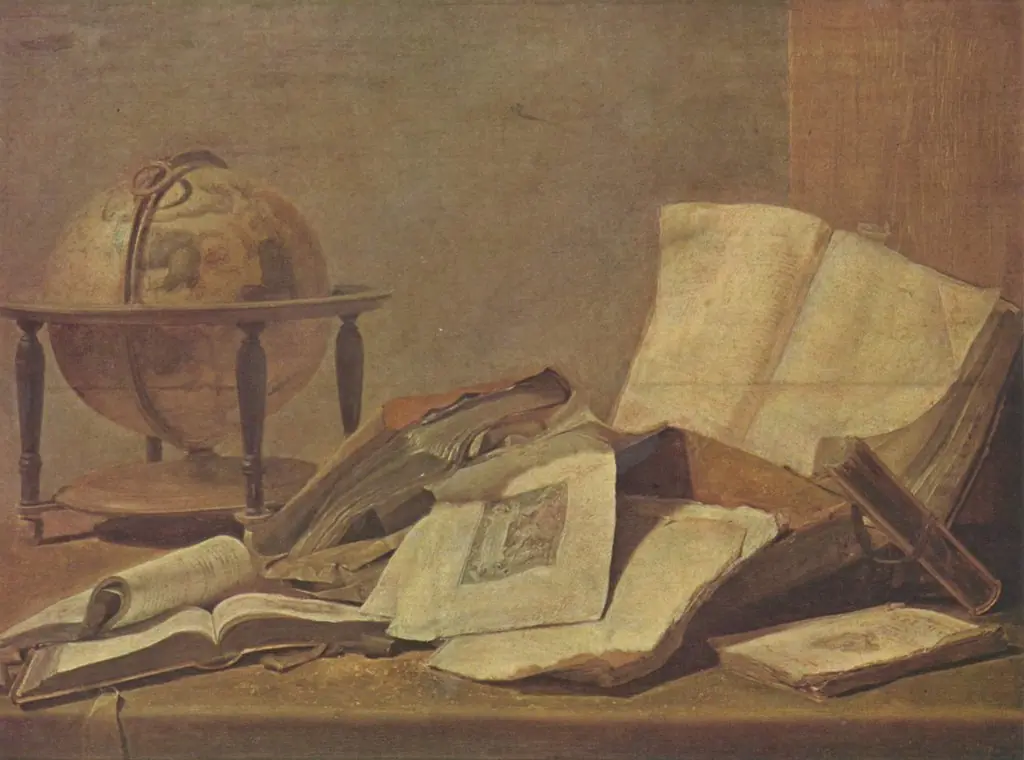 Still-life with Books and Globe
 Still Life with Books
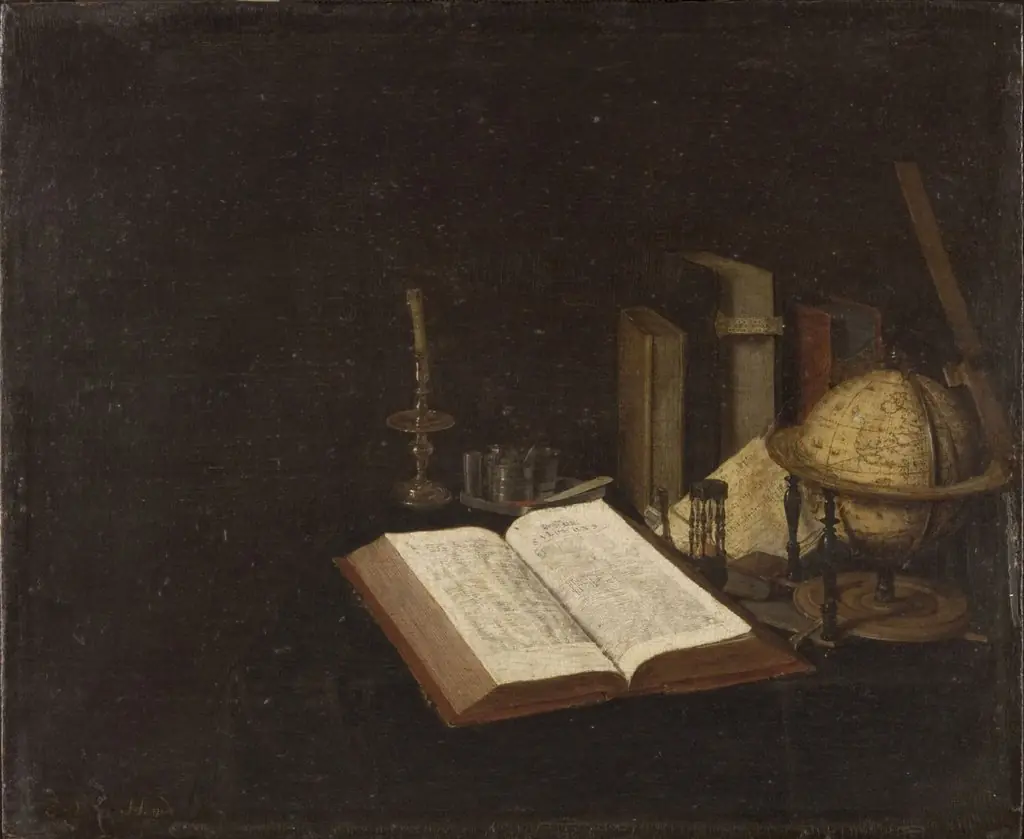 Still Life with Books and a Globe
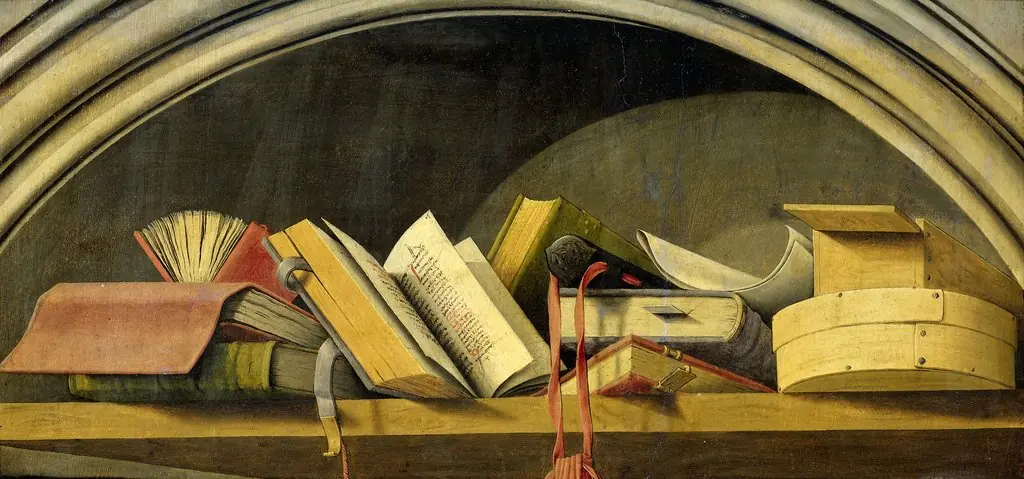 Still Life with Books in a Niche
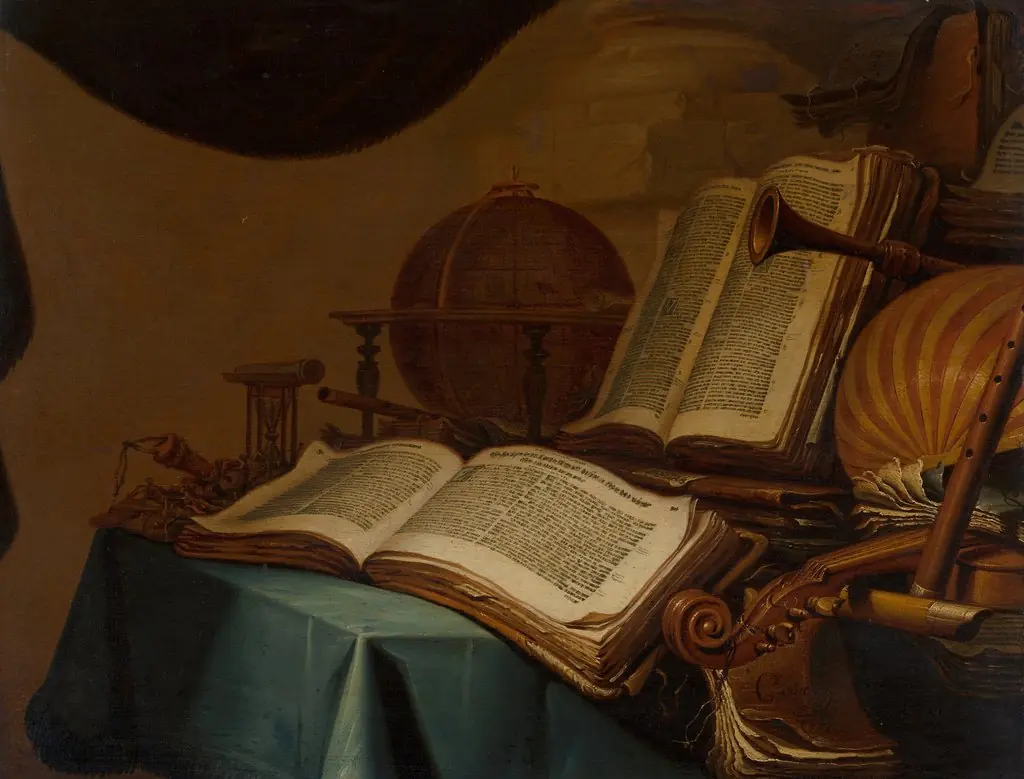 Still Life with Books, a Globe and Musical Instruments
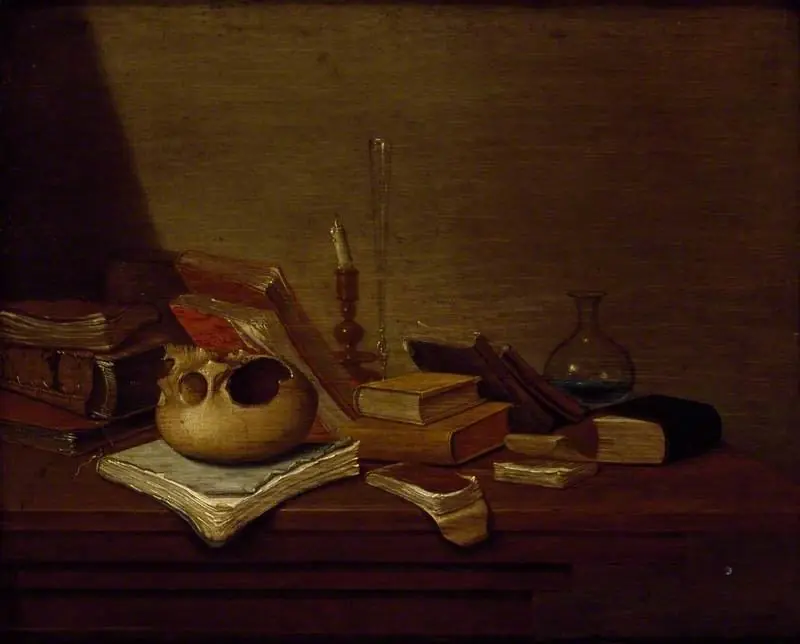 Still life with skull, books, candle and a flask
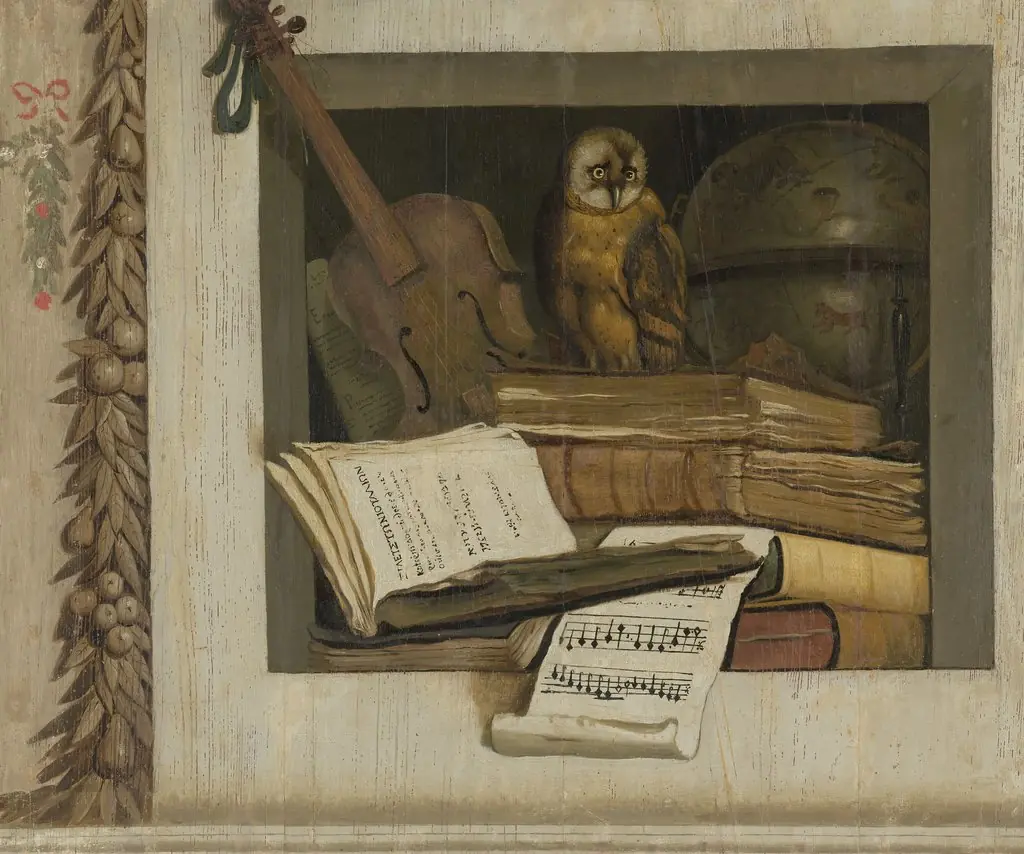 Still Life with Books, Sheet Music, Violin, Celestial Globe and an Owl