Artwork
Saying Grace
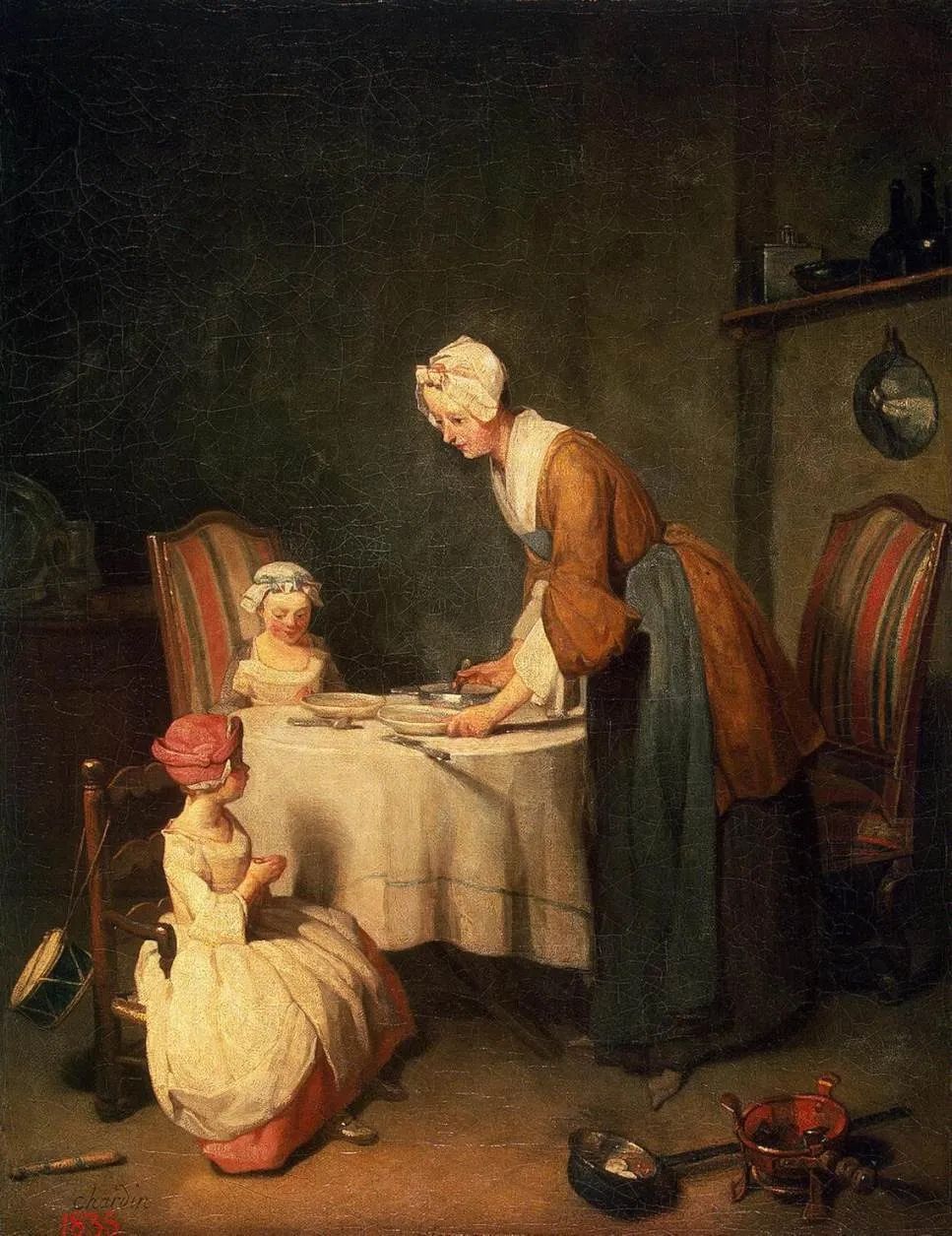
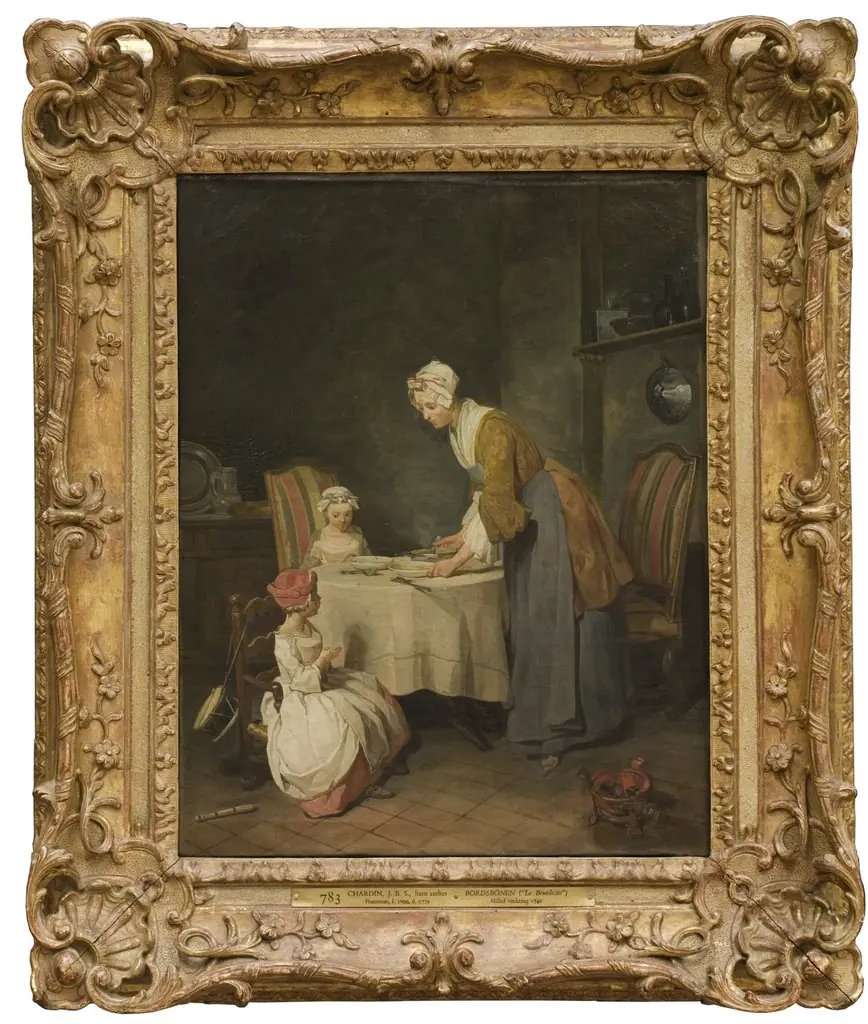
Saying Grace is an oil painting by the Rococo painting artist Jean-Baptiste-Siméon Chardin. It dates from 1744 and is held in the collection of the Hermitage Museum.
About this work
Overview
Though associated with the Rococo era, the painting diverges from its ornamental tendencies, favoring quiet realism over theatricality.
Painted in 1744 by Jean-Baptiste-Siméon Chardin, Saying Grace is an oil-on-canvas work that captures a humble domestic ritual. Though associated with the Rococo era, the painting diverges from its ornamental tendencies, favoring quiet realism over theatricality. It portrays a family pausing before a meal, emphasizing stillness and introspection. The piece is now part of the State Hermitage Museum’s collection in Saint Petersburg.
Subject & Meaning
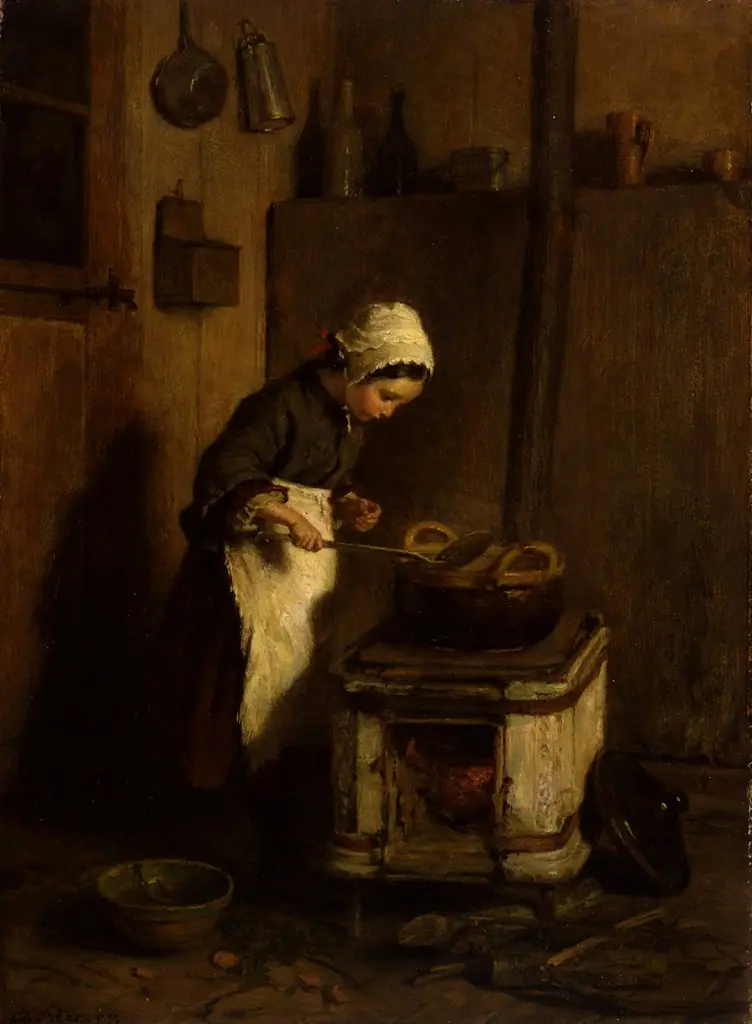
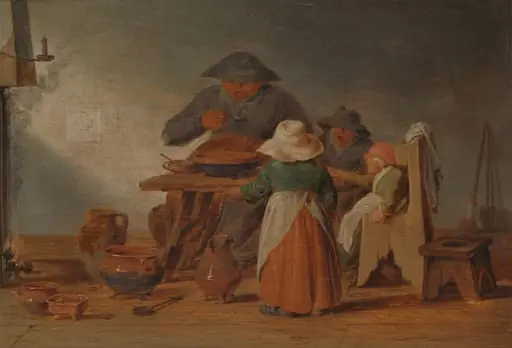
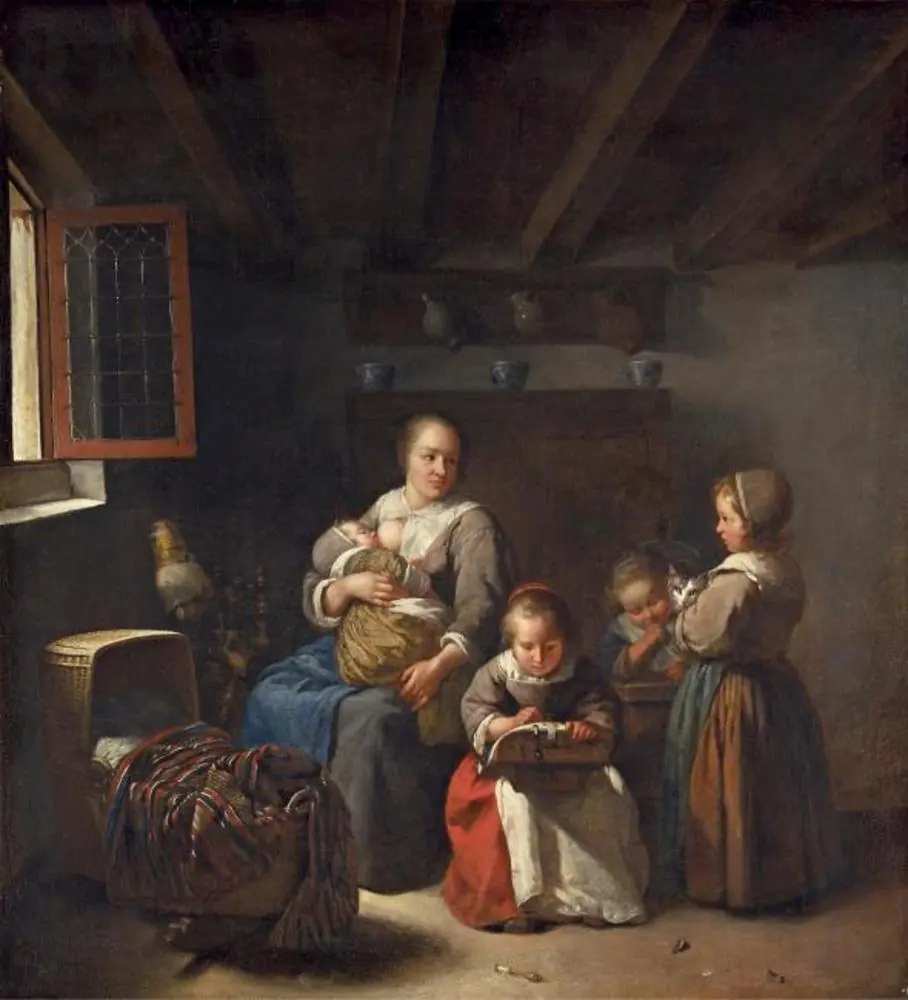
The scene shows a mother serving food at a modest wooden table while two children bow their heads in prayer. No overt religious symbols appear; the act of grace is conveyed through posture and atmosphere. The composition suggests reverence rooted in daily routine rather than ceremony, reflecting Enlightenment-era values of domestic virtue and quiet piety. The absence of grandeur reinforces the dignity of ordinary life.
Technique & Style
Chardin employed subtle chiaroscuro to model forms with soft, naturalistic light, enhancing the tactile quality of fabrics, wood, and skin. His brushwork is deliberate yet unobtrusive, building texture through layered glazes rather than bold strokes. The dim interior, punctuated by a red chair and striped curtain, creates depth without theatrical contrast. Light falls precisely on faces and hands, drawing attention to the moment’s stillness.
History & Provenance
Completed in 1744, the painting was likely acquired by the French royal collection before entering the Hermitage’s holdings in the late 18th century. It was not widely exhibited during Chardin’s lifetime but gained recognition among collectors for its emotional restraint. Its presence in the Hermitage reflects its status as a significant example of French genre painting from the period.
Context
In mid-18th-century France, genre scenes were gaining traction as alternatives to mythological or aristocratic subjects. Chardin’s focus on working-class interiors aligned with broader cultural interest in moral simplicity and domestic life. While contemporaries like Watteau emphasized elegance, Chardin’s quiet realism offered a counterpoint, resonating with emerging bourgeois ideals of humility and order.
Legacy
Saying Grace influenced later realist painters through its unembellished treatment of everyday moments. Its emphasis on light, texture, and emotional nuance prefigured 19th-century approaches to domestic scenes. Though not widely celebrated in its time, the painting is now regarded as a quiet landmark in the evolution of genre painting, valued for its sincerity over spectacle.
Artist & collection
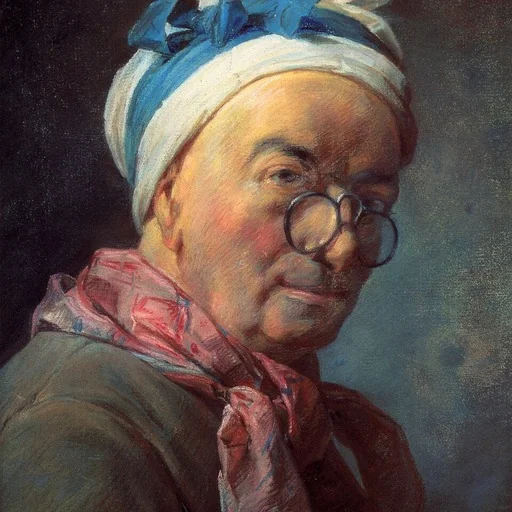
Artist
Jean Siméon Chardin (French:; November 2, 1699 – December 6, 1779) was an 18th-century French painter.