Artwork
Still Life with Attributes of the Arts
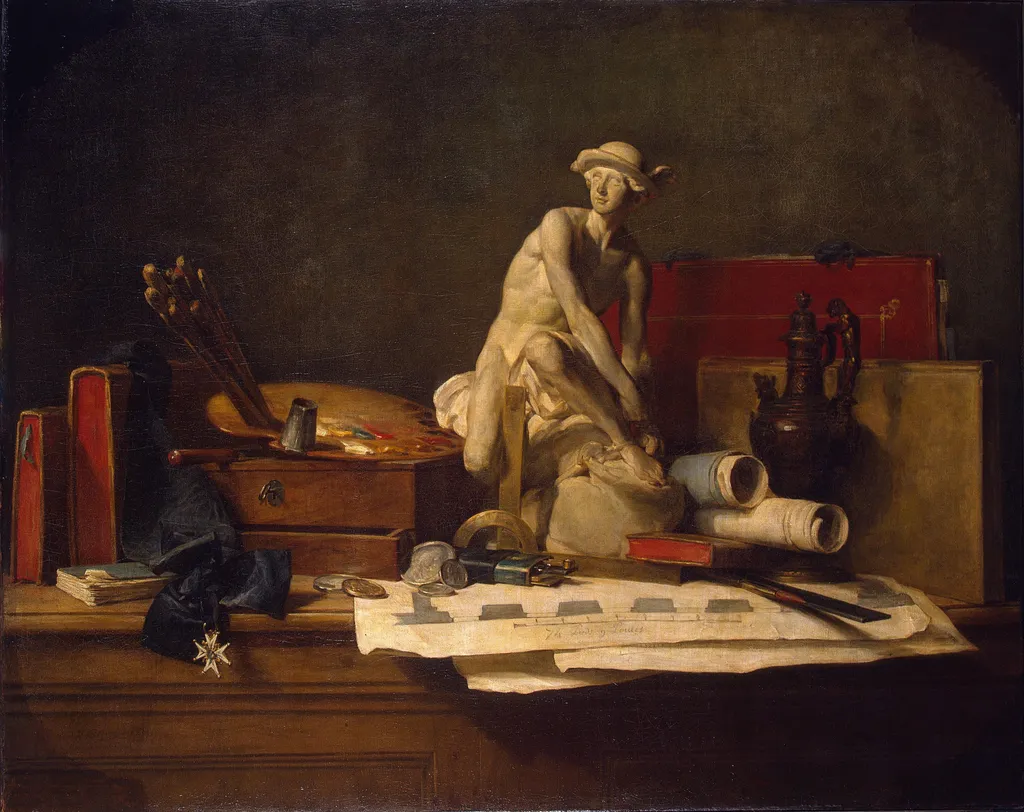
Still Life with Attributes of the Arts is an oil painting by the Rococo painting artist Jean-Baptiste-Siméon Chardin. It dates from 1766 and is held in the collection of the Hermitage Museum.
About this work
Subject & Meaning
The composition centers on a statue of Mercury, created by Jean-Baptiste Pigalle in 1744, which symbolizes the discipline of sculpture.
Commissioned by Empress Catherine II of Russia, this 1766 work functions as an allegory of the arts. The composition centers on a statue of Mercury, created by Jean-Baptiste Pigalle in 1744, which symbolizes the discipline of sculpture. Surrounding this central figure are objects representing other creative fields: a painter's palette alludes to Chardin's own profession, while architectural plans and a square at the statue's base refer to architecture. Additionally, scattered books and coins signify literature and goldsmithing respectively. This arrangement of attributes serves to celebrate the various domains of human artistic endeavor within a single still life.
Technique & Style
Still Life with Attributes of the Arts is executed in oil paint on canvas, a typical support for Chardin’s mid‑century works. The painting belongs to the Rococo still‑life tradition and presents an allegorical composition: a marble statue of Mercury by Jean‑Baptiste Pigalle signifies sculpture, while a painter’s palette, architectural drawings and a square, and books and coins allude to painting, architecture, literature and goldsmithing. The objects are arranged with careful balance and clear, even lighting, reflecting Chardin’s meticulous handling of texture and form.
History & Provenance
Still Life with Attributes of the Arts is held at the Hermitage Museum in Saint Petersburg. The painting was commissioned by Catherine II of Russia, who founded the Hermitage, establishing the work's long-standing presence in the imperial collection that became the museum.
Context
The 1766 oil painting Still Life with Attributes of the Arts, housed in the Hermitage Museum, was commissioned by Catherine II of Russia and exemplifies Rococo genre painting through its allegorical representation of the arts. The work incorporates symbolic elements such as a Mercury statue by Jean-Baptiste Pigalle (1744), a painter’s palette, architectural plans, and books with coins to embody Sculpture, Architecture, Literature, and Orfebrerie. Contemporary scholarship notes its thematic kinship with Chardin’s earlier 1765 Louvre work, Les Attributs des arts, underscoring his exploration of artistic personifications during the period.
The painting’s provenance as a royal commission and its placement within the Hermitage collection reflect both the diplomatic cultural exchanges between France and Russia and the broader Enlightenment-era fascination with personifying disciplines through visual allegory.
Own this work as a print
Artist & collection
Artist
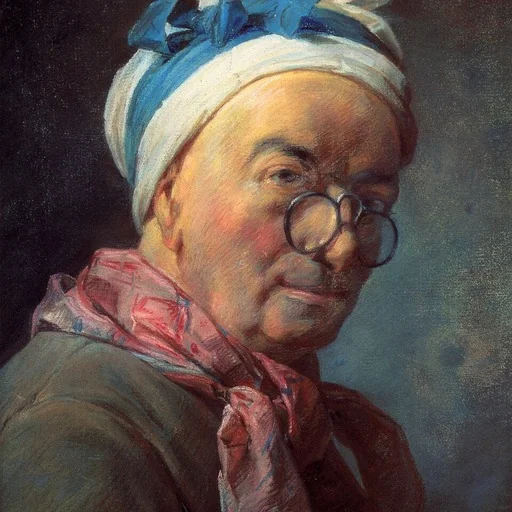
Jean Siméon Chardin (French:; November 2, 1699 – December 6, 1779) was an 18th-century French painter.