Artwork
William Gale
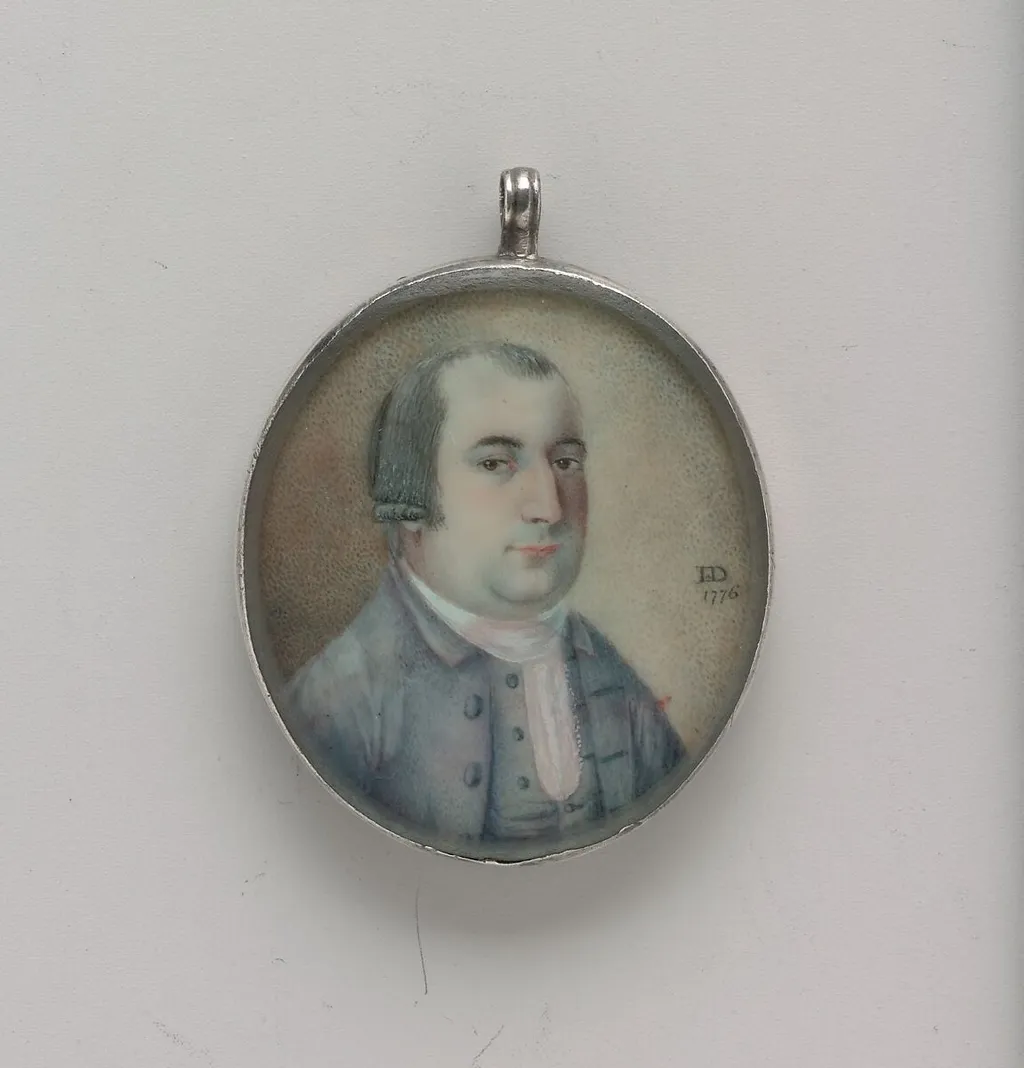
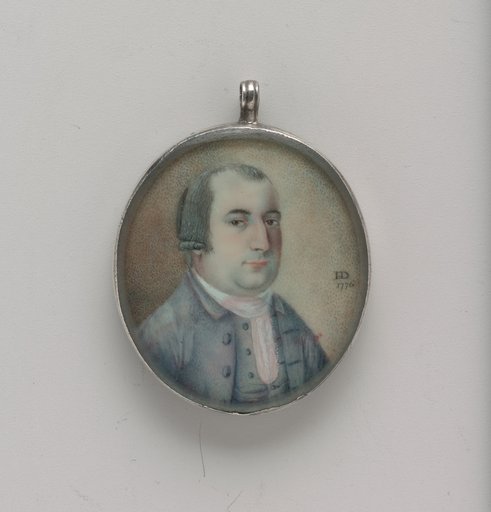
William Gale is a watercolor painting by the Rococo painting artist Joseph Dunkerley. It dates from 1776 and is held in the collection of the Metropolitan Museum of Art.
About this work
To see more small portraits like this, look up the subject men, portraits, american, man, portrait.
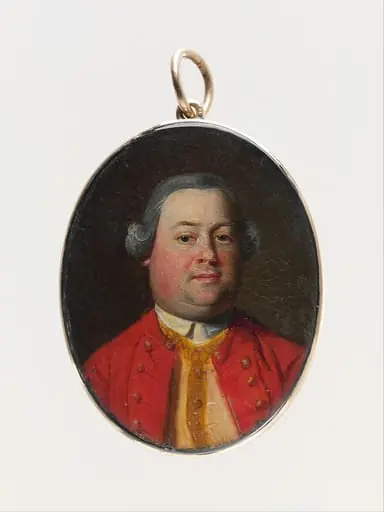
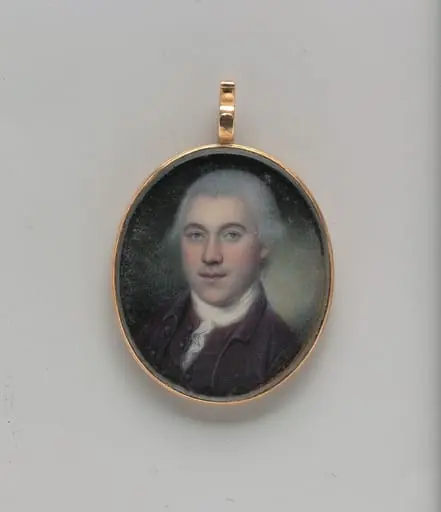
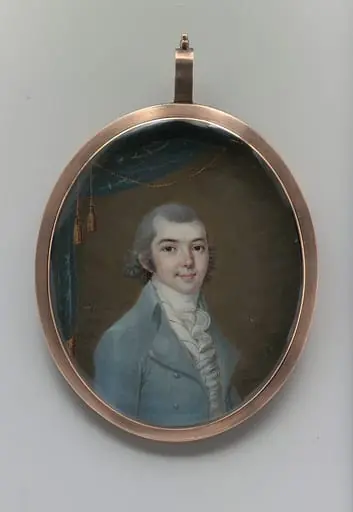
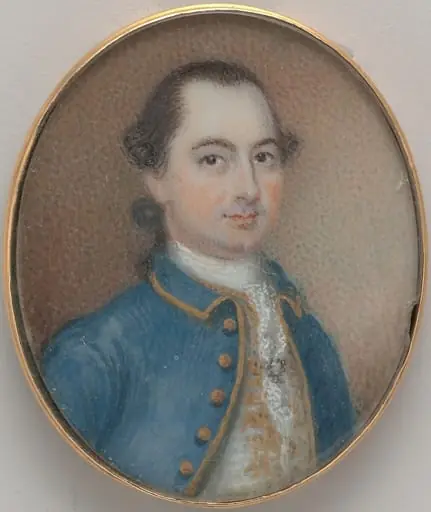
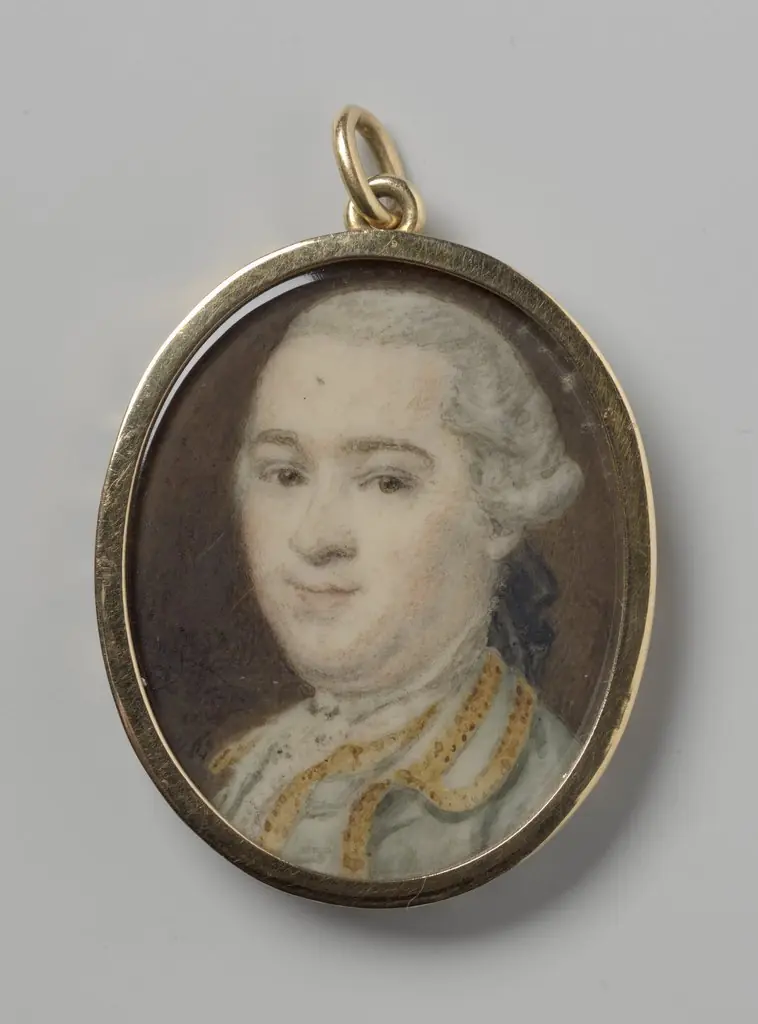
A young man in a red coat looks straight at you. His hair is powdered white, his face calm and serious. The background is plain, dark green.
This tiny painting is on ivory, not paper. Watercolor on ivory was rare, it glows like porcelain. Dunkerley painted it in 1776, the year America declared independence. The man’s identity is unknown, but his clothes say he was wealthy.
To see more small portraits like this, look up the subject men, portraits, american, man, portrait.
History & Provenance
William Gale is a watercolor portrait painted in 1776 by Joseph Dunkerley on ivory support; the work measures approximately 3.5 by 2.9 centimeters and belongs to the miniature genre. It depicts a man and was classified within The American Wing of the Metropolitan Museum of Art, where it remains on view. The painting entered the museum’s collection as part of the institution’s holdings of early American portraiture, though specific acquisition details are not recorded in the available documentation.
The work’s creation date aligns with the inception year recorded for the piece, confirming its execution in the late 18th century.
Context
Joseph Dunkerley’s 1776 watercolor portrait titled William Gale exemplifies early American portraiture through its modest dimensions of 3.5 × 2.9 cm and classification as a miniature within the Metropolitan Museum of Art’s American Wing. The work, documented in the museum’s collection and described in Wikidata, portrays an unidentified man and reflects the genre’s emphasis on intimate representation. Its inclusion in a major institutional collection has prompted scholarly discussion of Dunkerley’s role in colonial visual culture, situating the piece within broader narratives of American artistic development.
Overview
Joseph Dunkerley's watercolor portrait, William Gale, was created in 1776. This small-scale work on ivory captures an unidentified man, whose formal attire suggests a prosperous background. The painting offers a glimpse into American portraiture during a pivotal historical moment, showcasing the artist's skill in a delicate and luminous medium. It is part of The American Wing collection.
Subject & Meaning
The subject of this intimate portrait is a young man, presented with a calm, serious demeanor. He wears a red coat and powdered white hair, looking directly forward against a simple, dark green backdrop. Although his specific identity remains unrecorded, his elegant dress indicates a person of considerable means, reflecting the social status often conveyed through portraiture of the era.
Technique & Style
Dunkerley executed this portrait using watercolor on ivory, a less common choice than paper for the period. This particular medium lends a distinctive luminosity to the artwork, allowing the delicate pigments to glow with a quality akin to porcelain. The tiny scale further emphasizes the intricate detail and precision required for such a specialized technique, highlighting the artist's mastery.
Artist & collection