Artwork
The Last Communion of Saint Mary of Egypt
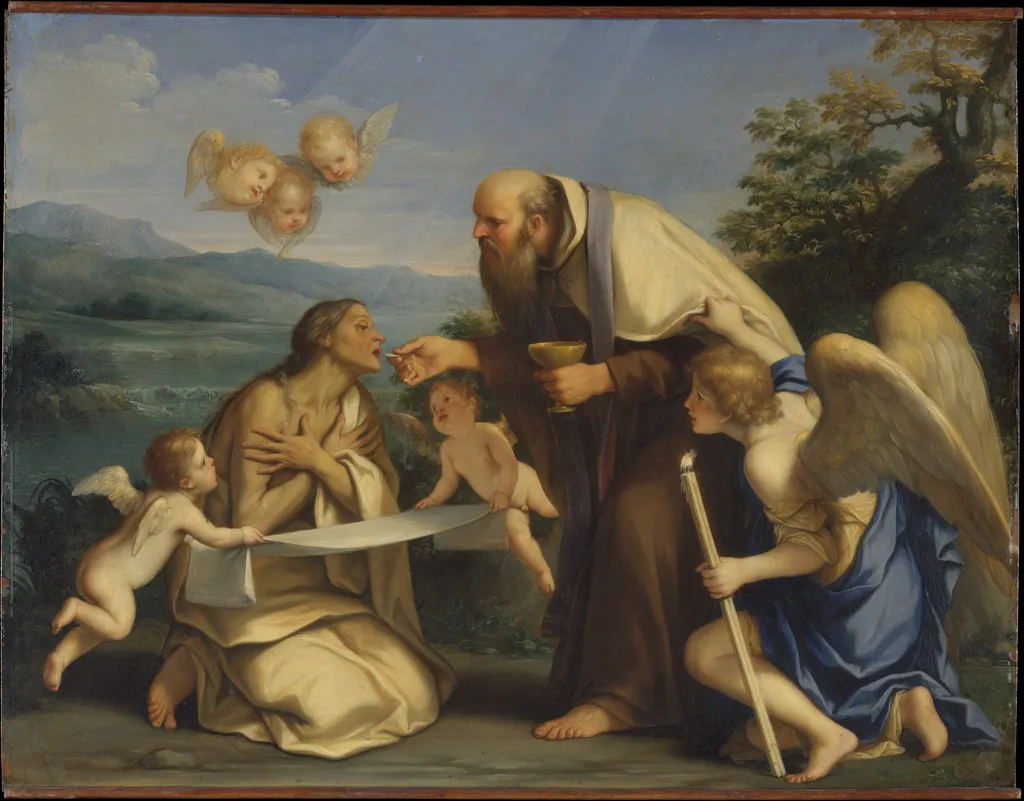
The Last Communion of Saint Mary of Egypt is an oil painting by the Early Baroque Italian artist Marcantonio Franceschini. It dates from 1690 and is held in the collection of the Metropolitan Museum of Art.
About this work
Technique & Style
3 cm and exemplifies Franceschini's refined handling of oil paint on a rigid, reflective ground that enhances luminosity.
Executed in oil on copper support, the work measures 42.5 × 54.3 cm and exemplifies Franceschini's refined handling of oil paint on a rigid, reflective ground that enhances luminosity. The handling is precise and linear, with smooth, evenly blended passages in flesh and drapery that convey a sculptural solidity, while delicate highlights on metallic elements suggest a controlled, almost enamel-like finish. Stylistically, the composition balances classical restraint with Counter-Reformation clarity, arranging figures in a shallow, stage-like space under a muted sky.
The saint's ascetic presence and the angel's gesture are rendered with restrained naturalism, while the priest's vestments and the gilded communion vessel receive heightened attention to texture and sheen.
History & Provenance
Painted in 1690 on copper, The Last Communion of Saint Mary of Egypt is documented as a work by Marcantonio Franceschini in both Franceschini's corpus and the Metropolitan Museum of Art's records. The painting entered the Metropolitan Museum of Art's collection as part of its holdings in religious art, where it has remained since acquisition. Its small copper support and devotional subject align with Franceschini's output executed in Bologna during the late seventeenth century.
Overview
Painted in 1690 on a copper support, The Last Communion of Saint Mary of Egypt is a religious work by the Bolognese painter Marcantonio Franceschini. The composition illustrates the final sacrament of the saint, a figure known for her ascetic life in the desert. In the scene, Mary of Egypt kneels in a white robe upon the earth, receiving the Eucharist from a standing priest clad in brown and white vestments who administers the host with a spoon.
Two angels attend the moment; one holds a scroll, likely signifying the saint's spiritual writings or the divine nature of the event. Executed during the height of Franceschini's career, the painting reflects the High Baroque style prevalent in Bologna, characterized by its clear narrative structure, balanced arrangement of figures, and polished finish typical of works on copper. The artist, a leading figure in the Bolognese school and a contemporary of Carlo Cignani, frequently produced religious subjects for altarpieces and private devotion.
This work demonstrates his ability to convey spiritual solemnity through a serene, naturalistic setting and a restrained palette, focusing on the intimate exchange between the divine and the penitent.
Subject & Meaning
The painting illustrates the final sacrament received by Saint Mary of Egypt. A woman, clad in a flowing white robe, kneels devoutly while a man, dressed in brown and white vestments, administers communion with a chalice and spoon. Two angels attend the scene, one holding a scroll and the other a staff, signifying the spiritual importance of the event and the saint's divine connection in her last moments.
Context
This work is attributed to Marcantonio Franceschini, an artist known for his contributions to religious painting. Franceschini's approach often combined classical influences with a devotional sensibility, creating compositions that resonated with the spiritual themes prevalent in his era. This piece exemplifies his capacity to render sacred narratives with clarity and emotional depth.
Own this work as a print
Artist & collection
Artist
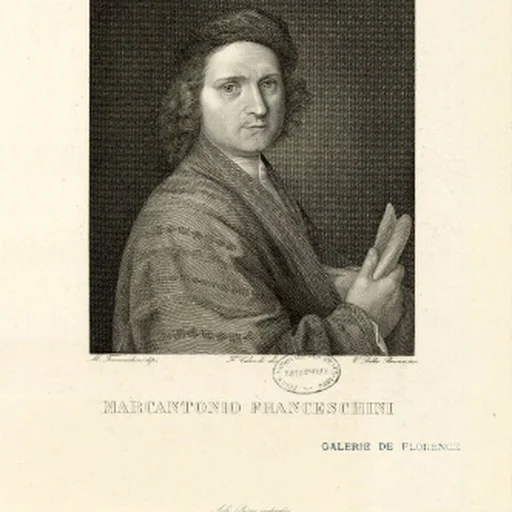
Marcantonio Franceschini (Italian pronunciation:; 1648 – 24 December 1729) was an Italian painter of the Baroque period, active mostly in his native Bologna. He was the father and teacher of Giacomo Franceschini.

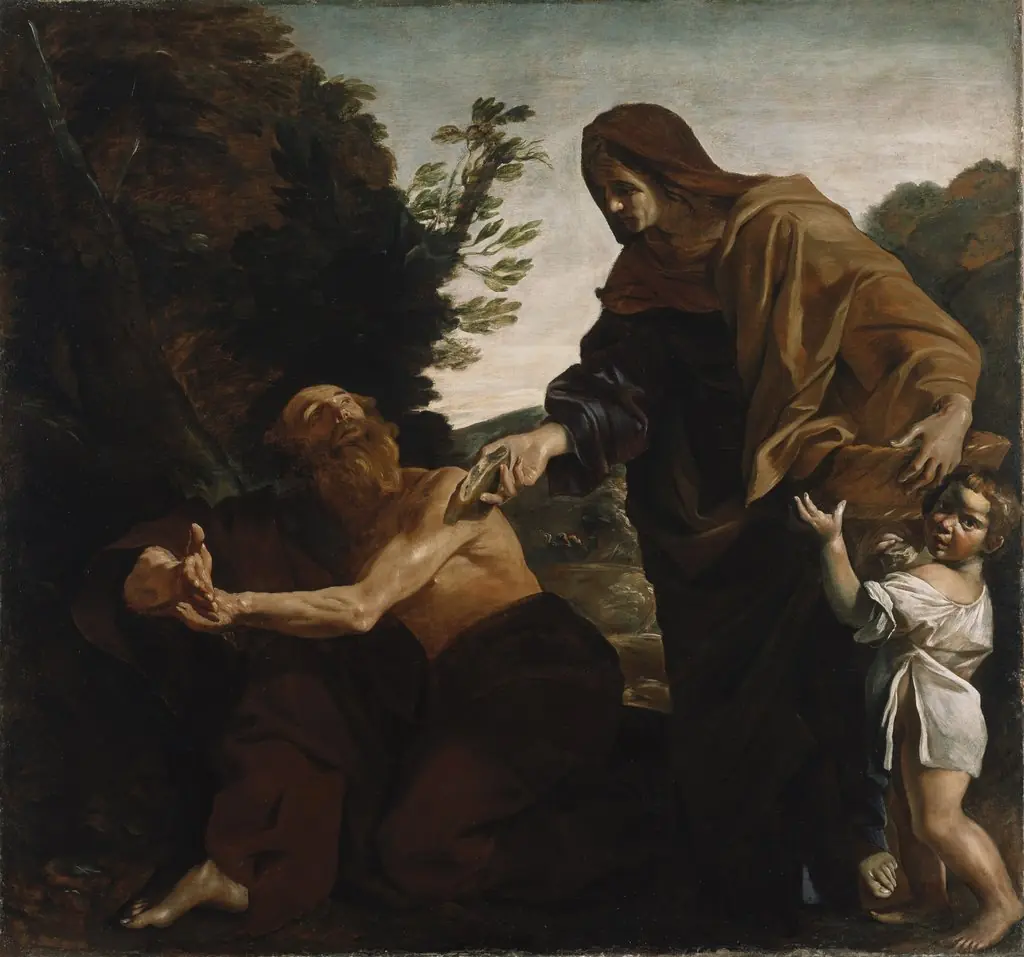
- Elijah Receiving Bread from the Widow of Zarephath
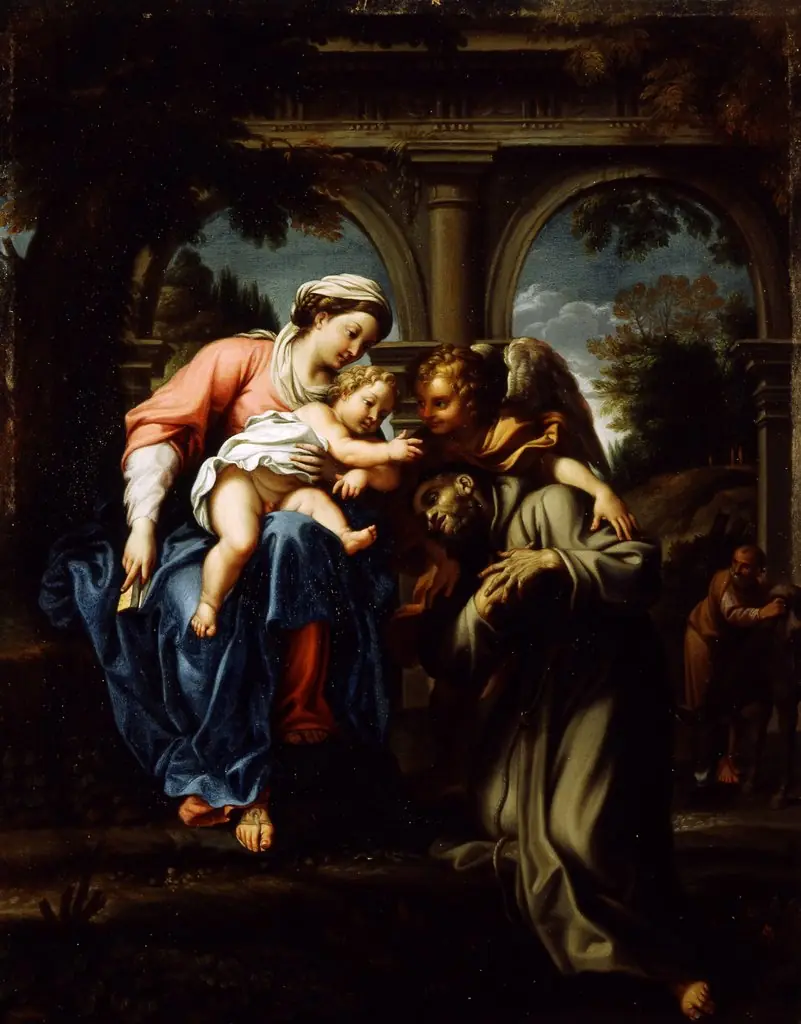 Vision of Saint Francis
 The Mystic Marriage of St Catherine
 Tobias Heals his Blind Father
 The Holy Family with Angels
 The Holy Family on the Steps
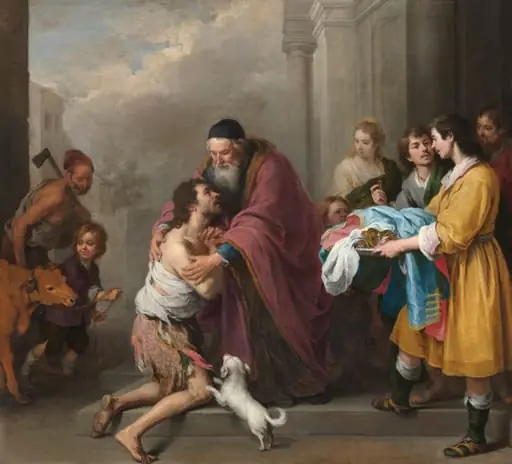 The Return of the Prodigal Son
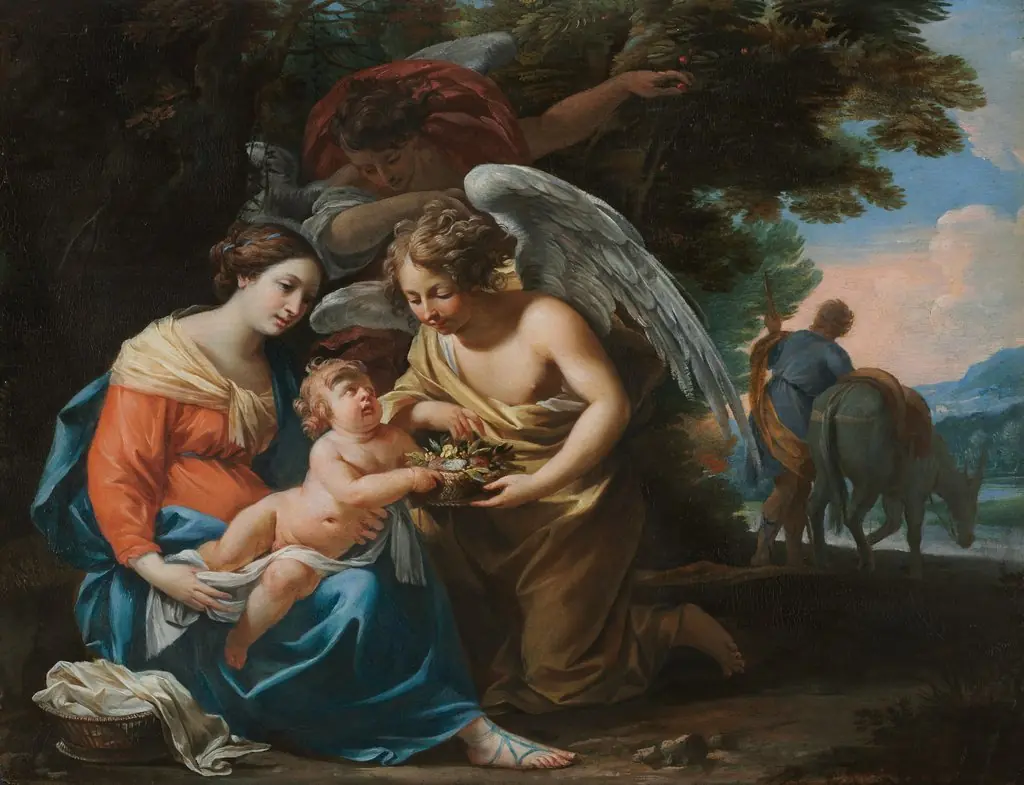 Rest on the Flight into Egypt
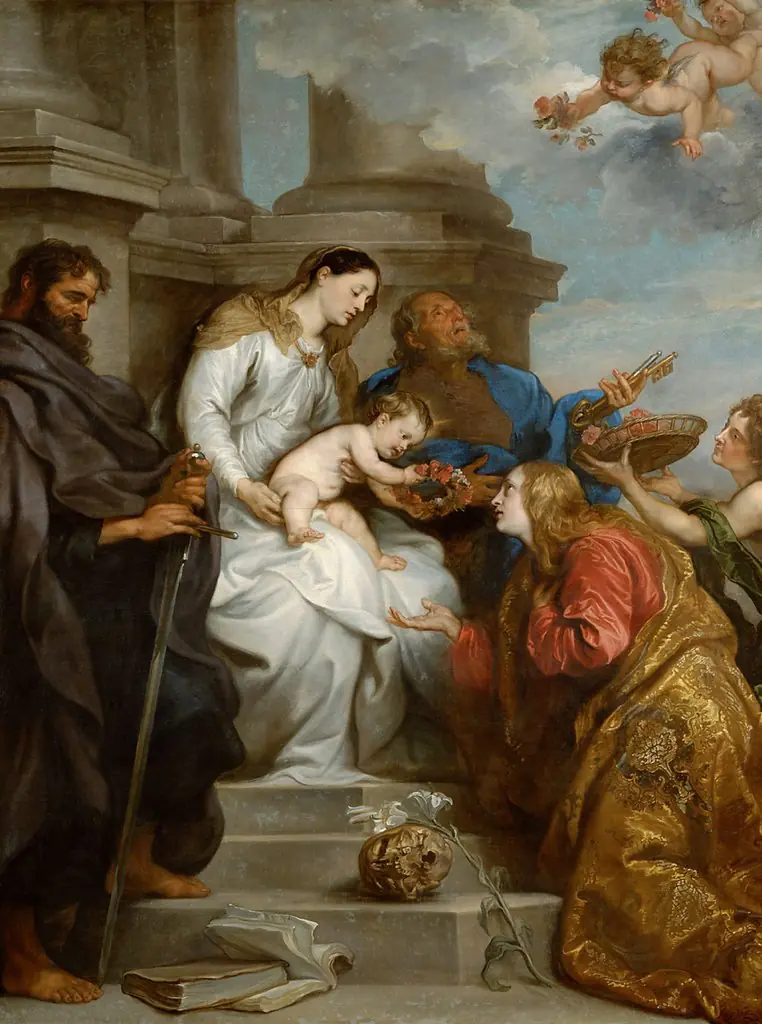 Coronation of Saint Rosalia
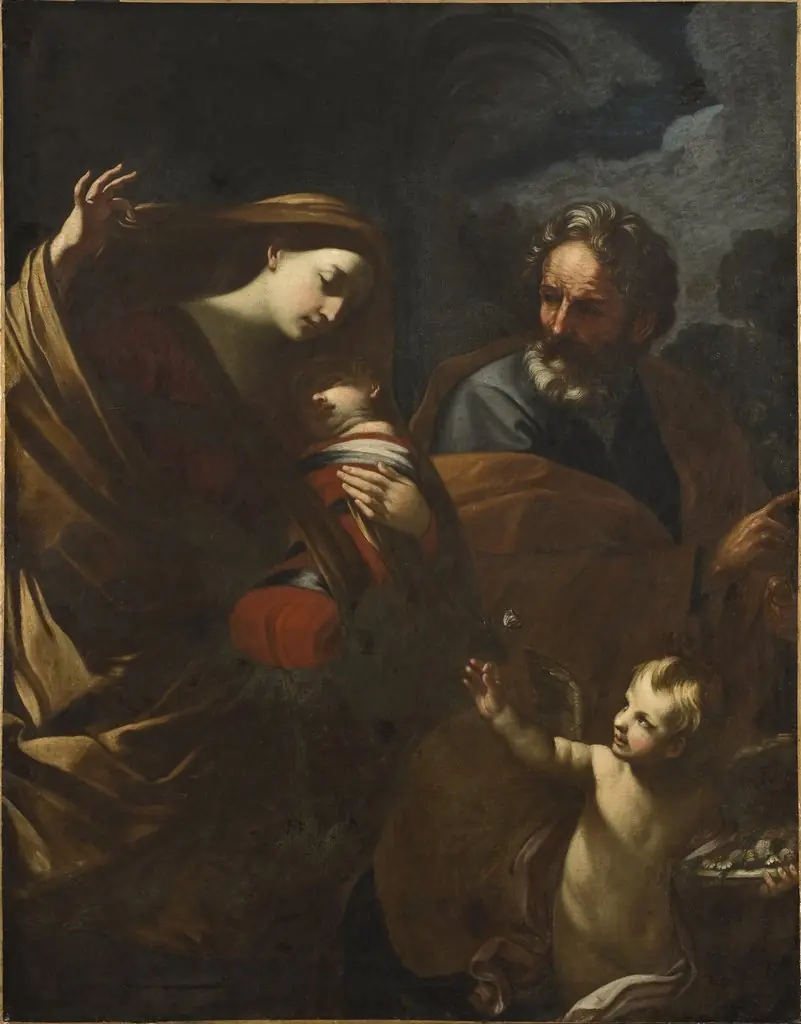 The Flight into Egypt
 Repentant Sinners in front of the Virgin and Child
 Suffer Little Children to Come Unto Me