Artwork
Deux stylistes Rue du Caire
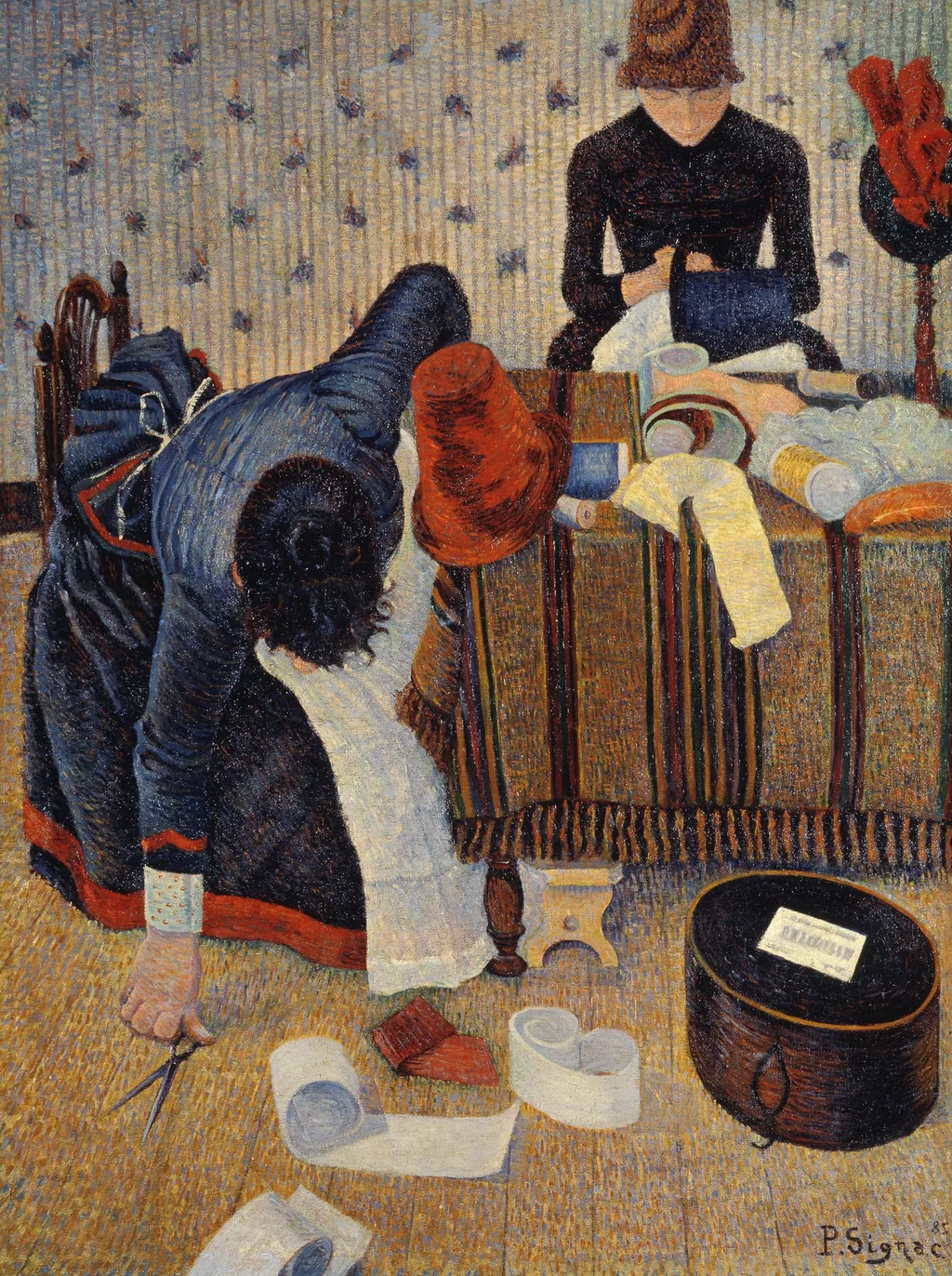
Deux stylistes Rue du Caire is an oil painting by the Neo-Impressionist artist Paul Signac. It dates from 1893 and is held in the collection of the Foundation E.G. Bührle Collection.
About this work
If you're interested in learning more about the artist's style and techniques, you might want to explore the work of Paul Signac.
This painting depicts two women in a room, engaged in various activities. One woman is kneeling on the floor, while the other sits on a chair. The room is filled with rolls of fabric, and the women appear to be working with them.
The colors used in the painting are muted, with shades of brown, blue, and white dominating the scene.
The women's clothing and hairstyles suggest that the painting is from the late 19th century. The artist's use of short, broken brushstrokes and vivid colors creates a sense of movement and energy in the scene.
If you're interested in learning more about the artist's style and techniques, you might want to explore the work of Paul Signac.
Overview
Paul Signac painted Deux stylistes Rue du Caire in 1893 using oil on canvas. Though best known for coastal scenes, this work shifts focus to an interior setting in Paris, capturing two women at work amid rolls of fabric. The painting belongs to the collection of Kunsthaus Zürich and reflects Signac’s commitment to Neo-Impressionist principles, particularly his use of systematic brushwork and optical color mixing.
Subject & Meaning
The scene portrays two female dressmakers in a modest interior, one kneeling, the other seated, attending to textiles. Their quiet labor suggests the everyday rhythms of urban craftsmanship in late 19th-century Paris. Signac avoids romanticizing their work; instead, he presents it with observational neutrality, emphasizing routine over narrative, aligning with his interest in documenting modern life through structured composition.
Technique & Style
Signac employs short, deliberate strokes of unmixed pigment, characteristic of Pointillism, to build form and atmosphere. The palette is restrained, dominated by earthy browns, soft blues, and pale whites, yet the application creates subtle luminosity through optical blending. The brushwork imparts a quiet rhythm to the scene, transforming static objects into a sense of contained motion without overt drama.
History & Provenance
Painted during Signac’s mature period, the work was likely completed in his Paris studio, possibly inspired by the Rue du Caire, a street known for textile trade. It entered the Kunsthaus Zürich collection in the 20th century, following the museum’s broader acquisition of Neo-Impressionist works. Its provenance remains unbroken since its acquisition, with no record of public exhibition prior to its institutional ownership.
Context
In the 1890s, Paris saw growing interest in the lives of working-class women, particularly in domestic and artisanal trades. Signac’s choice to depict dressmakers reflects this cultural attention, though his approach remains formalist. Unlike social realists, he prioritized color harmony and structure over commentary, situating labor within the broader Neo-Impressionist project of redefining visual perception.
Legacy
This painting exemplifies Signac’s expansion of Pointillism beyond landscape into interior genre scenes. While less celebrated than his seascapes, it demonstrates the adaptability of his technique to intimate subjects. Later artists studying Neo-Impressionism have cited this work as evidence of how systematic brushwork could convey quiet dignity in ordinary moments, influencing early modernist approaches to everyday life.
Own this work as a print
Artist & collection

Artist
Paul Victor Jules Signac ( seen-YAHK, French:; 11 November 1863 – 15 August 1935) was a French Neo-Impressionist painter who, with Georges Seurat, helped develop the artistic technique Pointillism.

- Woman Mending
 Mademoiselle Boissière Knitting
 Interior Mother and Sister of the Artist
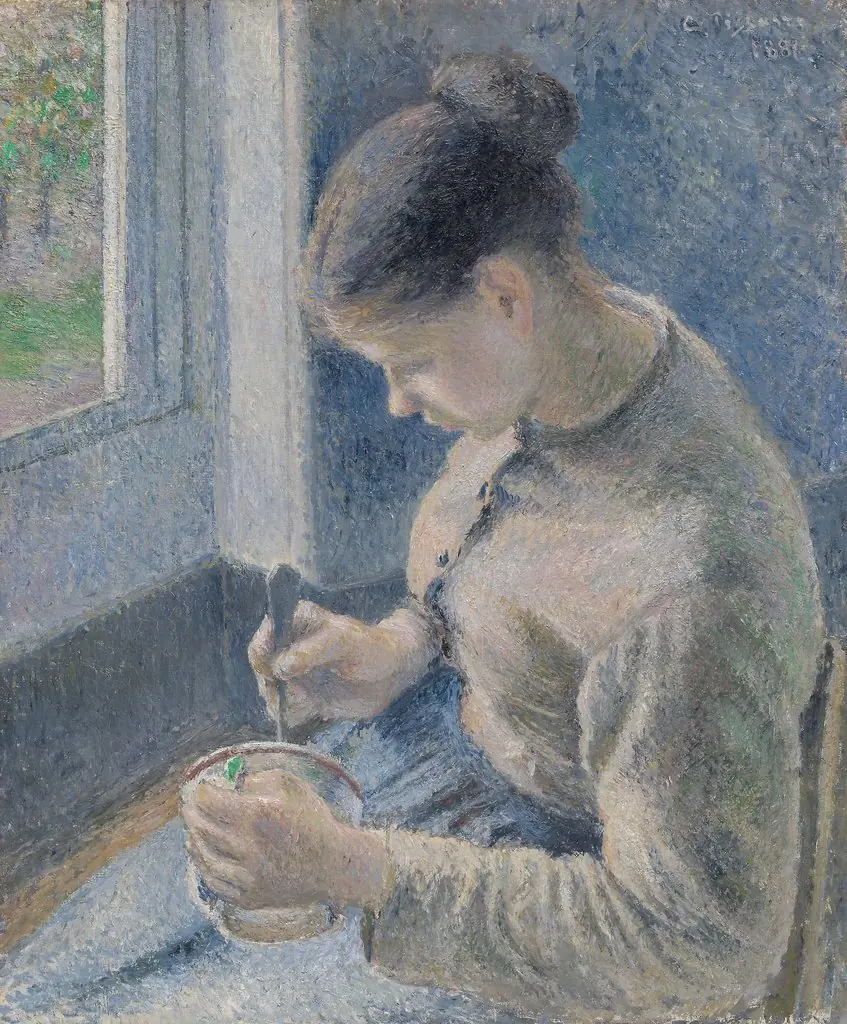 Young Peasant Having Her Coffee
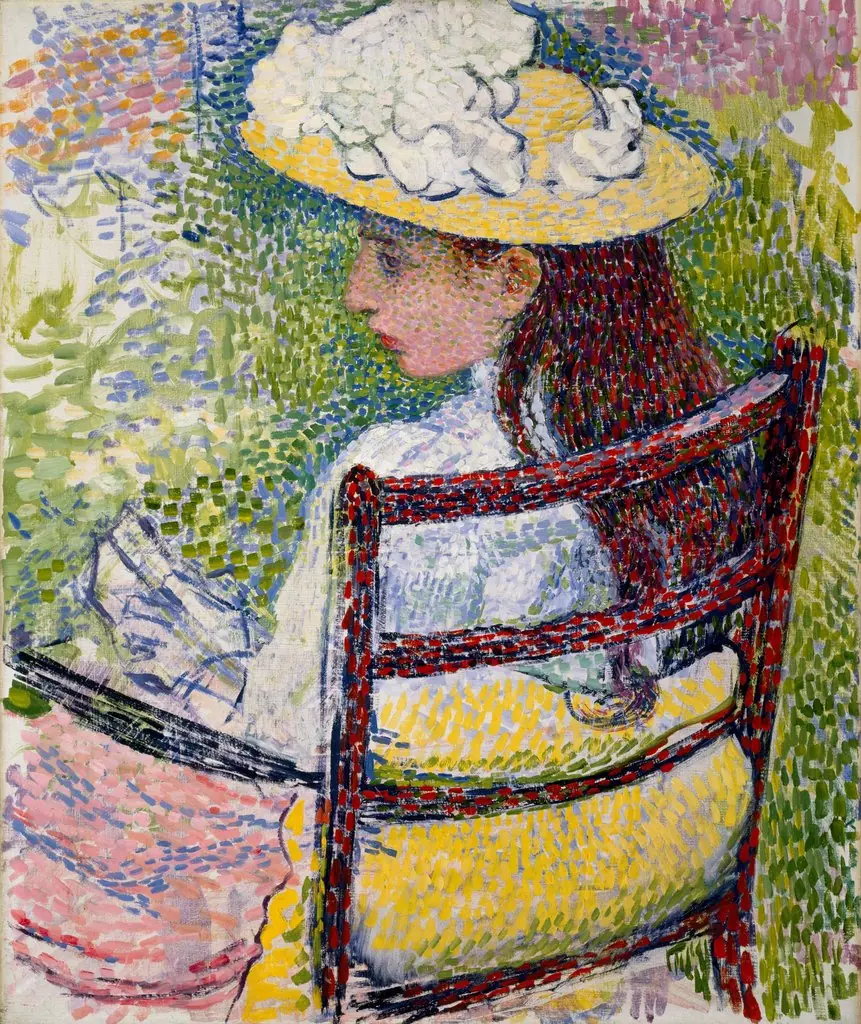 Jeanne Pissarro
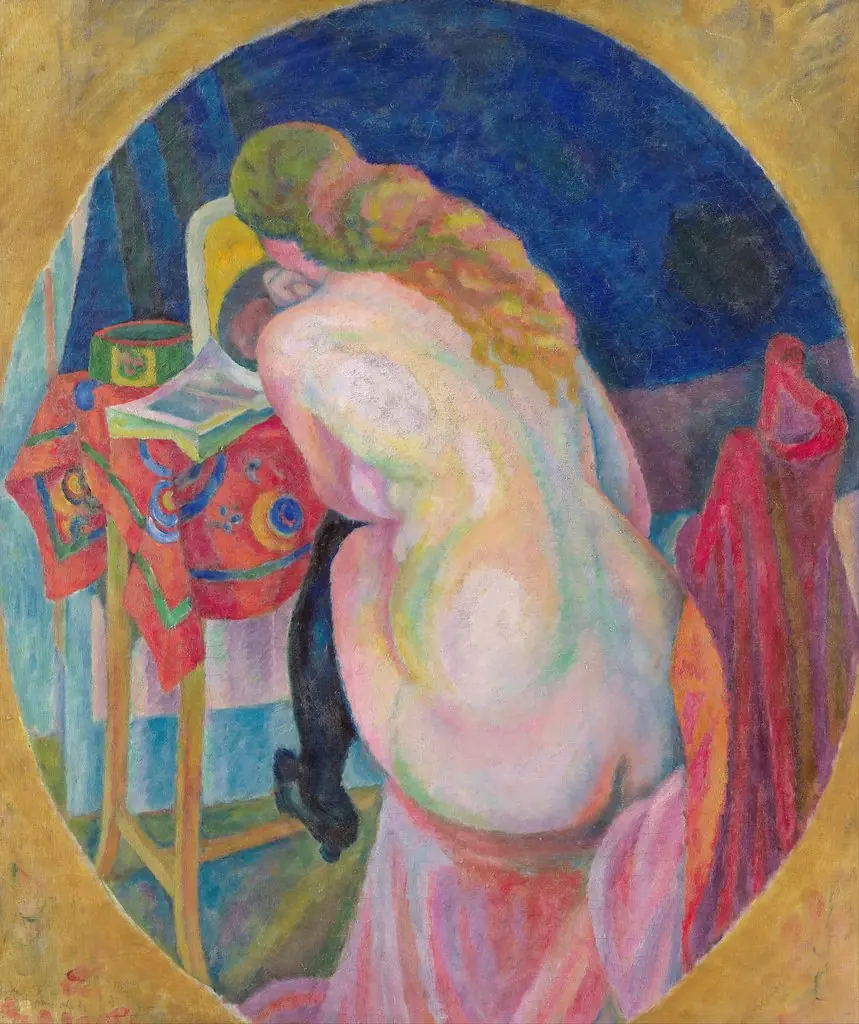 Female Nude Reading
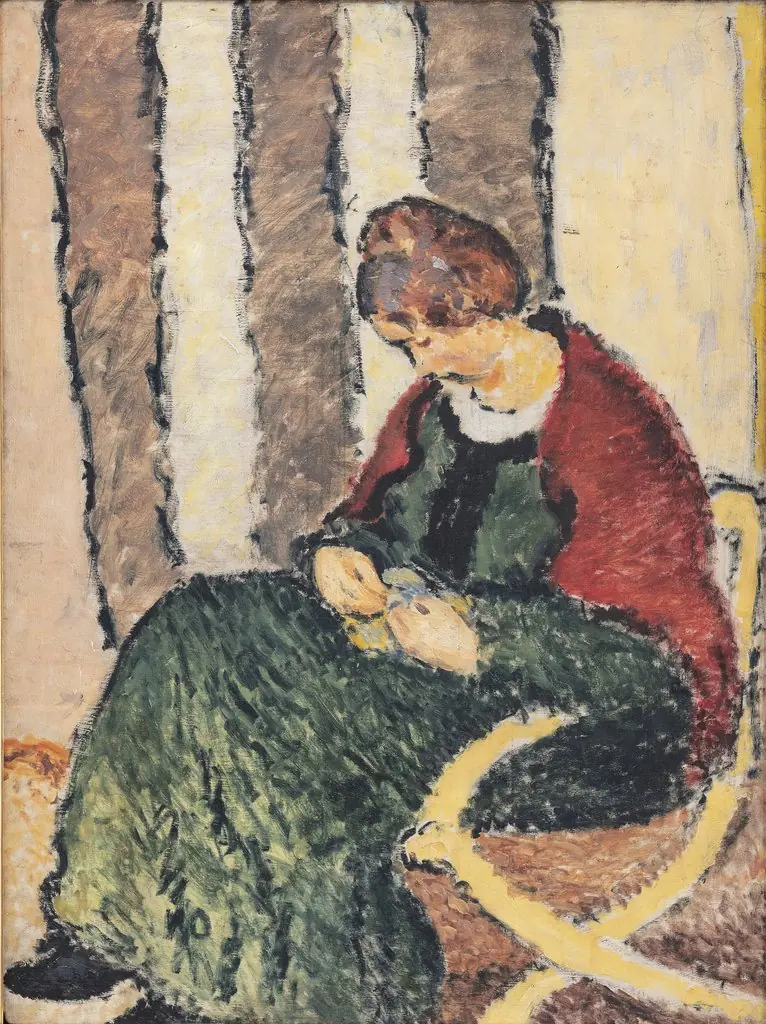 The Artist's Sister, Anna Giersing, Wearing a Red Shawl
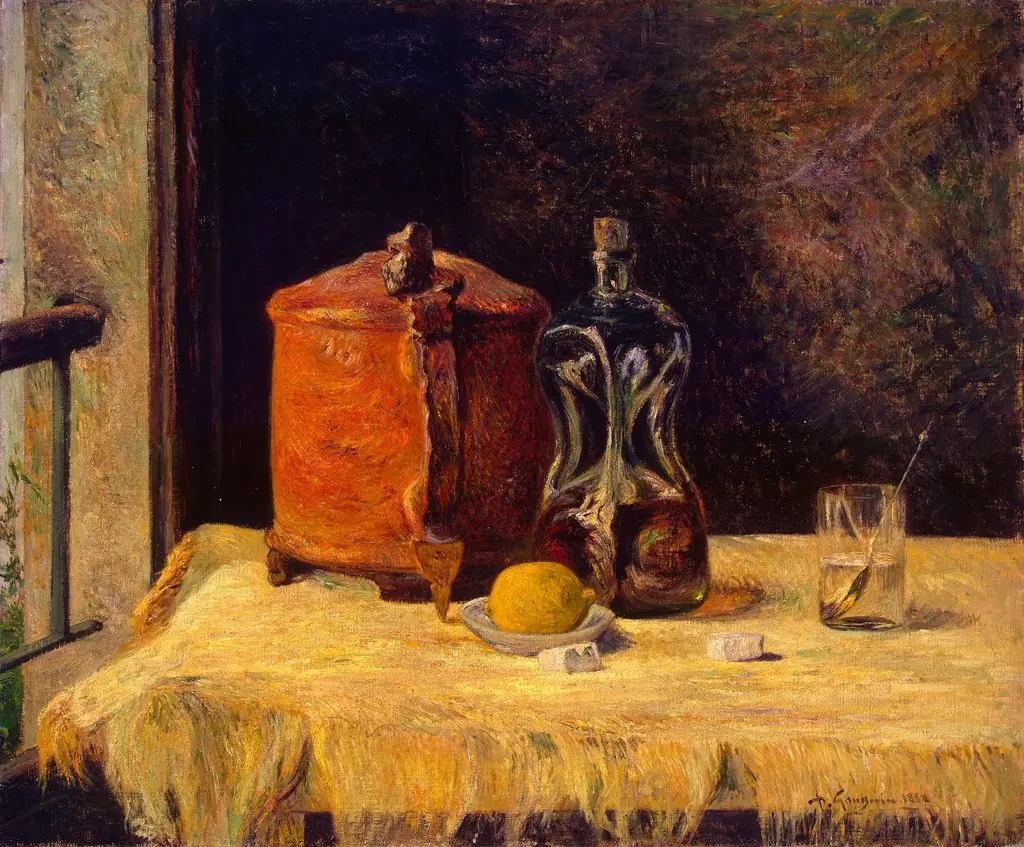 At the Window
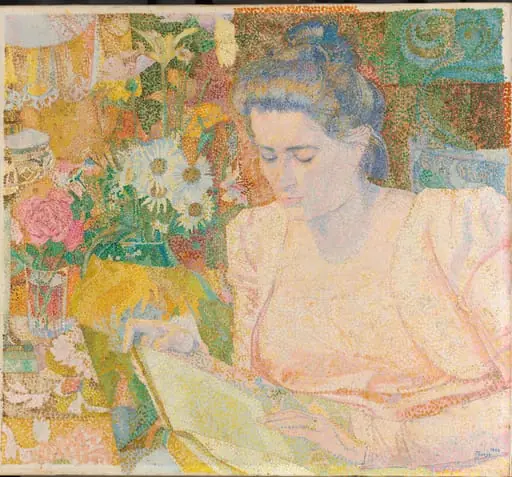 Portrait of Marie Jeanette de Lange
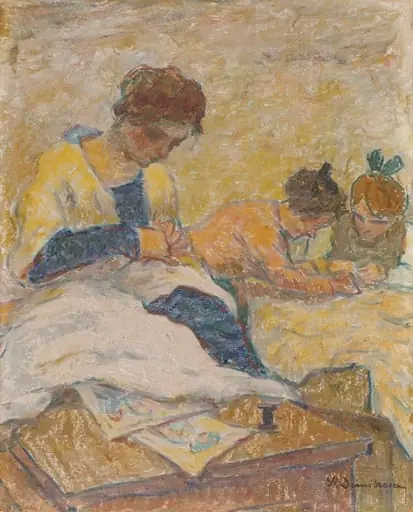 Interior cu personaje
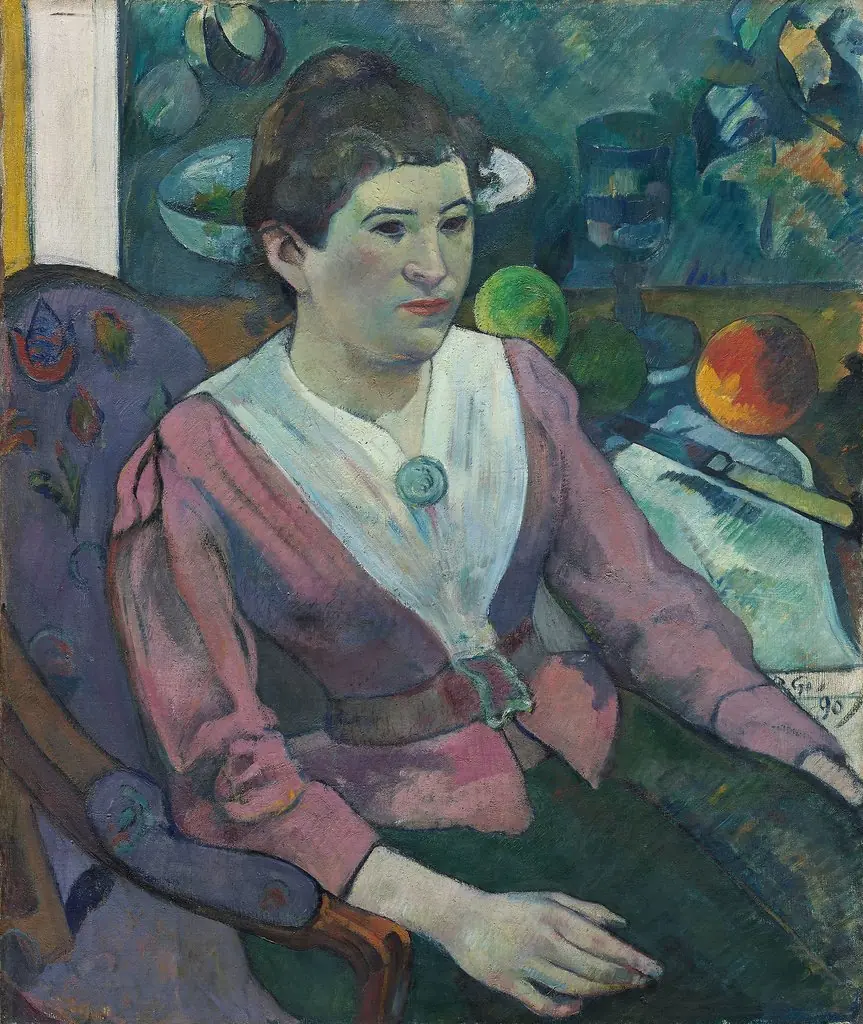 Woman in Front of a Still Life by Cézanne
 The Laundress