Artwork
Venus and Cupid
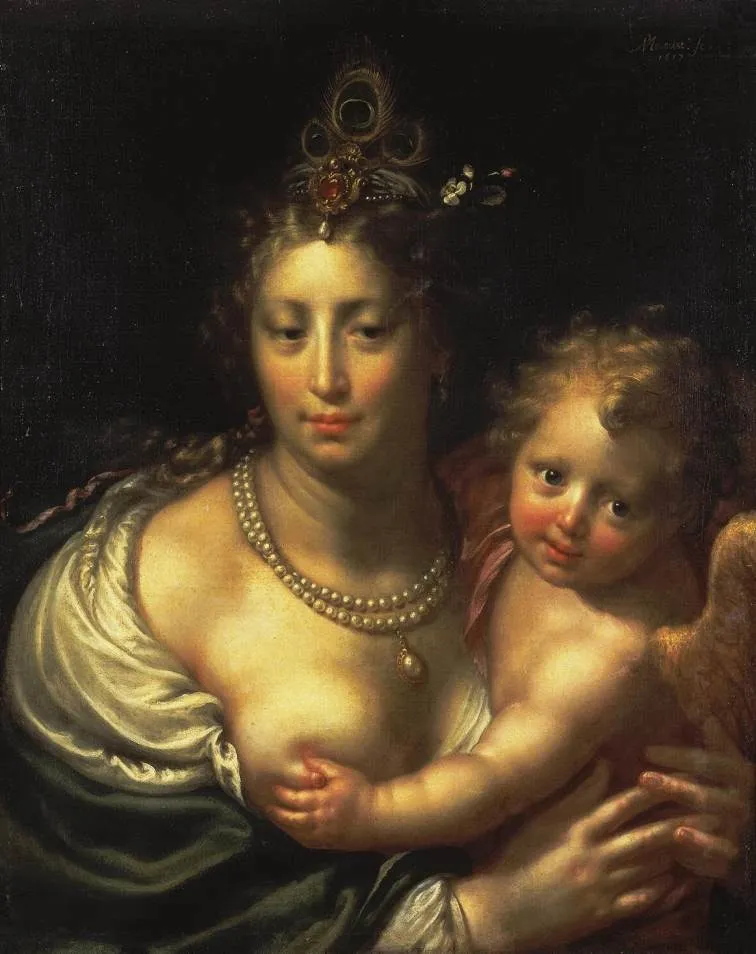
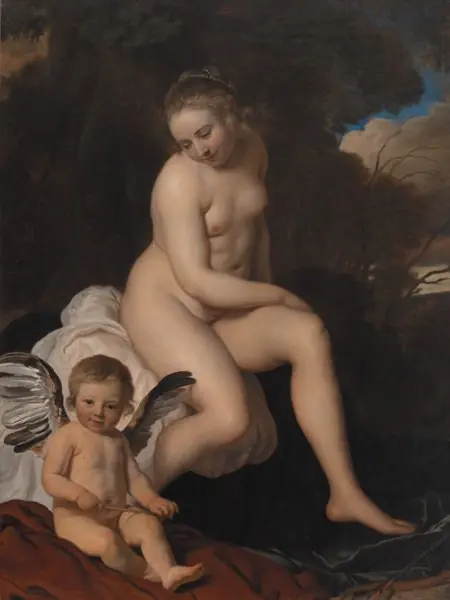
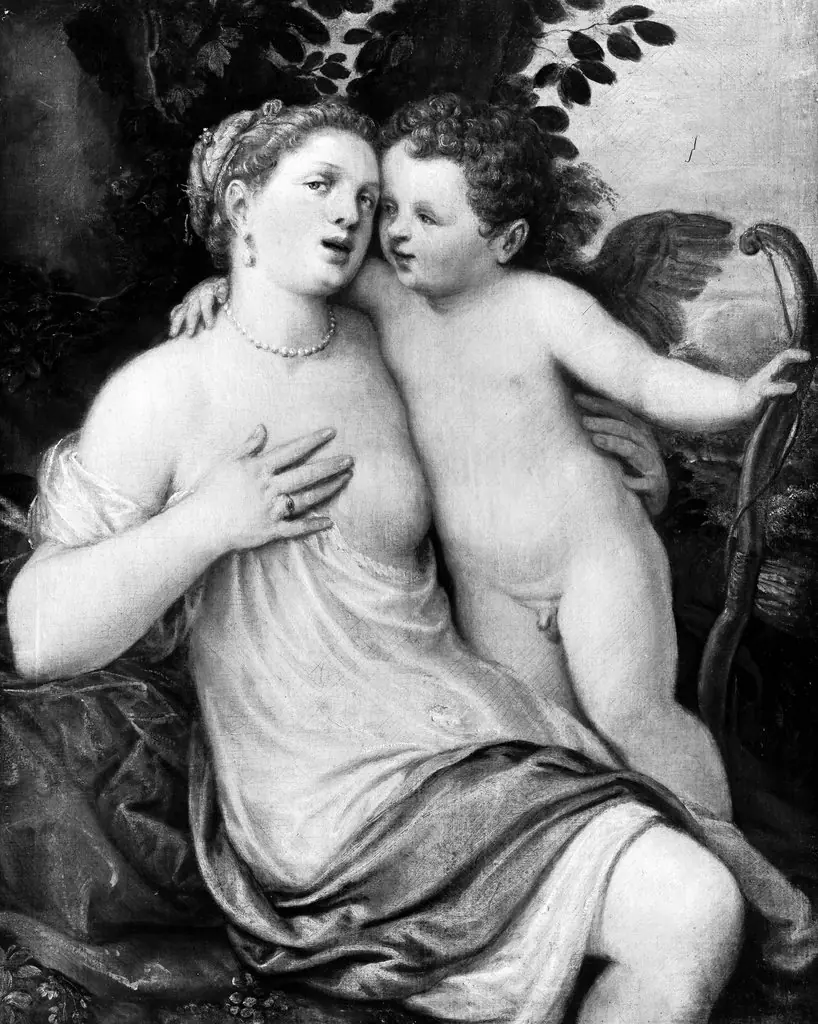
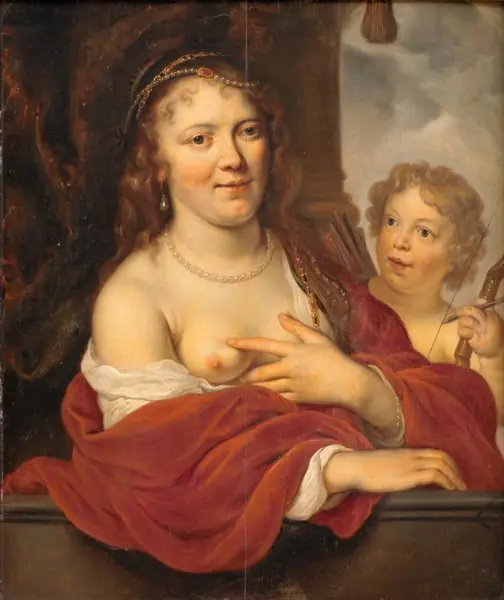
Venus and Cupid is an oil painting by the Early Baroque Italian artist Paulus Moreelse. It dates from 1617 and is held in the collection of the Hermitage Museum.
About this work
Overview
Moreelse, a Utrecht painter influenced by the Caravaggisti, utilizes strong chiaroscuro to model the smooth textures of the skin and fabric.
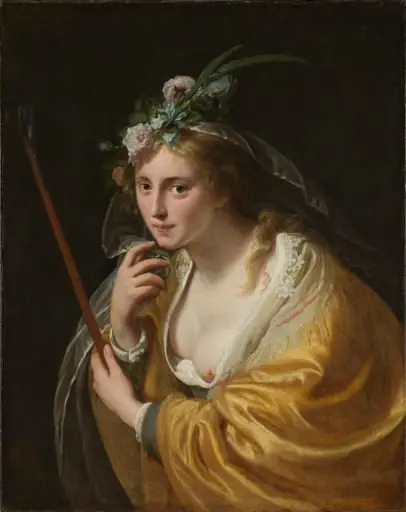
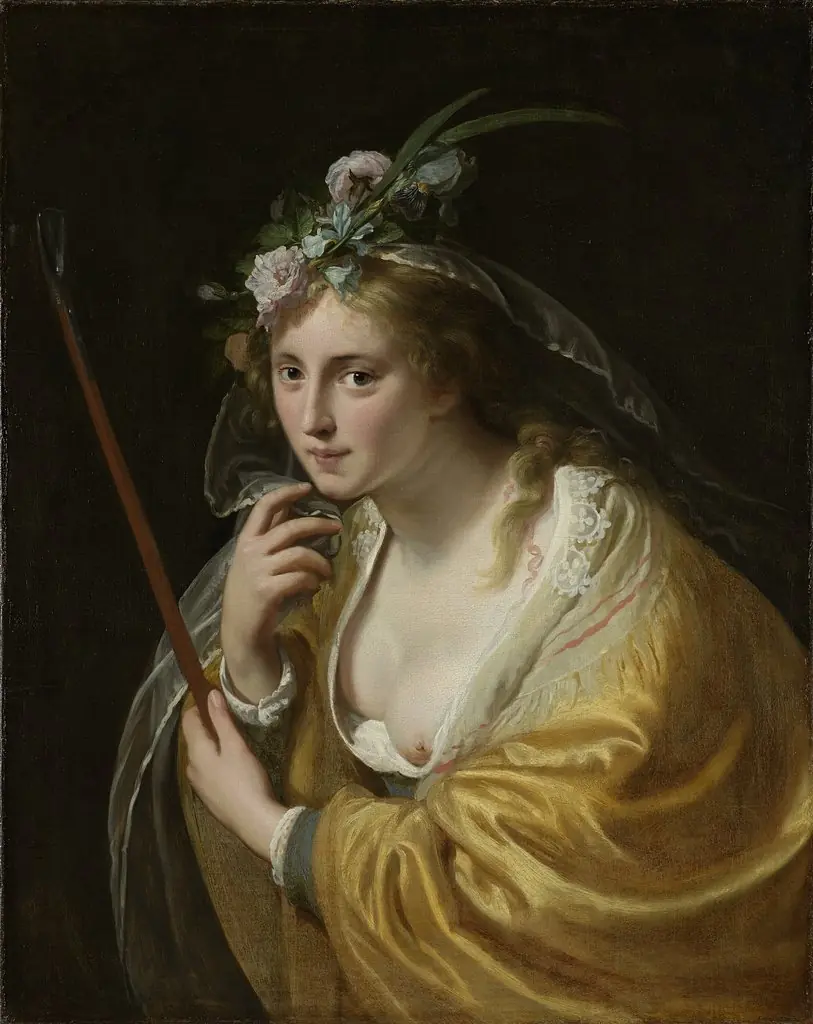
Painted in 1617, Paulus Moreelse's Venus and Cupid depicts the goddess of love and her son against a stark, dark background that isolates the figures and emphasizes their pale complexions. The composition features Venus standing in a three-quarter view, her body angled slightly while her gaze meets the viewer directly. She wears a loose, translucent white gown that reveals her form, accessorized with a prominent pearl necklace and an elaborate headpiece adorned with feathers, reflecting the fashion of the Dutch Golden Age rather than classical antiquity.
Cupid stands beside her, holding her hand; the child looks away with a curious expression, creating a dynamic tension between the figures. Moreelse, a Utrecht painter influenced by the Caravaggisti, utilizes strong chiaroscuro to model the smooth textures of the skin and fabric. This work exemplifies his early career focus on mythological subjects rendered with a refined, almost porcelain-like finish.
The painting serves as a characteristic example of early 17th-century Dutch mythological portraiture, blending classical iconography with contemporary elegance and dramatic lighting.
Subject & Meaning
The figure of Venus is shown in a serene pose, her hand gently clasping the child’s. The boy, with light hair and an inquisitive glance, looks away, suggesting a moment of tender interaction rather than overt narrative drama. The pairing reflects the classical association of love and beauty, emphasizing the intimate bond between the goddess and her offspring.
Technique & Style
Moreelse employs a pronounced chiaroscuro, illuminating the woman's face and the delicate folds of her white dress while the surrounding space recedes into deep shadow. This contrast creates a sculptural sense of volume. The woman’s attire, a pearl necklace, an elaborate feathered headdress, and a flowing gown, are rendered with fine brushwork that highlights texture and the smoothness of her skin.
History & Provenance
Since its creation in the early seventeenth century, the painting has remained in private and institutional hands before entering the State Hermitage Museum’s holdings. The museum acquired the work as part of its broader collection of Dutch Golden Age paintings, where it now contributes to the representation of mythological subjects within the European oeuvre.
Artist & collection