Artwork
Nymphs filling the horn of plenty
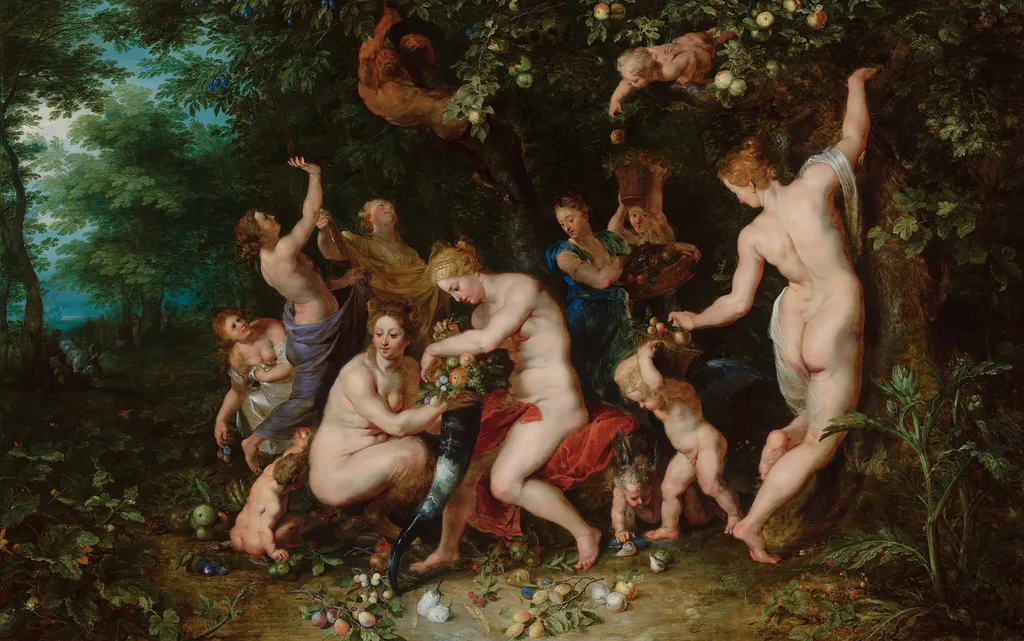
Nymphs filling the horn of plenty is an oil painting by the Flemish Baroque painting artist Peter Paul Rubens. It dates from 1615 and is held in the collection of the Mauritshuis.
About this work
Subject & Meaning
Symbolically, the work represents abundance and the bounty of the harvest, emphasized by the overflowing basket and fruit trees.
The painting illustrates a mythological scene centered on nymphs filling a cornucopia, or horn of plenty. The composition features female figures, some depicted topless and with varying hair colors including chestnut and blond, engaged in gathering fruit and harvest elements. These nymphs are accompanied by putti and a bearded satyr within a rural landscape setting under a cloudy sky.
Symbolically, the work represents abundance and the bounty of the harvest, emphasized by the overflowing basket and fruit trees. The inclusion of figures in various states of dress reflects the classical tradition of depicting mythological gatherings in nature, while detailed naturalistic elements such as insect and bird wings enrich this allegory of plenty.
Technique & Style
Nymphs filling the horn of plenty is executed in oil paint on panel, a support consistent with the collaborative Flemish practice of the period. The composition is laid out on a horizontal panel measuring 67.5 cm in height by 107 cm in width, a format that accommodates the densely populated mythological scene.
The painting is attributed to Peter Paul Rubens working in collaboration with Jan Brueghel the Elder and Hendrick van Balen the Elder, a partnership in which Rubens traditionally contributed the figures while Brueghel supplied the still-life elements such as the fruit-laden cornucopia and surrounding harvest details. The handling reflects this division of labor: the nymphs, putti, satyr, and bearded male figure display Rubens's robust, fleshy modeling, while the meticulously rendered fruit, baskets, and landscape passages show the fine brushwork associated with Brueghel.
Stylistically, the work combines mythological narrative with a pastoral Arcadian setting and integrates detailed naturalism in the still-life components with the dynamic figural style typical of early seventeenth-century Antwerp collaboration.
History & Provenance
Created in 1615, this mythological panel painting was a collaboration involving Peter Paul Rubens, Jan Brueghel the Elder, and Hendrick van Balen the Elder. The work measures 67.5 by 107 cm and depicts nymphs filling a cornucopia in a rural landscape. It entered the collection of Willem V, Prince of Orange-Nassau, establishing an early provenance linked to the House of Orange, and later became part of the holdings of the Mauritshuis in The Hague, where it remains on display. No exhibition history beyond the museum's ongoing display is documented in the available sources.
Overview
Peter Paul Rubens, a prominent Flemish artist and diplomat, completed Nymphs filling the horn of plenty in 1615. This oil painting exemplifies the Flemish Baroque movement, known for its vibrant compositions and rich color. The work depicts a lively mythological scene centered on themes of abundance and fertility, featuring numerous figures. It is currently housed in the collection of the Mauritshuis.
Own this work as a print
Artist & collection
Artist
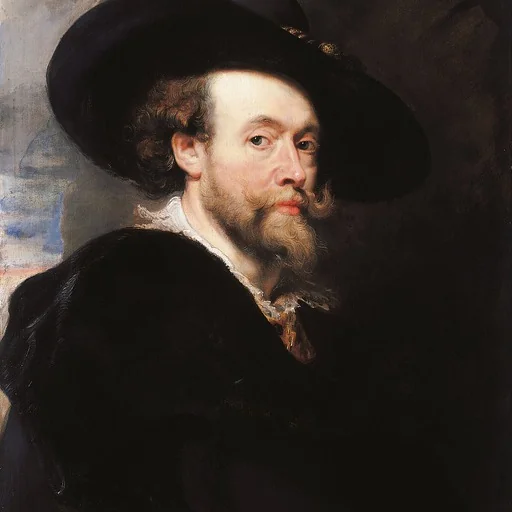
Sir Peter Paul Rubens ( ROO-bənz; Dutch:; 28 June 1577 – 30 May 1640) was a Flemish artist and diplomat.

 The Feast of the Gods
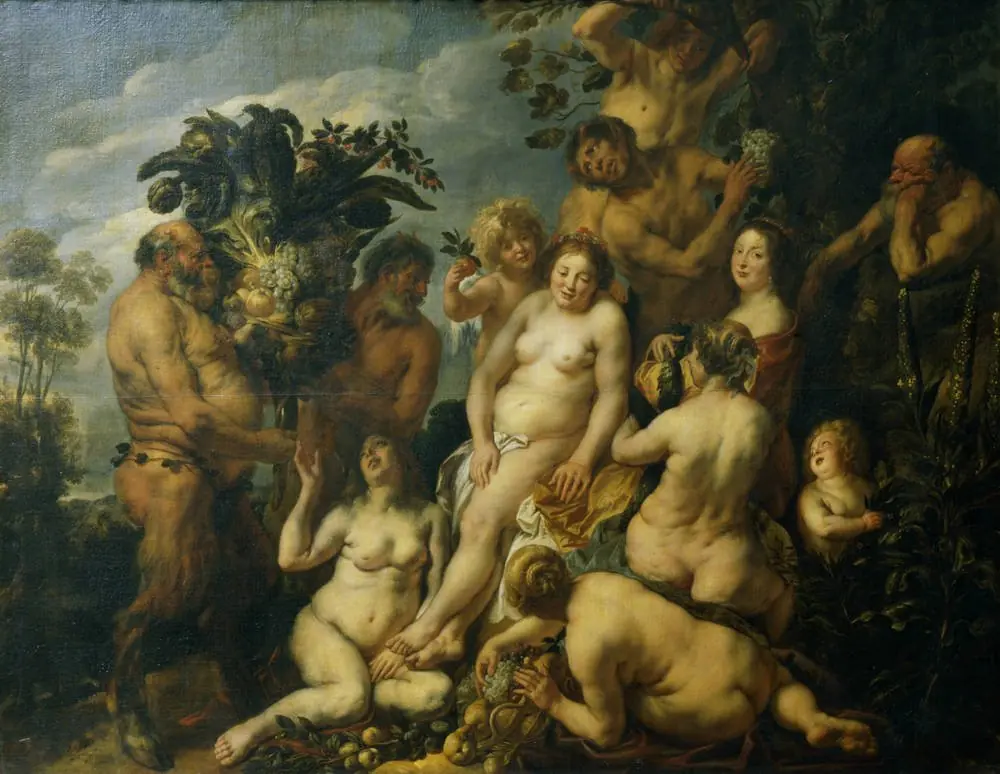 Allegory of Fertility
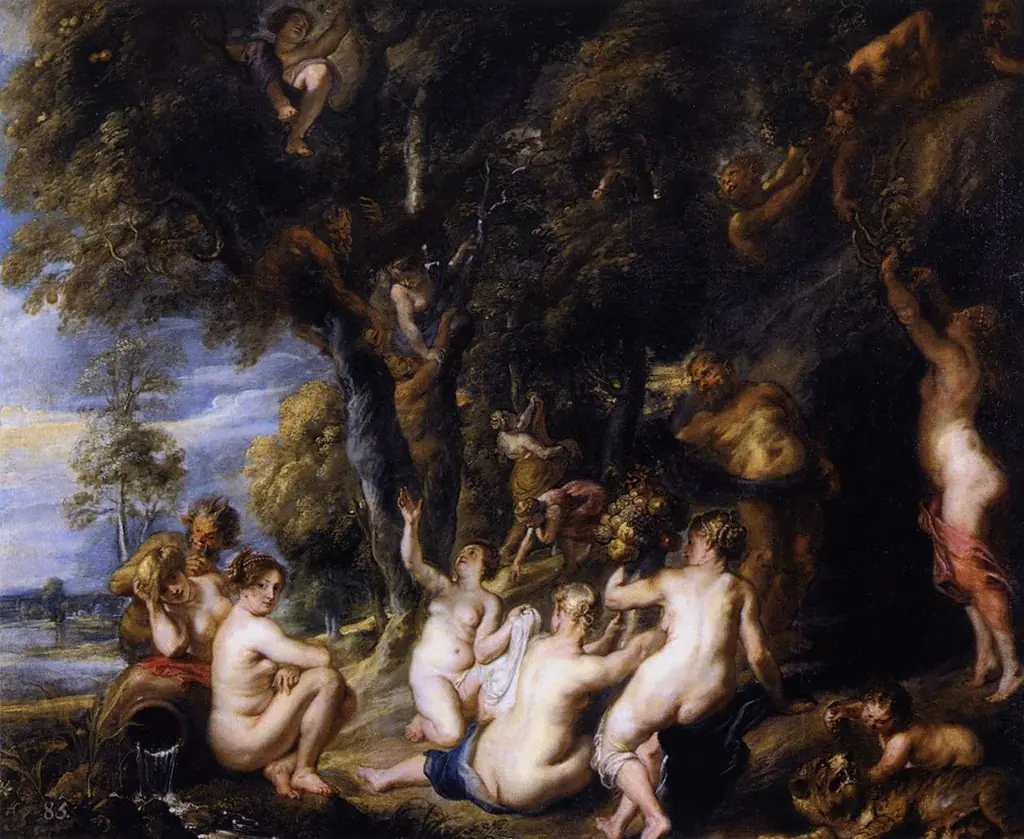
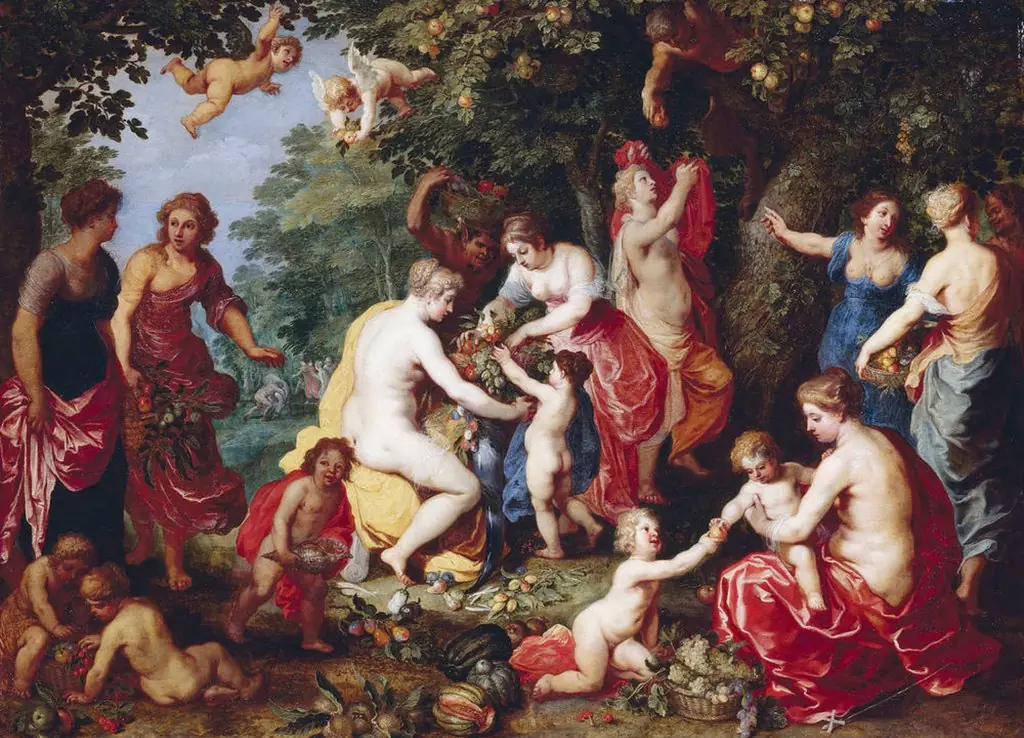 Nymphs and children under fruit trees (Naiads fill the cornucopia)
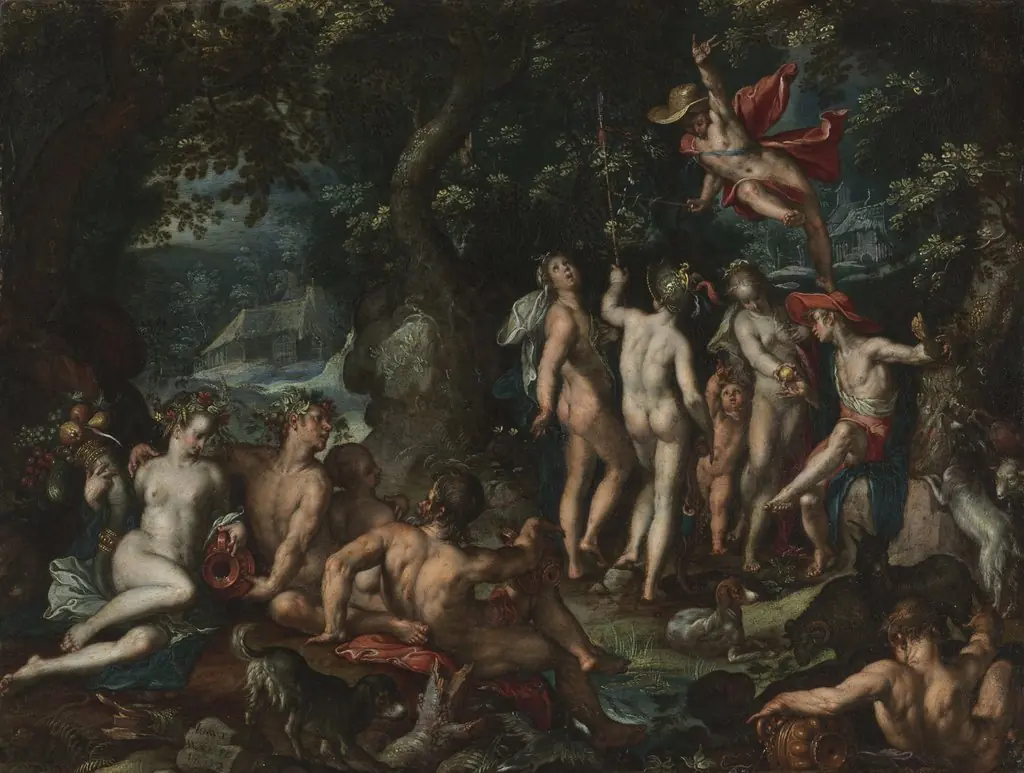 The Judgment of Paris
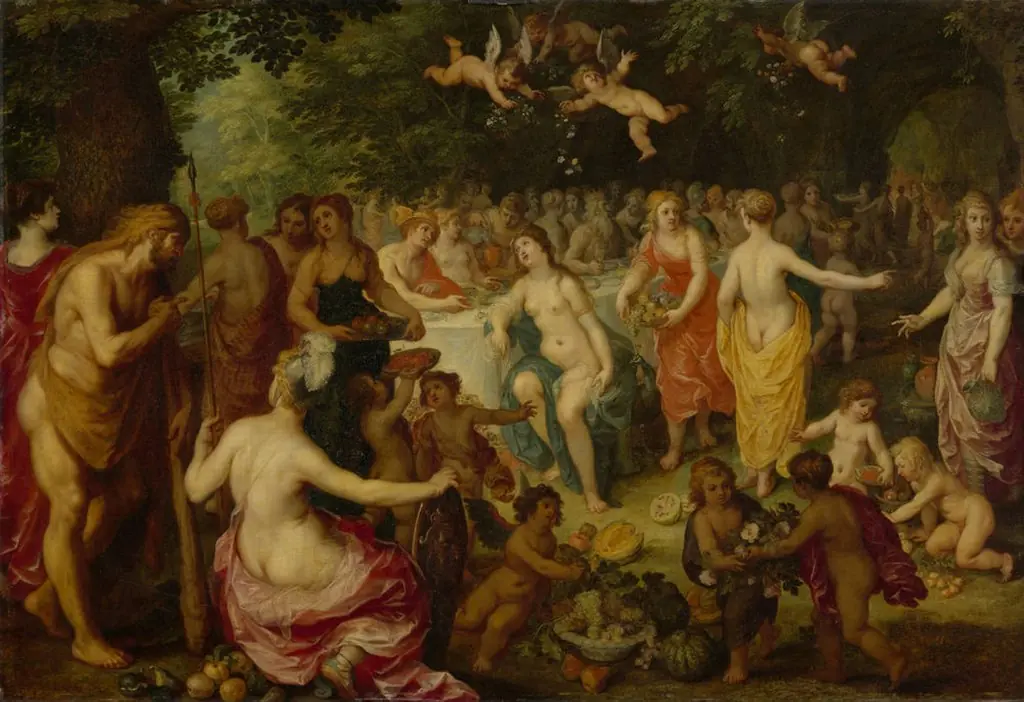
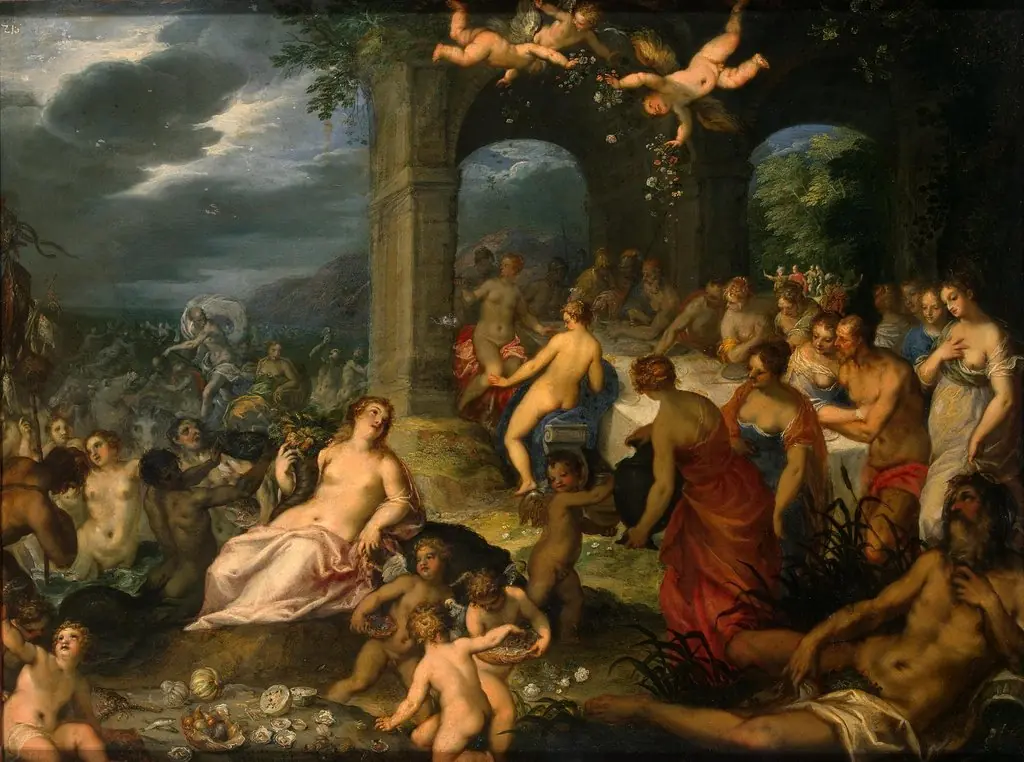 Feast of the Gods (The Marriage of Peleus and Thetis)
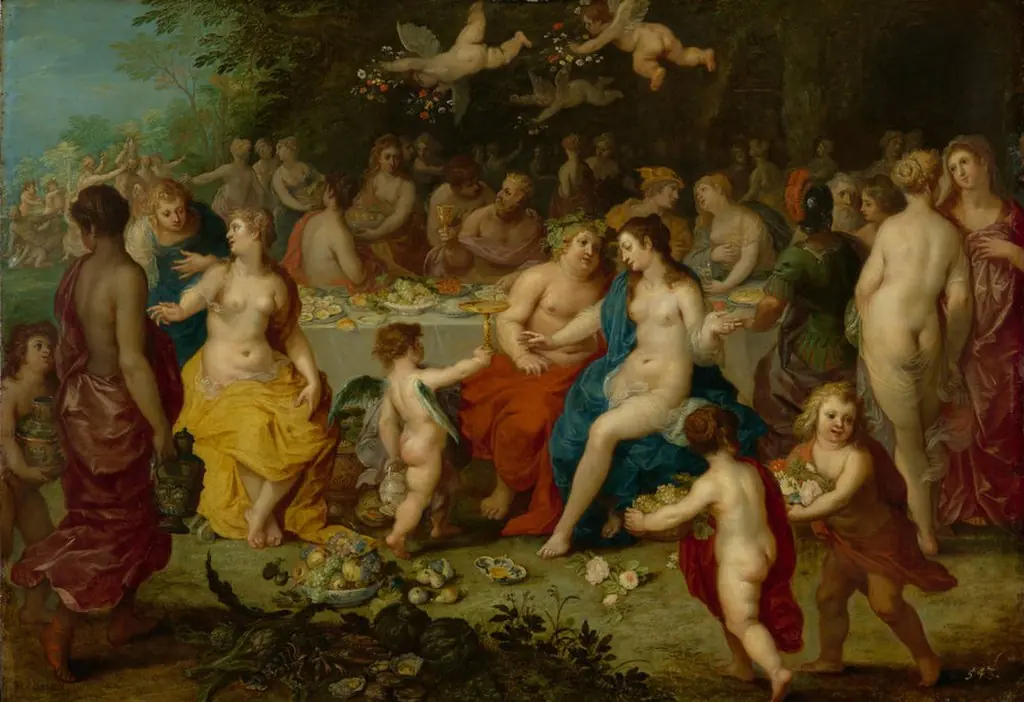 The wedding banquet of Bacchus and Ariadne
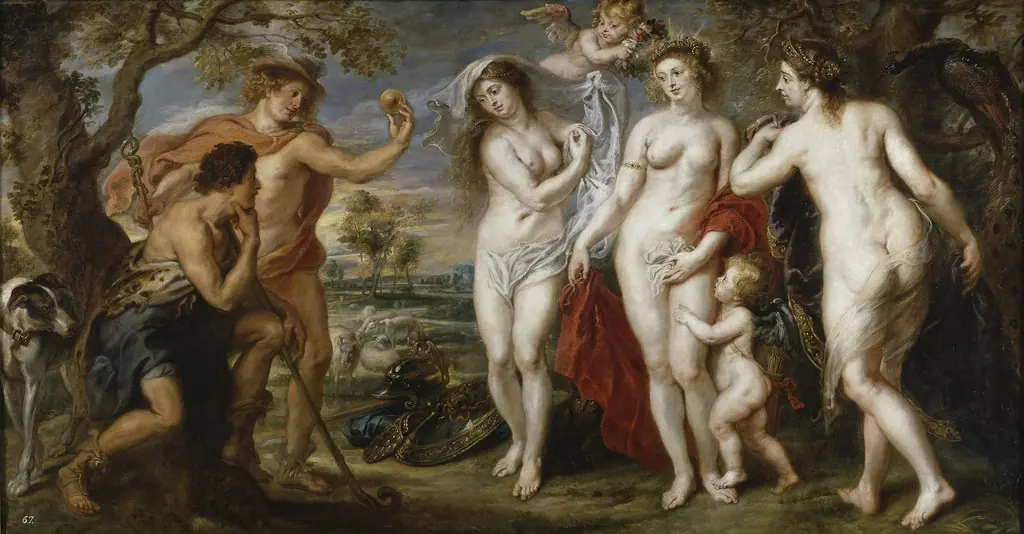 The Judgement of Paris
 The Feast of the Gods. The Wedding of Peleus and Thetis
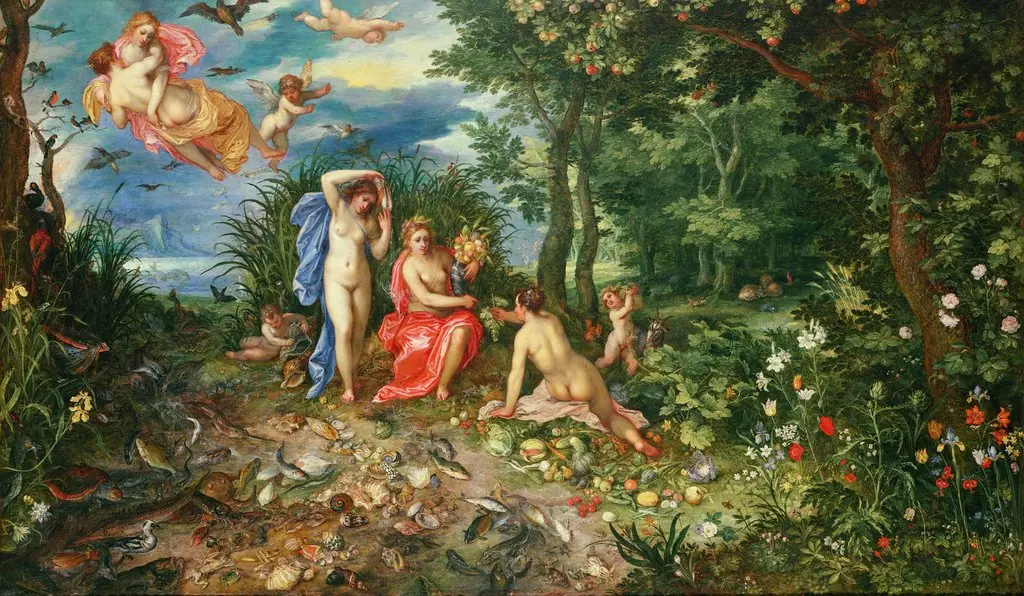 Ceres and the Four Elements
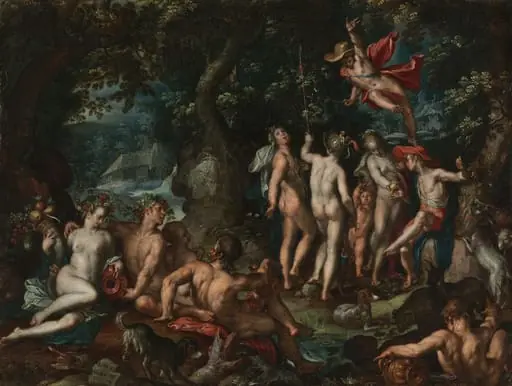 The Judgment of Paris