Artwork
Diana and her Nymphs Hunting
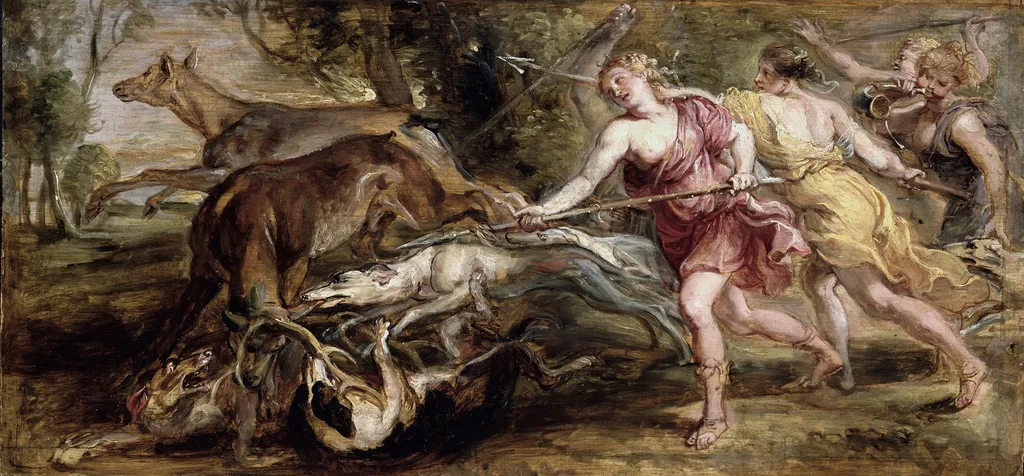
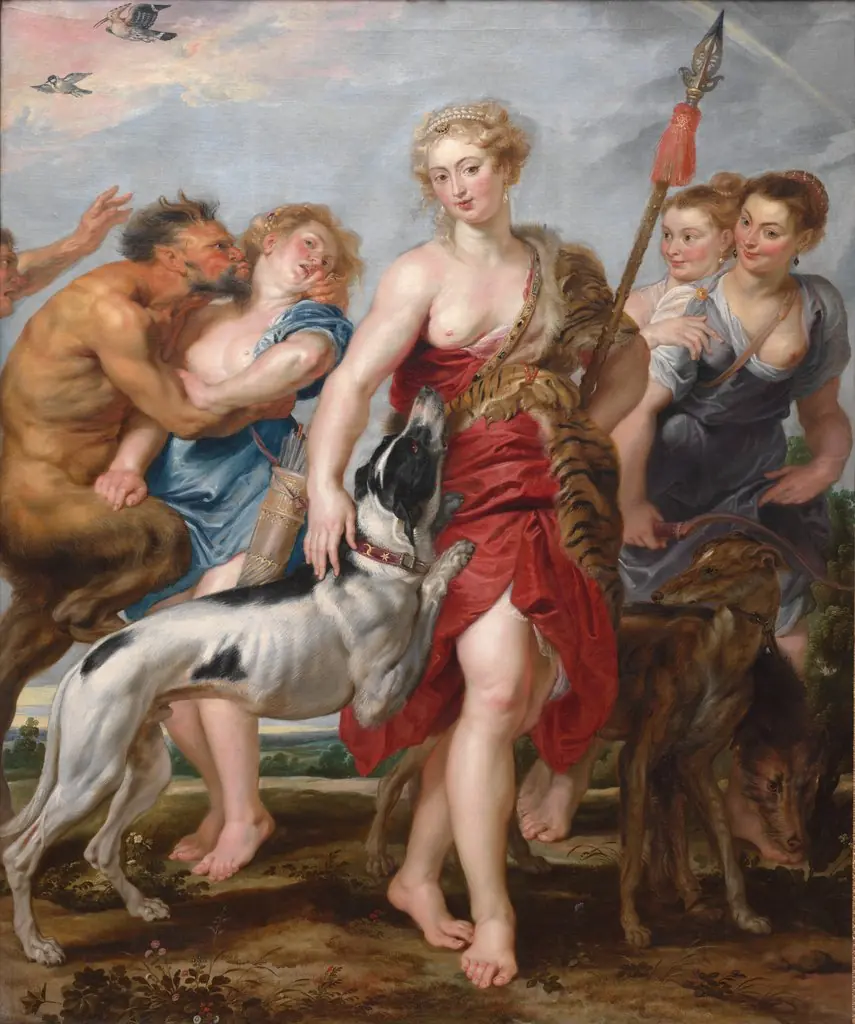
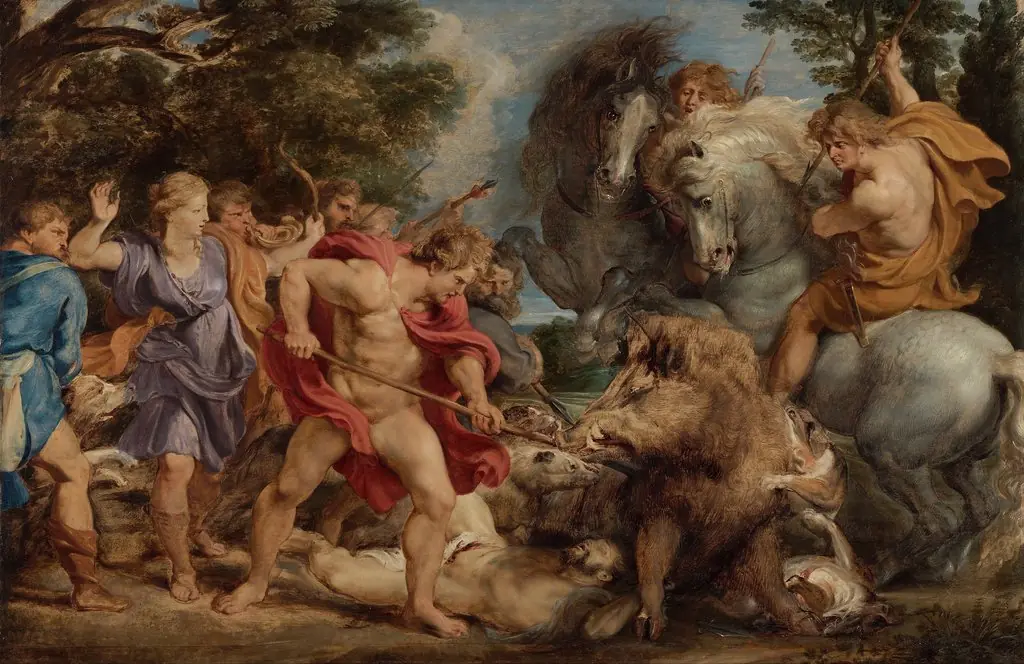
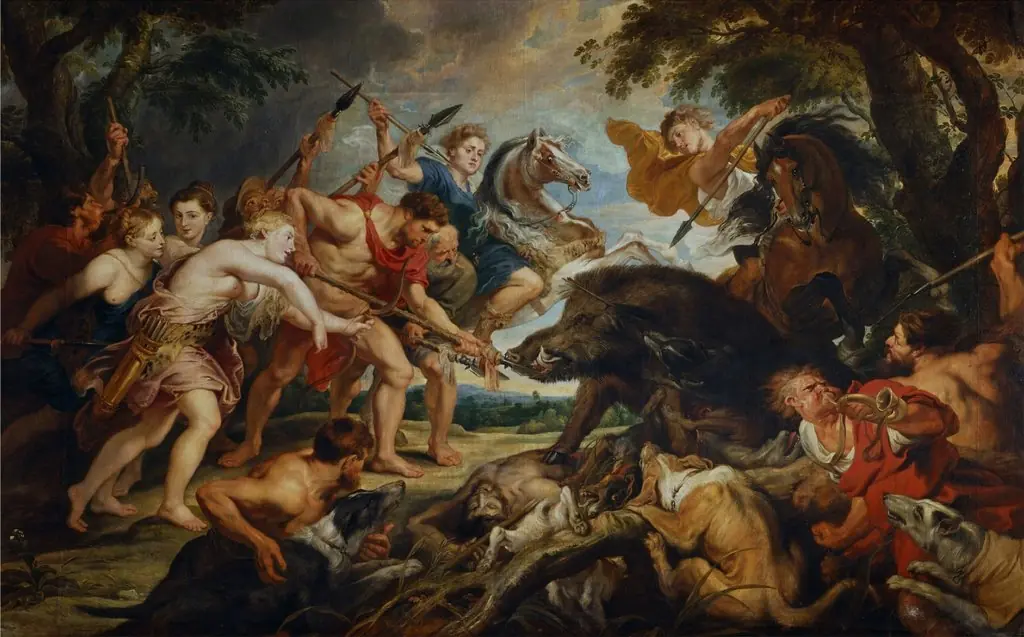
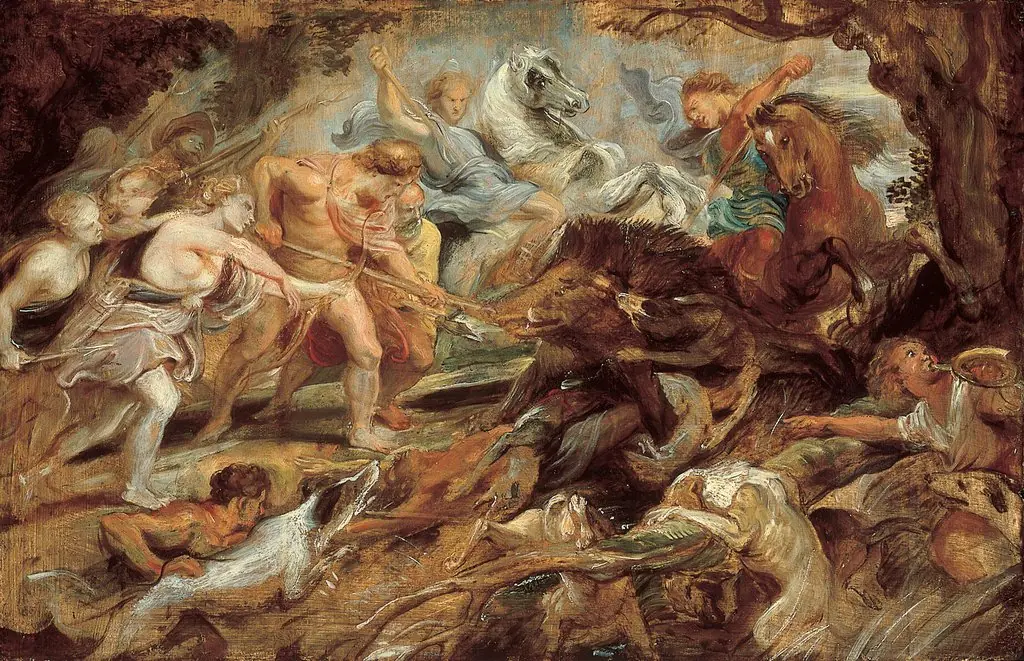
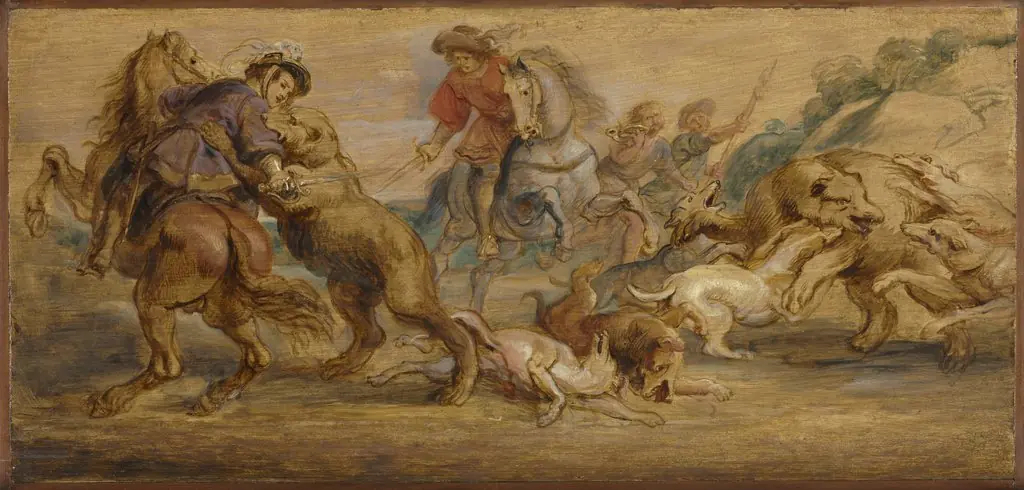
Diana and her Nymphs Hunting is an oil painting by the Flemish Baroque painting artist Peter Paul Rubens. It dates from 1636 and is held in the collection of the Museo del Prado.
About this work
Subject & Meaning
The painting depicts the Roman goddess Diana leading a group of nymphs on a hunt, a scene drawn from classical mythology.
The painting depicts the Roman goddess Diana leading a group of nymphs on a hunt, a scene drawn from classical mythology. In the composition, Diana is shown at the center, identifiable by her crescent-moon diadem and the silver bow she carries, while her nymphs accompany her as they pursue a stag through a dense forest. The stag functions as both quarry and focal point, guiding the viewer’s eye through the woodland glade.
Rubens renders the scene with dynamic movement, emphasizing the vigor of the hunt and the untamed vitality of nature. The presence of Diana and her nymphs underscores themes of chastity, the wild, and the untamed aspects of the natural world, aligning with Ovid’s depiction of Diana as a protector of the forest and its creatures.
Technique & Style
Diana and her Nymphs Hunting is executed in oil paint on an oak panel support. The work, created in 1636, measures 27.7 cm in height and 58 cm in width. As a mythological painting by Peter Paul Rubens, the piece depicts a hunting scene featuring Diana, nymphs, a stag, and a spear. The artwork is currently held in the collection of the Museo del Prado.
History & Provenance
Painted in 1636 by Peter Paul Rubens, Diana and her Nymphs Hunting is recorded as a finished work in that year.
The canvas entered the British aristocratic collection of Julius Wernher by 1902, before passing to his son Harold Augustus Wernher. By descent it remained with the Wernher family until it was acquired by the Spanish aristocrat Mariano Téllez-Girón y Beaufort Spontin. The painting was later transferred to the Museo del Prado, where it has been part of the permanent holdings since.
Diana and her Nymphs Hunting is held by the Museo del Prado. According to the collection data, the painting is also associated with Luton Hoo, indicating a provenance link to that English estate. Earlier ownership is traced to a sequence of private collectors, including Julius Wernher, Harold Augustus Wernher, and Mariano Téllez-Girón y Beaufort Spontin, before its accession into the Prado's holdings.
The work is catalogued as an oil-on-oak panel measuring 27.7 cm in height by 58 cm in width, painted in 1636.
No exhibition history beyond its current and prior ownership locations is documented in the available sources.
Overview
Peter Paul Rubens's 1636 oil painting, Diana and her Nymphs Hunting, exemplifies the Flemish Baroque style. It depicts the Roman goddess Diana and her companions engaged in a dynamic pursuit within a forest setting. This work showcases the artist's characteristic emphasis on vibrant color, energetic composition, and mythological themes, reflecting his significant influence within the Baroque tradition.
Artist & collection
Artist
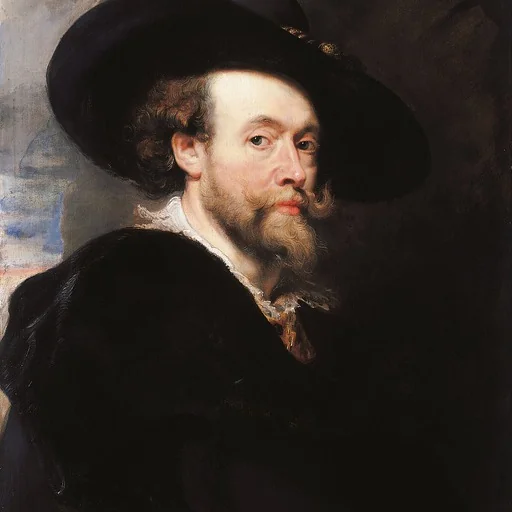
Sir Peter Paul Rubens ( ROO-bənz; Dutch:; 28 June 1577 – 30 May 1640) was a Flemish artist and diplomat.