Artwork
Cadmus sowing dragon's teeth
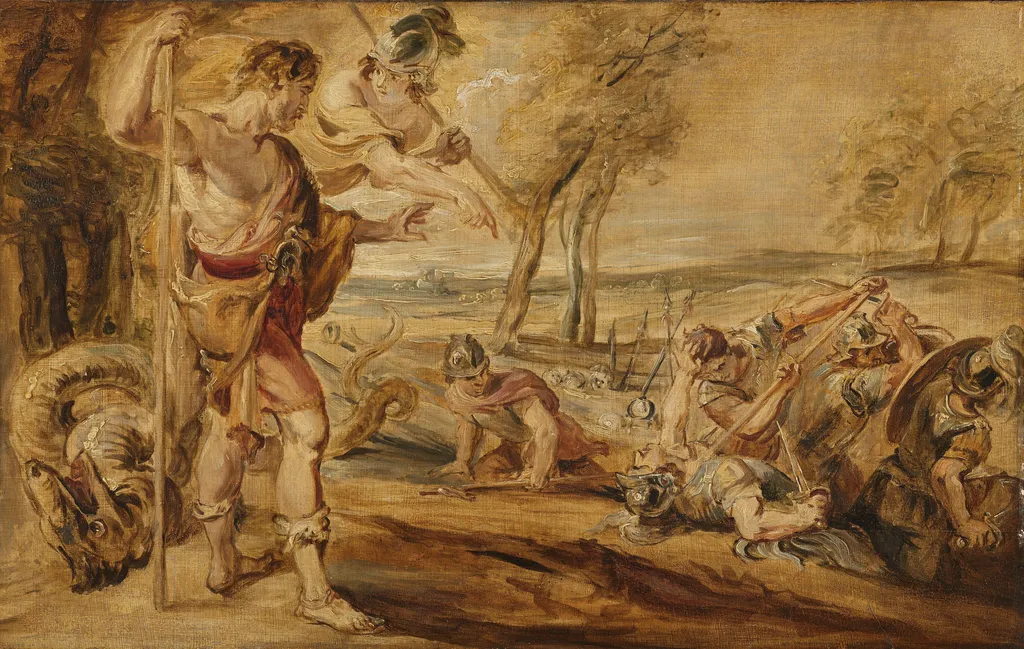
Cadmus sowing dragon's teeth is an oil painting by the Flemish Baroque painting artist Peter Paul Rubens. It is held in the collection of the Rijksmuseum.
About this work
Subject & Meaning
This narrative moment is derived from Ovid's Metamorphoses, specifically the account of Cadmus and Minerva found in Book III.
The painting illustrates the mythological figure Cadmus engaged in the act of sowing dragon's teeth. This narrative moment is derived from Ovid's Metamorphoses, specifically the account of Cadmus and Minerva found in Book III. The work functions as a mythological representation, visualizing the ancient story where the protagonist plants the teeth of a slain dragon, an act that subsequently leads to the emergence of armed warriors. By depicting this specific episode, the artwork captures a pivotal transformation within the classical legend.
Technique & Style
The work is executed on wood panel using oil paint, measuring 27.7 cm by 43.3 cm. It depicts the mythological scene of Cadmus sowing dragon's teeth, rendered in a Baroque style characteristic of Rubens' later period. The composition draws on the narrative of Ovid's Metamorphoses and was originally part of the collection of Franz Koenigs before entering the Rijksmuseum.
History & Provenance
The painting was created by Peter Paul Rubens in the Southern Netherlands, with its inception dated to 1650 and its composition derived from the Ovidian passage Metamorphoses III, 95–114, which Rubens had treated in an earlier work from 1636–1637. Executed in oil on panel, the work measures 27.7 by 43.3 cm. It subsequently entered the collection of Franz Koenigs and is now held by the Rijksmuseum.
The dating of 1650, recorded in both the internal catalogue and the Wikidata entry, postdates Rubens's death and is therefore taken to reflect a workshop or posthumous attribution rather than direct execution by the master.
The painting Cadmus sowing dragon's teeth by Peter Paul Rubens is held in the collection of the Rijksmuseum in Amsterdam. The work, executed on panel with oil paint in 1650, measures 27.7 cm in height and 43.3 cm in width. Historically, the piece was owned by Franz Koenigs before entering the museum's holdings.
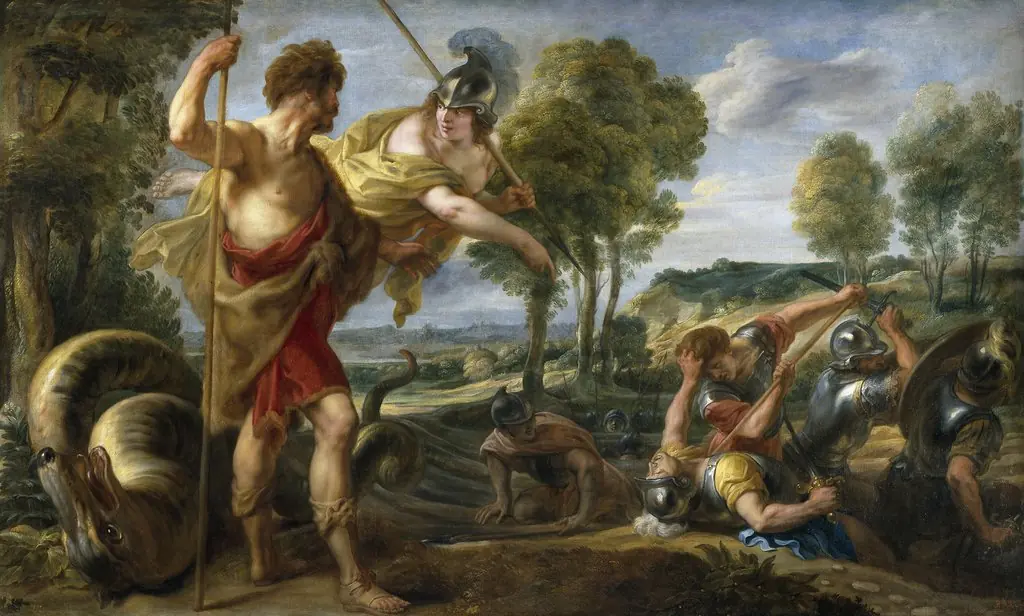
The artwork depicts the mythological figure Cadmus and is based on the narrative from Ovid's Metamorphoses (Book III, lines 95–114), specifically referencing Rubens's earlier composition Cadmus and Minerva created between 1636 and 1637.
Overview
Created circa 1650 by the Flemish Baroque painter Peter Paul Rubens, this panel‑size work portrays the myth of Cadmus sowing the dragon’s teeth. Executed in Rubens’s characteristic vigorous manner, the composition is now part of the Rijksmuseum’s collection. The painting captures a moment of sudden violence, with figures emerging from the ground amid a storm‑tossed seascape.
Context
Rubens’s interest in classical and biblical subjects placed him at the forefront of the Flemish Baroque movement, which prized dramatic narrative and dynamic composition. This painting aligns with his broader series of history paintings that reinterpret ancient myths for a 17th‑century audience, reflecting contemporary tastes for theatricality and moral allegory.
Own this work as a print
Artist & collection
Artist
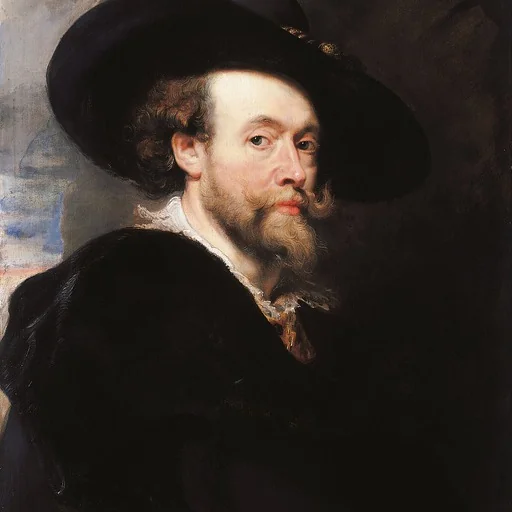
Sir Peter Paul Rubens ( ROO-bənz; Dutch:; 28 June 1577 – 30 May 1640) was a Flemish artist and diplomat.

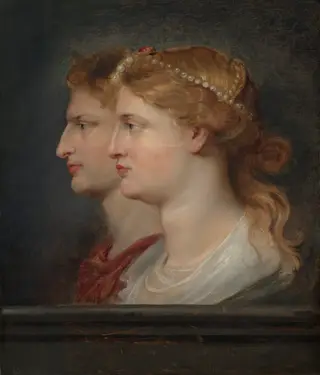
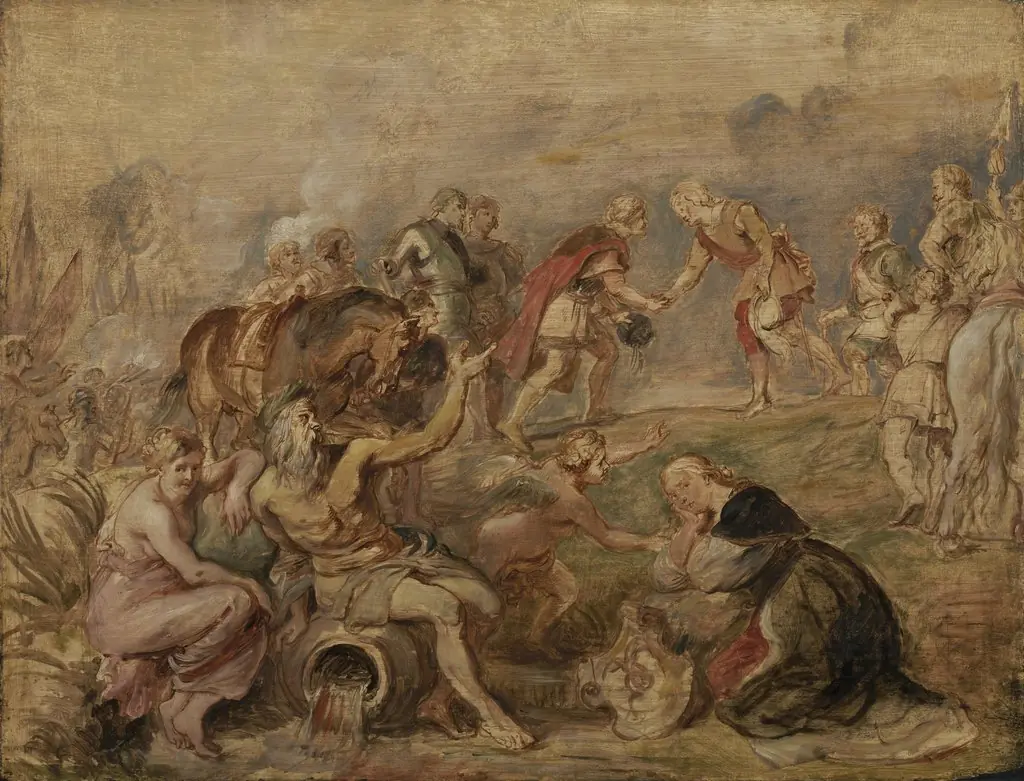 Meeting of King Ferdinand of Hungary and the Cardinal-Infante Ferdinand of Spain at Nördlingen
 The Meeting of David and Abigail
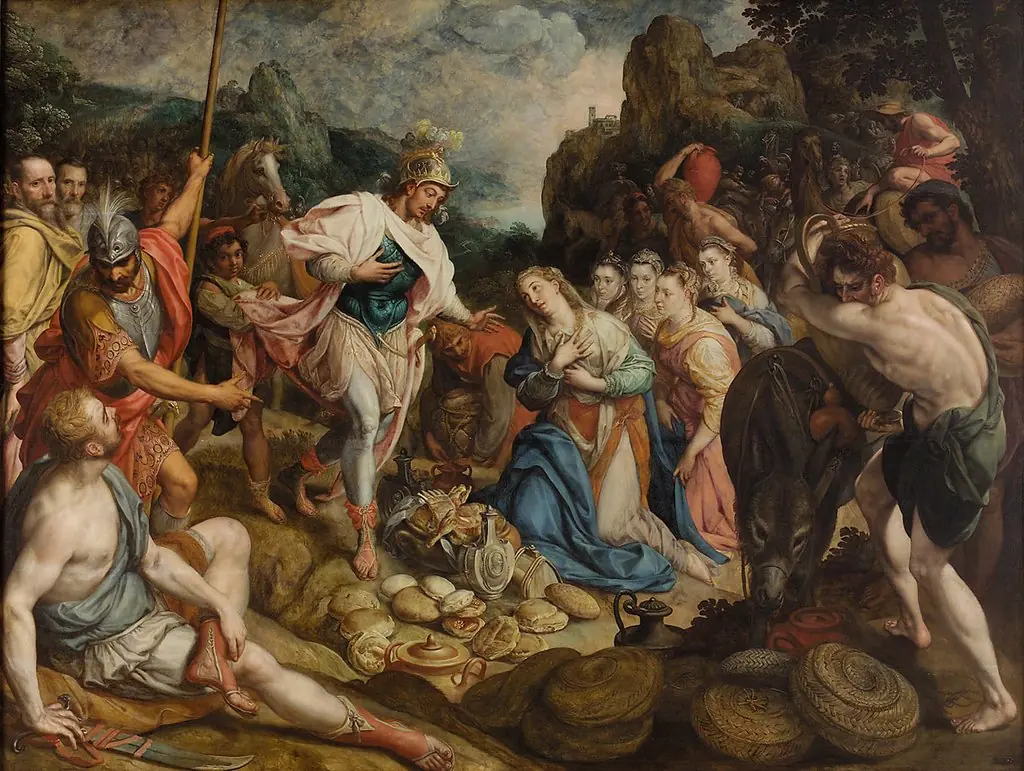 David and Abigail
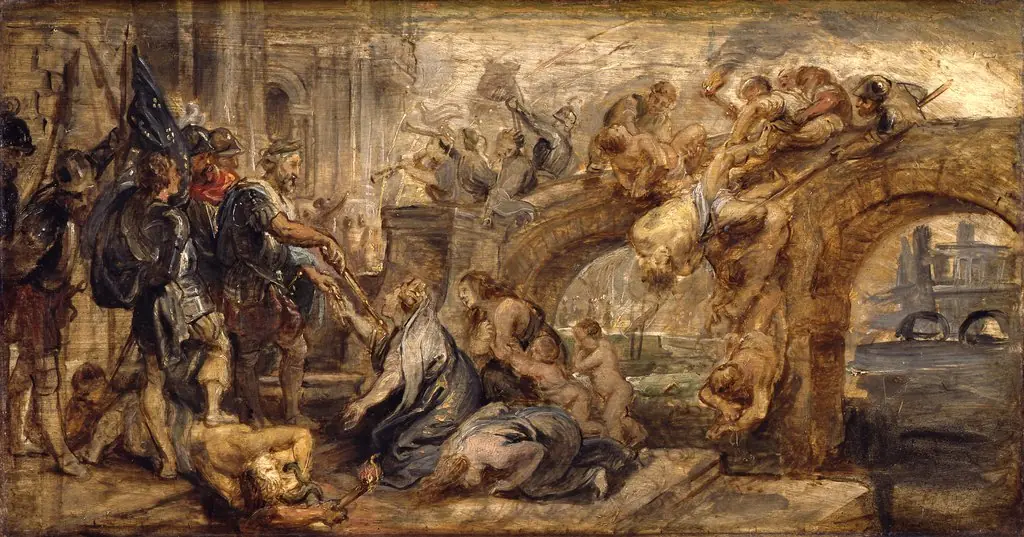 The Entry in Paris by Henry IV
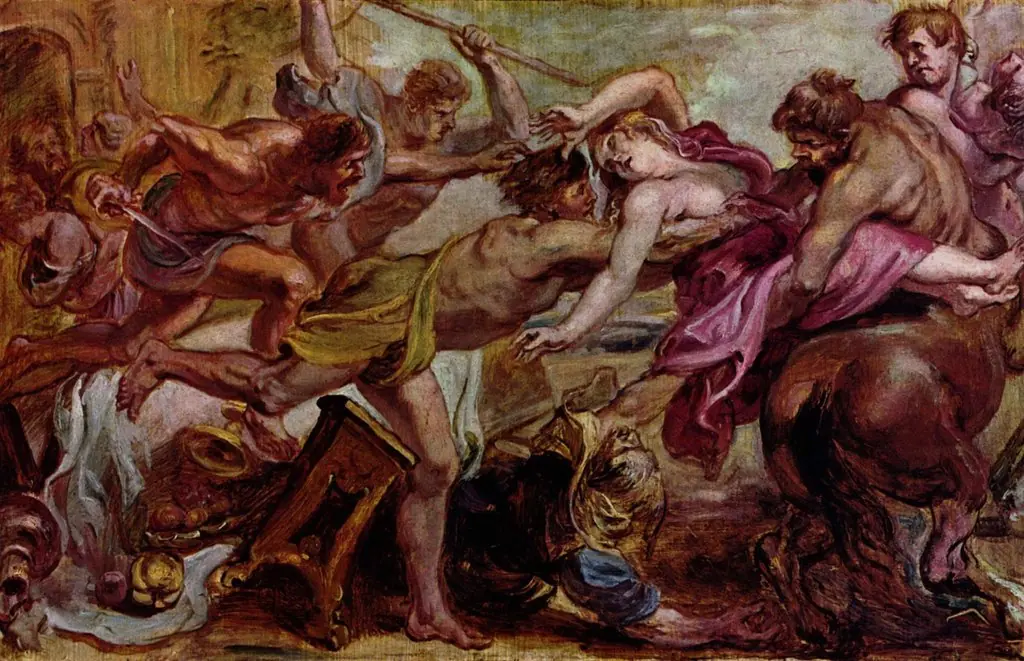 The Rape of Hippodamia
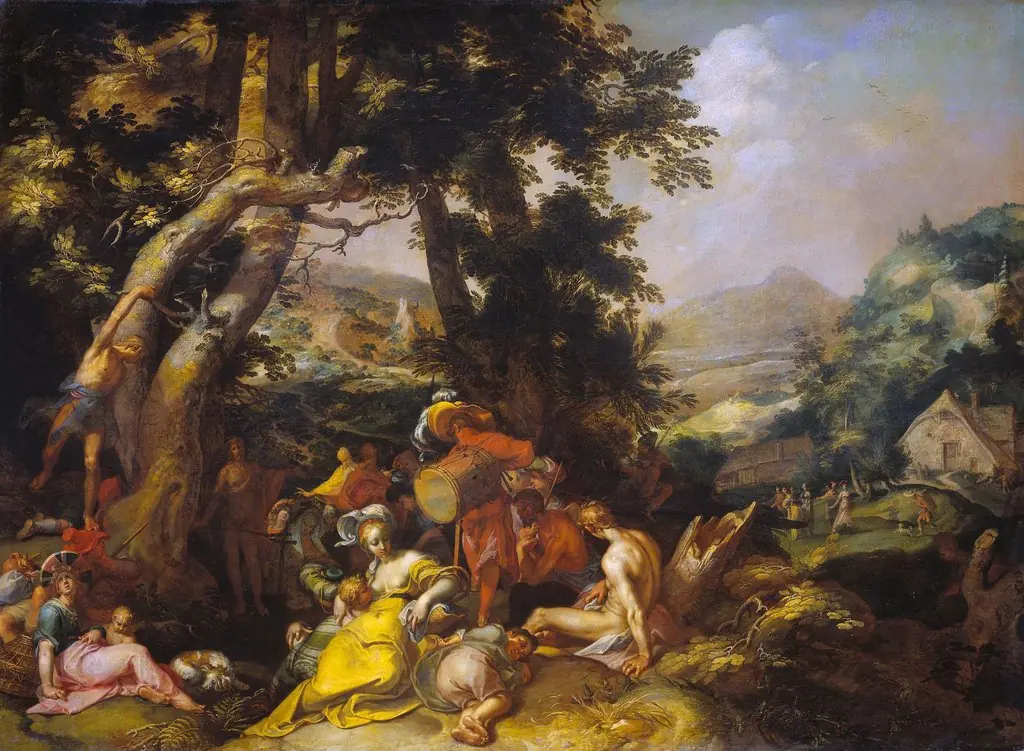 Landscape with the Ministry of John the Baptist
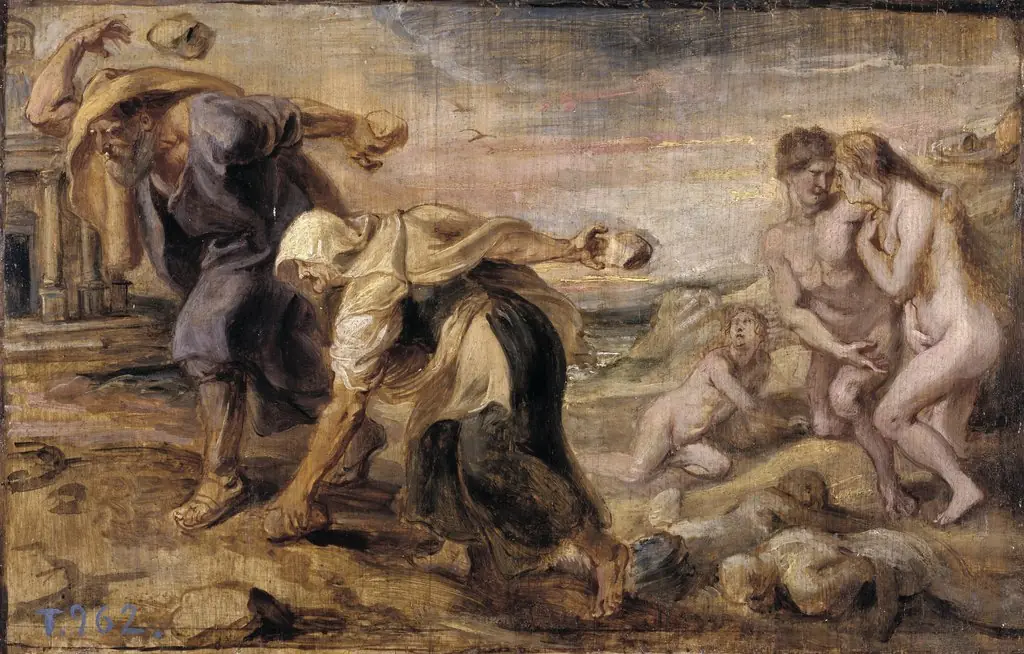 Deucalion and Pyrrha
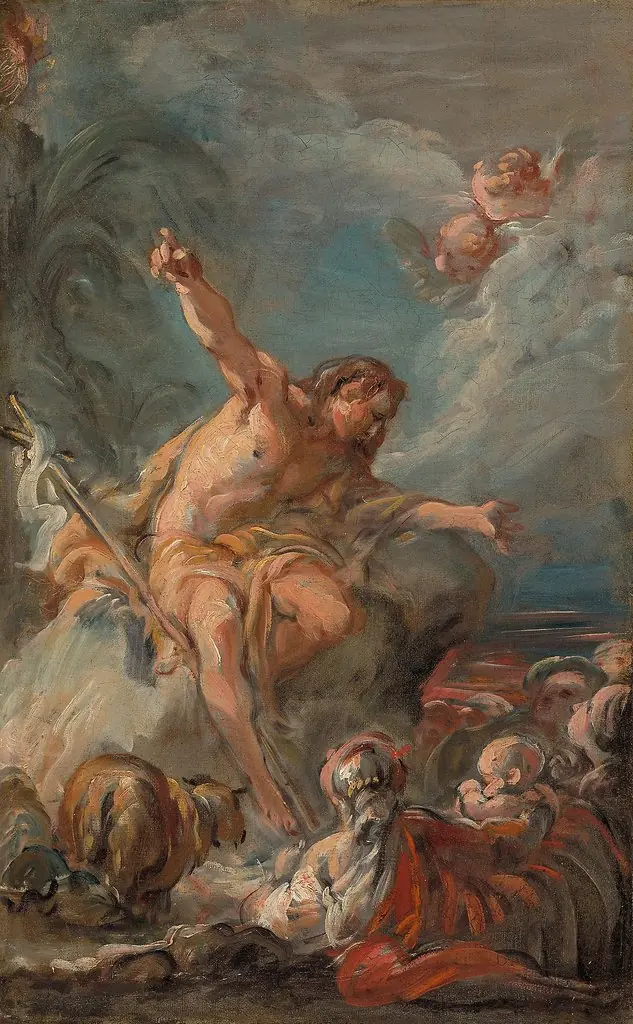 Saint John the Baptist Preaching in the Desert
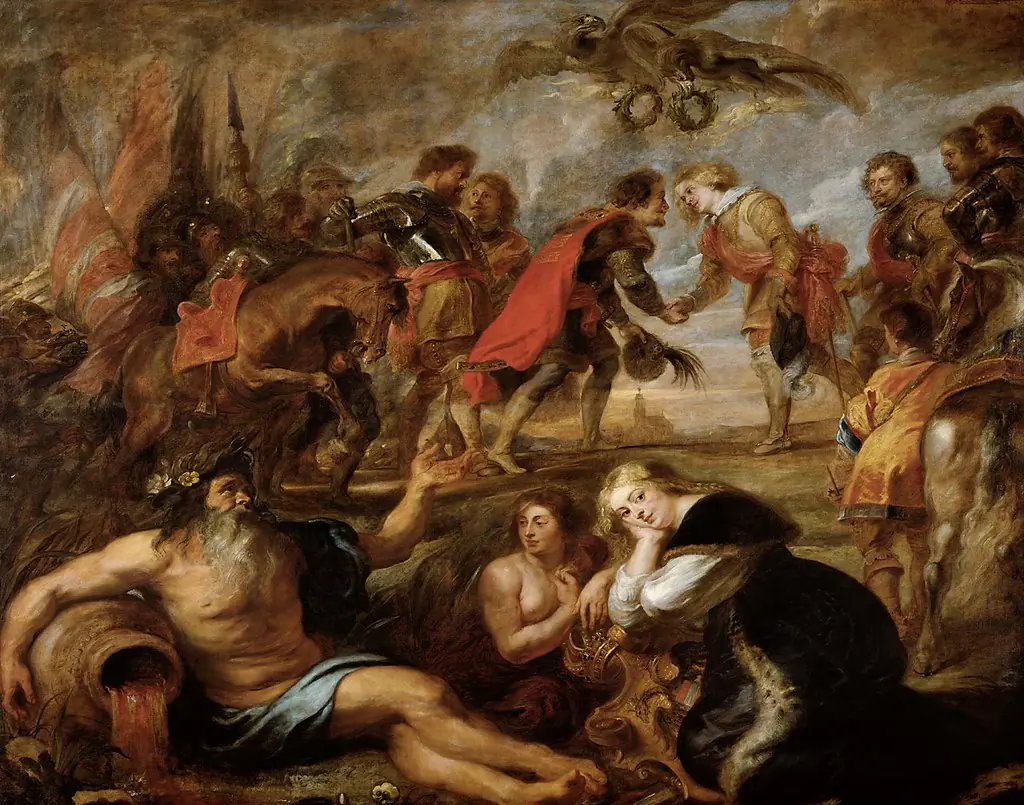 Meeting of King Ferdinand and Cardinal-infante Ferdinand at Nördlingen
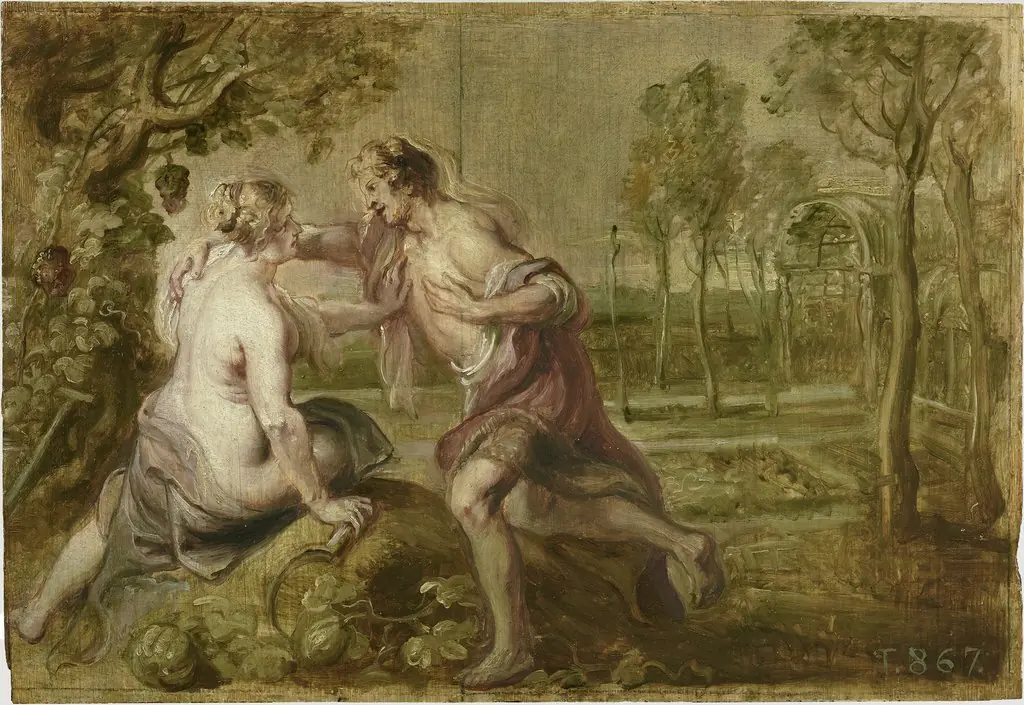 Vertumnus and Pomona
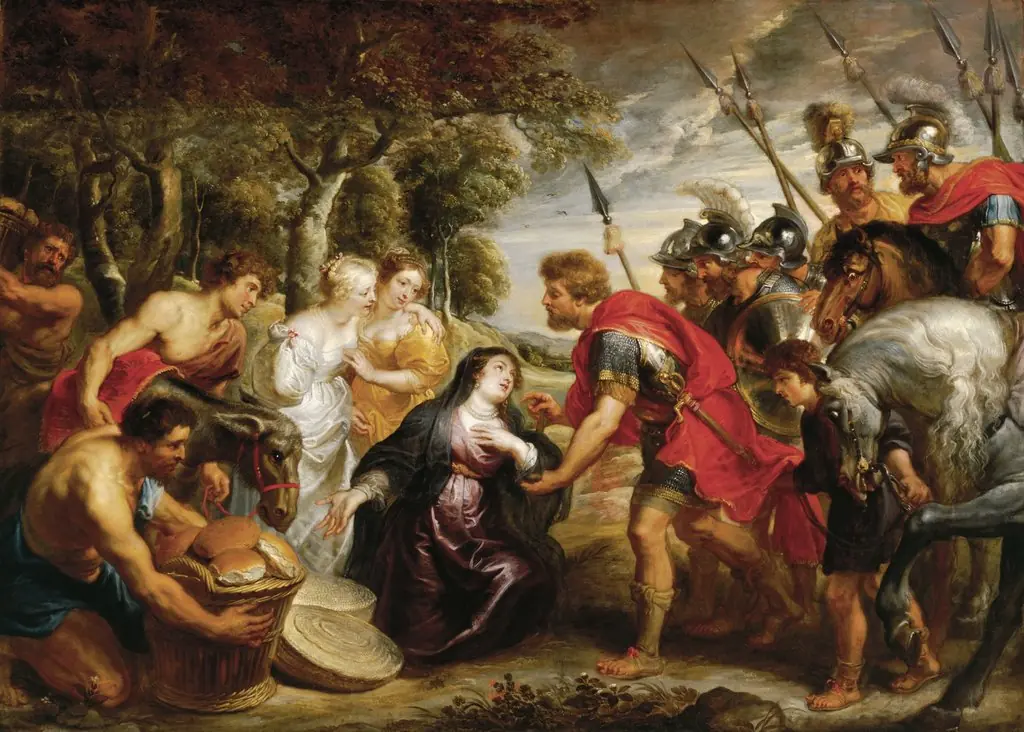 The Meeting of David and Abigail
- Cadmus and Minerva