Artwork
Leda and the Swan
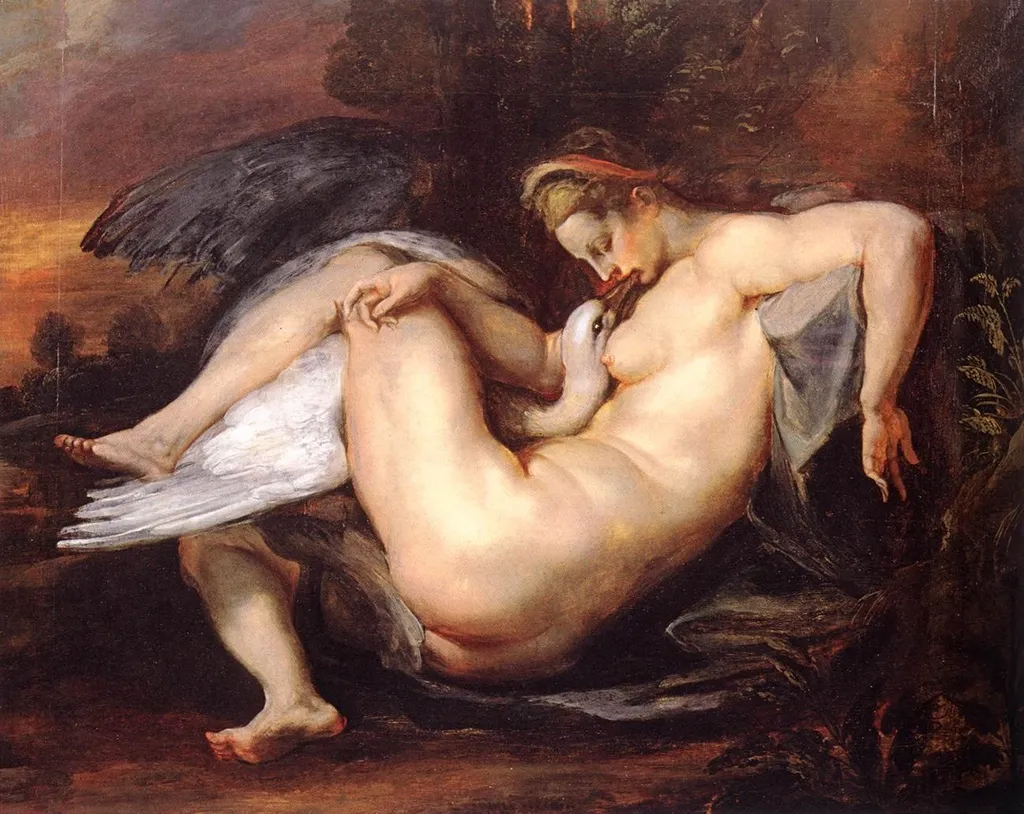
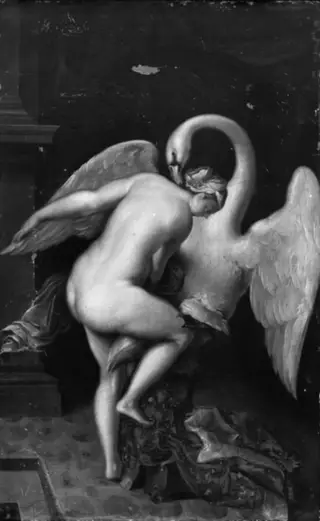
Leda and the Swan is an oil painting by the Flemish Baroque painting artist Peter Paul Rubens. It dates from 1601 and is held in the collection of the Museum of Fine Arts, Houston.
About this work
Technique & Style
The 1601 version is characterized by looser brushwork, reduced detail, a muted palette, and minimal landscape, with green drapery beneath the figure.
Leda and the Swan is executed in oil paint on panel and measures 64.5 by 80.5 cm. The 1601 version is characterized by looser brushwork, reduced detail, a muted palette, and minimal landscape, with green drapery beneath the figure. X-ray analysis indicates the panel was originally painted in an elliptical format that cropped the left elbow and part of the right foot; it is now presented in a rectangular format. Stylistically, Rubens departs from his Michelangelo model by rendering Leda with curvaceous, soft proportions, looser hair, and naturalistic anatomy rather than Michelangelo's harder, more muscular, masculine-appearing female form.
The figure is fully nude, with the swan's neck cradled between her breasts in an explicitly erotic composition.
History & Provenance
Peter Paul Rubens created two versions of Leda and the Swan, with the first completed in 1601 and the second in 1602. The 1601 work was produced during Rubens's journey to Italy, where he traveled to Rome to study and copy the works of leading Italian Renaissance masters. In Rome, he encountered Michelangelo's now-lost painting of the same subject, which served as the direct prototype for his own compositions.
X-ray analysis of the 1601 painting reveals it was initially planned as an ellipse that would have cropped the left elbow and part of the right foot, but the final executed format is rectangular.
The 1601 oil painting Leda and the Swan by Peter Paul Rubens is held in the collection of the Museum of Fine Arts, Houston. The work, executed on panel, measures 64.5 cm in height and 80.5 cm in width. The museum's holding represents the first of two versions Rubens created of this mythological subject, distinguished by looser brushwork and muted colors compared to his later 1602 iteration.
Context
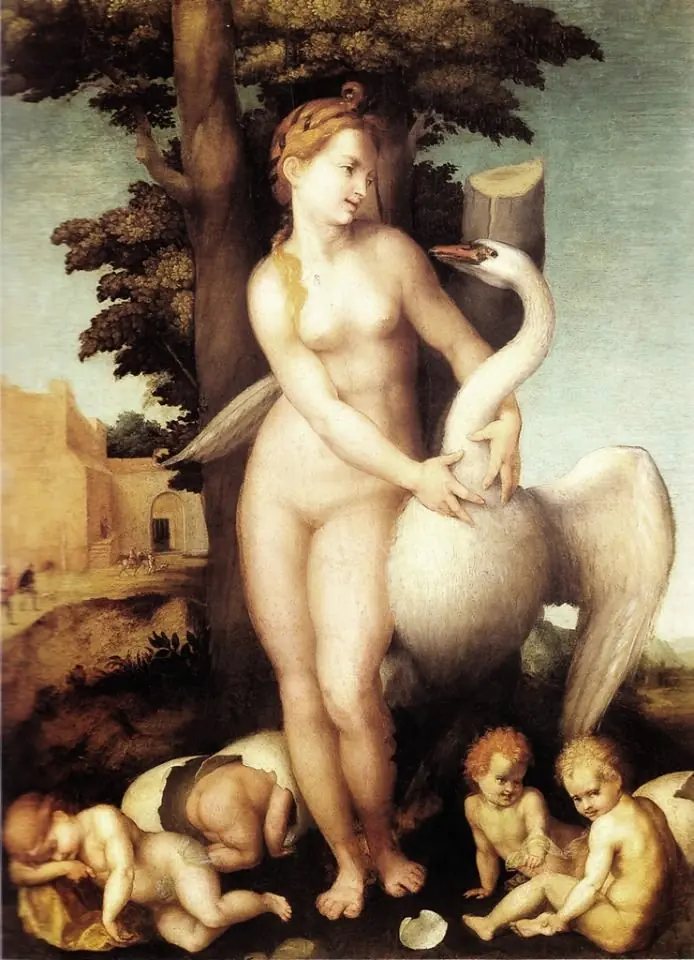
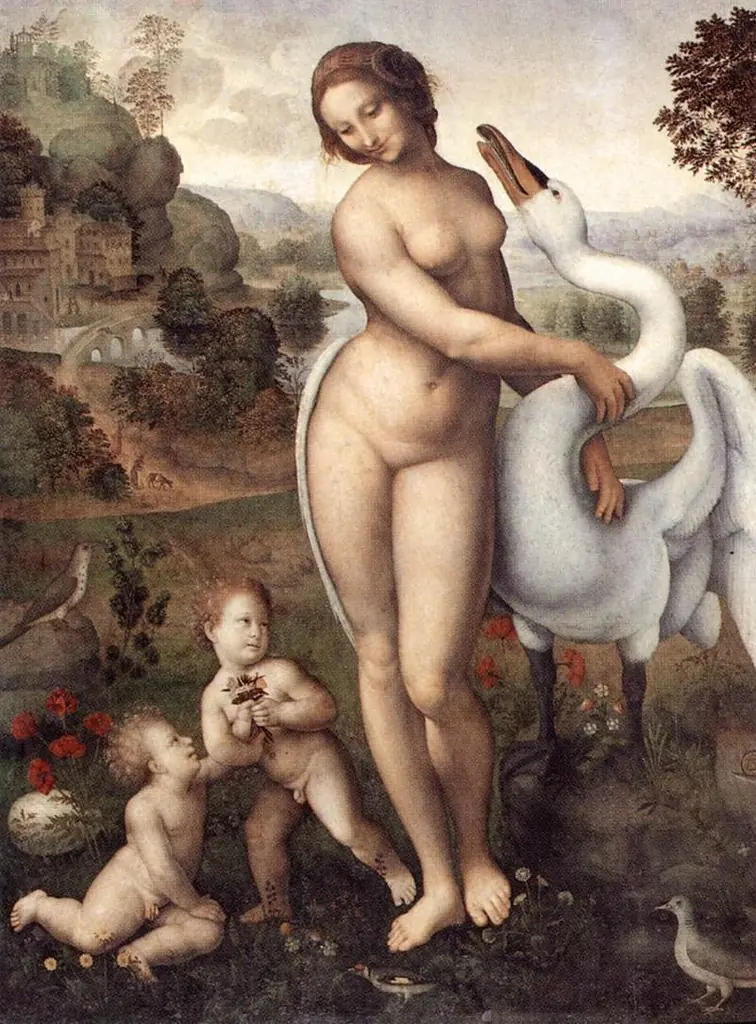
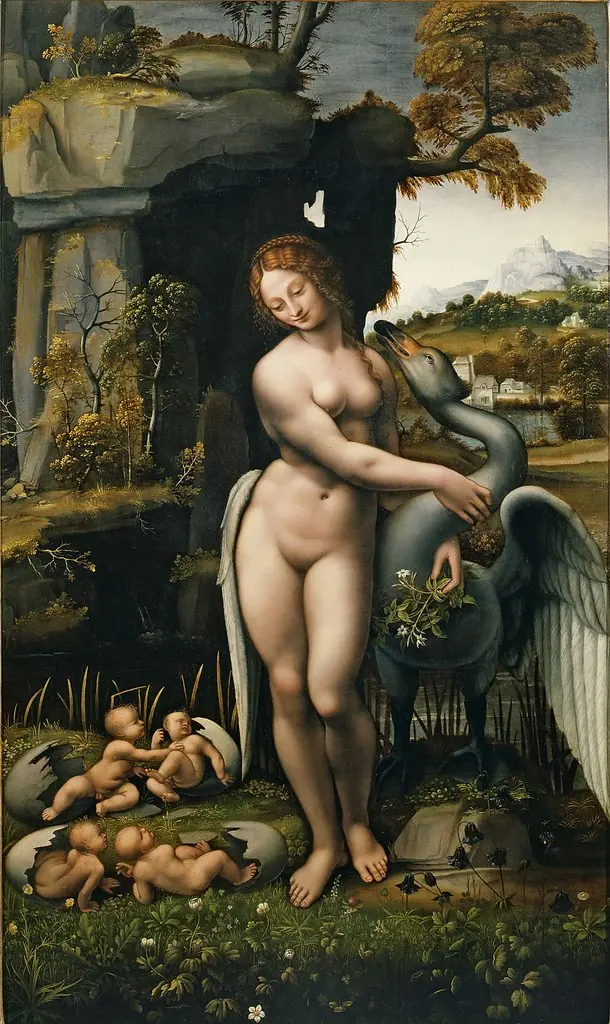
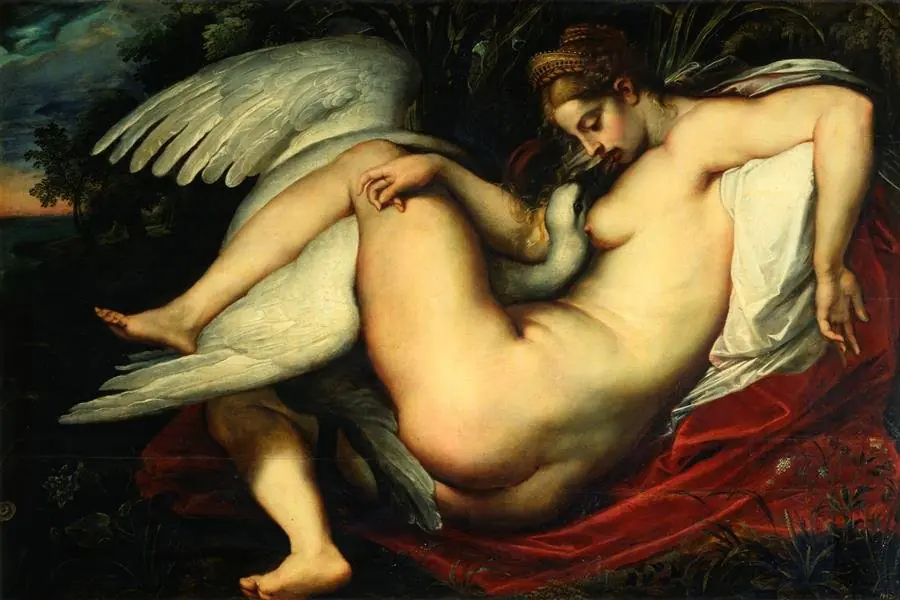
Peter Paul Rubens produced two versions of Leda and the Swan in 1601 and 1602, both serving as variations on Michelangelo's lost composition which Rubens studied during his time in Rome. While the 1601 prototype closely mirrors Michelangelo's twisting posture and finger placement, it diverges significantly in style; Rubens replaced the Italian master's muscular, masculine figures with a softer, more curvaceous anatomy that foreshadowed his famous 'Rubenesque' ideal. Art historians note that the earlier work features looser brushstrokes, muted colors, and green drapery, whereas the 1602 iteration displays greater precision, vibrant hues, and elaborate details.
The painting sits within a broader Renaissance and Baroque tradition of depicting mythological abductions, often utilizing these narratives to explore female nudity and eroticism. Unlike Michelangelo, who depicted the moment of violation, Rubens presented the swan as a graceful yet ravishing figure caressing Leda. This approach, combining classical archaeological memory with a distinctively voluptuous aesthetic, cemented the work's status as a key example of how Northern artists reinterpreted Italian High Renaissance models.
Overview
Peter Paul Rubens created two oil paintings titled Leda and the Swan, dating from 1601 and 1602. This mythological subject depicts the Spartan queen Leda in an encounter with Zeus, who has transformed into a swan. The artwork showcases Rubens's early engagement with classical themes and his developing artistic style during his formative years in Italy.
Subject & Meaning
The painting portrays a nude Leda in a relaxed posture, her right arm gently encircling the swan's neck. Her left arm is bent, and she wears a headband, with her chestnut hair visible. The swan's wings are broadly spread, its beak positioned near her face, suggesting an intimate interaction.
The dark background, featuring subtle trees and foliage, enhances the focus on the figures, conveying a sense of calm and private encounter.
Legacy
Rubens's creation of Leda and the Swan directly reflects his studies in Italy, particularly his encounter with the works of Michelangelo. During his travels to Rome, Rubens sought to deepen his understanding of Italian Renaissance masters, making copies of significant artworks. Michelangelo's renowned, though now lost, painting of Leda and the Swan served as a crucial prototype for Rubens's interpretations of the subject.
Artist & collection
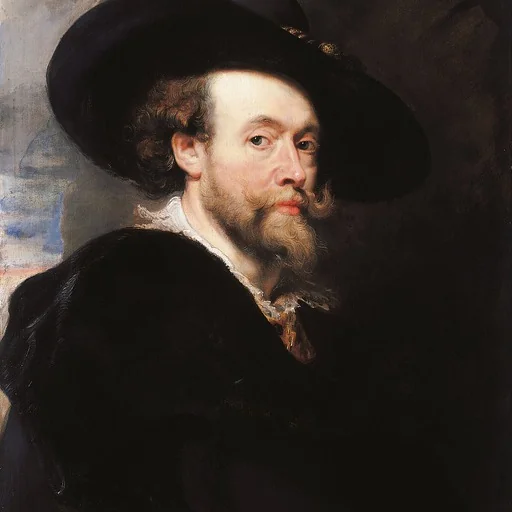
Artist
Sir Peter Paul Rubens ( ROO-bənz; Dutch:; 28 June 1577 – 30 May 1640) was a Flemish artist and diplomat.