Artwork
Orpheus and Eurydice
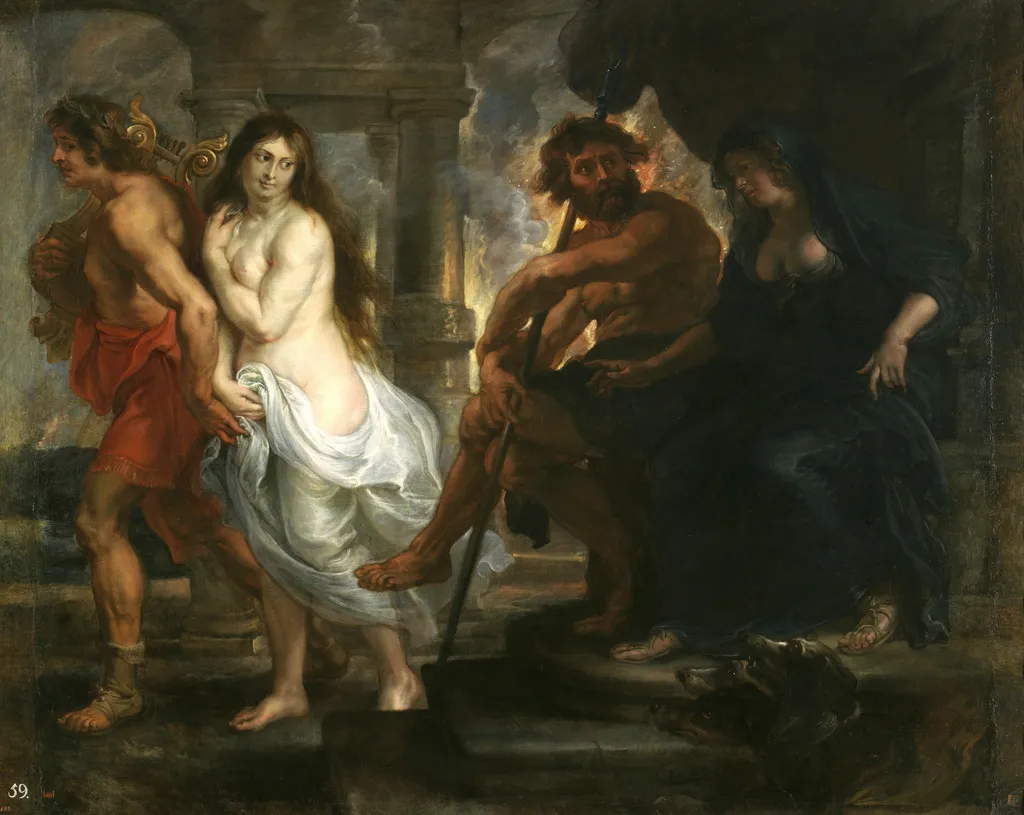
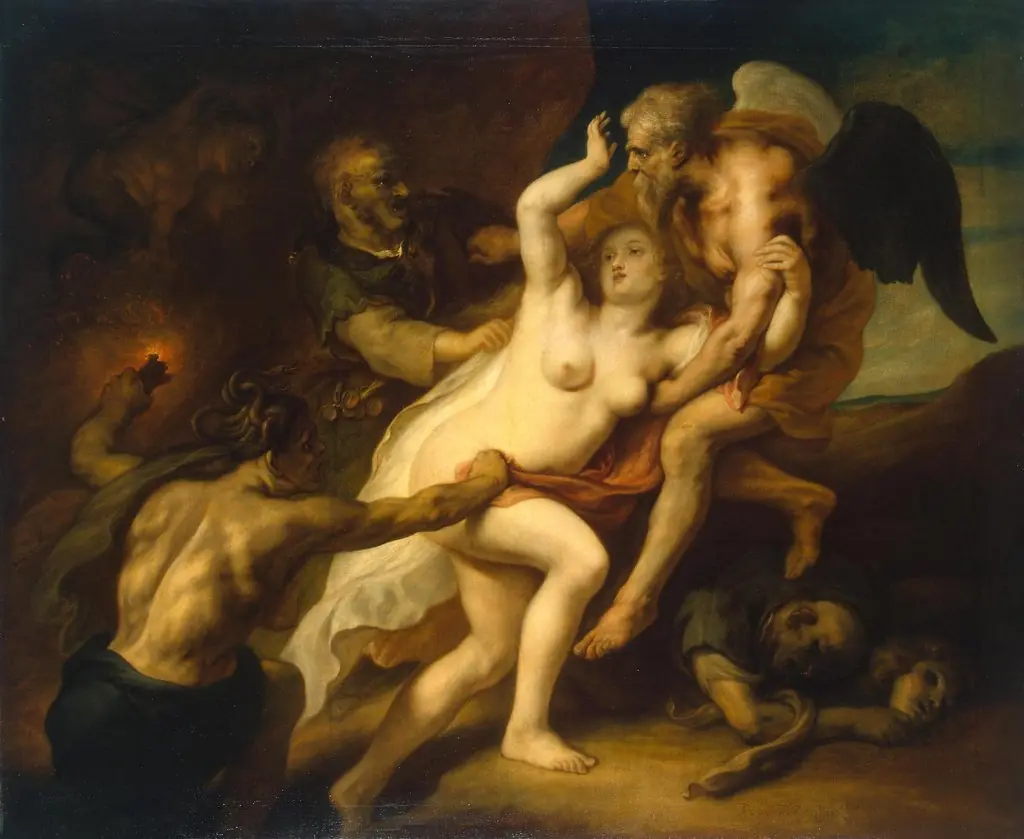
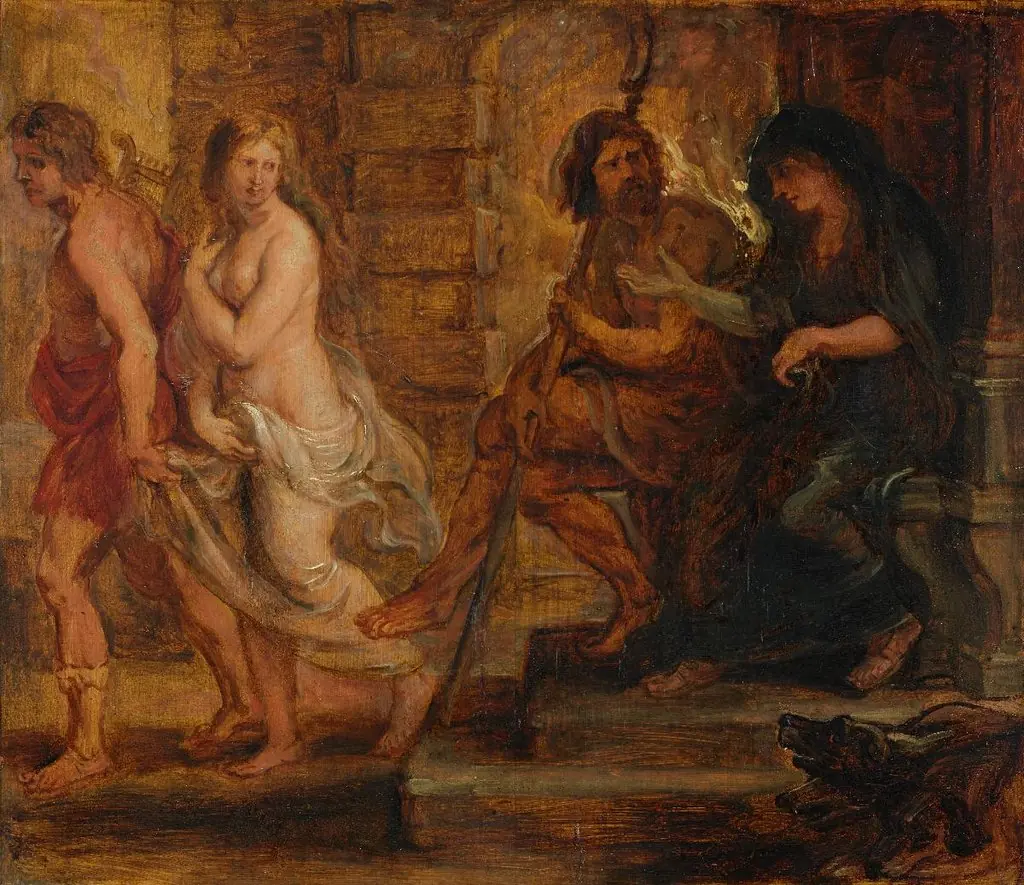
Orpheus and Eurydice is an oil painting by the Flemish Baroque painting artist Peter Paul Rubens. It dates from 1636 and is held in the collection of the Museo del Prado.
About this work
Subject & Meaning
The work visually interprets the specific episode from Ovid's Metamorphoses where the musician guides his spouse from Hades toward the living world.
Peter Paul Rubens's 1636 oil painting illustrates the mythological narrative of Orpheus leading his wife Eurydice out of the underworld. The work visually interprets the specific episode from Ovid's Metamorphoses where the musician guides his spouse from Hades toward the living world. By depicting these two central figures, the composition captures the pivotal moment of their attempted rescue, embodying themes of love, loss, and the precarious boundary between life and death inherent in the classical tale.
Technique & Style
The work is executed in oil paint on canvas, measuring 196.5 cm in height by 247.5 cm in width. Executed in 1636, it belongs to the mythological painting genre and portrays the figures of Orpheus and Eurydice. The composition draws on the Ovidian narrative of Orpheus leading Eurydice from Hades, rendered with the characteristic dynamism and chiaroscuro of Rubens' mature style. The painting is housed in the Museo del Prado, where it remains on public view.
History & Provenance
Orpheus and Eurydice is an oil-on-canvas painting by Peter Paul Rubens, dated 1636. The work was created as a mythological piece depicting the story of Orpheus and Eurydice, drawing on the narrative from Ovid's Metamorphoses (Book X, lines 1-39). Measuring 196.5 cm in height by 247.5 cm in width, the painting is held in the collection of the Museo del Prado, where it remains located.
The sources do not provide details regarding the original commission, any intermediate ownerships, or the chain of custody prior to the painting's acquisition by the Museo del Prado.
Legacy
Rubens' 1636 oil painting Orpheus and Eurydice, depicting the mythological scene of Orpheus leading Eurydice from Hades, became part of the Museo del Prado's collection and established a significant precedent for Baroque representations of the myth. Its compositional intensity and emotional depth influenced later interpretations of the Orpheus legend across European art, particularly through Rubens' role in shaping mythological painting conventions in the 17th century. The work's presence in a major institutional collection reinforced the narrative's enduring prestige in art historical discourse.
Overview
Created in 1636 by the Flemish painter and diplomat Peter Paul Rubens, this oil on canvas portrays a moment from the myth of Orpheus and Eurydana. The composition is set in a shadowy, rocky interior where four figures are arranged around a central female figure in a white garment. The work is part of the Museo del Prado’s collection.
Context
Rubens frequently turned to classical mythology for his history paintings, integrating learned references with dynamic composition. This work aligns with his broader oeuvre that blends humanist scholarship with the exuberant visual language of the Baroque, illustrating the power of music and love against the inevitability of death.
Own this work as a print
Artist & collection
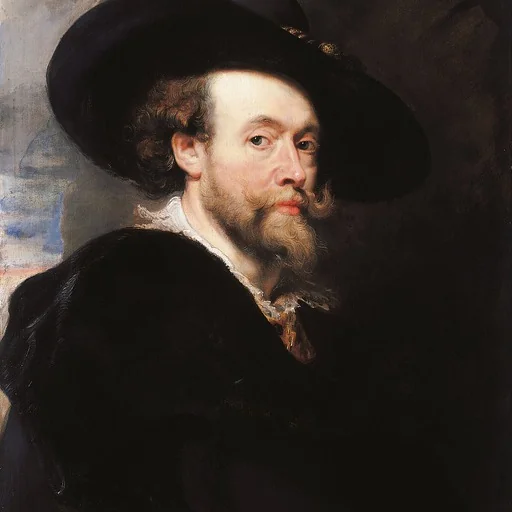
Artist
Sir Peter Paul Rubens ( ROO-bənz; Dutch:; 28 June 1577 – 30 May 1640) was a Flemish artist and diplomat.