Artwork
Nessus and Dejanira
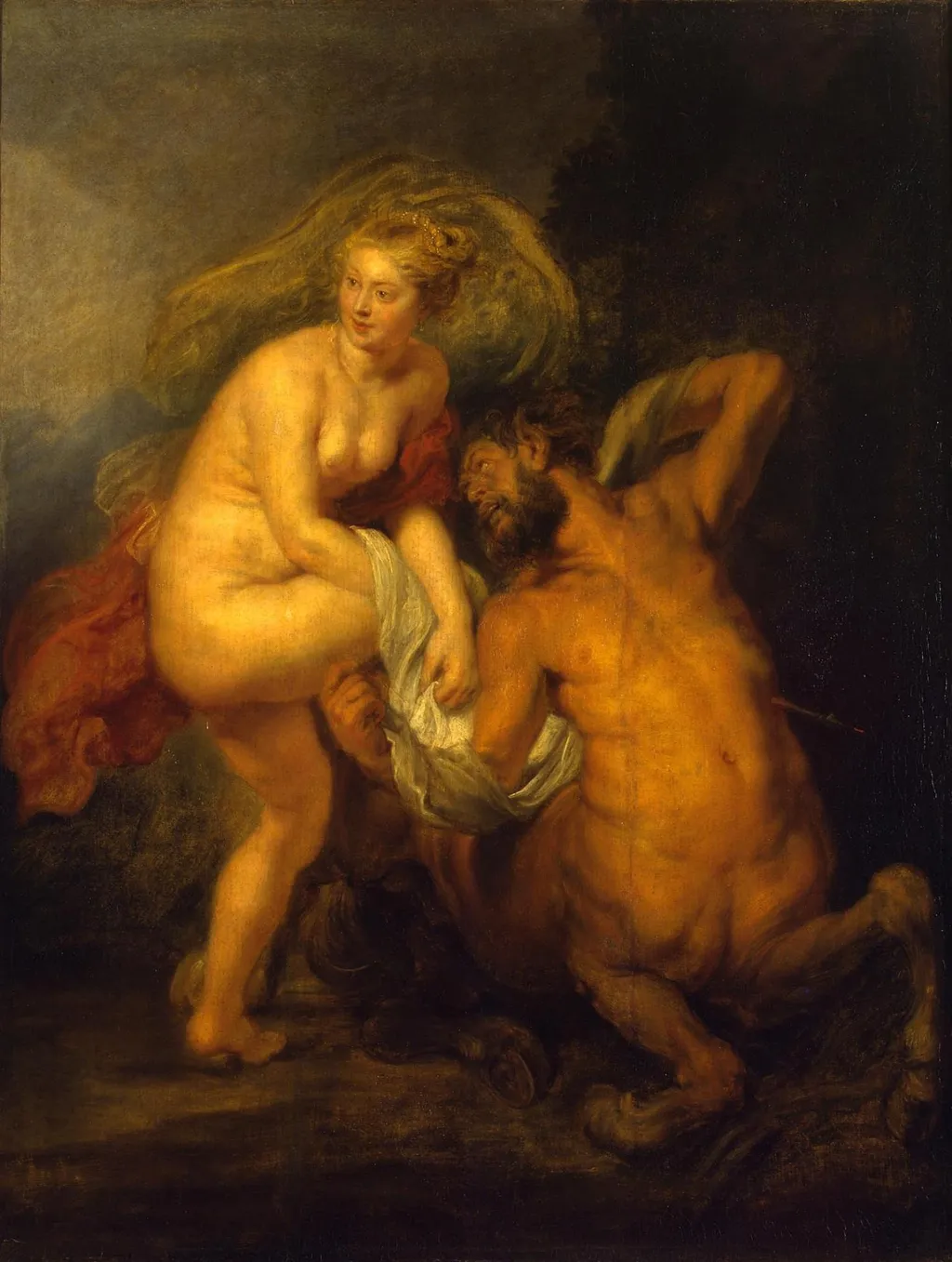
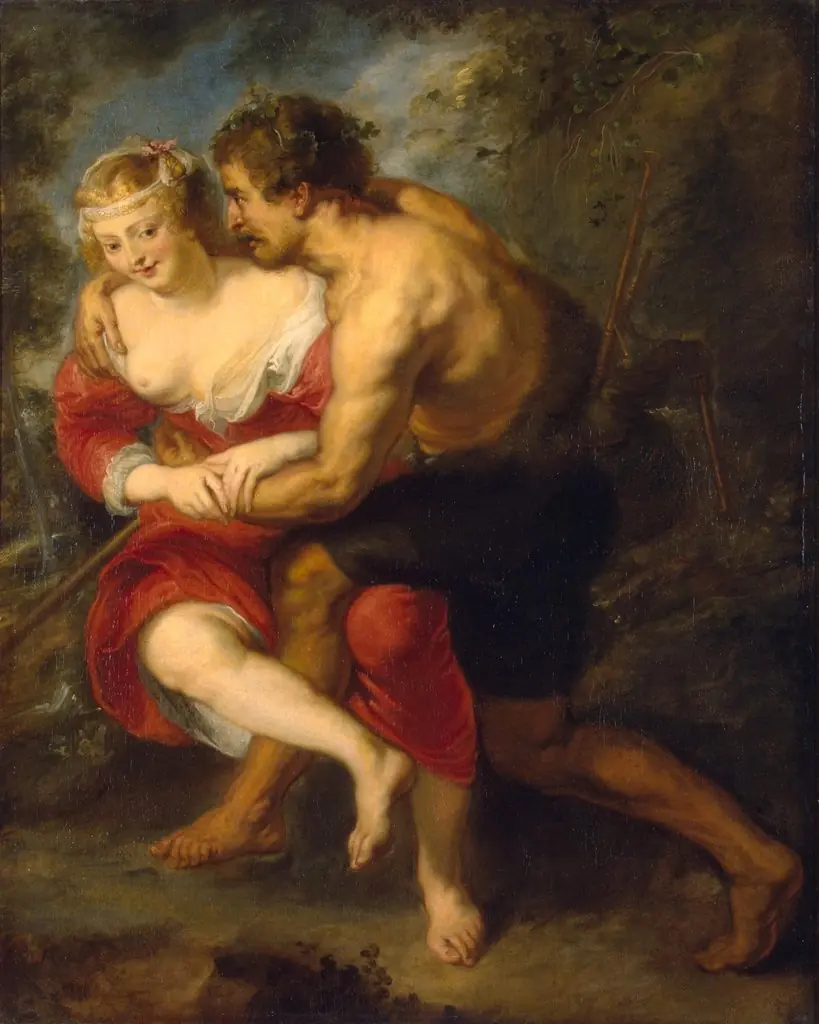
Nessus and Dejanira is an oil painting by the Flemish Baroque painting artist Peter Paul Rubens. It dates from 1630 and is held in the collection of the Hermitage Museum.
About this work
Overview
Nessus and Dejanira is an oil painting from circa 1630 attributed to the school of Peter Paul Rubens.
Nessus and Dejanira is an oil painting from circa 1630 attributed to the school of Peter Paul Rubens. Created in Flanders, the work measures 82 by 63.5 centimeters and depicts the mythological abduction of Dejanira by the centaur Nessus. The painting is held in the Hermitage Museum. While the composition reflects Rubens's designs and thematic interests, scholars consider the Hermitage canvas a workshop production from around the time of the master's death in 1640, rather than an autograph work by Rubens himself.
Subject & Meaning
The painting illustrates the classical myth of Dejanira and the dying centaur Nessus, drawing from ancient Greek legends as recounted by Sophocles and Ovid. According to the narrative, Nessus attempted to abduct Dejanira while ferrying her across the river Euenos, prompting Heracles to shoot the centaur with a poisoned arrow. As Nessus lay dying, he tricked Dejanira into keeping his blood, falsely claiming it would serve as a love charm to ensure Heracles's fidelity. This deception ultimately caused Heracles's demise when Dejanira later applied the tainted blood to a shirt. In the Hermitage painting, a winged Cupid is included to clarify the centaur's lustful intentions, and Dejanira's expression captures her distress.
Technique & Style
Executed in oil on canvas, the painting employs a vertical composition that places the two intertwined figures against a dark, undefined background with faint atmospheric light in the upper left. The nude Dejanira features fair skin and golden hair swept upward by a translucent greenish veil. Her body twists away from the muscular, bearded Nessus, who kneels on his right knee and presses his face against her side while grasping her waist. Dejanira pulls a white cloth between them, and a red drapery falls behind her. The palette relies on warm flesh tones, deep browns, and muted greens, with the male figure rendered in warm orange-brown hues. Strong chiaroscuro models the forms as light falls from the left. The brushwork is visible and fluid in the fabrics and background, contrasting with a smooth, polished finish on the skin, hallmarks of the Rubens workshop's Baroque style.
History & Provenance
The Hermitage painting's exact ownership chain remains unspecified in available records, though its attribution to the Rubens school places its creation in Antwerp around 1630. A closely related autograph oil sketch by Rubens, the Abduction of Dejanira by Nessus, provides a provenance parallel. That sketch on oak panel descended through the Spanish nobility, appearing in the 1737 posthumous inventory of the 6th Duke of Pastrana. It later entered the collection of George Augustus Wallis in Spain before passing through a Berlin estate sale in 1895. Acquired by a private collector, it descended to Hope Taylor, who sold it at Sotheby's in 2000. Jordan and Thomas A. Saunders III acquired it, lending it to exhibitions at the Bruce Museum, Berkeley Art Museum, Cincinnati Art Museum, and Virginia Museum of Fine Arts between 2004 and 2025.
Context
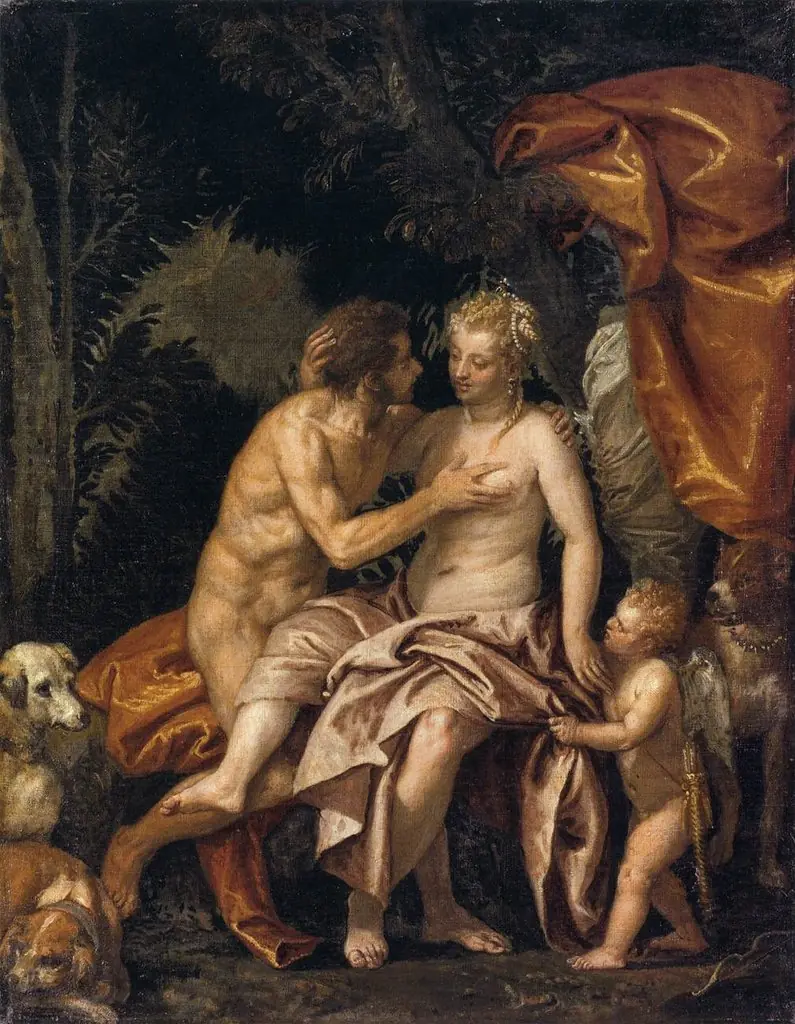
The composition exemplifies the Baroque movement's emphasis on movement, color, and sensuality, which Rubens championed by fusing Flemish realism with Italian Renaissance traditions. Depicting this myth posed distinct compositional challenges for artists, primarily how to arrange the centaur, the abductee, and the distant Heracles within a coherent space. The Hermitage workshop painting resolves this by adopting a viewpoint from Heracles's bank, turning the centaur to run across the picture plane so his chest remains exposed to the incoming arrow. This approach contrasts with earlier treatments by Veronese and Reni, who struggled with spatial depth or arrow trajectories. Rubens's solution provided a dynamic and formally resolved model that navigated the narrative constraints that had troubled earlier painters.
Own this work as a print
Artist & collection
Artist
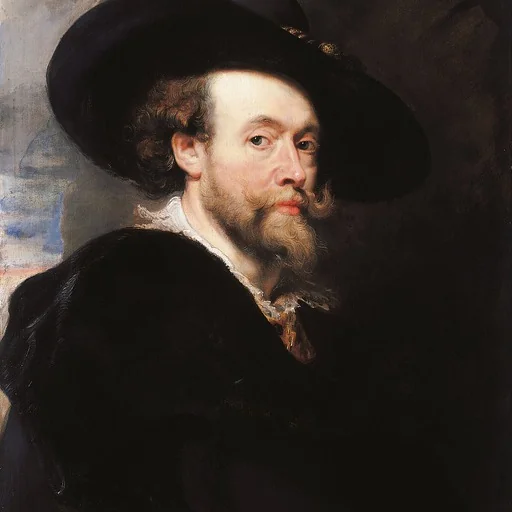
Sir Peter Paul Rubens ( ROO-bənz; Dutch:; 28 June 1577 – 30 May 1640) was a Flemish artist and diplomat.