Artwork
Vulcan forging the Thunderbolts of Jupiter
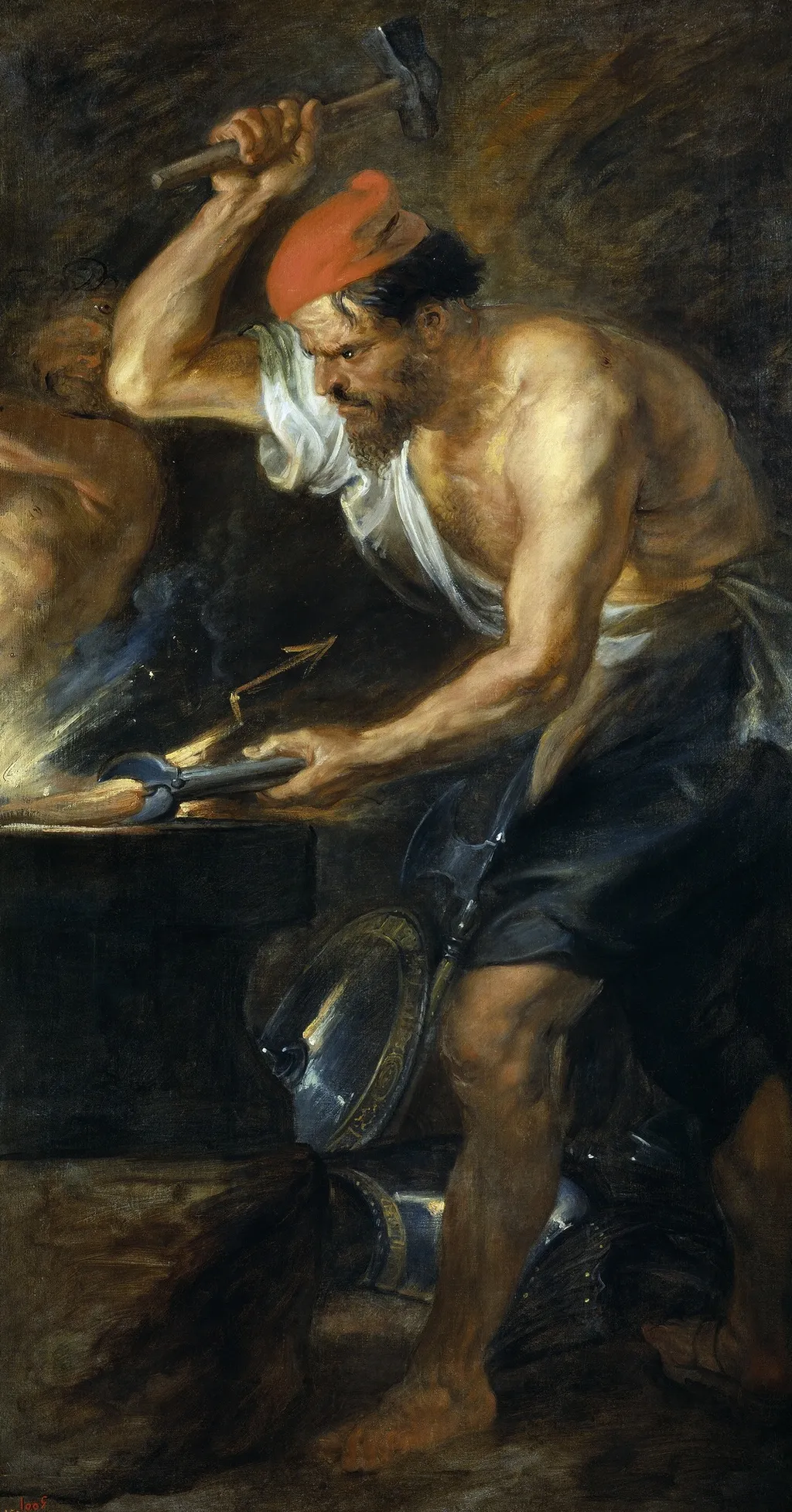
Vulcan forging the Thunderbolts of Jupiter is an oil painting by the Flemish Baroque painting artist Peter Paul Rubens. It dates from 1636 and is held in the collection of the Museo del Prado.
About this work
Subject & Meaning
The work was commissioned by Philip IV of Spain as part of the decoration of the Torre de la Parada and now belongs to the collection of the Museo del Prado.
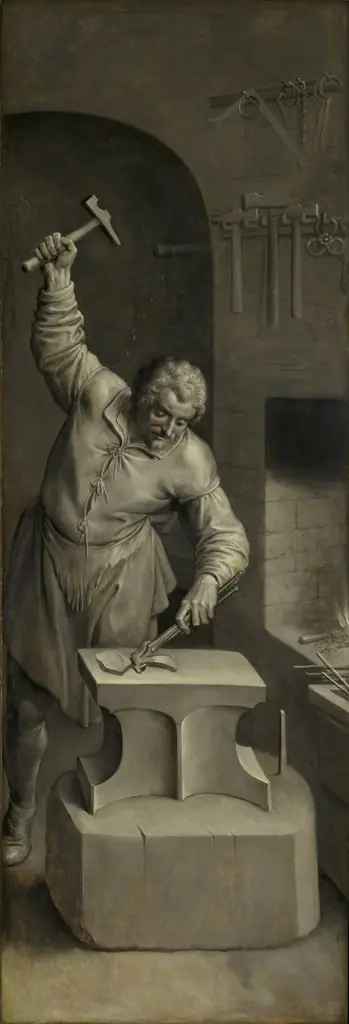
The painting depicts Vulcan, the Greek god of fire (known to the Romans by that name and to the Greeks as Hephaestus), shown at work forging the thunderbolts of Jupiter. Rubens drew on classical texts by Homer and Virgil for the subject. Vulcan is identified through his traditional attributes of the forge: an anvil, a hammer, and tongs, with which he shapes the weapons of the gods, here, the lightning bolt of Zeus.
The scene embodies the Greek ideal that fire descended from the heavens in the form of lightning, and Rubens uses the glow of the forge flames to shape the painting's atmosphere. Although other artists, including Velázquez in his 1630 Forge of Vulcan, treated the same mythological theme, Rubens approaches it with a characteristically original conception.
The work was commissioned by Philip IV of Spain as part of the decoration of the Torre de la Parada and now belongs to the collection of the Museo del Prado.
Technique & Style
Executed in oil paint on canvas, the work measures 182.5 cm in height and 99.5 cm in width.
The composition renders Vulcan at his forge, hammer in hand, striking glowing metal to fashion Jupiter’s thunderbolts. Rubens employs a dynamic Baroque handling, with vigorous brushwork that conveys both the muscular exertion of the figure and the incandescent glow of the forge. Light and shadow are orchestrated to heighten the drama, the firelight illuminating Vulcan’s body and the surrounding tools, anvil, tongs, and hammer, while casting strong chiaroscuro across the scene.
Stylistically, the painting aligns with Rubens’s mature mythological mode, blending classical iconography with exuberant movement and palpable texture in the handling of flesh, metal, and flame.
History & Provenance
The painting was commissioned by King Felipe IV of Spain as part of a larger decorative program for the Torre de la Parada. Created between 1636 and 1638, the work depicts the mythological scene of Vulcan forging thunderbolts, drawing inspiration from classical texts by Homer and Virgil. Peter Paul Rubens executed the piece in oil on canvas during this period, contributing to a series that also involved other masters such as Velázquez.
The work eventually entered the collection of the Museo del Prado in Madrid, where it is currently held but not on public display.
Peter Paul Rubens's Vulcan forging the Thunderbolts of Jupiter is held in the collection of the Museo del Prado in Madrid. The painting was originally commissioned by Philip IV for the decoration of the Torre de la Parada. It is currently not on public display.
The work is an oil on canvas created between 1636 and 1638. Historical records indicate it was formerly owned by Ferdinand VII of Spain before entering the Prado's holdings. While the painting has a documented history linked to the Spanish royal collection, specific accession numbers or a detailed chronological exhibition list are not provided in the available sources.
Context
Created between 1636 and 1638, Vulcan forging the Thunderbolts of Jupiter serves as a significant example of Peter Paul Rubens's late mythological output, executed for the decoration of the Torre de la Parada under the commission of Philip IV. The work demonstrates Rubens's deep engagement with classical literature, drawing inspiration from Homeric and Virgilian texts to depict the forge of the god of fire. While the subject of Vulcan's workshop had been treated by contemporaries, such as Velázquez in his 1630 The Forge of Vulcan, Rubens distinguished his approach through a unique atmospheric treatment of the flames and lighting.
This painting remains a key piece within the Prado's holdings, illustrating the collaborative artistic environment of the Spanish court where multiple masters contributed to the royal project.
Legacy
Vulcan forging the Thunderbolts of Jupiter, painted by Peter Paul Rubens in 1636, was commissioned by King Philip IV of Spain for decorative purposes in the Torre de la Parada, a project that also involved artists such as Diego Velázquez. The work draws on classical sources from Homer and Virgil and reflects Rubens' distinctive treatment of mythological subjects, differing from earlier depictions like Velázquez's The Forge of Vulcan (1630). Its creation and display within the royal palace underscore its political and artistic significance in the Spanish Baroque court.
The painting remained in the Royal Palace of Madrid and was later housed in the Museo del Prado, where it formed part of the royal collection inherited from Ferdinand VII. Although it is no longer on public exhibition, the work continues to be referenced in scholarly discussions of Baroque mythological painting and the influence of classical literature on Flemish and Spanish artists.
Overview
Peter Paul Rubens painted Vulcan Forging the Thunderbolts of Jupiter in 1636. Executed in oil on canvas, the work belongs to the Flemish Baroque tradition, noted for its vigorous movement and saturated palette. The composition centers on the god Vulcan at his forge, captured in a moment of intense labor. The painting is part of the Museo del Prado’s permanent collection.
Artist & collection

Artist
Sir Peter Paul Rubens ( ROO-bənz; Dutch:; 28 June 1577 – 30 May 1640) was a Flemish artist and diplomat.