Artwork
Portrait of Francesco Giamberti da Sangallo
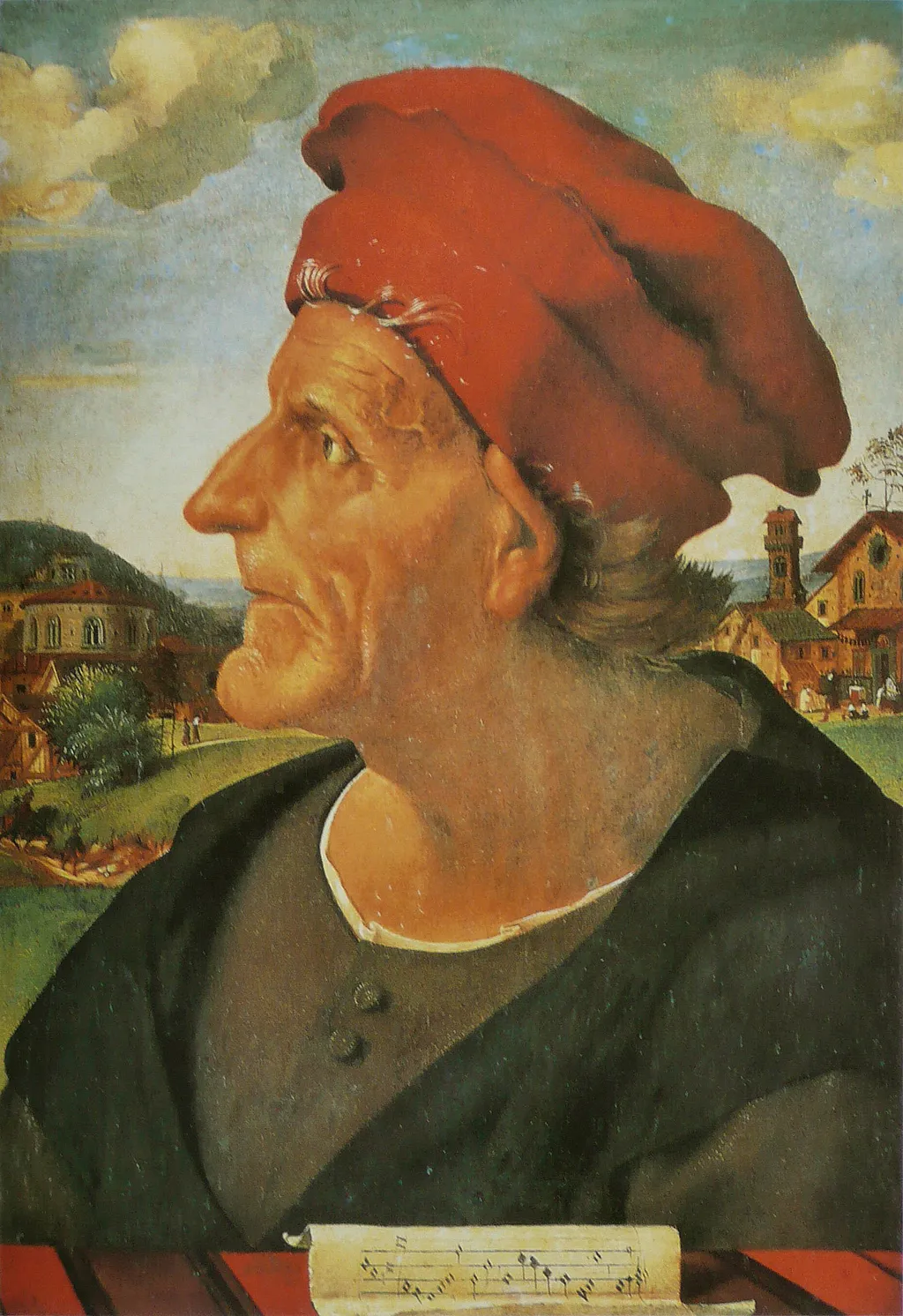
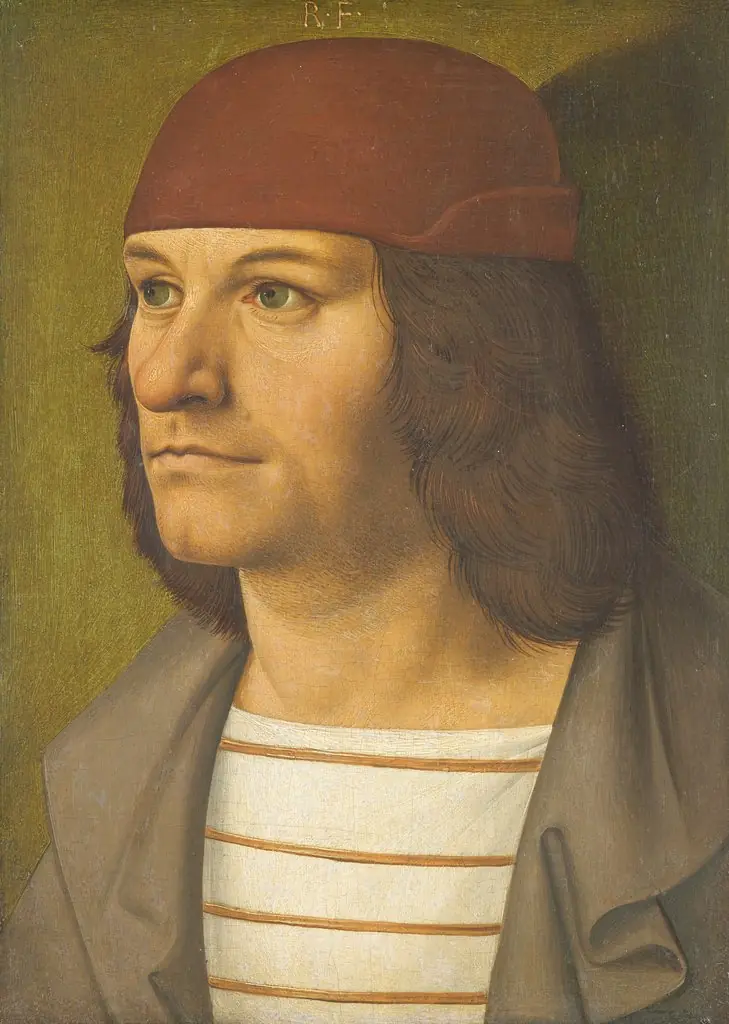
Portrait of Francesco Giamberti da Sangallo is an oil painting by the Early Renaissance artist Piero di Cosimo. It dates from 1492 and is held in the collection of the Rijksmuseum.
About this work
Subject & Meaning
His sons Giuliano and Antonio da Sangallo the Elder, and grandsons Antonio the Younger, Bastiano, and Francesco da Sangallo, continued this artistic lineage.
The artwork depicts Francesco Giamberti, a Florentine legnaiuolo (furniture carver) who worked for Cosimo the Elder, the Medici, and likely the papacy. He also composed music for the Medici, an aspect symbolized in the portrait by a musical score with pneumatics carved into the base of a piece of furniture. Giamberti was the progenitor of the prominent Tuscan Sangallo family of architects and artists, a name possibly derived from his property near the San Gallo gate in Florence.
His sons Giuliano and Antonio da Sangallo the Elder, and grandsons Antonio the Younger, Bastiano, and Francesco da Sangallo, continued this artistic lineage. The painting was commissioned by his son Giuliano as a double portrait, likely utilizing a death mask for Francesco's likeness. Piero di Cosimo's realism is evident in symbolic, non-idealized physical details, such as a prominent temple vein and an ear folded by a cap, while the background details reflect the influence of Hugo van der Goes.
Technique & Style
The work is an oil painted on wooden panel, measuring approximately 47.5 cm in height and 33.5–33.7 cm in width. It depicts Francesco Giamberti, a legnaioulo and furniture carver who worked for the Medici and possibly for the papacy, and it bears a musical score carved into the base of a piece of furniture he made. The painting shows a realistic handling of facial features such as a prominent vein in the temple and an ear folded by a cap, distinguishing it from the idealism common in contemporary portraits.
Small narrative details on the sides reflect the influence of Hugo van der Goes, and the composition was likely commissioned by Giuliano da Sangallo using a death mask of his father. The portrait is executed in oil on panel and is housed in the Rijksmuseum, Amsterdam.
History & Provenance
Piero di Cosimo created this oil on panel painting in Florence around 1485. The work was commissioned by the subject's son, Giuliano da Sangallo, as a double portrait of himself and his father, Francesco Giamberti. Since Francesco had already died by the time of the commission, Piero di Cosimo likely utilized a death mask to execute his likeness.
The painting depicts Francesco Giamberti, a furniture carver and musician who worked for the Medici and the papacy, and who founded the prominent Tuscan Sangallo family of architects and artists. The artwork is currently held in the Rijksmuseum in Amsterdam and was also associated with the Mauritshuis. It was featured in the exhibition Remember Me.
Portrait of Francesco Giamberti da Sangallo is held in the Rijksmuseum, Amsterdam, where it is listed under the accession number SK-A-1234. The work entered the museum’s collection as part of the Rijksmuseum’s acquisition of the Mauritshuis holdings in 1885 and has been displayed in the permanent exhibition "Remember Me" since 2010. It was also featured in the traveling exhibition "Portraits of the Renaissance" that toured major European institutions from 2015 to 2017.
Context
Scholarship notes the painting's departure from the idealism common among its contemporaries, instead emphasizing a realism characteristic of Piero di Cosimo. This is evident in specific naturalistic details, such as the prominent vein on the subject's temple and an ear folded by his cap. Art historians also identify the influence of Hugo van der Goes in the small anecdotal details along the work's sides.
Commissioned by Giuliano da Sangallo around 1485, the portrait was likely created using a death mask of Francesco, who had already died. This memorial function and the work's stylistic synthesis place it firmly within the Quattrocento Florentine tradition.
Legacy
The portrait is recognized for shaping the visual tradition of Tuscan family commemoration through its blend of realism and narrative detail. Contemporary accounts highlight its role in inspiring later double portraits of Florentine patrons, particularly the Sangallo lineage. Its representation of a furniture carver who also composed music and contributed to Medici cultural projects has been cited as an early example of interdisciplinary Renaissance artistry.
The work’s emphasis on individual physiognomy, such as the pronounced vein in the sitter’s temple and the folded ear beneath a cap, has been noted for departing from idealized forms toward a more observational style that influenced subsequent portraitists. Additionally, the integration of symbolic elements drawn from Hugo van der Goes’ compositions has contributed to its reputation as a bridge between Northern and Italian artistic sensibilities.
Overview
Executed around 1485, this oil on panel portrait by Piero di Cosimo depicts Francesco Giamberti, a Florentine furniture carver and musician. The work resides in the Rijksmuseum, Amsterdam, and its composition combines a detailed landscape background with a focused, profile view of the sitter, whose attire and accessories are rendered in vivid colour and careful modeling.
Own this work as a print
Artist & collection

Artist
Piero di Cosimo, also known as Piero di Lorenzo, was an Italian Renaissance painter, who continued to use an essentially Early Renaissance style into the 16th century.