Artwork
Pieter Brueghel de Oude (naar). De ontrouwe herder
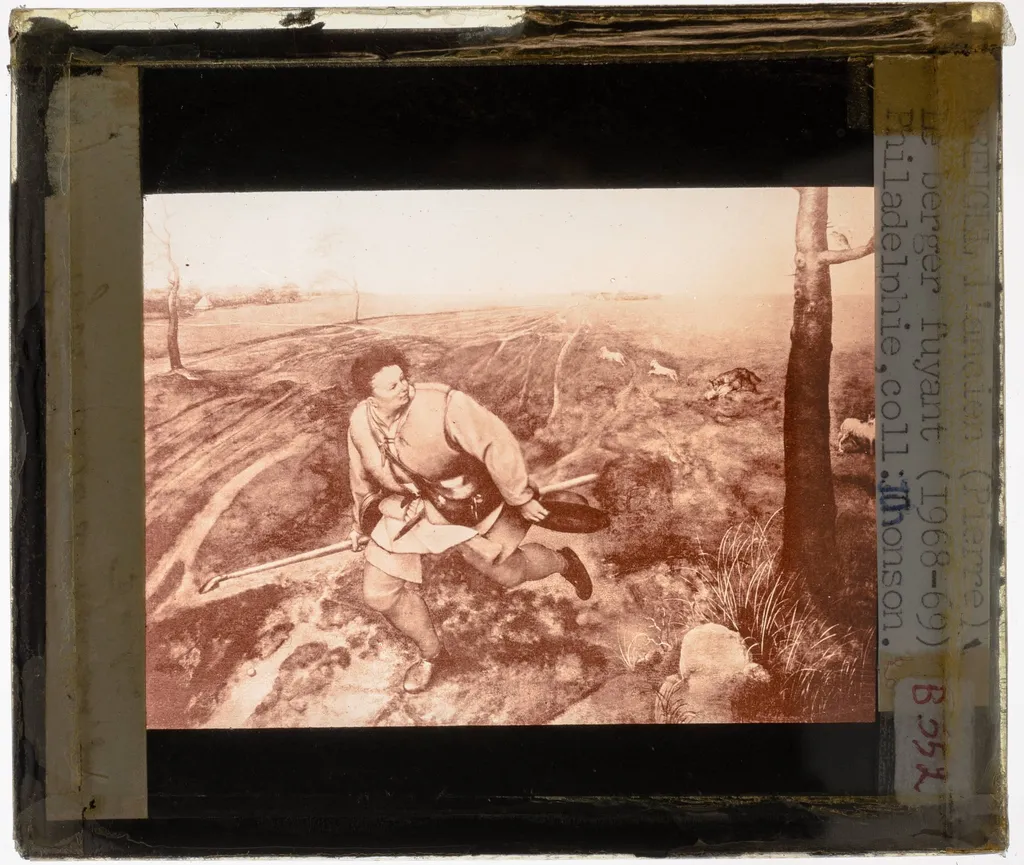
Pieter Brueghel de Oude (naar). De ontrouwe herder is an unspecified painting by Pieter Brueghel I. It is held in the collection of the Catholic University of Leuven. This oil-on-panel painting, attributed to Pieter Bruegel the Elder or a close follower, dates to the late 16th century.
About this work
Overview
It is now held in the Philadelphia Museum of Art, having entered the collection through 19th- or early 20th-century European photographic archives.
This oil-on-panel painting, attributed to Pieter Bruegel the Elder or a close follower, dates to the late 16th century. It depicts a pastoral scene centered on a shepherd neglecting his duties, set against a detailed landscape. The work originates from the Northern Renaissance tradition, emphasizing everyday life with symbolic undertones.
It is now held in the Philadelphia Museum of Art, having entered the collection through 19th- or early 20th-century European photographic archives.
Subject & Meaning
The shepherd, shown distracted or idle while his flock strays, functions as an allegory for moral failure. In Christian and folk traditions, the shepherd symbolized spiritual guardianship; his negligence suggests betrayal of trust, possibly reflecting contemporary concerns about religious or civic duty. The quiet disorder of the scene, sheep wandering, tools abandoned, reinforces the theme without overt drama, inviting quiet reflection rather than moral outrage.
Technique & Style
The painting employs subtle chiaroscuro to model forms and suggest atmospheric depth, characteristic of Northern Renaissance practice. Brushwork is precise yet unobtrusive, with careful rendering of foliage, wool, and terrain. The composition balances horizontal landscape elements with vertical figures, creating a sense of quiet containment.
Color remains muted, favoring earth tones that ground the scene in realism while allowing symbolic weight to emerge through gesture and arrangement.
History & Provenance
The painting’s documented history begins with its reproduction on glass slides by the University of Louvain between 1839 and 1939, likely for academic use. Its prior ownership and exact origin remain undocumented. It entered the Philadelphia Museum of Art’s collection through unknown means, possibly via a European dealer or collector. The slide’s annotations suggest it was studied as an example of moral allegory in 16th-century Netherlandish art.
Context
Created during a period of religious upheaval and social change in the Low Countries, the painting reflects broader cultural anxieties about duty, authority, and moral decay. Bruegel’s tradition of embedding social commentary in rural scenes aligns with contemporaries like Pieter Aertsen and Jan van der Straet. The work avoids overt religious iconography, instead using familiar pastoral imagery to convey ethical warnings accessible to a broad audience.
Legacy
Though not among Bruegel’s most widely recognized works, this painting contributes to the understanding of how allegory was woven into everyday scenes in Northern Renaissance art. Its survival through photographic reproduction highlights its role in 19th-century art education. Modern viewers recognize it as a quiet, nuanced meditation on responsibility, preserving the era’s capacity to embed moral inquiry within the ordinary.
Own this work as a print
Artist & collection

Artist
Pieter Bruegel (also Brueghel or Breughel) the Elder ( BROY-gəl, US also BROO-gəl; Dutch: ; c.
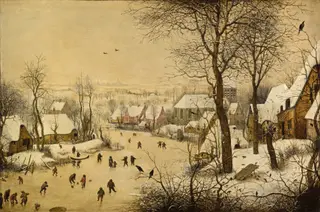
- Pieter Brueghel de Oude. Nederlandse spreekwoorden Detail: Twee spreekwoorden
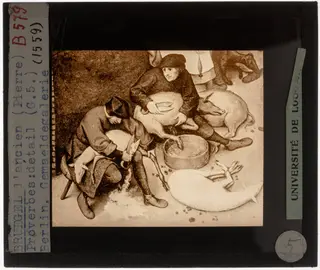 Pieter Brueghel the Elder. Dutch Proverbs Detail: One shears the sheep, the other the pigs
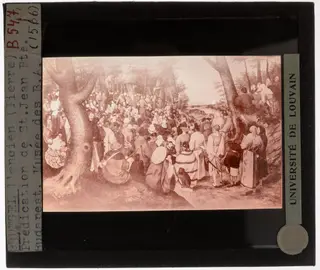 Pieter Brueghel de Oude. Prediking van Johannes de Doper
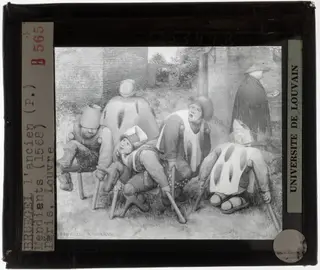 Pieter Brueghel de Oude. De Kreupelen
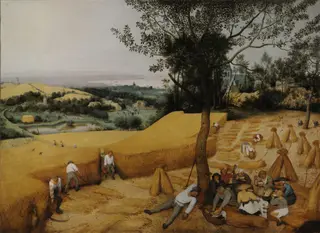
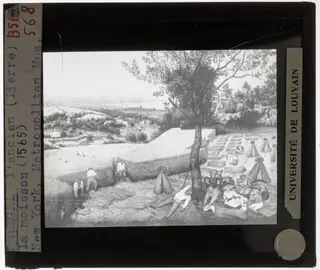 Pieter Brueghel the Elder. The Harvest
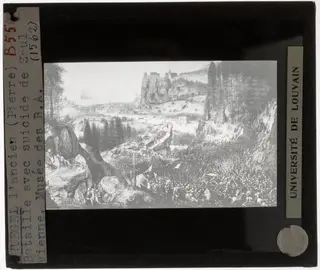 Pieter Brueghel de Oude. Zelfmoord van Saul
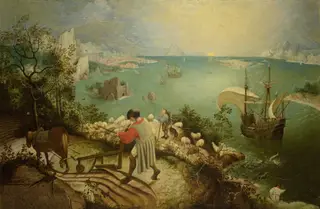
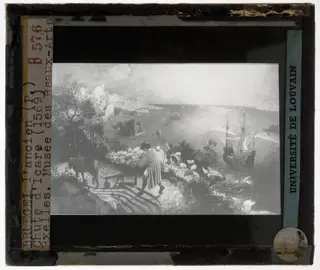 Pieter Brueghel de Oude. De val van Icarus
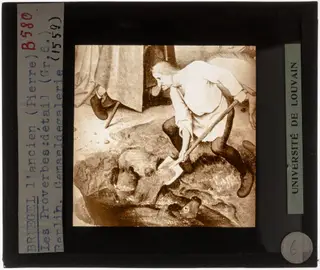 Pieter Brueghel de Oude. Nederlandse spreekwoorden Detail: Als 't kalf verdronken is, dempt men de put
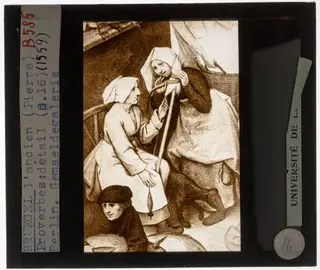 Pieter Brueghel de Oude. Nederlandse spreekwoorden Detail: De ene rokkent wat de andere spint