Artwork
Pieter Brueghel de Oude. Nederlandse spreekwoorden Detail: De ene rokkent wat de andere spint
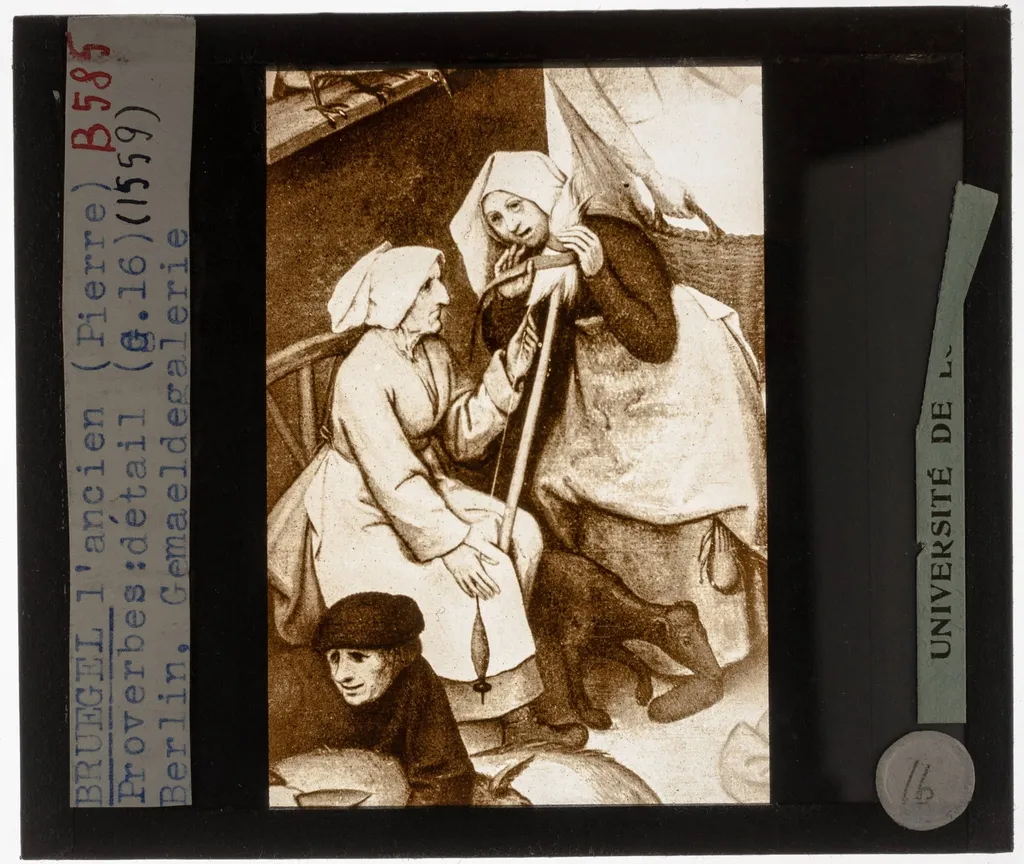
Pieter Brueghel de Oude. Nederlandse spreekwoorden Detail: De ene rokkent wat de andere spint is an unspecified painting by the Northern Renaissance artist Pieter Brueghel I. It dates from 1559 and is held in the collection of the Catholic University of Leuven.
About this work
Overview
Created in 1559, this oil-on-panel work by Pieter Bruegel the Elder depicts a bustling village street teeming with figures engaged in a variety of everyday, often absurd activities. The composition is densely populated, offering a snapshot of 16th‑century rural life rendered with a humor that invites close inspection.
Subject & Meaning
The scene illustrates the Dutch proverb “De ene rokkent wat de andere spint,” roughly “one man robs what the other spins,” alongside dozens of other sayings. Characters perform exaggerated tasks, tying ribbons to a pig’s tail, roasting bread on a head, feeding cheese to a mouse, each visual pun embodying a moral or folk wisdom of the period.
Technique & Style
Executed in oil on wood, Bruegel employs the Northern Renaissance’s meticulous detail and vivid coloration. His brushwork balances fine line work for individual figures with broader strokes for architectural elements, creating depth while maintaining a flat, narrative surface that emphasizes the multitude of simultaneous actions.
History & Provenance
The painting entered the collection of the Staatliche Museen zu Berlin, where it remains on display. Its early documentation traces back to the 19th‑century KU Leuven glass‑slide archive, though the original photographer of that record is unknown. The work has been catalogued as a representative example of Bruegel’s proverb series.
Context
Bruegel’s proverb paintings reflect a broader 16th‑century interest in visualizing popular sayings, serving both didactic and entertainment purposes. By embedding over a hundred idioms within a single canvas, he creates a visual compendium that mirrors the oral culture of the Low Countries during the Northern Renaissance.
Own this work as a print
Artist & collection

Artist
Pieter Bruegel (also Brueghel or Breughel) the Elder ( BROY-gəl, US also BROO-gəl; Dutch: ; c.
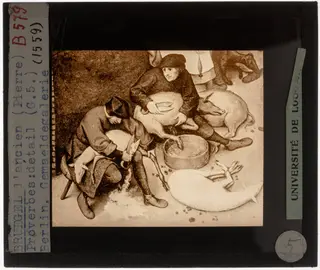
- Pieter Brueghel the Elder. Dutch Proverbs Detail: One shears the sheep, the other the pigs
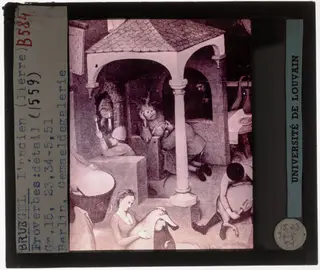 Pieter Brueghel de Oude. Nederlandse spreekwoorden Detail: Vijf spreekwoorden
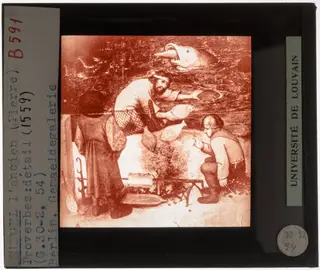 Pieter Brueghel the Elder. Dutch proverbs Detail: Five proverbs
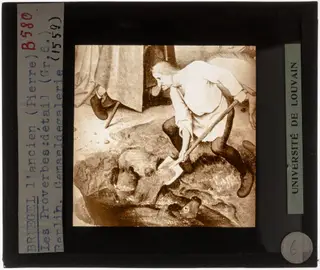 Pieter Brueghel de Oude. Nederlandse spreekwoorden Detail: Als 't kalf verdronken is, dempt men de put
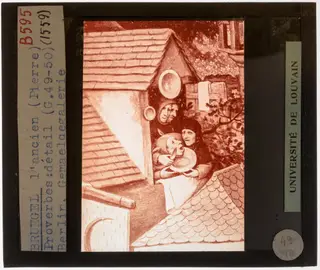 Pieter Brueghel the Elder. Dutch proverbs Detail: Two proverbs
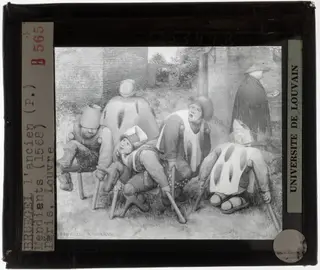 Pieter Brueghel de Oude. De Kreupelen
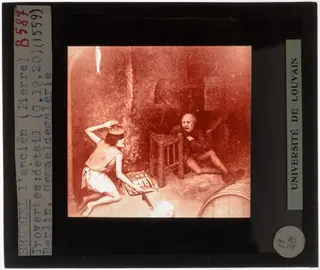 Pieter Brueghel de Oude. Nederlandse spreekwoorden Detail: Twee spreekwoorden
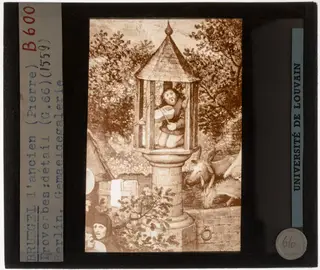 Pieter Brueghel de Oude. Nederlandse spreekwoorden Detail: Hij speelt op die kake
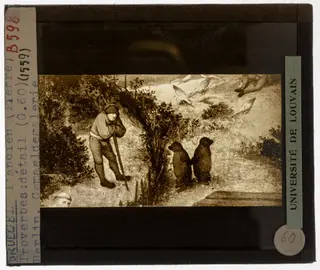 Pieter Brueghel de Oude. Nederlandse spreekwoorden Detail: Wilde beeren, die zijn bij den ander gheeren
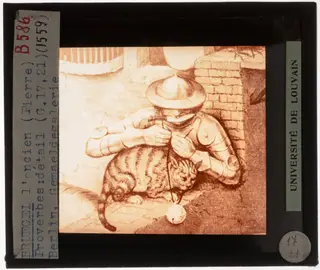 Pieter Brueghel de Oude. Nederlandse spreekwoorden Detail: De kat de bel aanbinden
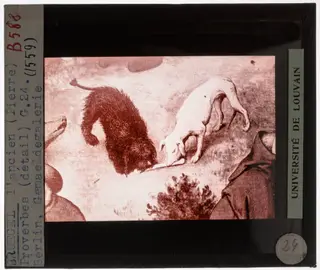 Pieter Brueghel de Oude. Nederlandse spreekwoorden Detail: Twee honden aan een been, komen zelden overeen
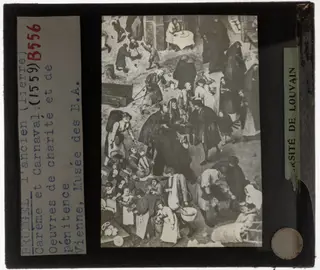 Pieter Brueghel de Oude. Strijd tussen Carnaval en Vasten Detail: Allegorie van Liefdadigheid en Boete