Artwork
Balaam and his Ass
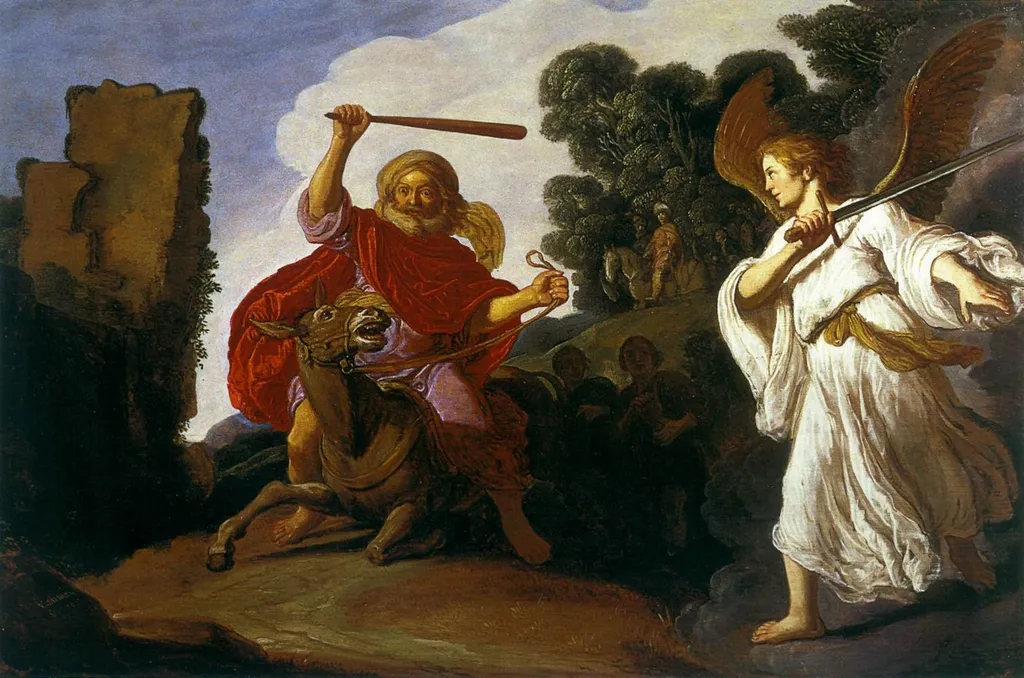
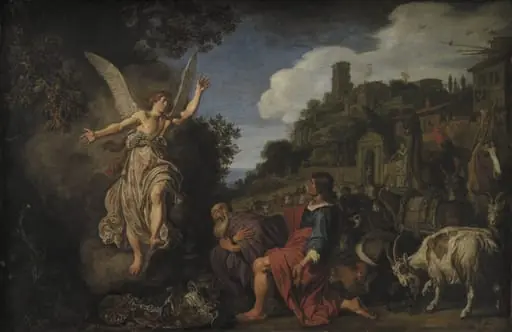
Balaam and his Ass is an oil painting by the Early Baroque Italian artist Pieter Lastman. It dates from 1622 and is held in the collection of the Israel Museum.
About this work
Overview
It illustrates a moment from the Book of Numbers in which a prophet, blinded by anger, attempts to strike his donkey, unaware that an angel blocks their path.
Painted in 1622 on a wood panel, Balaam and his Ass is a religious narrative by the Dutch artist Pieter Lastman. It illustrates a moment from the Book of Numbers in which a prophet, blinded by anger, attempts to strike his donkey, unaware that an angel blocks their path. Lastman’s precise handling of figures and emotional intensity align with early Baroque tendencies, though his style remains rooted in Northern European traditions rather than Italian models.
Subject & Meaning
The scene depicts Balaam, a prophet summoned to curse Israel, reacting with fury as his donkey rears in fear. An angel, sword in hand, stands visible only to the animal, signaling divine intervention. The moment underscores themes of spiritual blindness and humility: the beast perceives the sacred where the man does not. Lastman emphasizes this irony through contrasting expressions, Balaam’s rage versus the donkey’s alarm and the angel’s stillness.
Technique & Style
Lastman rendered the figures with careful attention to anatomical detail and expressive gesture, using fine brushwork to define fabric, fur, and feather. The composition directs the viewer’s eye along the diagonal of the raised staff toward the angel, heightening dramatic tension. The background, with its soft sky and sparse trees, avoids distraction, focusing attention on the psychological clash between human arrogance and divine presence.
History & Provenance
Created during Lastman’s mature period in Amsterdam, the painting reflects his role as a teacher to younger artists, including Rembrandt. While its early ownership is undocumented, it entered a public collection in the 19th century and has since been recognized for its narrative clarity and influence on Dutch biblical painting. Its survival on a wood panel suggests it was intended for private devotion or scholarly appreciation.
Context
In early 17th-century Holland, biblical scenes were popular among collectors seeking moral instruction. Lastman’s approach, combining theatrical gesture with psychological realism, responded to both Catholic Counter-Reformation imagery and Protestant interest in scriptural clarity. Though influenced by Italian composition, his work retained a Northern emphasis on detail and human emotion, distinguishing it from more ornate continental equivalents.
Legacy
Lastman’s treatment of this biblical episode became a model for his pupils, particularly Rembrandt, who later revisited the subject with greater emotional depth. The painting’s emphasis on inner conflict and divine revelation helped shape the Dutch tradition of narrative history painting. Though not widely exhibited today, it remains a key example of how religious stories were rendered with psychological nuance in the early Baroque era.
Artist & collection
Artist
Pieter Lastman (1583–1633) was a Dutch painter. Lastman is considered important because of his work as a painter of history pieces and because his pupils included Rembrandt and Jan Lievens. In his paintings Lastman paid…