Artwork
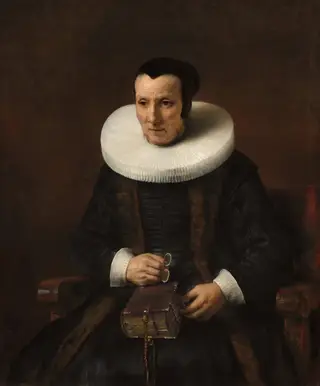
Portrait of Baertje Martens
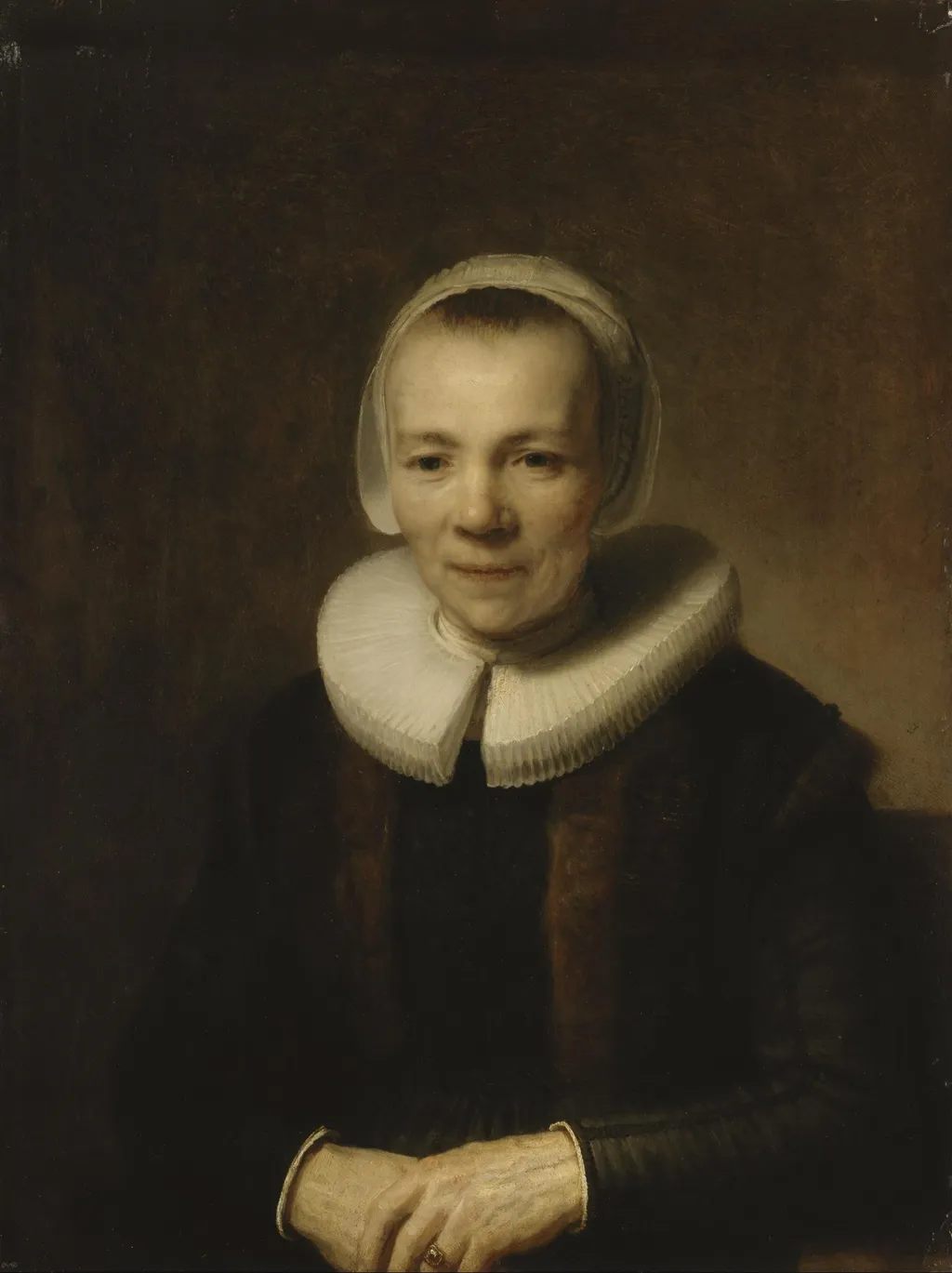
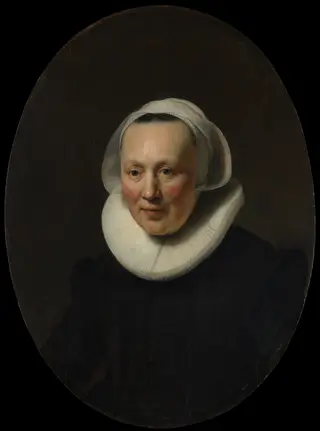
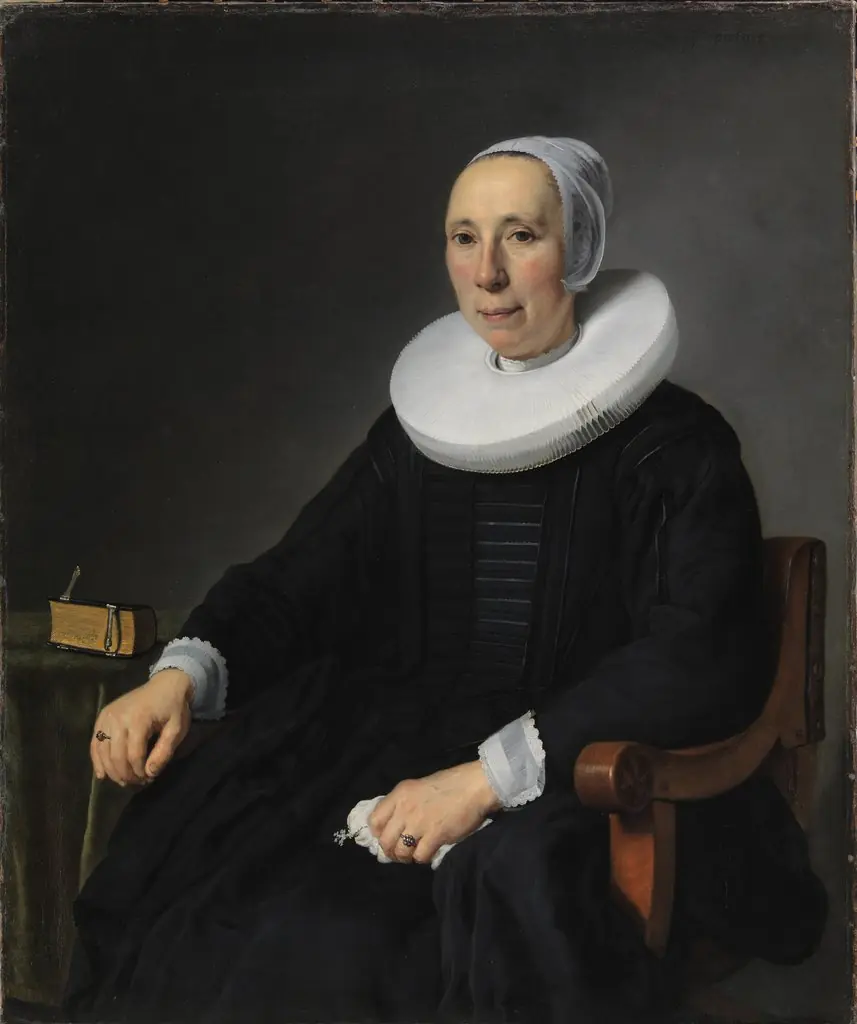
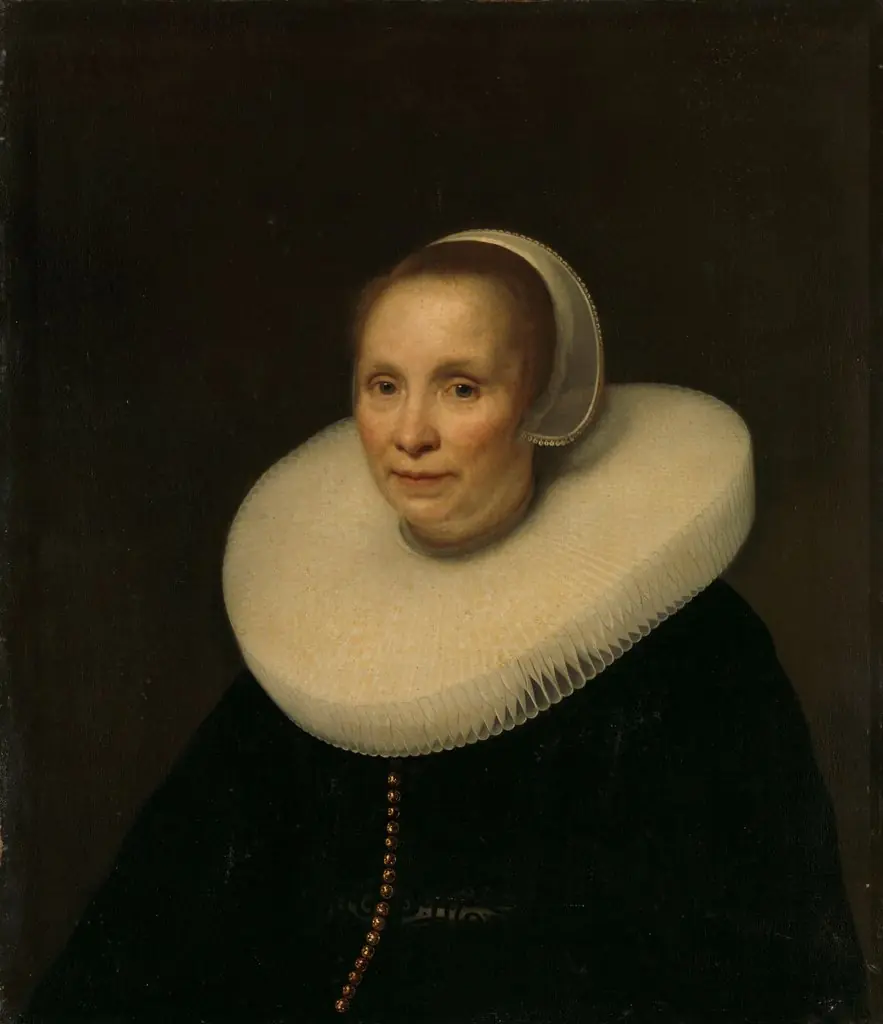
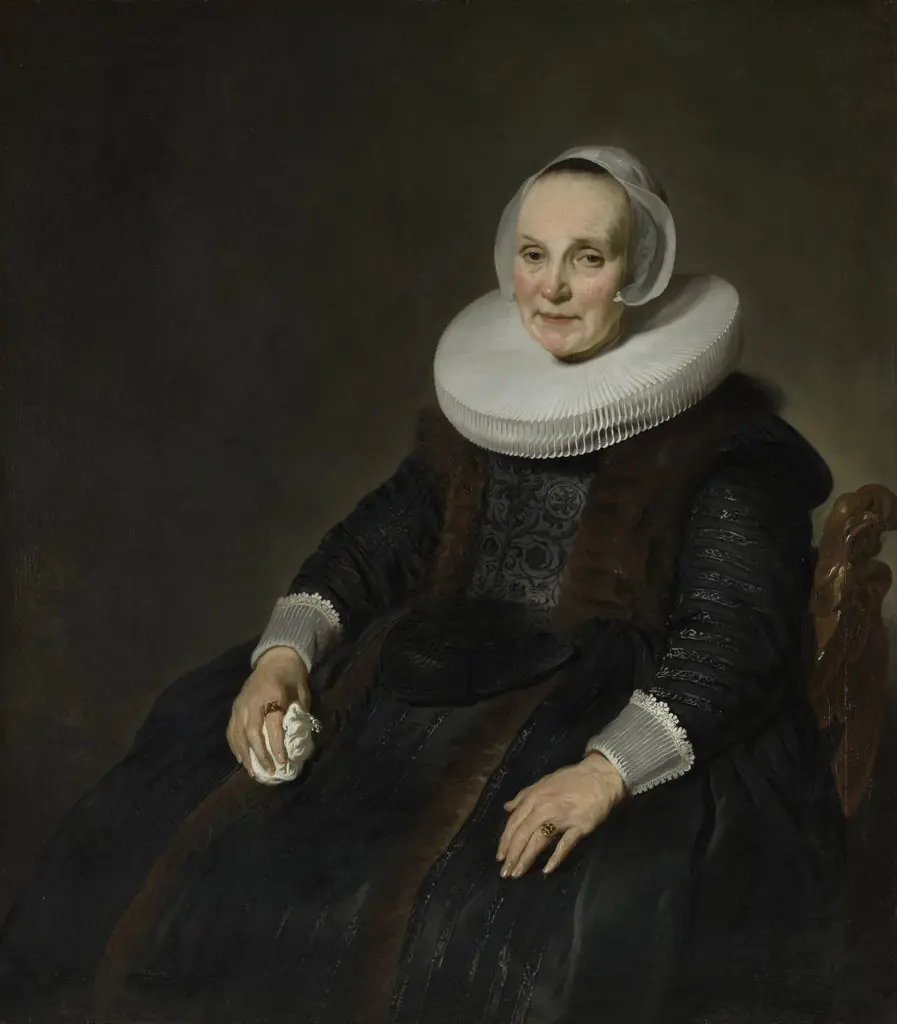
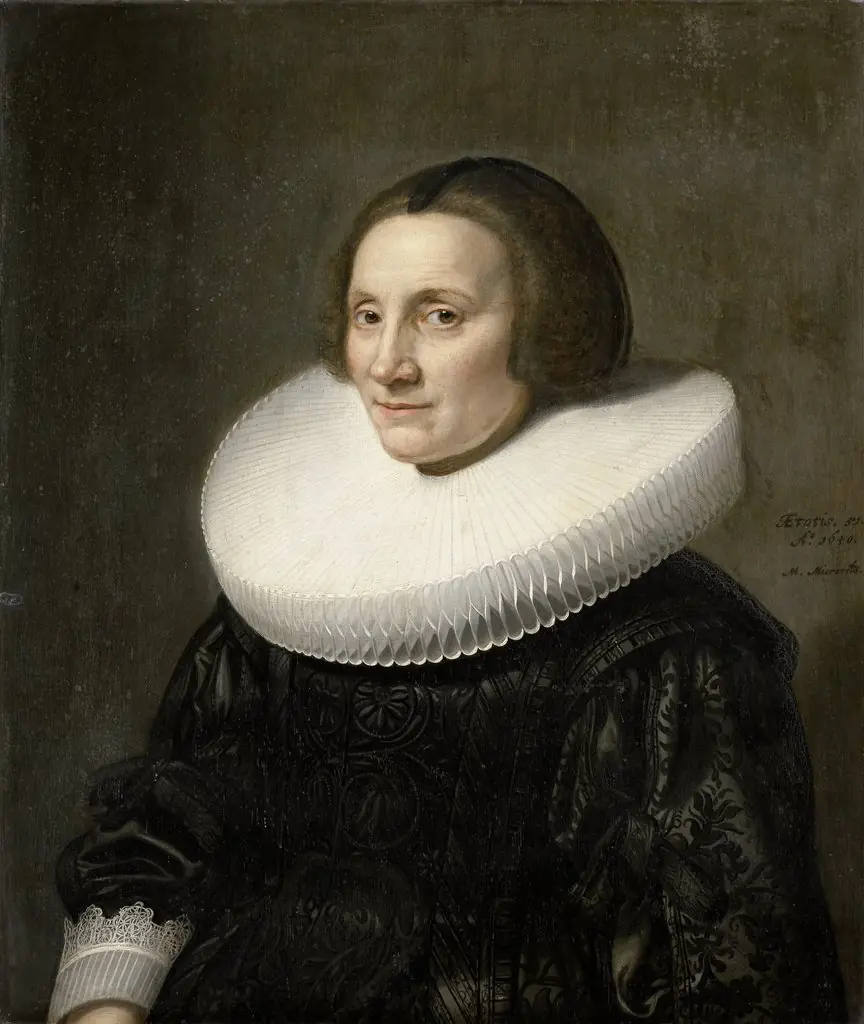
Portrait of Baertje Martens is an oil painting by the Dutch Golden Age artist Rembrandt van Rijn. It dates from 1640 and is held in the collection of the Hermitage Museum. This 1640 oil on oak panel painting is a portrait by Rembrandt, currently housed in the State Hermitage Museum.
About this work
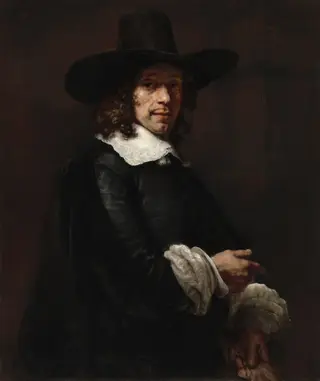
It now hangs in the State Hermitage Museum as the companion piece to Rembrandt’s Portrait of Herman Doomer.
Portrait of Baertje Martens is a 1640 oil painting by Rembrandt. It was painted on an oak panel using oil paint.
The work was bought in Paris by Dmitri Alekseyevich Gallitzin for Catherine II of Russia. It now hangs in the State Hermitage Museum as the companion piece to Rembrandt’s Portrait of Herman Doomer.
The painting shows Rembrandt’s skill with light and texture. Visit the State Hermitage Museum to see it in person.
Overview
Portrait of Baertje Martens is a 1640 oil on oak panel painting by Rembrandt van Rijn. Measuring 76 by 56 centimeters, the work depicts a woman facing forward against a dark, undefined background and is currently housed in the Hermitage Museum in Saint Petersburg. It functions as the pendant to Rembrandt's Portrait of Herman Doomer, which resides in the Metropolitan Museum of Art in New York. The painting is a significant example of Rembrandt's portraiture from the middle of his career, demonstrating his sophisticated handling of light and texture to convey the character and social standing of his sitter.
Subject & Meaning
The painting represents Baertje Martens, who was born around 1596 in Naarden and buried on June 9, 1678, in the Nieuwezijds Kapel in Amsterdam. She moved to Amsterdam at the age of twelve, presumably to work as a servant on the Herengracht, and in 1618 she married the Amsterdam furniture maker Herman Doomer. She was also the mother of the painter Lambert Doomer. The portrait's iconography emphasizes her marital status and social respectability. She wears a white cap covering her hair, a large starched ruff collar, and dark clothing with brown fur trim. Her hands are clasped at waist level, and a ring is visible on one finger, a clear symbol of her marriage and family role.
Technique & Style
Rembrandt executed the work in oil on an oak panel support. The composition is dominated by a palette of browns, blacks, and whites. Light falls strongly from the left, illuminating the sitter's face, collar, and hands while the right side of her figure recedes into shadow. The background shows subtle tonal gradation from dark to lighter brown. Rembrandt's brushwork varies across the surface: it is smooth and blended in the face, while more visible texture is employed in the rendering of the fur and fabric. Although the work is signed 'Rbrandt / f' in the lower left corner, this signature was added at a later date. The dating of the painting to 1640 relies on the date inscribed on its pendant.
History & Provenance
The two portraits of Baertje Martens and Herman Doomer were likely commissioned by Herman Doomer himself. After his death in 1650, his widow bequeathed the portraits to their son, Lambert Doomer, in her wills of July 15, 1654, May 23, 1662, and September 3, 1668. She stipulated that Lambert must have copies made at his own expense for his siblings, a condition he apparently fulfilled, as copies exist in an English private collection. Lambert subsequently left the portraits to his nephew, Herman Voster, a preacher. An inventory made after Lambert's death lists the works as two portraits of the deceased father and mother painted by Rembrandt van Rijn and bequeathed to Hermanus Voster. Voster likely sold the paintings before 1725. A reproductive print of the Herman Doomer portrait published in London in 1725 indicates it was then in the collection of Anthony Cousein. The Cousein collection was auctioned at Langford's in London on February 8, 1750, where the portraits were offered separately as lot 53 and lot 54, causing the pair to be divided. The portrait of Baertje Martens was subsequently acquired in Paris by Dmitri Alekseyevich Gallitzin for the collection of Empress Catherine II of Russia, entering the Hermitage Museum where it remains. The painting was exhibited at the Rijksmuseum in Amsterdam and the Museum Boijmans Van Beuningen in Rotterdam in 1956.
Context
Created in the Netherlands in 1640, the portrait falls within a prolific period of Rembrandt's career when he was in high demand for private commissions in Amsterdam. The work exemplifies his mature approach to portraiture, where psychological presence and the tactile qualities of costumes are rendered through dramatic chiaroscuro and varied brushwork. The separation of the pendants during the 1750 London auction reflects the historical art market's tendency to divide paired portraits, a common fate for such works. The 1956 exhibition, held at the Rijksmuseum and Museum Boijmans Van Beuningen to commemorate the 350th anniversary of Rembrandt's birth, underscores the painting's recognized importance within the artist's catalog.
Own this work as a print
Artist & collection

Artist
Rembrandt Harmenszoon van Rijn, known mononymously as Rembrandt, was a Dutch Golden Age painter, printmaker, and draughtsman.