Artwork
Jan Cornelis Sylvius, Preacher
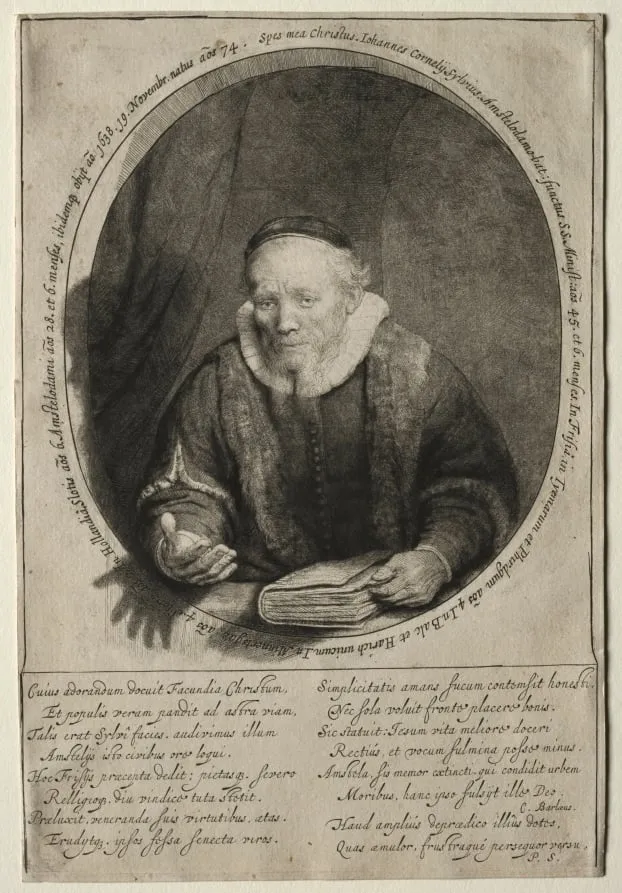
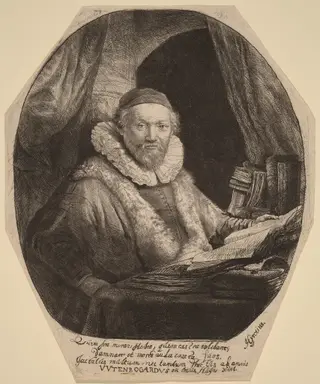
Jan Cornelis Sylvius, Preacher is a print by the Baroque artist Rembrandt van Rijn. It dates from 1646 and is held in the collection of the Cleveland Museum of Art.
- Accession no.
- 1942.756
- Credit line
- Bequest of John L. Severance
About this work
Overview
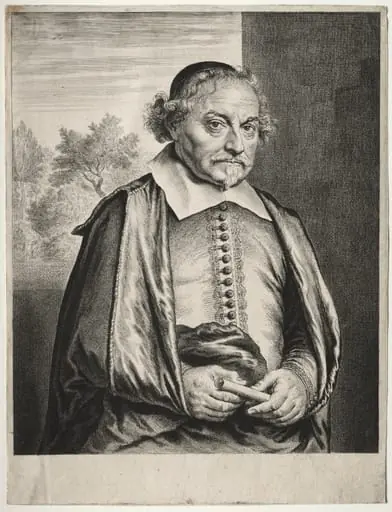
Jan Cornelis Sylvius, Preacher is a 1646 etching and drypoint by Rembrandt van Rijn, distinguished by its experimental use of sulphur tint and gray wash.
Jan Cornelis Sylvius, Preacher is a 1646 etching and drypoint by Rembrandt van Rijn, distinguished by its experimental use of sulphur tint and gray wash. The work depicts the titular figure, a clergyman, seated in a darkened interior. He is dressed in somber black robes with a stark white collar, his face and hands illuminated by a focused light source that highlights his contemplative expression.
A book rests on the table before him, reinforcing his role as a scholar and preacher. Rembrandt employs deep shadows and subtle tonal gradations to create a sense of volume and psychological depth, moving beyond simple portraiture to capture an intimate moment of reflection. This piece exemplifies the artist's mastery of the etching medium during his mature period, where he frequently explored the interplay of light and shadow to convey spiritual gravity.
The inclusion of sulphur tint, a technique involving the application of a resinous ground to create soft, atmospheric effects, demonstrates Rembrandt's continuous innovation in printmaking. The work stands as a significant example of Dutch Golden Age portraiture, reflecting the era's emphasis on individual character and the quiet dignity of the clergy.
Subject & Meaning
The image depicts a man in somber dress, a white collar framing his face, and a book placed before him, suggesting the role of a preacher or scholar. The solemn expression and the presence of the volume convey an atmosphere of contemplation and religious duty, aligning with the title’s identification of the sitter.
Technique & Style
Rembrandt employs chiaroscuro through stark contrasts between a dark, undefined background and a sharply lit face, creating a three‑dimensional effect. The fine line work and varied hatching illustrate his mastery of tonal gradation in printmaking, allowing subtle modeling of flesh and fabric within the limited medium.
History & Provenance
Since its creation in the mid‑seventeenth century, the print has passed through private collections before entering the Cleveland Museum of Art. The museum acquired it as part of its European graphic arts holdings, where it is displayed alongside other works by Rembrandt and his contemporaries.
Context
The 1640s marked a period when Rembrandt increasingly focused on portraiture and biblical subjects, often using prints to disseminate his images. This work reflects the era’s interest in depicting learned clergy, a theme common in Dutch Protestant society, and showcases the artist’s ability to convey character with minimal detail.
Artist & collection

Artist
Rembrandt Harmenszoon van Rijn, known mononymously as Rembrandt, was a Dutch Golden Age painter, printmaker, and draughtsman.