Artwork
The Blindness of Tobit: the Larger Plate
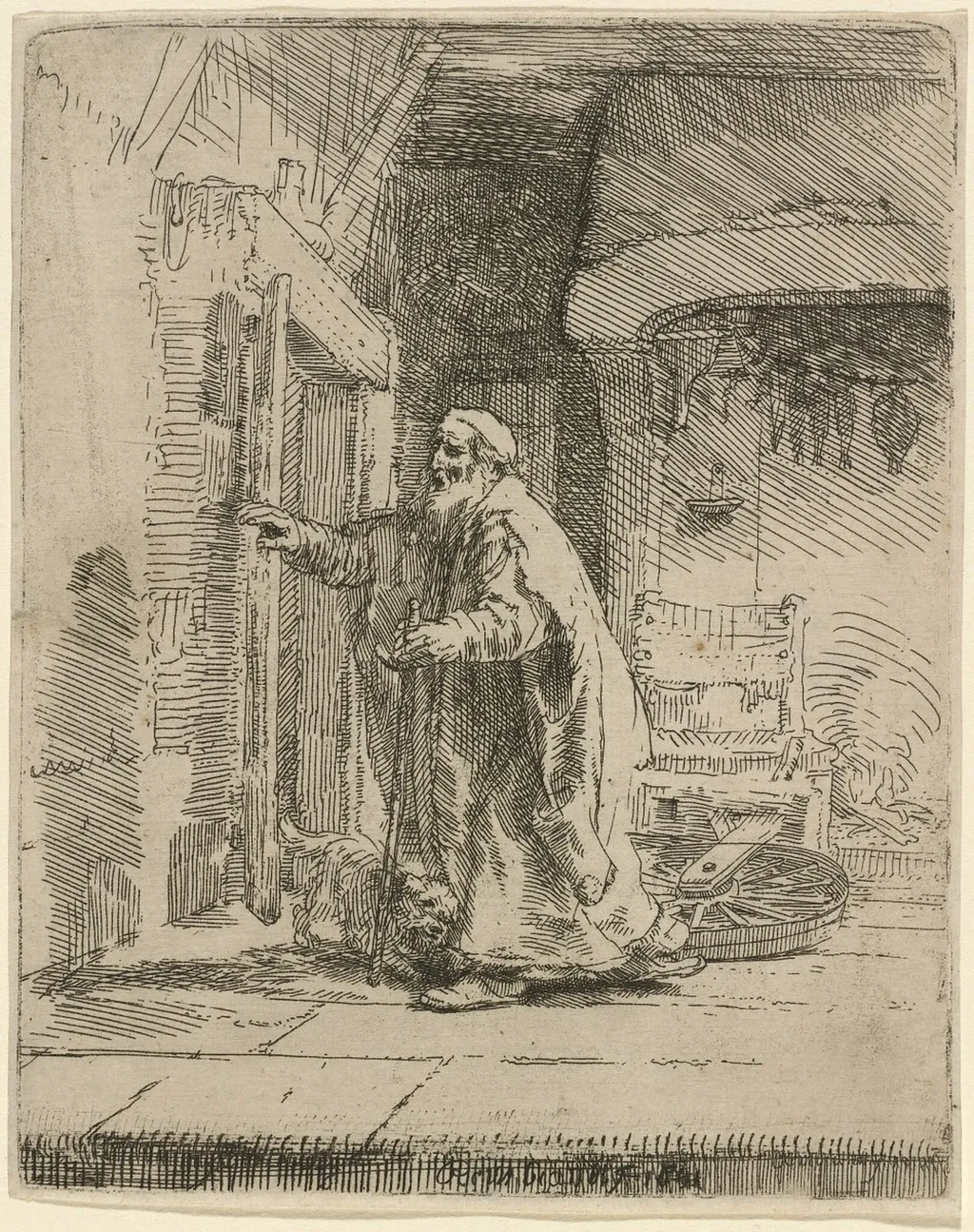
The Blindness of Tobit: the Larger Plate is an ink print by the Baroque artist Rembrandt van Rijn. It dates from 1651 and is held in the collection of the National Gallery of Art. Rembrandt’s 1651 etching titled The Blindness of Tobit (Larger Plate) portrays a moment from the Old Testament narrative.
About this work
Overview
Rembrandt’s 1651 etching titled The Blindness of Tobit (Larger Plate) portrays a moment from the Old Testament narrative. Executed as a print, the work combines traditional etching with selective dry‑point accents, resulting in a richly textured image that emphasizes the solemnity of the scene.
Subject & Meaning
At the composition’s centre stands an aged Tobit, his gaze lowered in grief. Clad in a flowing robe and turban, he leans against a doorway, his right hand supporting the frame while his left grips a staff. The darkness surrounding him underscores the biblical theme of loss and divine testing.
Technique & Style
Rembrandt employed bold incised lines and deep cross‑hatching to model volume, while dry‑point additions sharpened the foreground’s edges. The interplay of light and shadow, chiaroscuro, creates a three‑dimensional effect, drawing the eye to Tobit’s figure and enhancing the emotional weight of the moment.
History & Provenance
The larger plate version was completed in 1651, during the later phase of Rembrandt’s printmaking career when he explored more dramatic tonal contrasts. The work has been catalogued among his biblical series and remains in several museum collections, illustrating his mature approach to narrative etching.
Own this work as a print
Artist & collection

Artist
Rembrandt Harmenszoon van Rijn, known mononymously as Rembrandt, was a Dutch Golden Age painter, printmaker, and draughtsman.

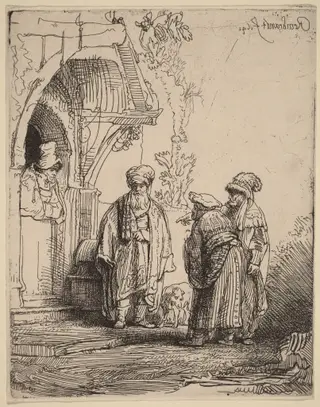 Three Oriental Figures (Jacob and Laban?)
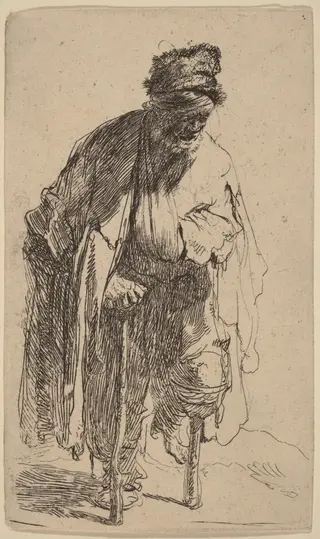 Beggar with a Wooden Leg
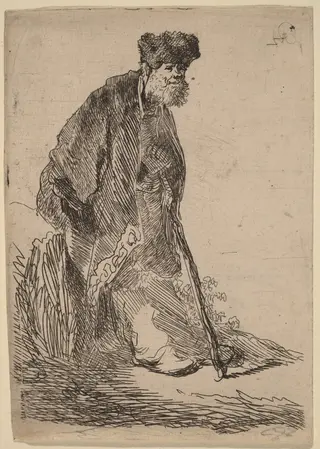 Man in a Coat and Fur Cap Leaning against a Bank
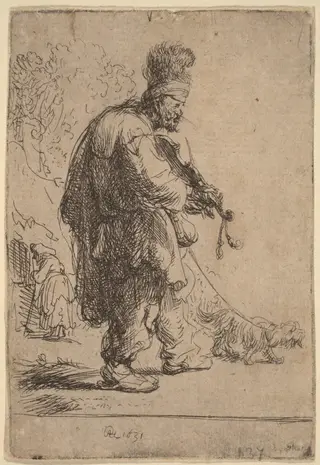 The Blind Fiddler
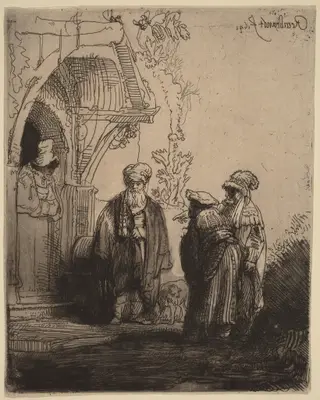 Three Oriental Figures (Jacob and Laban?)
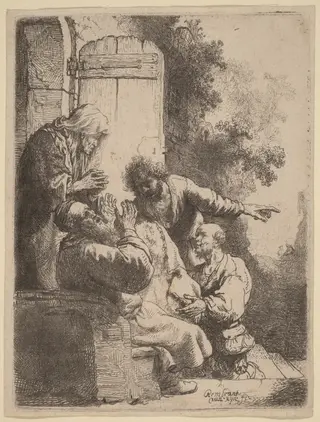 Joseph's Coat Brought to Jacob
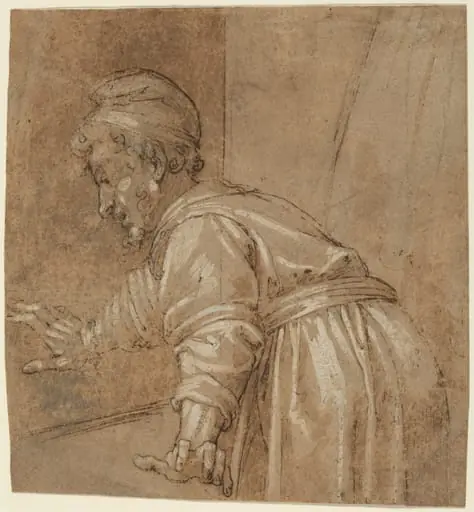 A Man Looking Out a Window
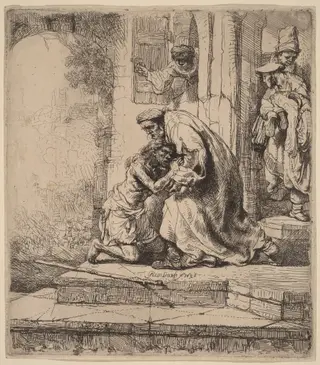 The Return of the Prodigal Son
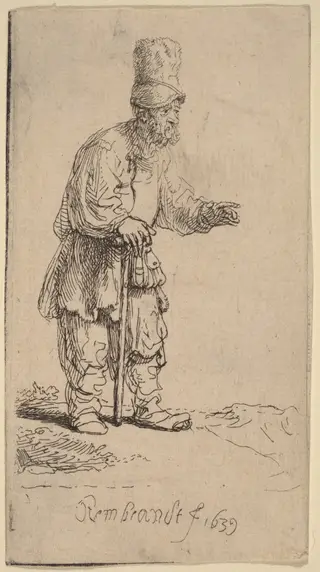 A Peasant in a High Cap, Standing Leaning on a Stick