Artwork
The Fourth Oriental Head
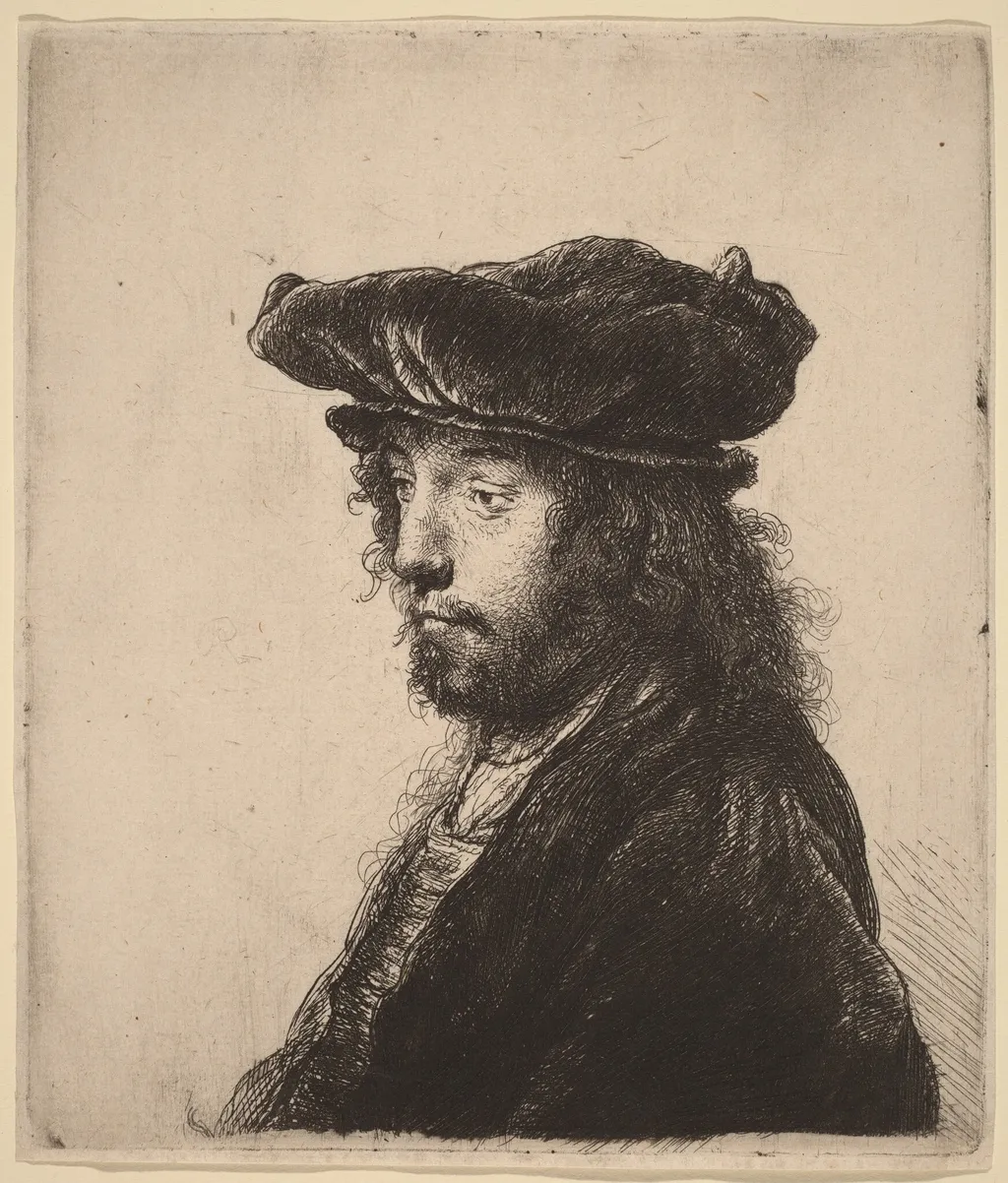
The Fourth Oriental Head is an ink print by the Baroque artist Rembrandt van Rijn. It dates from 1635 and is held in the collection of the National Gallery of Art.
About this work
Overview
It depicts a male figure with a full beard and tightly curled hair, dressed in a low-crowned hat and a high, turned-up collar.
Created around 1635, The Fourth Oriental Head is a black-and-white etching by Rembrandt van Rijn. It depicts a male figure with a full beard and tightly curled hair, dressed in a low-crowned hat and a high, turned-up collar. The image is rendered with deliberate, uneven lines that suggest urgency and tactile engagement with the plate, characteristic of Rembrandt’s experimental approach to printmaking.
Subject & Meaning
The figure’s attire and features evoke an imagined Eastern or Middle Eastern type, common in 17th-century European art to signify exoticism or biblical antiquity. Rather than a specific portrait, the image functions as a study of character and expression, reflecting Rembrandt’s interest in human types and psychological presence through costume and gesture.
Technique & Style
Rembrandt used etching to carve lines directly into a metal plate, which he then inked and pressed onto paper. The rough, scratchy texture results from his aggressive handling of the burin and his willingness to leave visible tool marks. This deliberate roughness enhances the sense of immediacy, transforming technical process into expressive language.
History & Provenance
The print emerged during Rembrandt’s early Amsterdam period, when he was actively exploring printmaking alongside painting. Few records detail its early ownership, but it was likely circulated among collectors and artists who valued his innovative etchings. It remains part of major museum collections today, preserved as a key example of his graphic work.
Context
In the 1630s, Rembrandt was refining his etching technique while responding to market demand for biblical and orientalizing subjects. This print aligns with broader European fascination with the 'Orient' as a cultural construct, yet it diverges from mere stereotype through its intimate, unidealized rendering of the sitter’s presence.
Legacy
The Fourth Oriental Head exemplifies Rembrandt’s influence on the artistic potential of etching. His willingness to embrace imperfection and spontaneity redefined printmaking as a medium for personal expression rather than mere reproduction. Later artists studied his plates for their emotional depth and technical freedom.
Own this work as a print
Artist & collection

Artist
Rembrandt Harmenszoon van Rijn, known mononymously as Rembrandt, was a Dutch Golden Age painter, printmaker, and draughtsman.

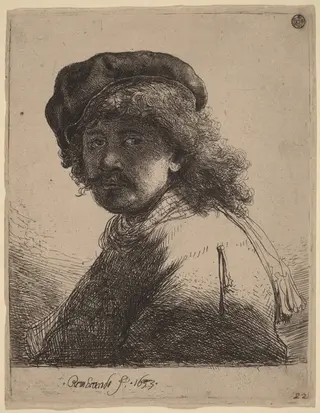 Self-Portrait in a Cap and Scarf with the Face Dark
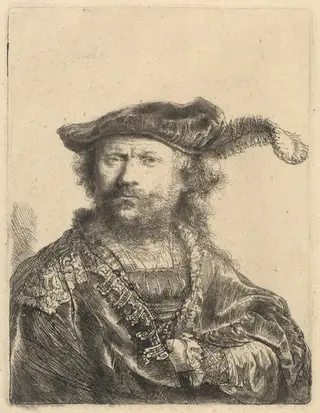 Self-Portrait in a Velvet Cap with Plume
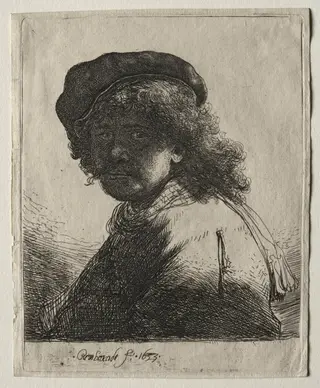 Self-Portrait in a Cap and Scarf with the Face Dark: Bust
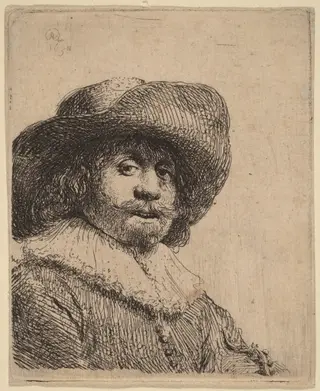 Man in a Broad-Brimmed Hat
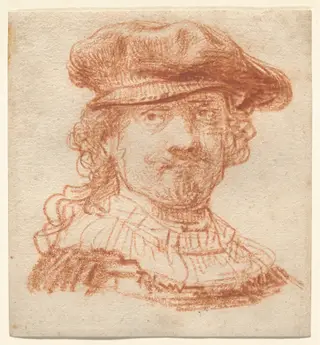 Self-Portrait
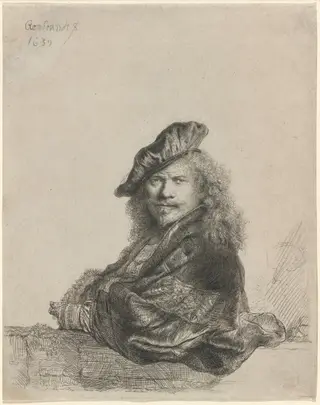 Self-Portrait Leaning on a Stone Sill
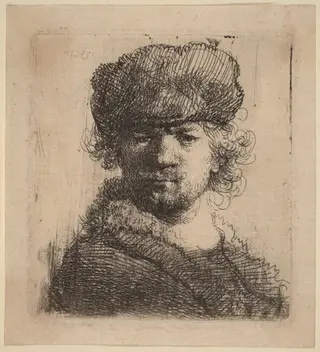 Self-Portrait in a Heavy Fur Cap
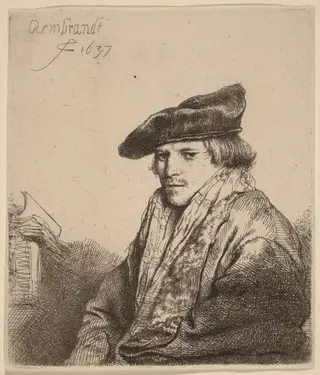 Young Man in a Velvet Cap (Petrus Sylvius?)
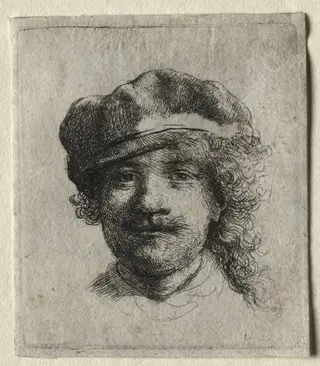 Self-Portrait Wearing a Soft Cap: Full Face, Head Only
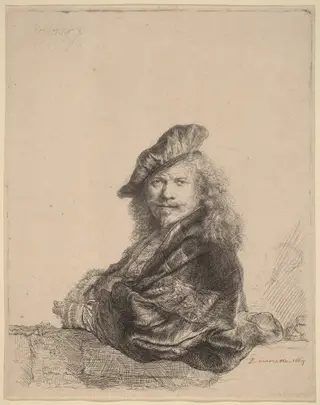 Self-Portrait Leaning on a Stone Sill
- The Fourth Oriental Head
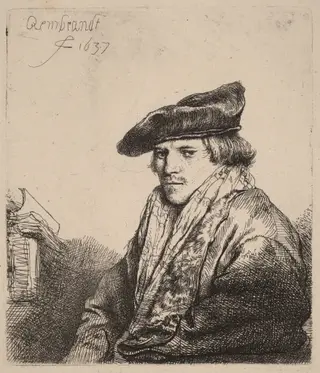 Young Man in a Velvet Cap (Petrus Sylvius?)