Artwork
Turbaned Soldier on Horseback
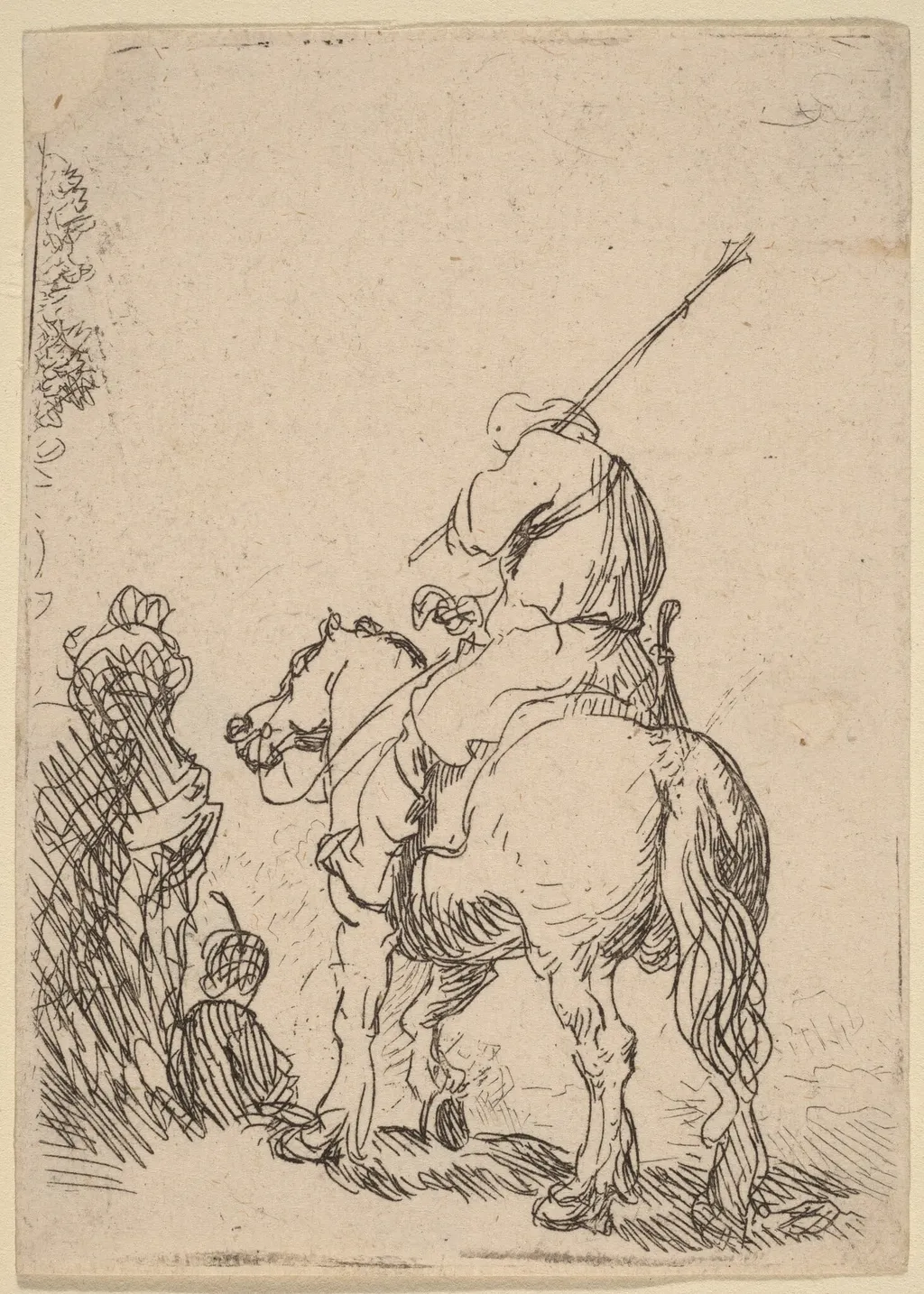
Turbaned Soldier on Horseback is an ink print by the Baroque artist Rembrandt van Rijn. It dates from 1632 and is held in the collection of the National Gallery of Art.
About this work
Overview
The work depicts a mounted figure in exotic attire, characterized by a prominent turban and a spear, rendered with the artist's characteristic economy of line.
Turbaned Soldier on Horseback is an etching by Rembrandt van Rijn created in 1632. The work depicts a mounted figure in exotic attire, characterized by a prominent turban and a spear, rendered with the artist's characteristic economy of line. Rembrandt employs quick, loose strokes to define the anatomy of the horse and the drapery of the rider, capturing a sense of immediate movement rather than static detail.
A smaller walking figure and a tree appear in the background, executed with rough, sketchy marks that establish depth without distracting from the central subject. Produced during the artist's early career in Amsterdam, this piece reflects his intense interest in the study of human expression, costume, and dynamic composition. It exemplifies his mastery of the etching medium, where he utilized varied line weights and textures to suggest form and atmosphere.
The work stands as a significant example of Rembrandt's exploration of Orientalist themes and his ability to convey narrative energy through minimal means, foreshadowing his later, more complex graphic works.
Subject & Meaning
The composition presents a soldier wearing a turban, brandishing a spear while astride a horse whose musculature is suggested by a few decisive strokes. A secondary, diminutive figure walks beside a tree in the background, adding depth and hinting at a narrative of travel or military patrol.
Technique & Style
Created by incising a design into a metal plate, the etching relies on ink filling the carved lines, producing a textured, sketch‑like quality when printed. Rembrandt’s handling of the needle yields loose, confident marks that convey movement, a characteristic approach for his preparatory studies.
History & Provenance
The work belongs to Rembrandt’s early period, when he explored printmaking as a means of rapid experimentation. Though not a finished composition, it reflects his interest in portraying exotic attire and equestrian subjects, themes that appear in his later, more elaborate paintings and prints.
Own this work as a print
Artist & collection

Artist
Rembrandt Harmenszoon van Rijn, known mononymously as Rembrandt, was a Dutch Golden Age painter, printmaker, and draughtsman.

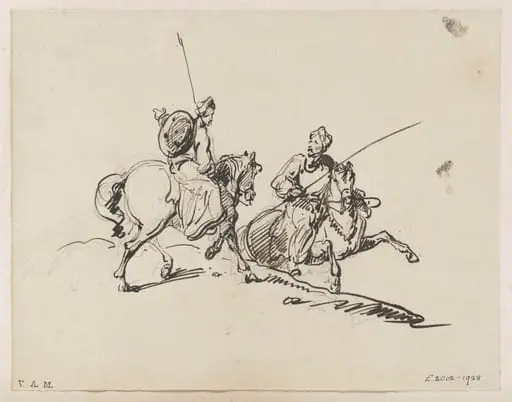 Two turbaned horsemen
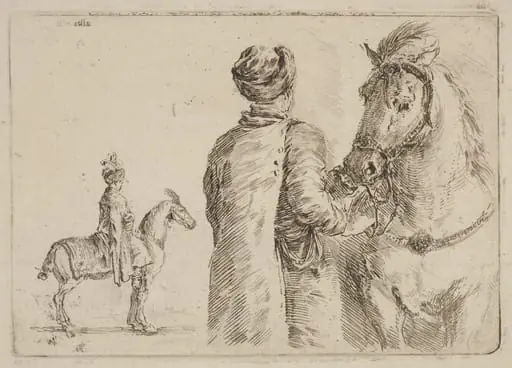 Polish Attendant Holding the Bridle of a Horse
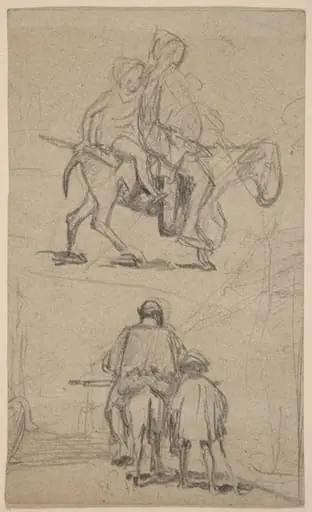 Father, Son, and Donkey
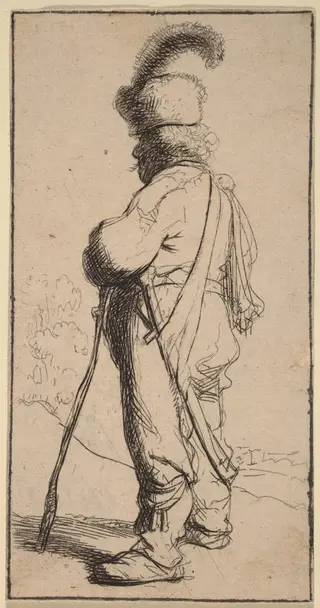 Polander Leaning on a Stick
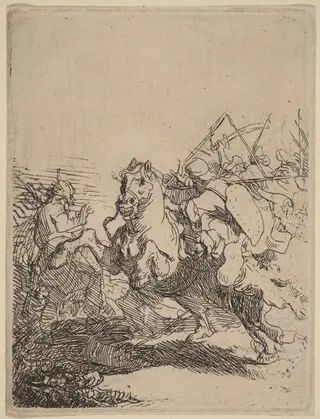 A Cavalry Fight
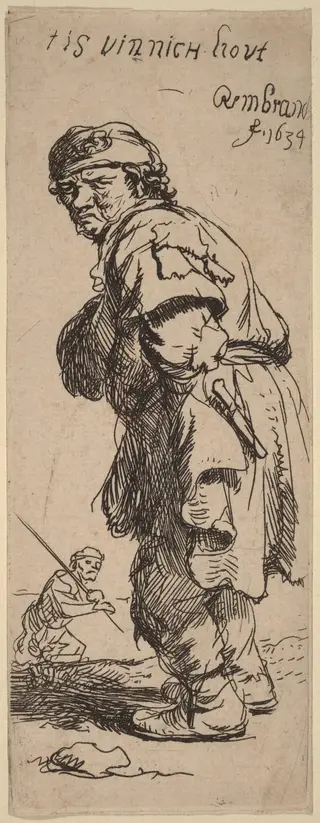 A Peasant Calling Out: "tis vinnich kout" (It's biting cold)
 Soldier Holding a Fowl by the Feet
 Landscape with Horsemen
 The Baptism of the Eunuch
 Landscape with the Taming of a Horse