Artwork
Squirrel on Grapevine
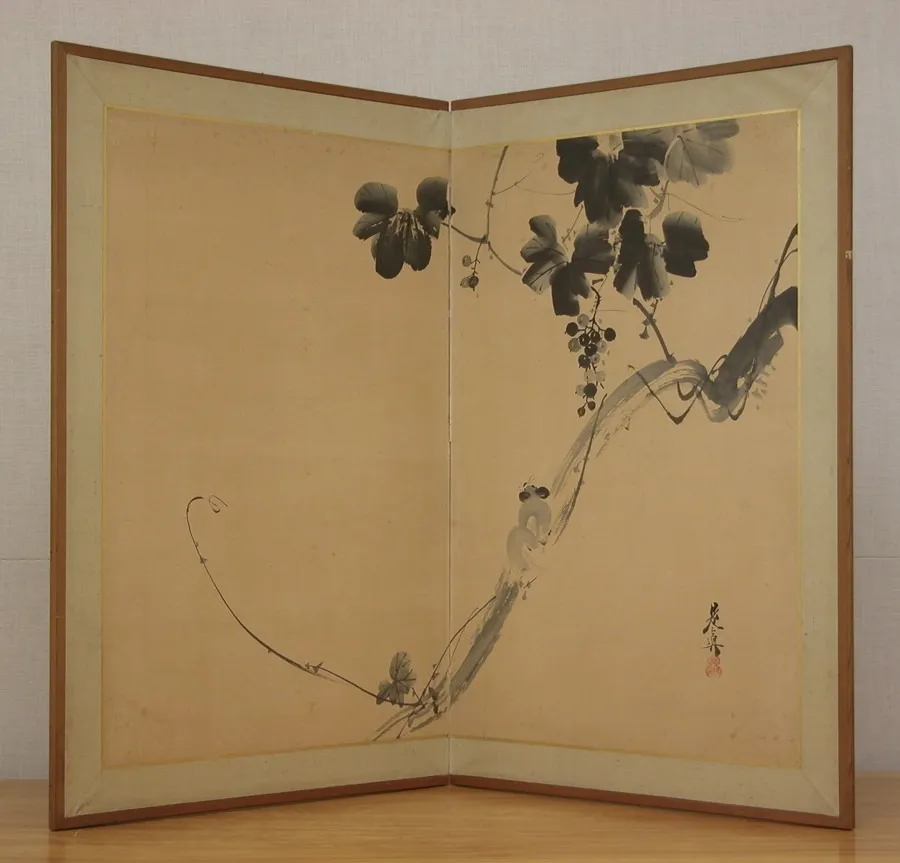
Squirrel on Grapevine is an unspecified painting by the Ukiyo-e artist Shibata Zeshin. It dates from 1849 and is held in the collection of the Metropolitan Museum of Art.
About this work
Technique & Style
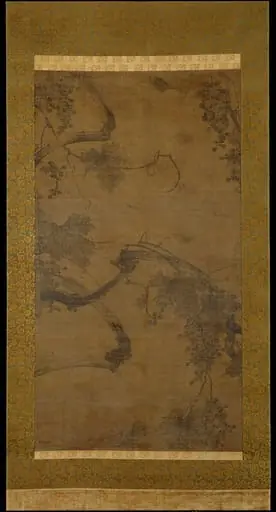
The work depicts a small animal perched among vine leaves rendered with fine detail and naturalistic shading characteristic of the artist's brushwork.
Squirrel on Grapevine is an oil painting on paper attributed to Shibata Zeshin created in 1849 in Japan. The work depicts a small animal perched among vine leaves rendered with fine detail and naturalistic shading characteristic of the artist's brushwork. It is housed in the Metropolitan Museum of Art collection and retains its original support without significant degradation noted in documentation.
History & Provenance
Squirrel on Grapevine is a painting by Shibata Zeshin, created in 1849 in Japan. It belongs to the collection of the Metropolitan Museum of Art in New York. The work entered the museum's holdings as part of its established collection, reflecting its recognized significance in Japanese art.
Squirrel on Grapevine is held by the Metropolitan Museum of Art, New York, where it is accessioned as 1975.268.106.
The painting was exhibited at the Metropolitan Museum of Art in 2012 as part of the display Japanese Landscape Painting in the Edo Period: Selections from the Collection of Mr. and Mrs. John M. Crawford Jr.
Overview
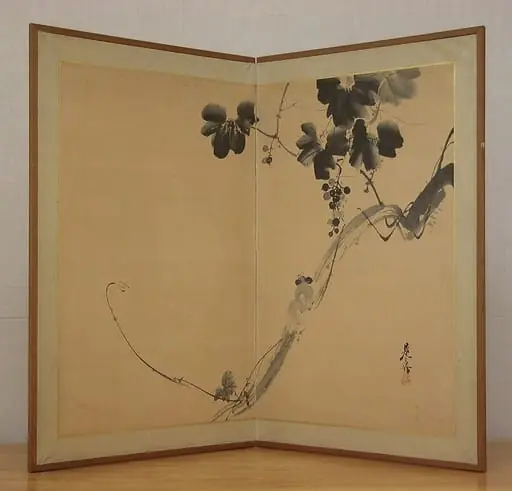
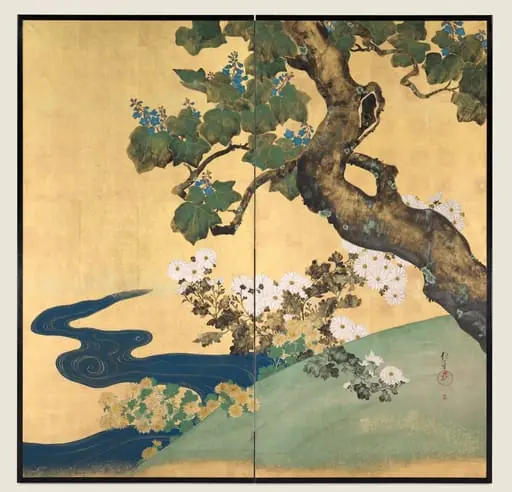
Created in 1849 by the Japanese painter Shibata Zeshin, “Squirrel on Grapevine” is a two‑panel folding screen now in the collection of the Metropolitan Museum of Art. The work presents a modest composition of a small squirrel clinging to a twisting vine, set against a largely unadorned background that emphasizes the dark silhouettes of grapes, leaves and the animal.
Subject & Meaning
The scene captures a moment of quiet observation in nature: a squirrel ascends a curved grapevine, its tiny form rendered with clarity against the stark backdrop. While no explicit narrative is provided, the juxtaposition of the animal with cultivated vines may allude to themes of harmony between wildlife and cultivated garden spaces, a common motif in Edo‑period art.
Artist & collection