Artwork
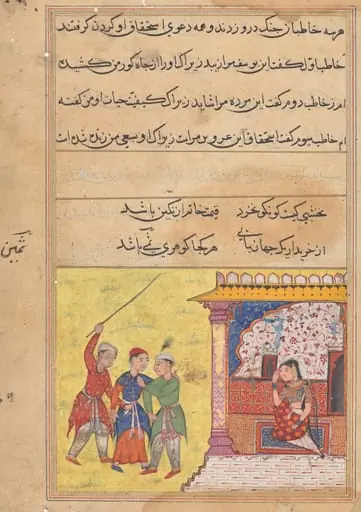
The court jester meets a Zangi dancing with joy, and learns from him that the cause of his happiness is his assignation with a woman who is the jester’s own wife, from a Tuti-nama (Tales of a Parrot): Twenty-second Night
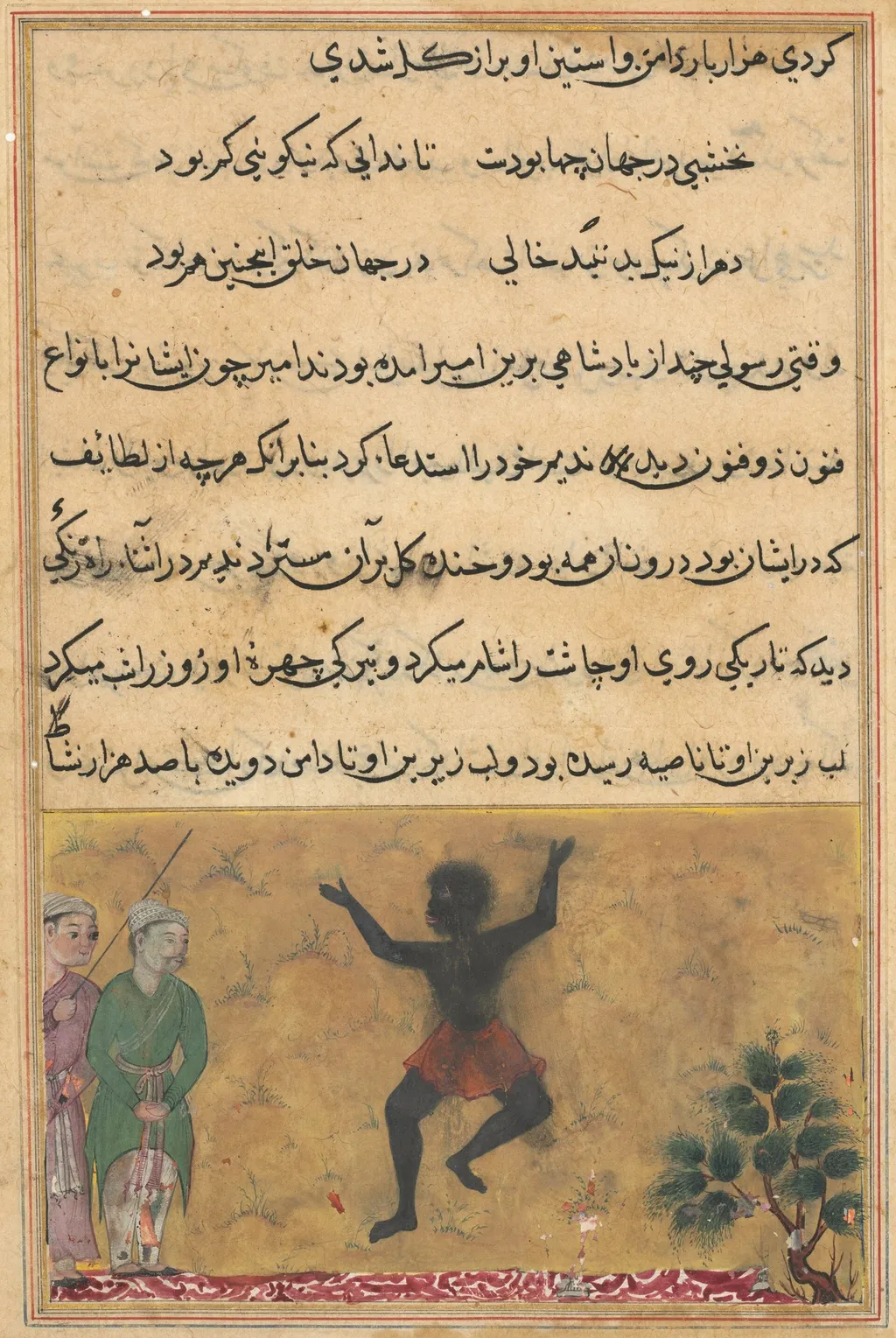
The court jester meets a Zangi dancing with joy, and learns from him that the cause of his happiness is his assignation with a woman who is the jester’s own wife, from a Tuti-nama (Tales of a Parrot): Twenty-second Night is an unspecified painting. It dates from 1560 and is held in the collection of the Cleveland Museum of Art.
About this work
Subject & Meaning
The jester learns that the dancer’s happiness stems from a secret assignation with a woman who is, unbeknownst to the Zangi, the jester’s own wife.
The painting illustrates a scene from the Twenty‑second Night of the Tuti‑nama (Tales of a Parrot) in which a court jester encounters a Zangi, an African dancer, who is dancing with joy. The jester learns that the dancer’s happiness stems from a secret assignation with a woman who is, unbeknownst to the Zangi, the jester’s own wife. The image captures the moment of ironic revelation, underscoring themes of mistaken identity, cuckoldry, and the comic folly that runs through the parrot’s tales. As a Mughal‑era manuscript illustration, it visually narrates the moral and humorous lesson embedded in the story.
History & Provenance
Created in 1560 within the Mughal Empire, this painting depicts a scene from the Twenty-second Night of the Tuti-nama. The work is attributed to an unknown artist. It is currently held in the collection of the Cleveland Museum of Art, where it was accessioned under the inventory number 1962.279.155.a.
The painting is held by the Cleveland Museum of Art, where it is recorded as inventory number 1962.279.155.a. Acquired in 1962, the work entered the museum’s collection from an unspecified source. It has not been recorded as included in any subsequent exhibitions in the museum’s publicly documented history.
Context
The painting depicting the court jester meeting a Zangi dancing with joy was created in 1560 in the Mughal Empire and is housed in the Cleveland Museum of Art. It illustrates a narrative from the Tuti-nama (Tales of a Parrot): Twenty-second Night, in which the jester learns of his happiness through an assignation with his own wife. The work is attributed to an unknown artist and forms part of a broader tradition of Mughal miniature painting that blends narrative illustration with intricate detail.
Scholars note its stylistic connections to Persianate manuscript traditions while emphasizing its unique synthesis of courtly humor and emotional revelation.
The painting’s iconography and composition have been analyzed in relation to Safavid and Ottoman visual cultures, highlighting cross‑regional influences in miniature art. Its inclusion in a Cleveland Museum of Art collection underscores its significance within Western scholarship on South Asian artistic exchange.
The artist’s broader context remains partially obscure, though the piece reflects the patronage networks of Mughal elite circles that valued didactic storytelling through visual media.
Legacy
The painting entered the collection of the Cleveland Museum of Art, where it remains on view as part of its Mughal Indian holdings. Its depiction of narrative interplay between courtly figures and supernatural beings influenced later Indian miniature workshops that explored similar moral allegories, and scholars have cited its compositional daring as a precedent for blending figuration with decorative patterning in subsequent manuscript production.
Overview
The work is a miniature painting illustrating a scene from the twenty‑second night of the Persian collection of stories known as the Tuti‑nama, or “Tales of a Parrot.” In the image a court jester encounters a dancing Zangi, whose exuberant leap conveys joy, while the jester stands still, garbed in green and purple, appearing startled by the unexpected revelation.
Technique & Style
Executed in the traditional Persian miniature manner, the painting employs delicate brushwork and vibrant pigments. The figures are rendered in flat, decorative planes, with the standing figure in richly patterned green and purple robes and the leaping dancer in a bright red skirt and dark trousers. Black ink calligraphy arches above the scene, integrating text and image as is customary in manuscript illustration.
Artist & collection

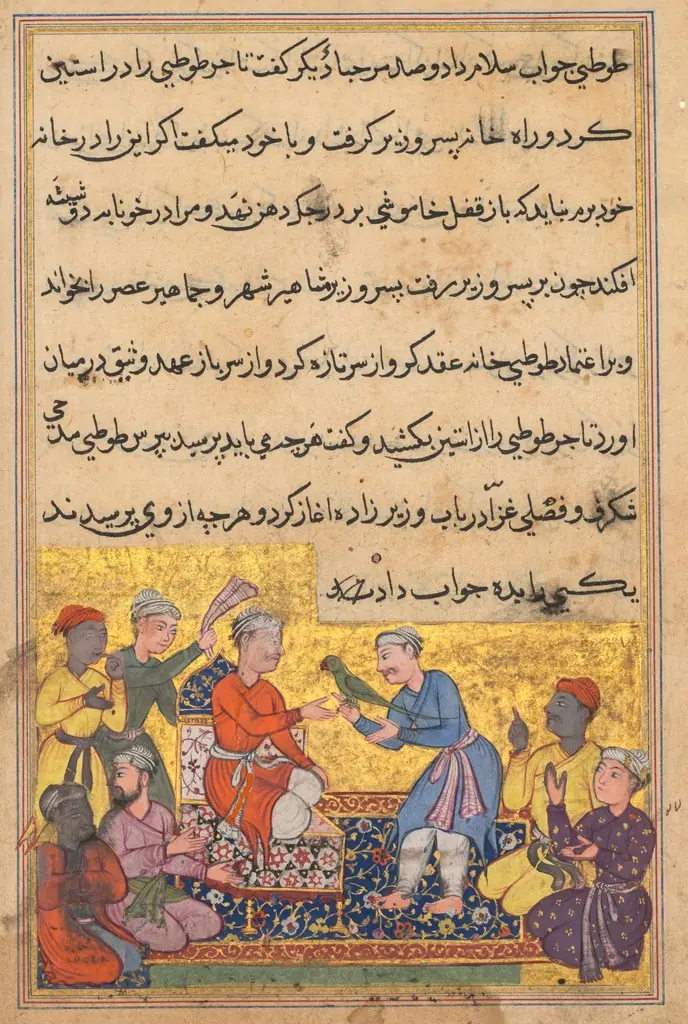 The magic parrot of the merchant talks to the vizier’s son, from a Tuti-nama (Tales of a Parrot): Tenth Night
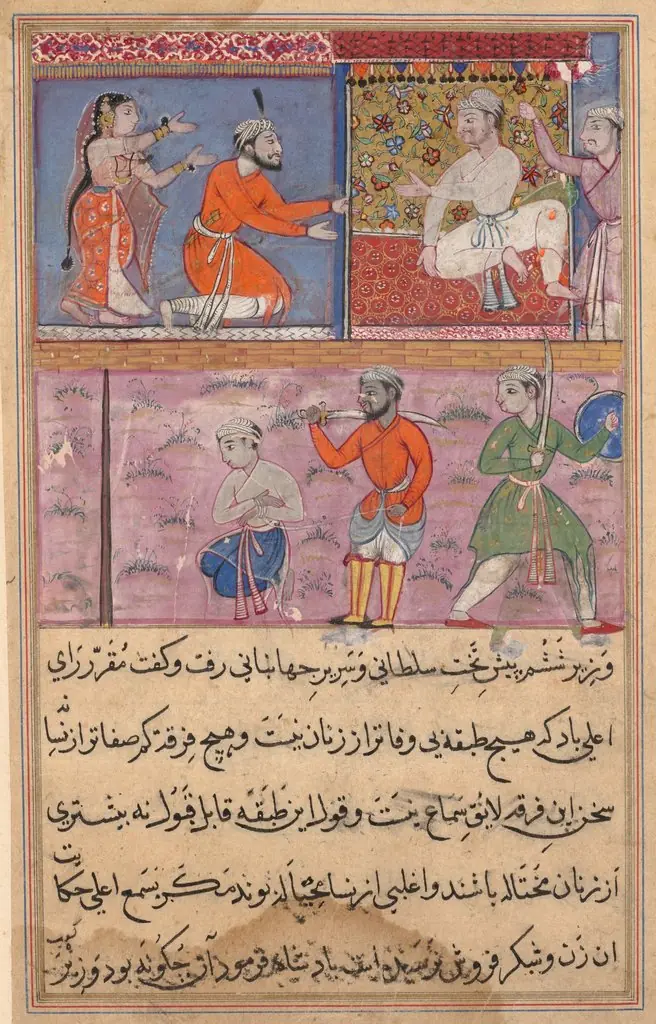 Page from Tales of a Parrot (Tuti-nama): text page
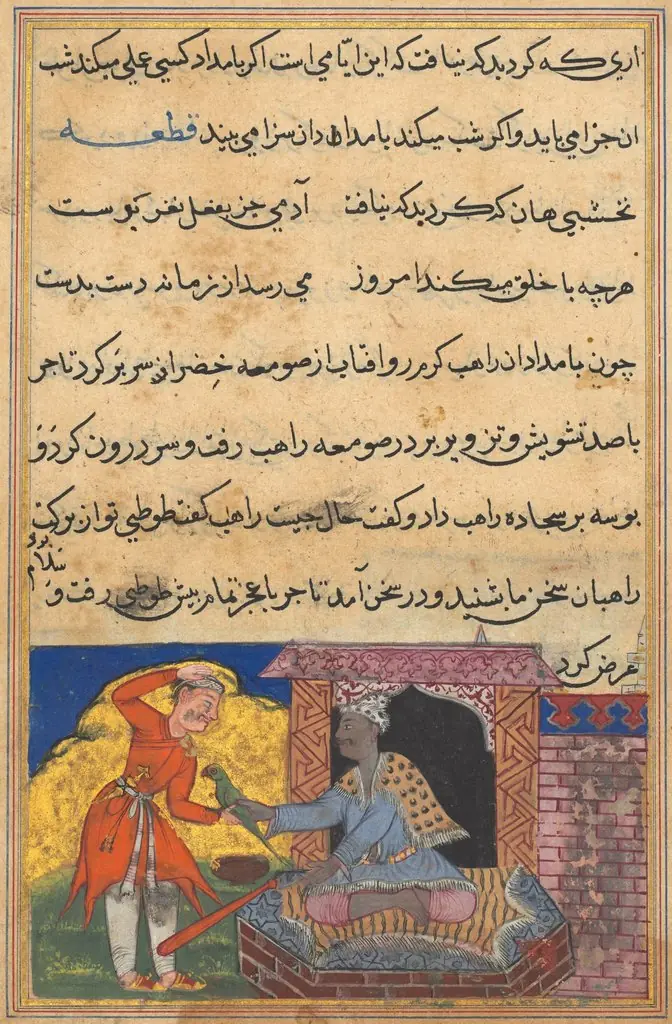 The monk returns the magic parrot to its rightful owner, the merchant, from a Tuti-nama (Tales of a Parrot): Tenth Night
 The bird of seven colors brings a sable to the pious man, from a Tuti-nama (Tales of a Parrot): Fifty-second Night
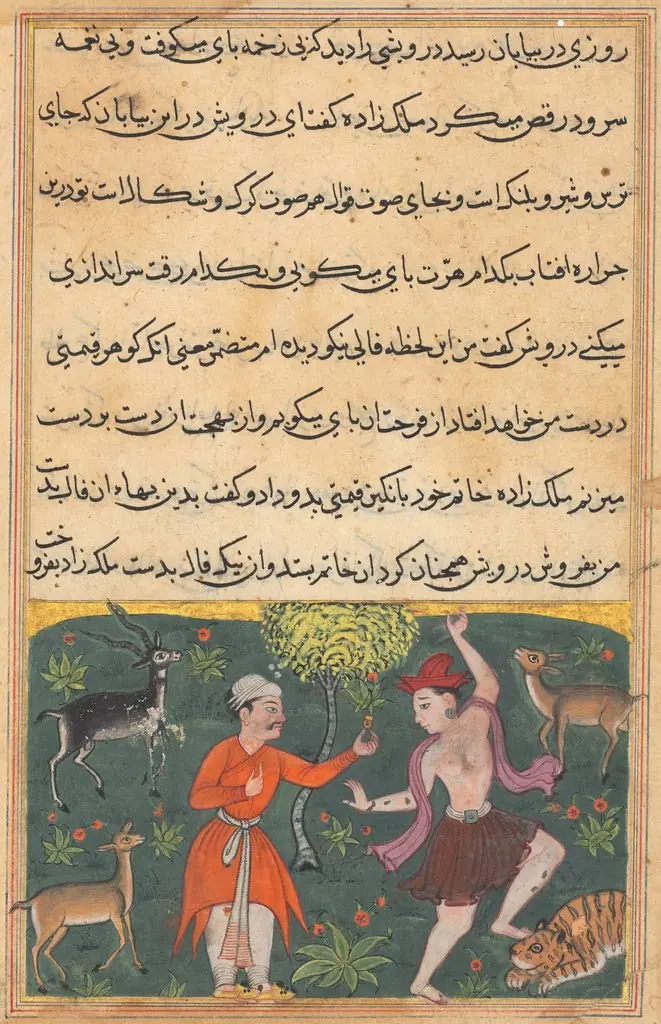 The prince meets a carefree dancing dervish whose good fortune he purchases for his ring, from a Tuti-nama (Tales of a Parrot): Eighteenth Night
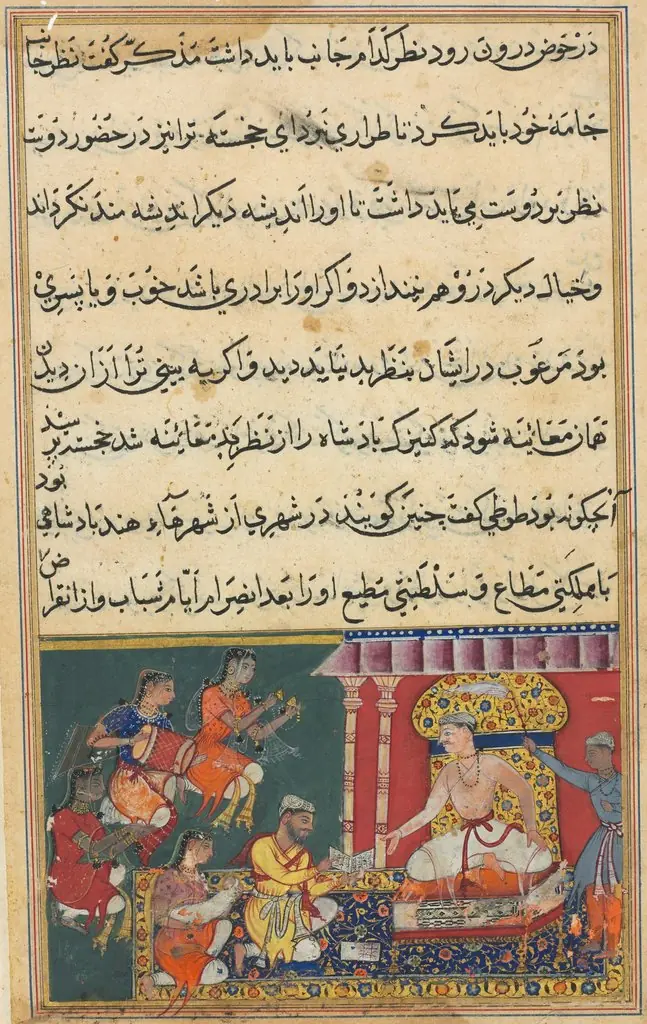 The astrologer predicts a calamity for the newly born prince in his thirteenth year, but one which he would be able to overcome, from a Tuti-nama (Tales of a Parrot): Eighth Night
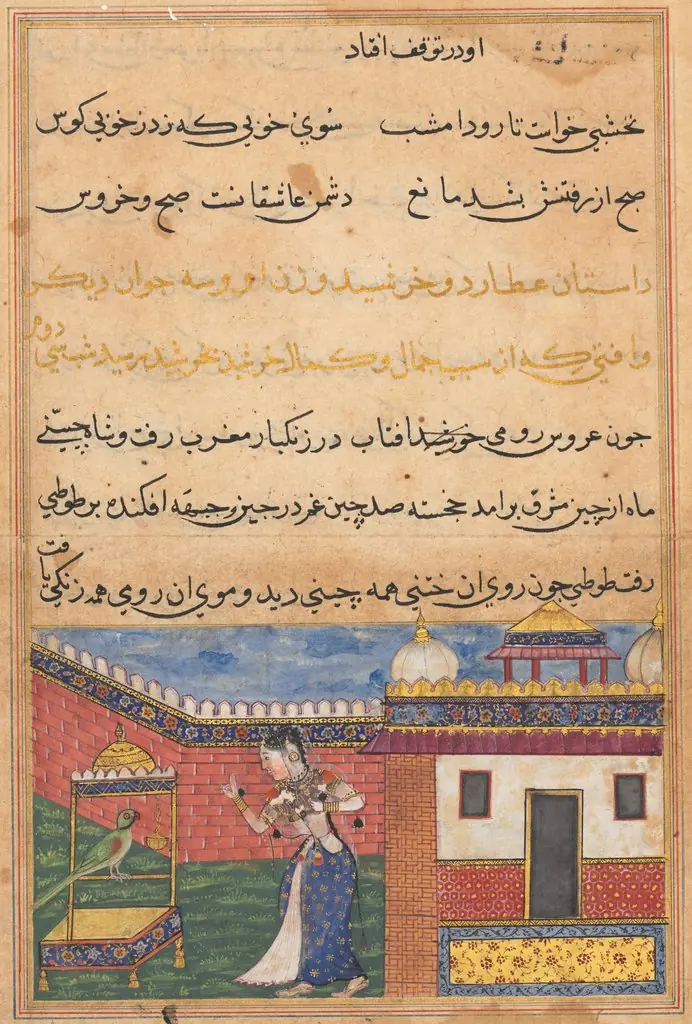 The parrot addresses Khujasta at the beginning of the thirty-second night, from a Tuti-nama (Tales of a Parrot)
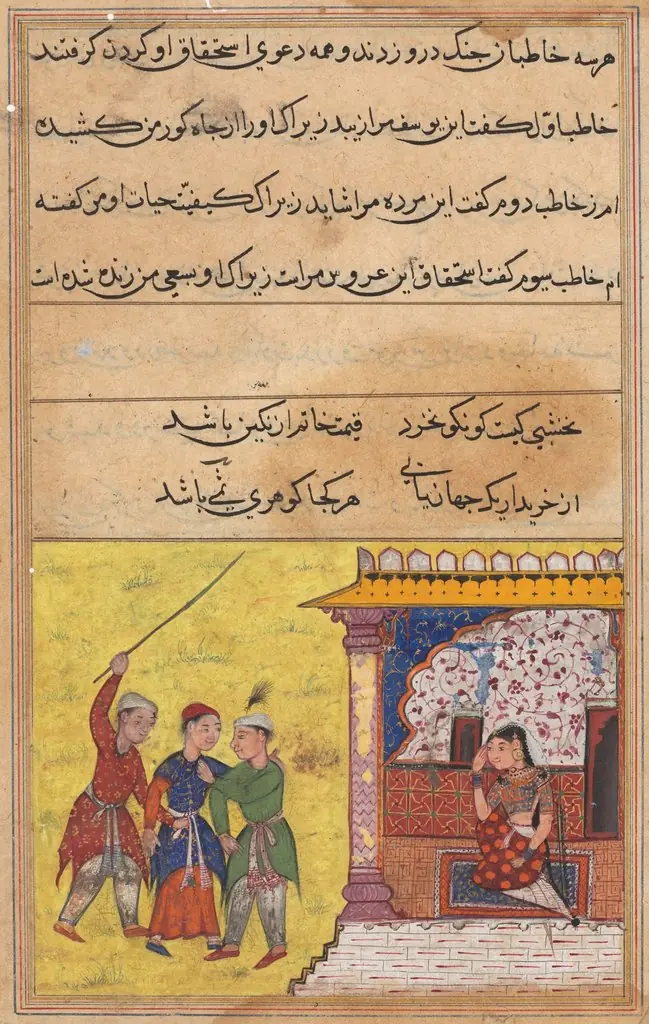 The three suitors again begin to quarrel among themselves for the hand of the devotee’s daughter, from a Tuti-nama (Tales of a Parrot): Twentieth Night
- The court jester meets a Zangi dancing with joy, and learns from him that the cause of his happiness is his assignation with a woman who is the jester’s own wife, from a Tuti-nama (Tales of a Parrot): Twenty-second Night
 The parrot addresses Khujasta at the beginning of the thirty-second night, from a Tuti-nama (Tales of a Parrot)
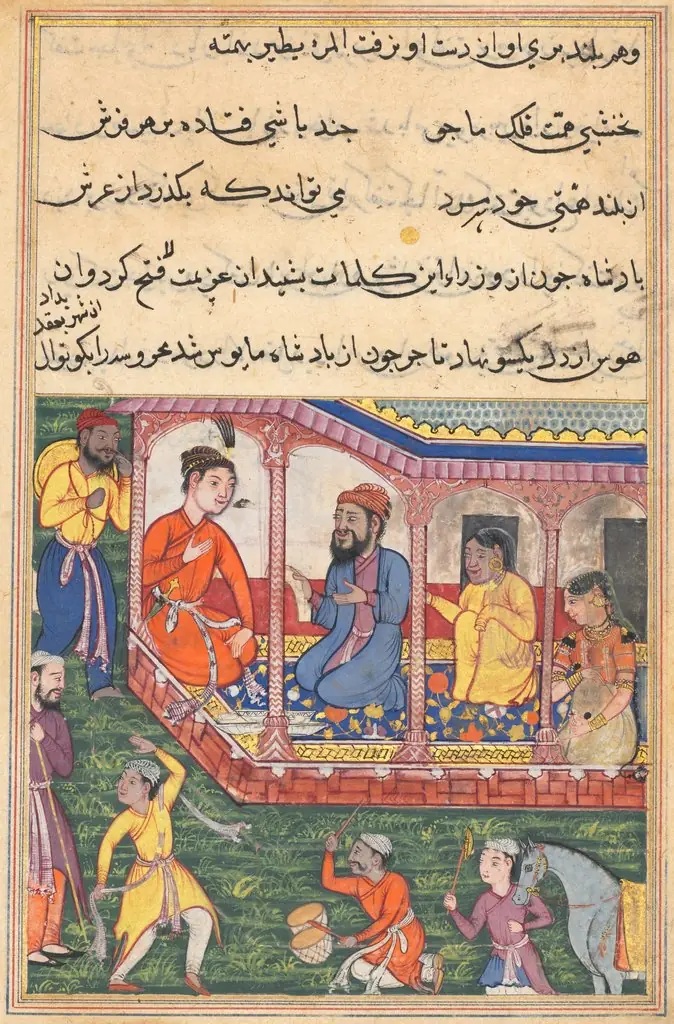 Mahrusa’s marriage to the prefect of the city, from a Tuti-nama (Tales of a Parrot): Thirty-sixth Night
 The three suitors again begin to quarrel among themselves for the hand of the devotee’s daughter, from a Tuti-nama (Tales of a Parrot): Twentieth Night