Artwork
Portrait of the Artist's daughter Lavinia
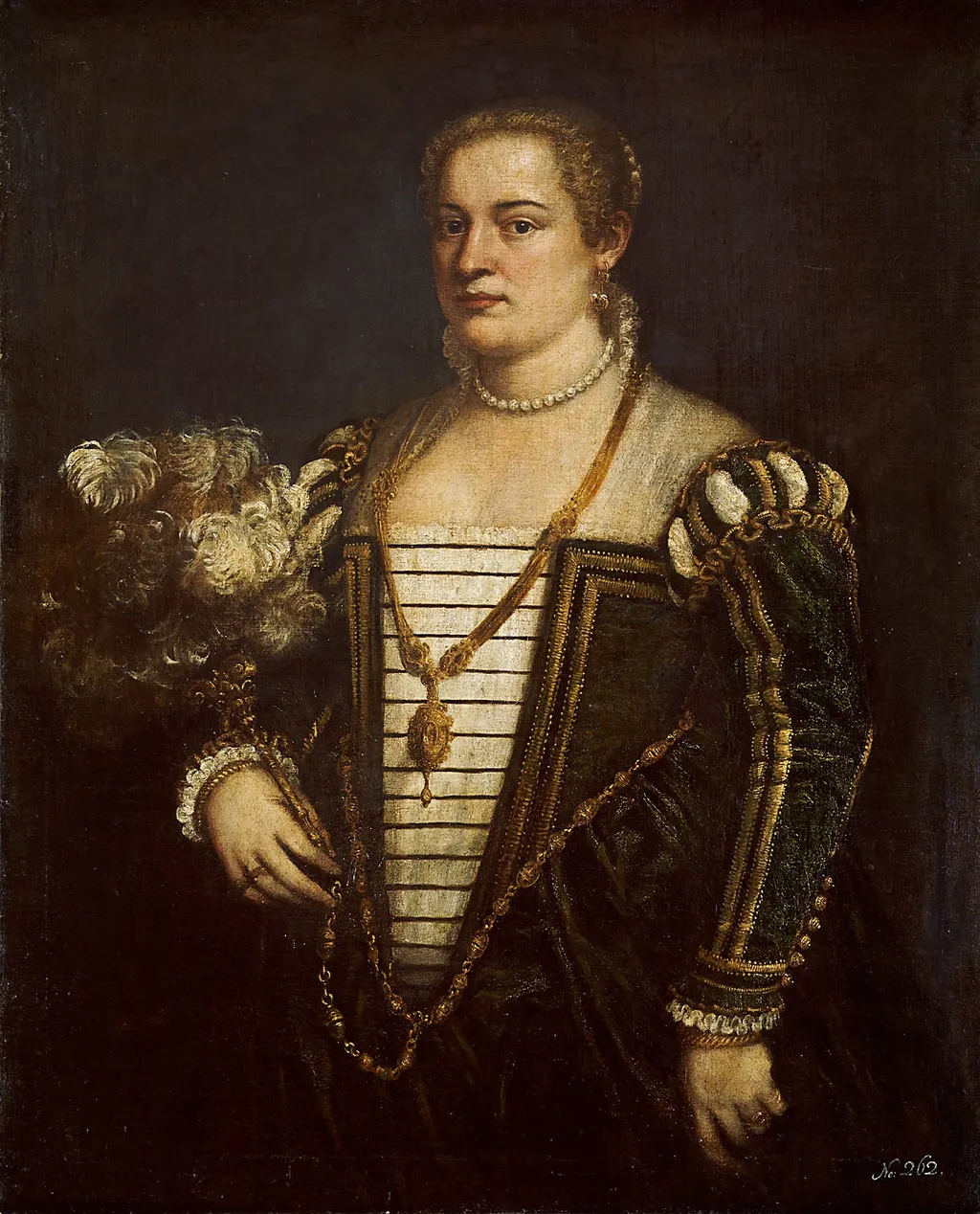
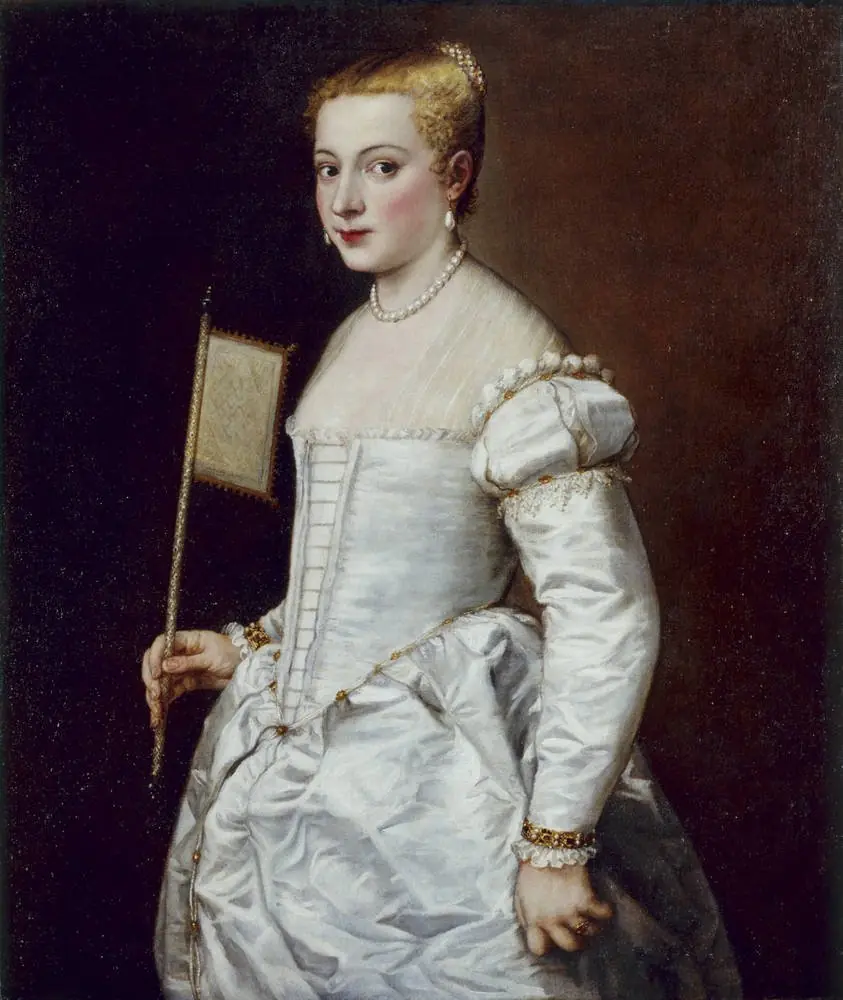
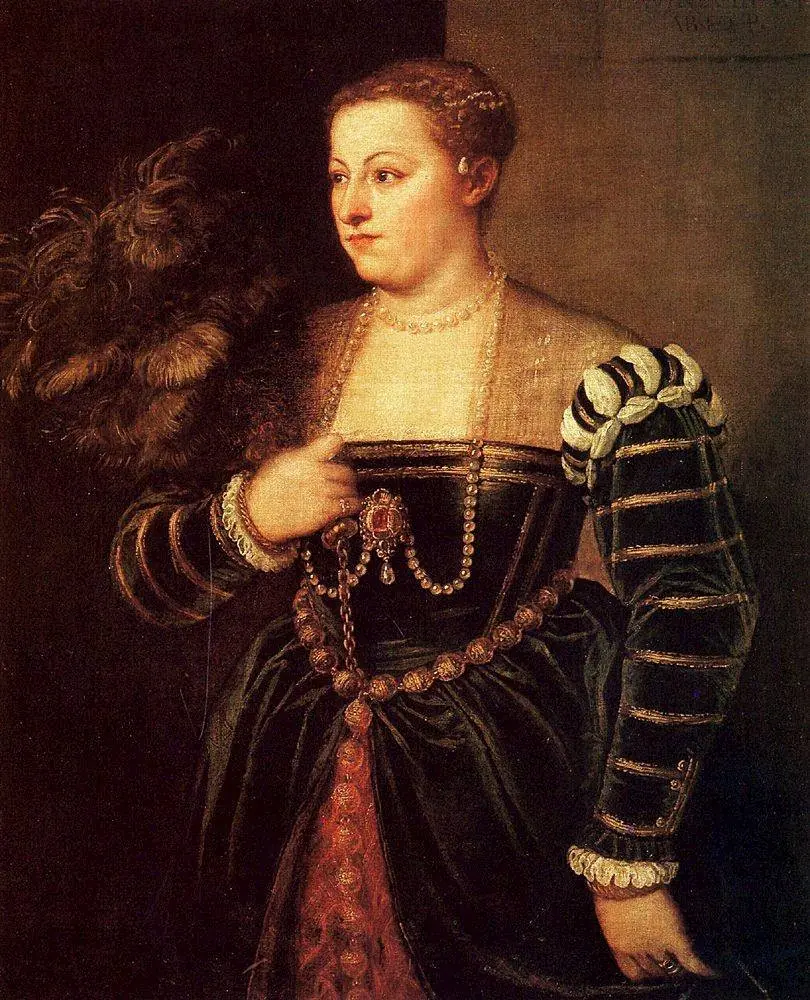
Portrait of the Artist's daughter Lavinia is an oil painting by the High Renaissance artist Titian. It dates from 1565 and is held in the collection of the Kunsthistorisches Museum.
About this work
Subject & Meaning
The subject is identified explicitly as Lavinia Vecellio, establishing the piece as a familial representation within the artist's oeuvre.
The work depicts Lavinia Vecellio, the daughter of the artist Titian. Created in 1565, the painting serves as a portrait of this specific family member rather than an allegorical figure. The subject is identified explicitly as Lavinia Vecellio, establishing the piece as a familial representation within the artist's oeuvre. As a portrait genre work, its primary meaning lies in the commemoration of the artist's daughter.
Technique & Style
Executed in oil on poplar panel in 1565, the portrait measures 111 cm in height and 90.5 cm in width.
The handling is characteristic of Titian’s late style, with fluid, blended brushwork that softens contours and imbues the sitter’s features with a delicate, lifelike presence. Subtle glazes modulate the modeling of Lavinia’s face, while the dark background concentrates attention on her poised yet tender expression. The restrained palette, anchored by earthy browns and creamy whites, contrasts with the luminous flesh tones achieved through successive translucent layers.
History & Provenance
Created in 1565, the Portrait of the Artist's daughter Lavinia is an oil painting on panel attributed to Titian and his workshop. The work depicts Lavinia Vecellio, the daughter of the artist. Historical records indicate that the painting was once in the possession of Archduke Leopold Wilhelm of Austria.
It is currently held in the collection of the Kunsthistorisches Museum in Vienna. The dimensions of the panel are 111 cm in height and 90.5 cm in width.
The painting is held in the collection of the Kunsthistorisches Museum. Historical records indicate that the work was once owned by Archduke Leopold Wilhelm of Austria before entering the museum's holdings. The provided sources do not contain specific inventory numbers or details regarding the artwork's exhibition history.
Overview
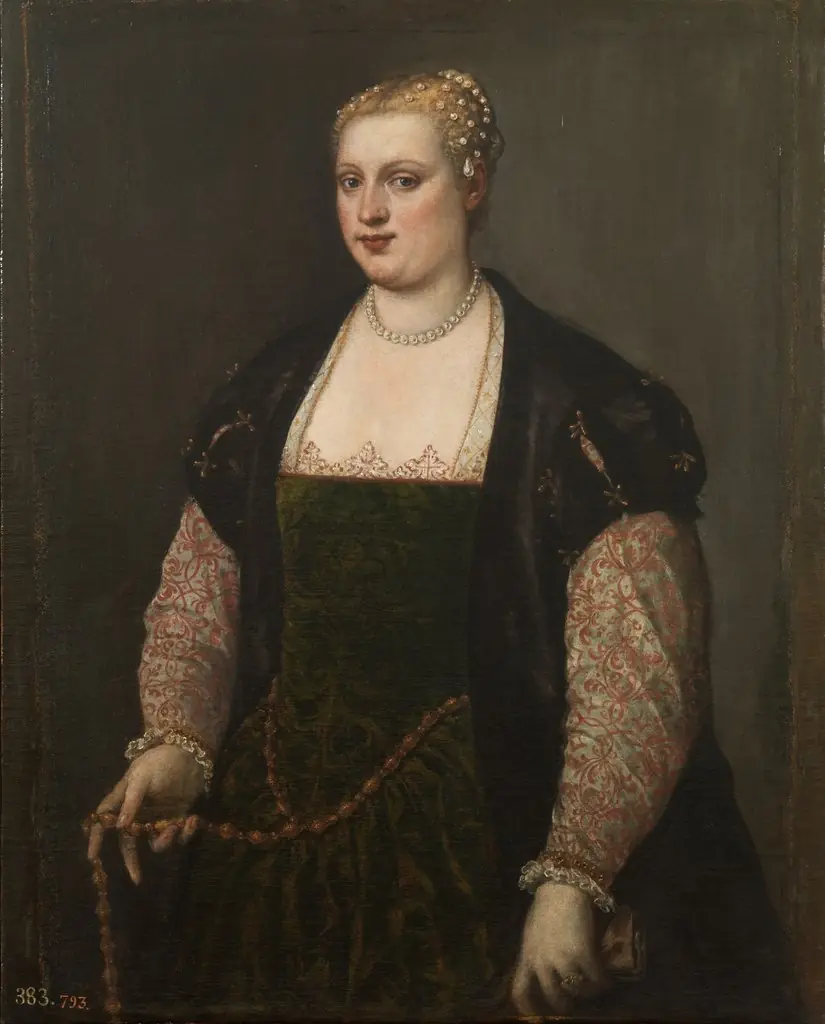
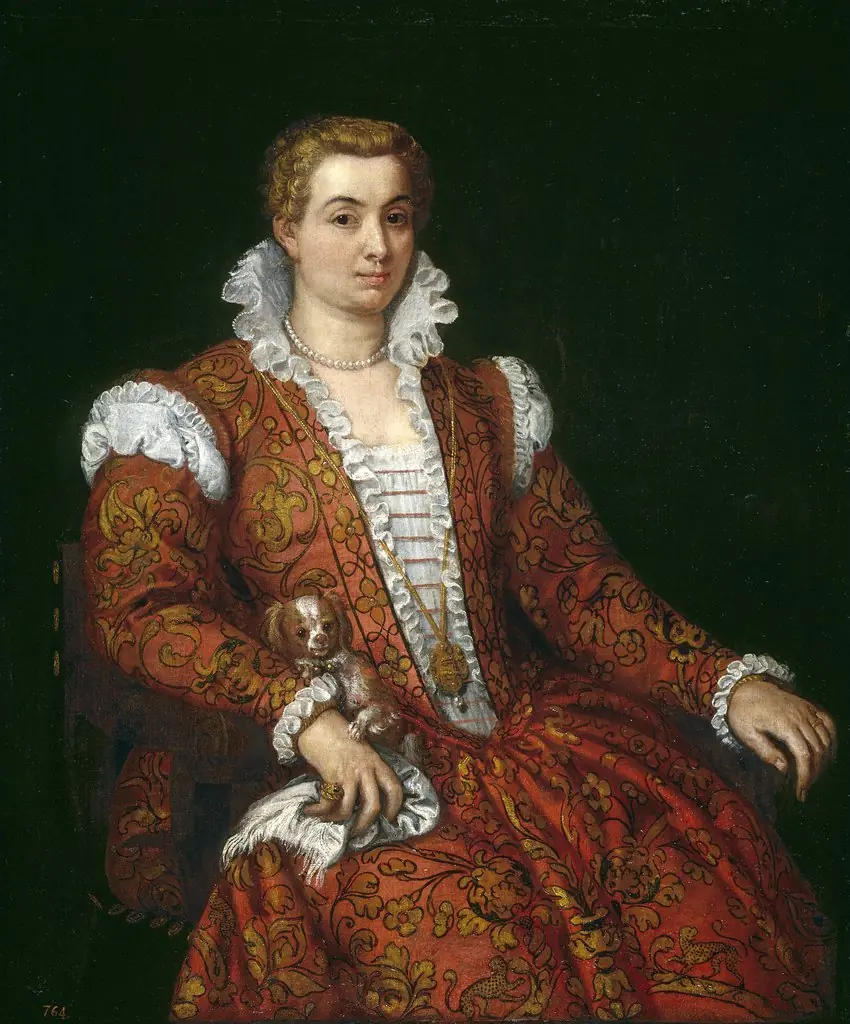
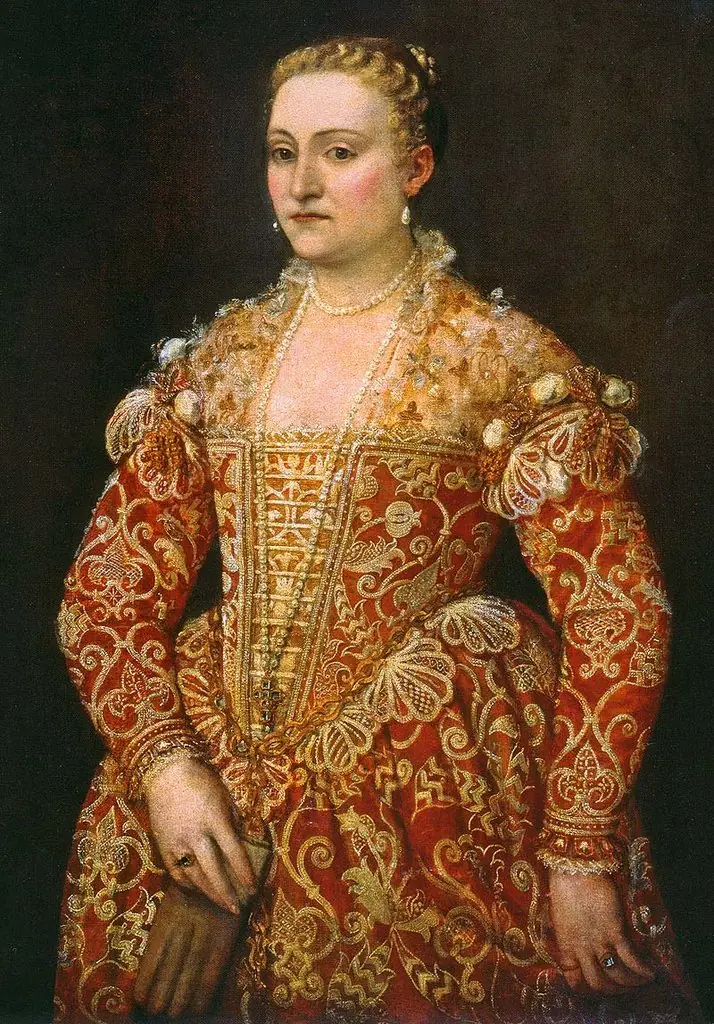
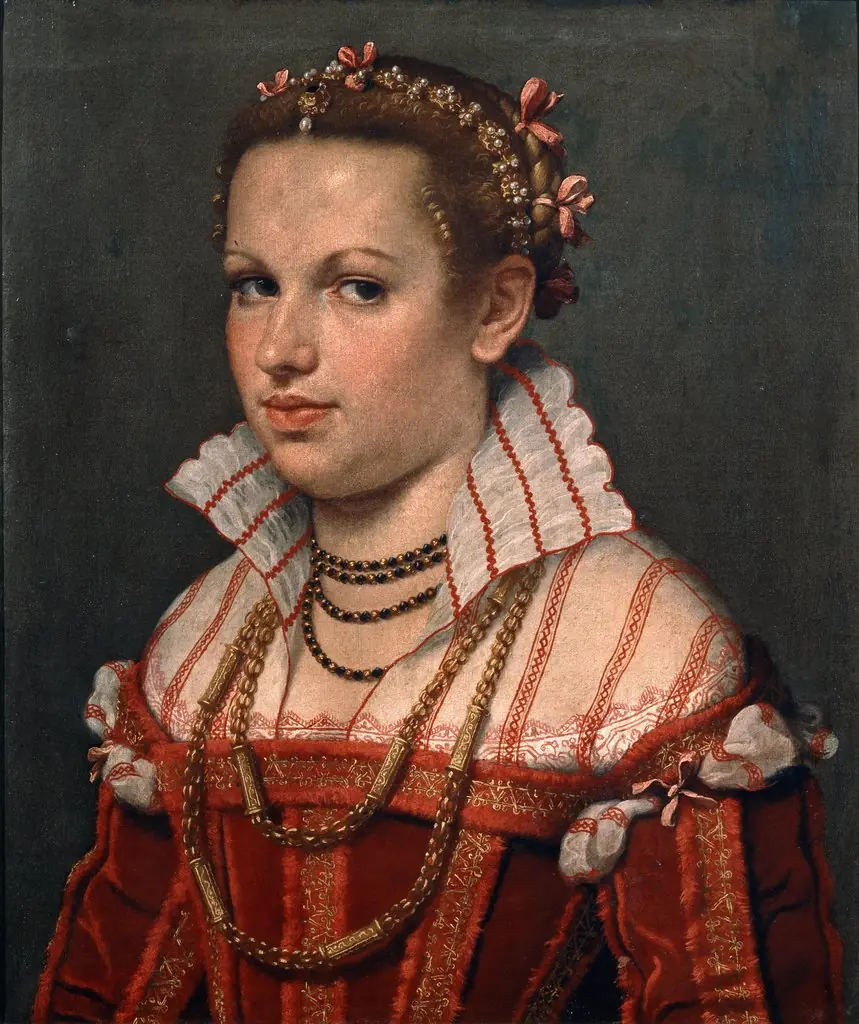
This 1565 oil painting by Titian portrays his daughter, Lavinia Vecellio, set against a somber background. The subject is depicted in elaborate 16th-century attire, characterized by a striped white top, a gold-trimmed jacket, and a pearl necklace. Her hands are occupied with a bouquet of softly rendered flowers and a chain bearing a small ornament. Her hair is pulled back, and her expression is calm and direct.
Context
As a product of the High Renaissance, this portrait reflects the era's emphasis on realism, individualism, and the artist's skill in capturing the subject's essence. Titian's position as a leading Venetian painter influenced the development of Renaissance art beyond Venice.
Legacy
While the portrait's direct influence on subsequent art movements is not widely highlighted in historical analyses, it contributes to Titian's legacy as a versatile and innovative artist. The work remains significant within his corpus and the broader context of Renaissance portraiture.
Artist & collection
Artist
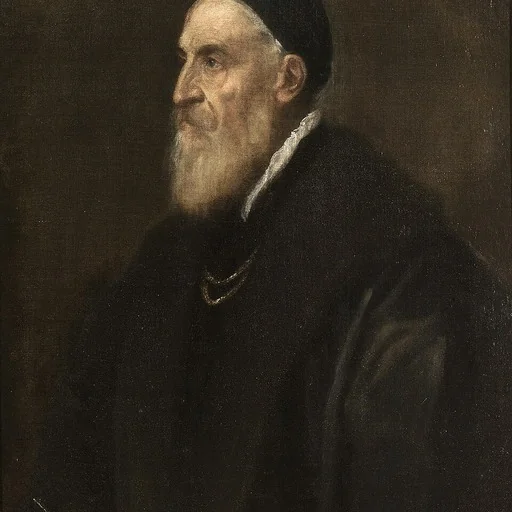
Tiziano Vecellio (Italian:; c. 1488/1490 – 27 August 1576), Latinized as Titianus, hence known in English as Titian ( TISH-ən), was an Italian Renaissance painter. The most important artist of Renaissance Venetian…