Artwork
The king of the Ocean, having assumed human form, arrives at the court of the Raja, from a Tuti-nama (Tales of a Parrot): Eleventh Night
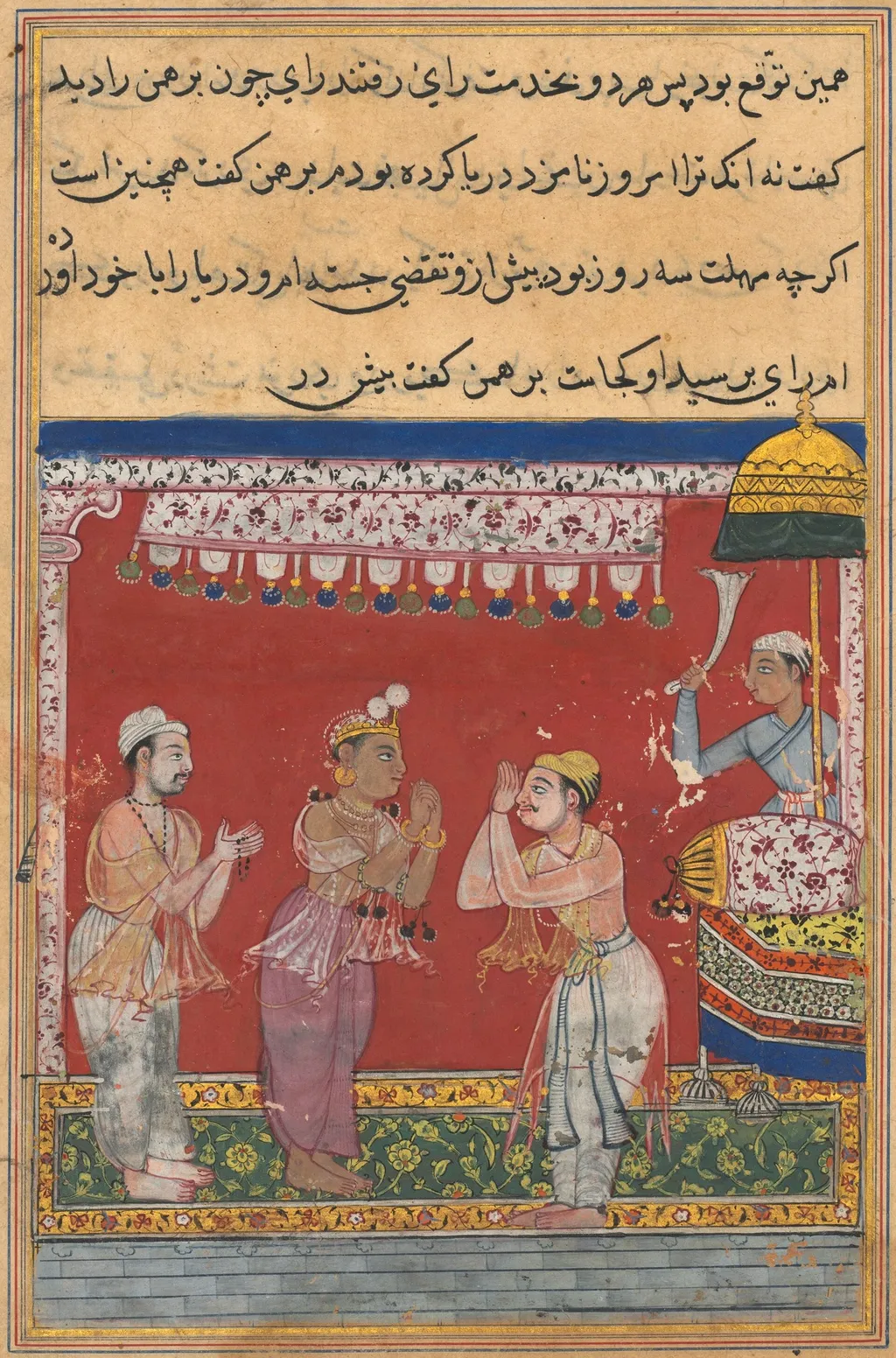
The king of the Ocean, having assumed human form, arrives at the court of the Raja, from a Tuti-nama (Tales of a Parrot): Eleventh Night is an unspecified painting. It dates from 1560 and is held in the collection of the Cleveland Museum of Art. The work depicts a narrative scene set within a vivid red interior framed by an ornate border.
About this work
Technique & Style
The painting was executed in opaque watercolor and ink on paper, the technique typical of Mughal manuscript production in the mid-sixteenth century.
The painting was executed in opaque watercolor and ink on paper, the technique typical of Mughal manuscript production in the mid-sixteenth century. The composition shows the figures rendered with fine linear detail set against flat areas of color, in keeping with the narrative illustration style of the early Mughal atelier. The available records do not provide further detail on the specific palette, brushwork, or current condition of the leaf.
History & Provenance
The painting illustrates the Eleventh Night of the Tuti-nama (Tales of a Parrot), depicting the king of the Ocean in human form arriving at the Raja's court. Dated to 1560 and produced in the Mughal Empire, the work is attributed to an unknown artist. It is now held by the Cleveland Museum of Art, having entered the collection in 1962 under accession number 1962.279.92.a.
The available records document its present location and accession number but provide no verified details of its original commission, intermediate owners, or exhibition history.
Legacy
The painting belongs to the dispersed Cleveland Tuti-nama, one of the earliest illustrated manuscripts produced in the imperial Mughal atelier and a key document for the study of the formative Mughal painting style. The leaf remains part of the Cleveland Museum of Art's collection, preserving its place within the study of South Asian manuscript illumination.
Overview
The work depicts a narrative scene set within a vivid red interior framed by an ornate border. Central to the composition is a crowned figure in pink, holding a fan and caught in a dance-like pose. Flanking him are two attendants: one in a white cap, hands clasped in observation, and another in a blue sash, raising a golden horn while grasping an embellished bag. Arabic script crowns the upper edge, indicating a literary source.
Subject & Meaning
The painting illustrates a moment from the eleventh night of a Tuti‑nama, a collection of parrot tales, in which the oceanic king assumes human form to appear before a raja’s court. The regal attire and ceremonial objects underscore the king’s transformed status, while the surrounding figures convey courtly reception and curiosity toward the supernatural visitor.
Context
During the period when illustrated storybooks flourished, depictions of mythic rulers adopting human guise were common, serving both entertainment and moral instruction. The inclusion of Arabic script and courtly attire situates the scene within a cultural milieu that valued literary sophistication and visual opulence.
Artist & collection

- The king of the Ocean, having assumed human form, arrives at the court of the Raja, from a Tuti-nama (Tales of a Parrot): Eleventh Night
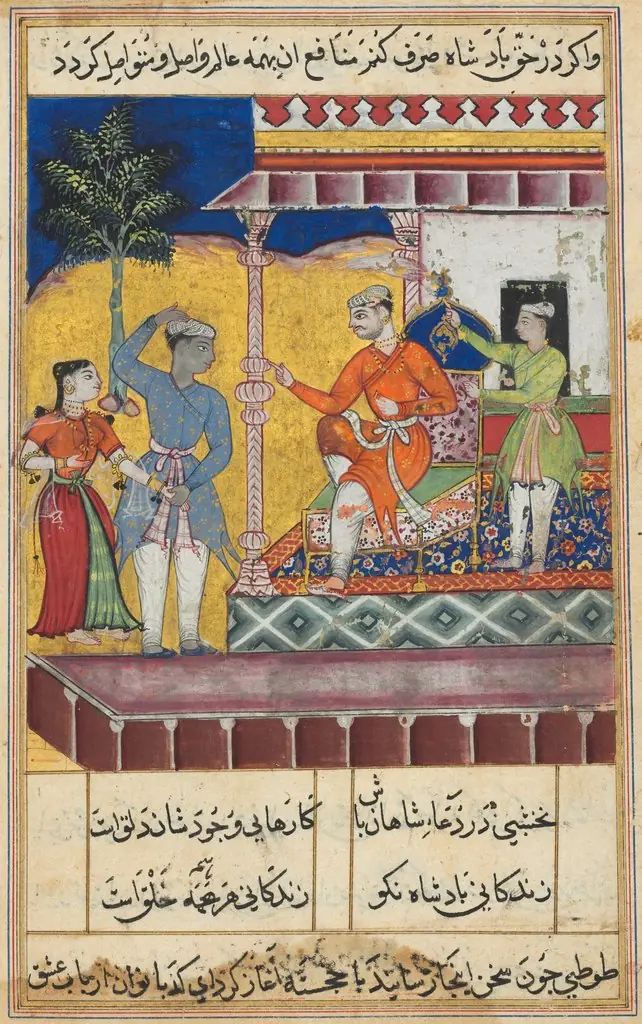 The rejuvenated old man and the daughter of the king of the jinns take leave of the King of Kings, from a Tuti-nama (Tales of a Parrot): Seventh Night
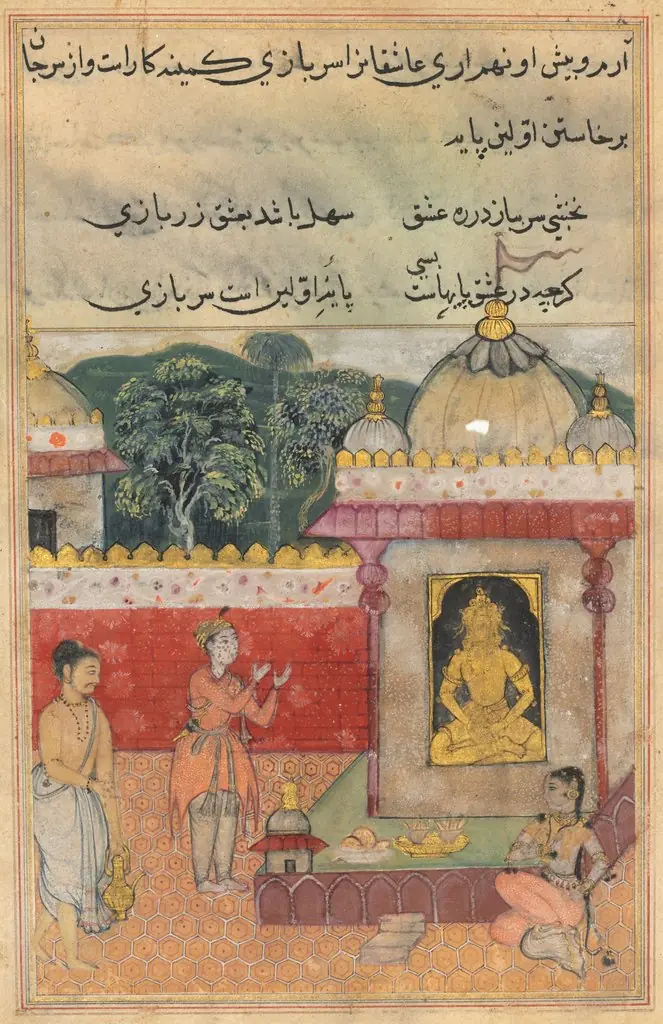 The Raja’s son vows to sever his head and offer it to the image if he is united with the princess he has seen in the temple, from a Tuti-nama (Tales of a Parrot): Thirty-fourth Night
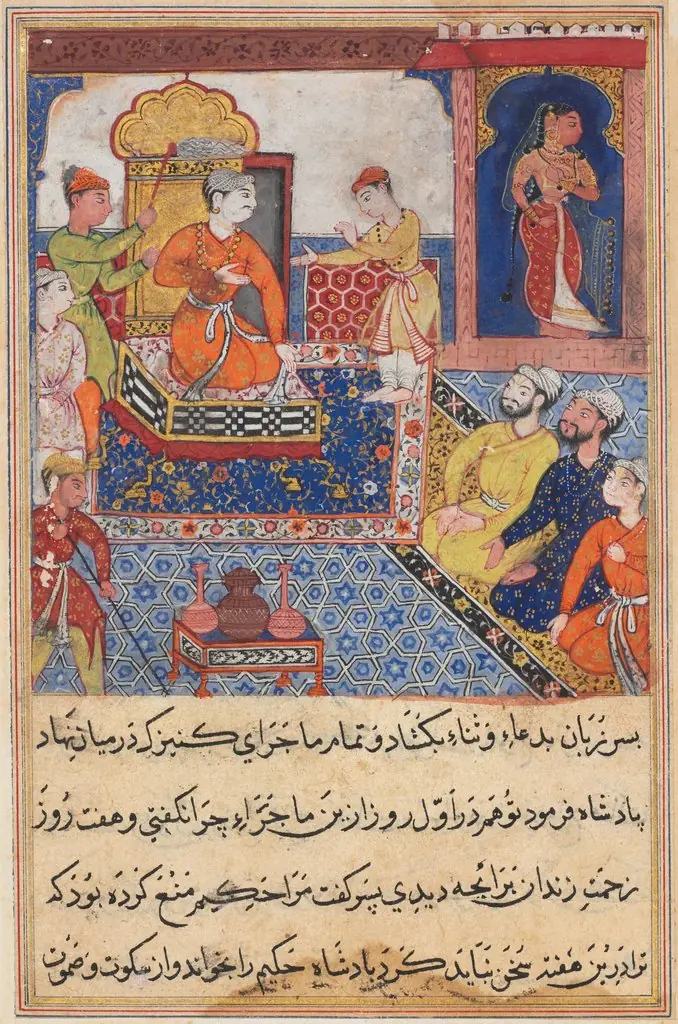 The young prince recounts his experiences to his father, the king, from a Tuti-nama (Tales of a Parrot): Eighth Night
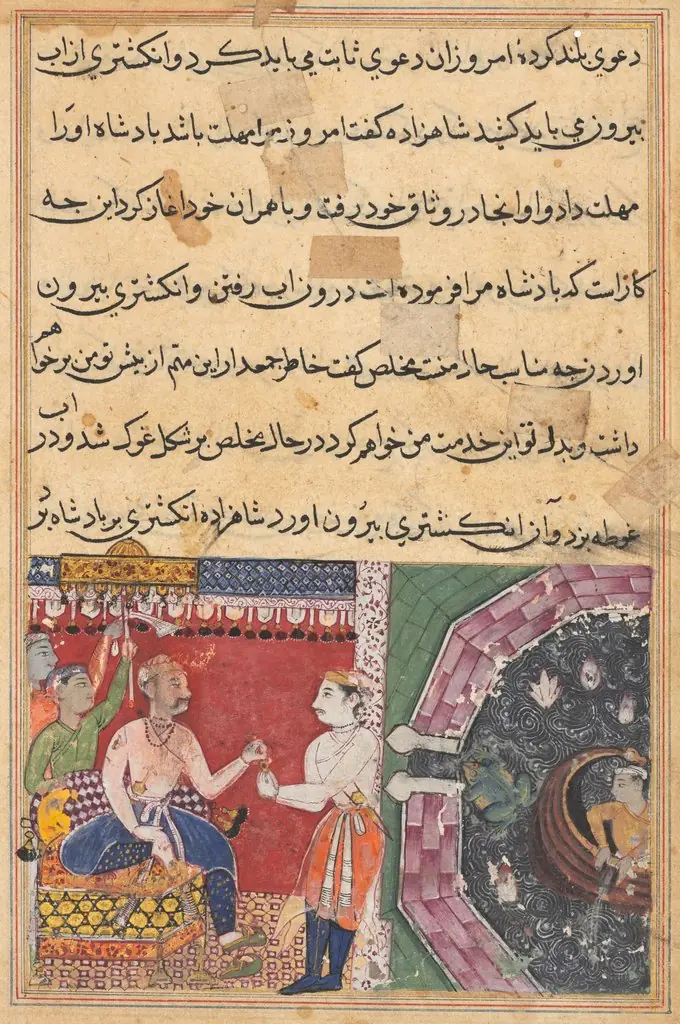 The prince, with the help of Mukhlis who changes into a frog, recovers the ring lost in the sea, and returns it to the king, from a Tuti-nama (Tales of a Parrot): Eighteenth Night
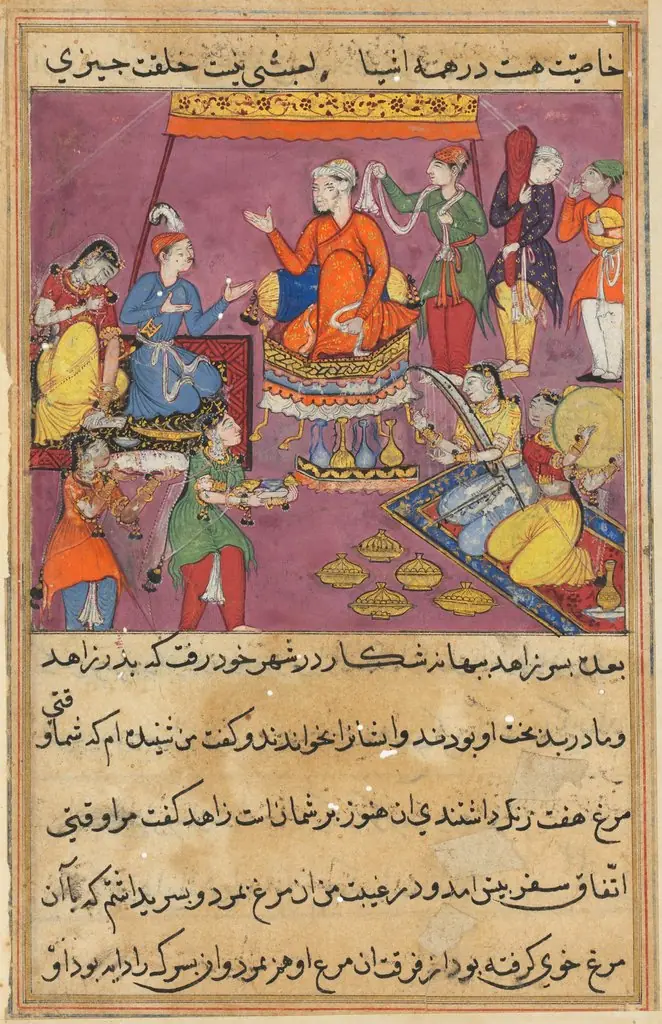 The king gives his daughter in marriage to the pious man’s son, from a Tuti-nama (Tales of a Parrot): Fifty-second Night
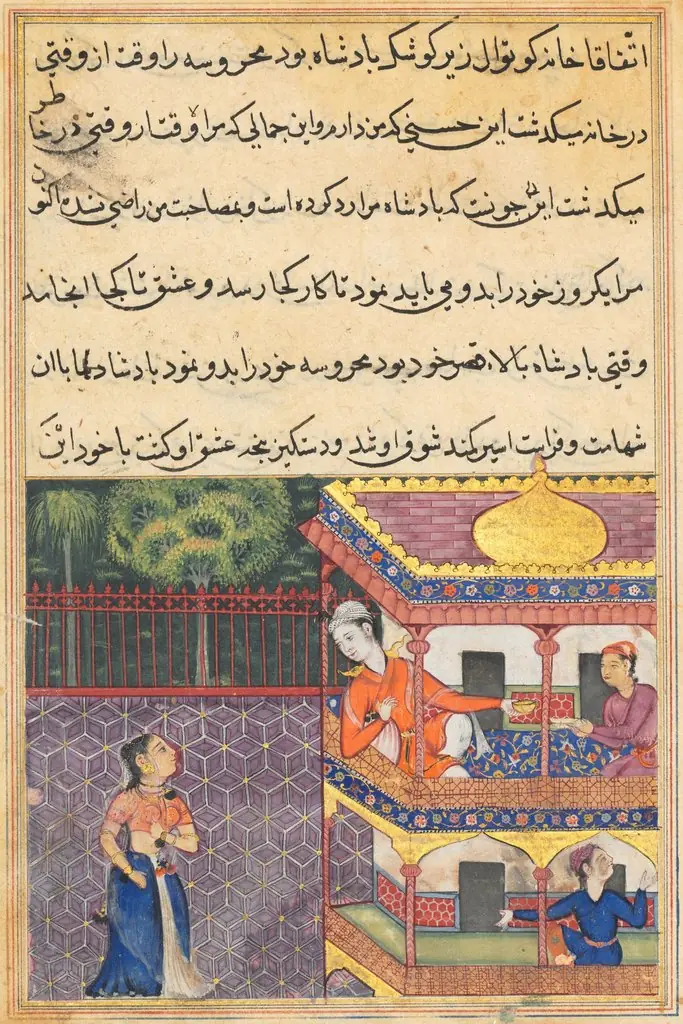 The king of Zabul sees Mahrusa from his palace balcony, from a Tuti-nama (Tales of a Parrot): Thirty-sixth Night
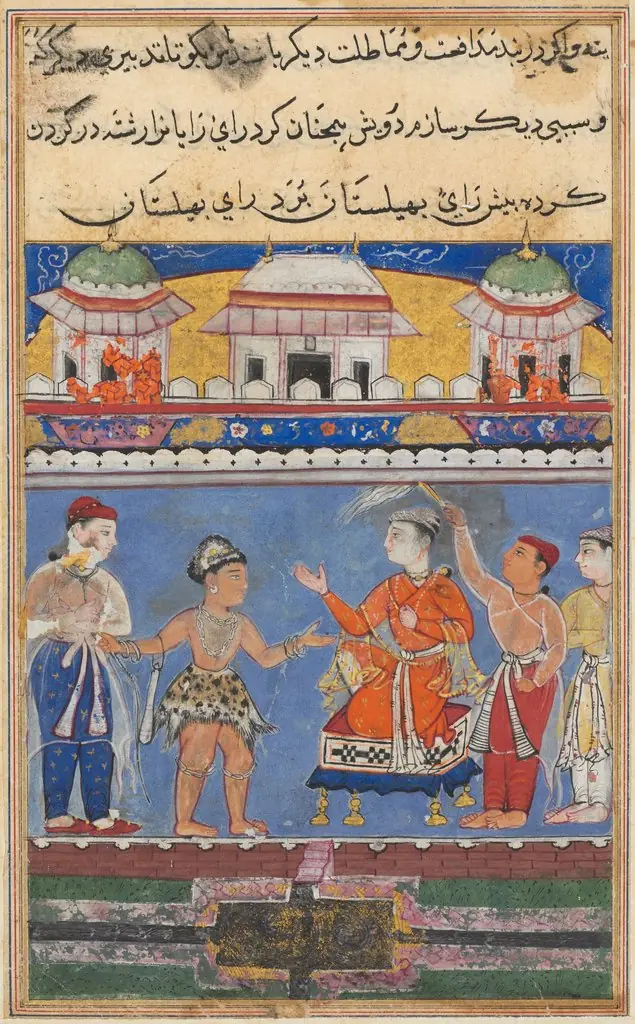 The dervish brings the King of Kings before the king of Bahilistan, from a Tuti-nama (Tales of a Parrot): Seventh Night
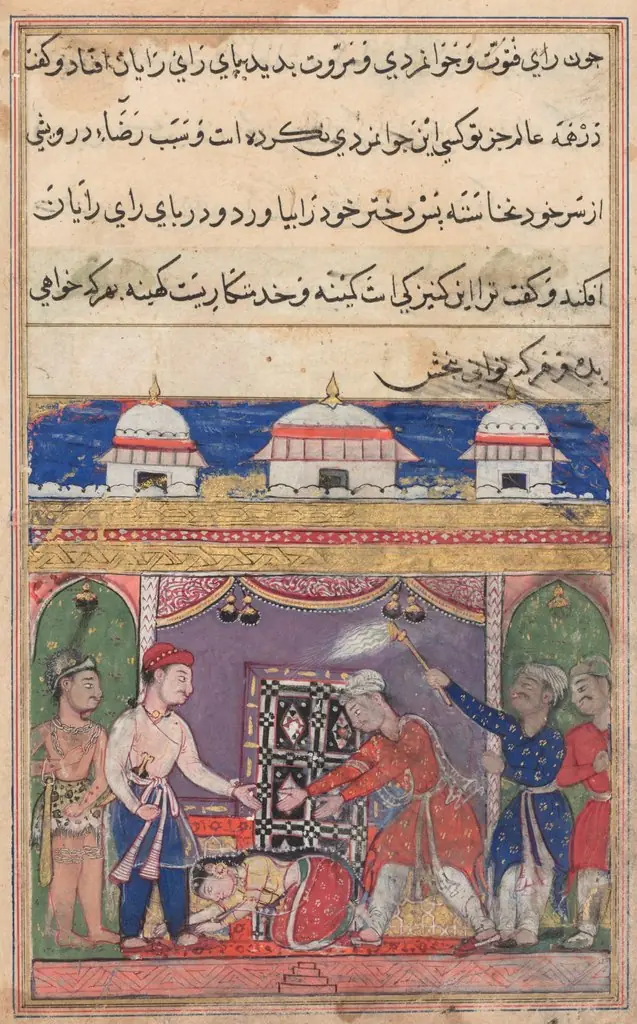 The king of Bahilistan offers his daughter to the King of Kings, from a Tuti-nama (Tales of a Parrot): Seventh Night
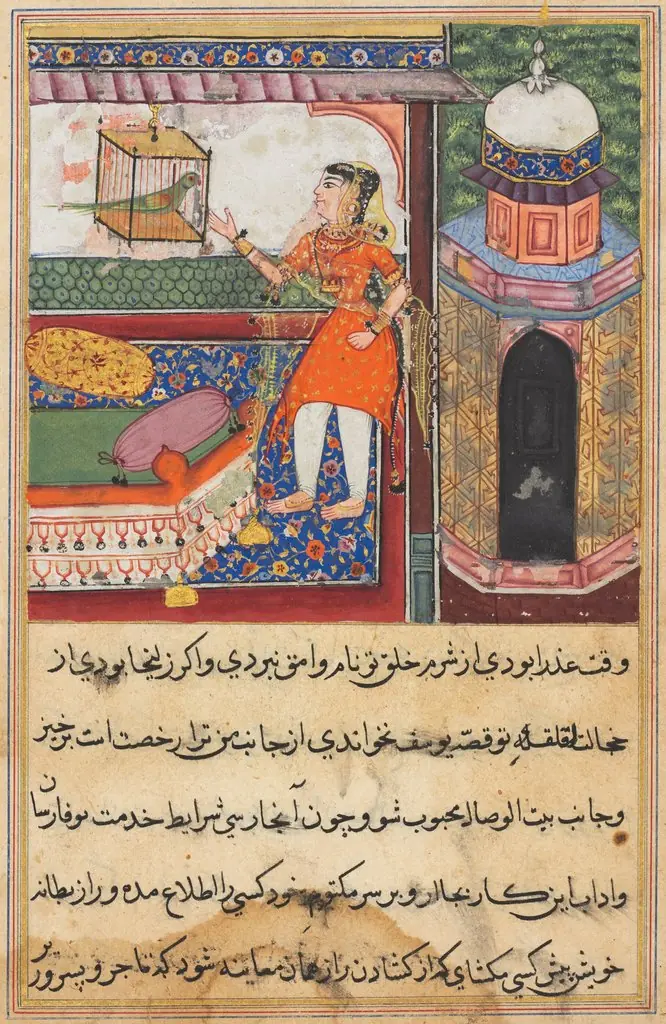 The Parrot Addresses Khujasta at the Beginning of the Tenth Night, from a Tuti-nama (Tales of a Parrot)
 The king gives his daughter in marriage to the pious man’s son, from a Tuti-nama (Tales of a Parrot): Fifty-second Night
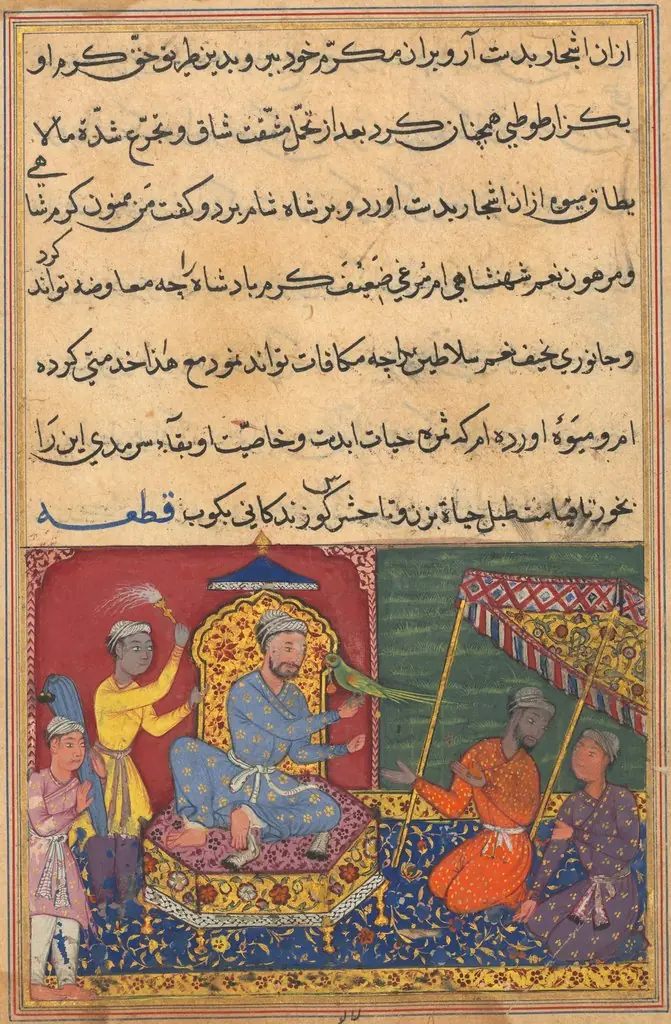 The parrot brings a fruit from the Tree of Life to the king of Syria, from a Tuti-nama (Tales of a Parrot): Ninth Night
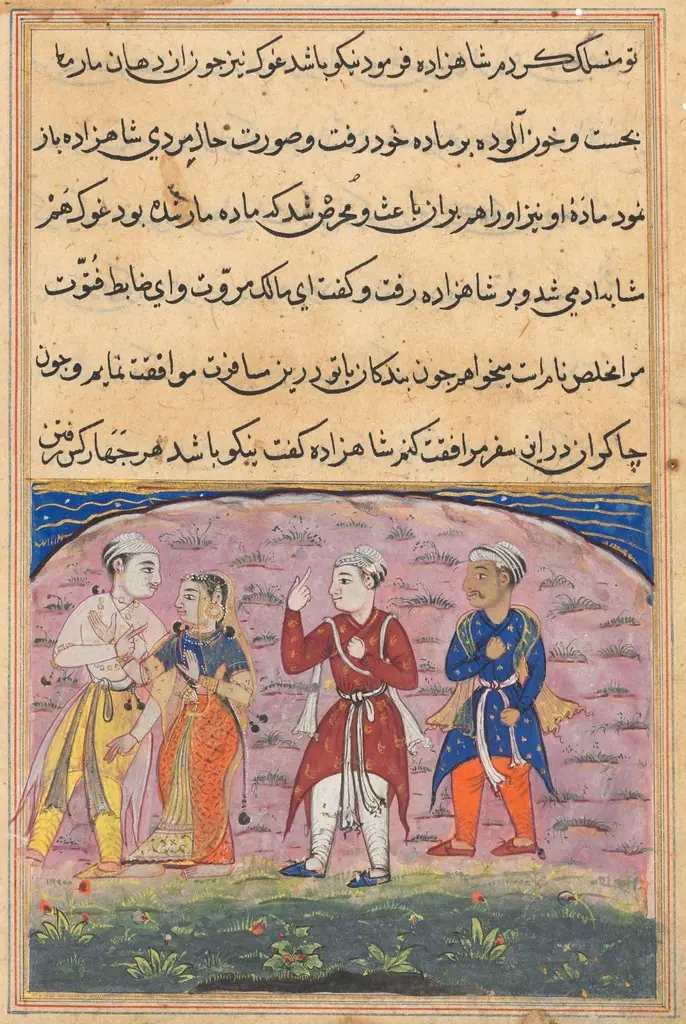 The prince and Nikfal are joined by Khalis and the Mukhlis who are the grateful snake and frog in human form, from a Tuti-nama (Tales of a Parrot): Eighteenth Night
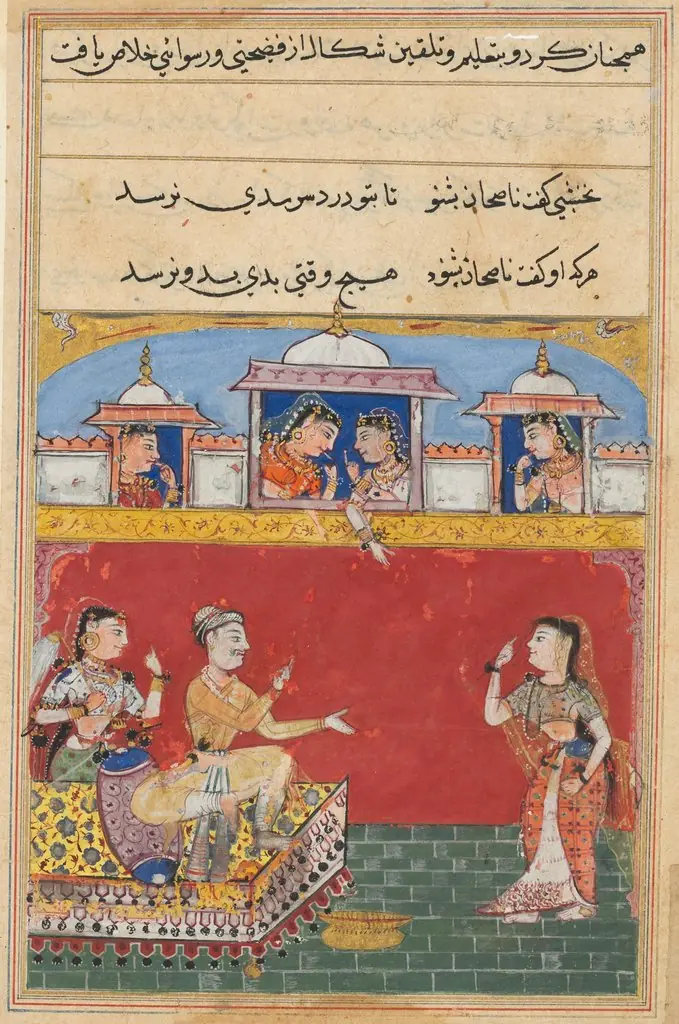 The daughter-in-law returns from her misadventure, feigning insanity, from a Tuti-nama (Tales of a Parrot): Sixteenth Night
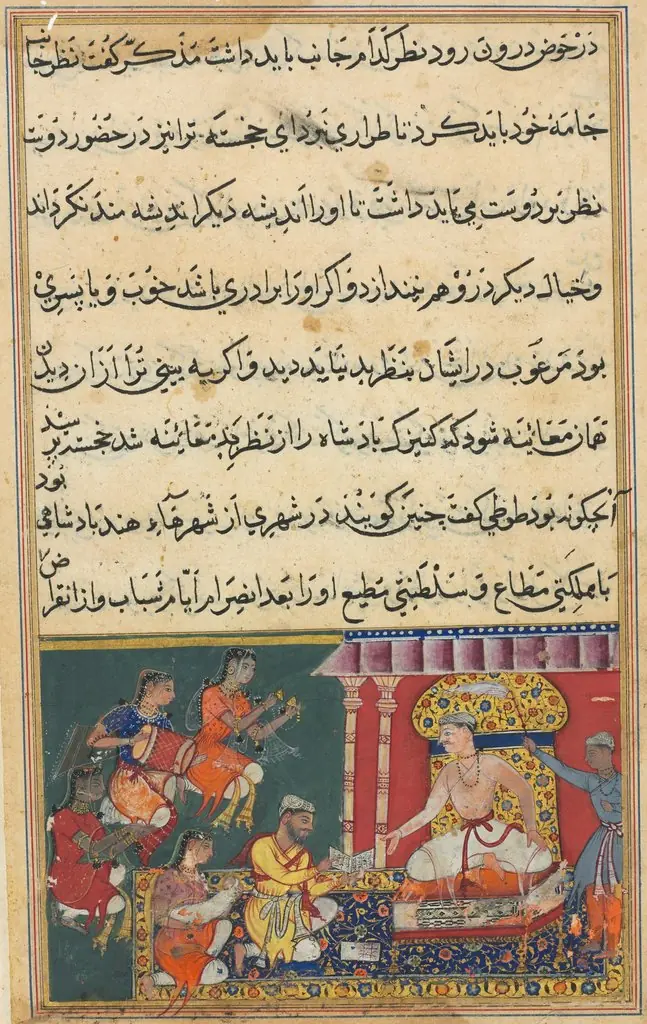 The astrologer predicts a calamity for the newly born prince in his thirteenth year, but one which he would be able to overcome, from a Tuti-nama (Tales of a Parrot): Eighth Night
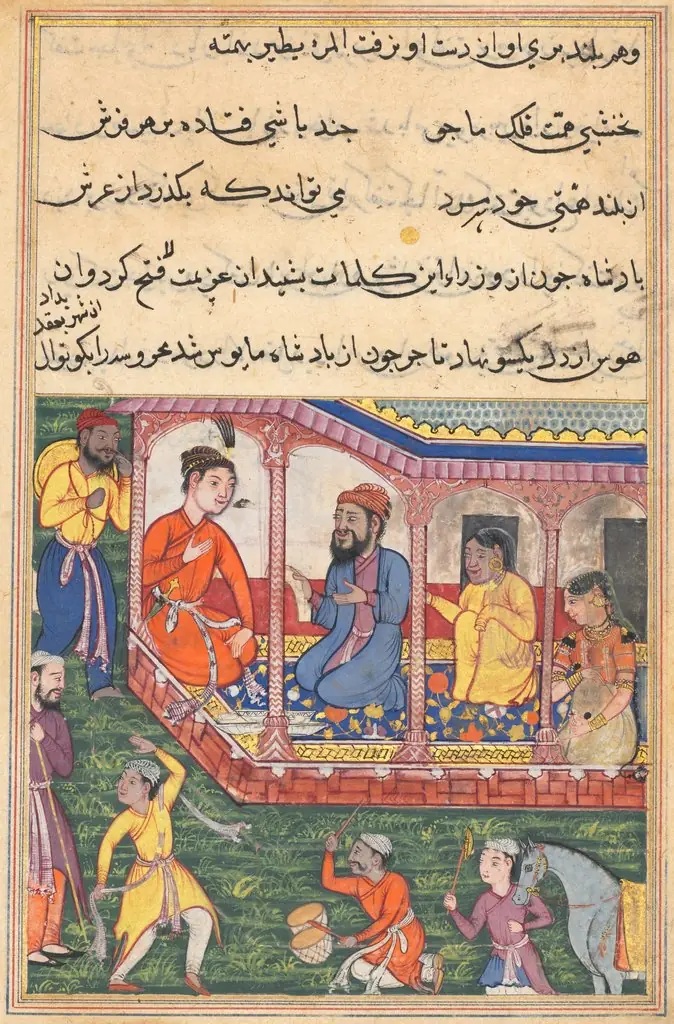 Mahrusa’s marriage to the prefect of the city, from a Tuti-nama (Tales of a Parrot): Thirty-sixth Night
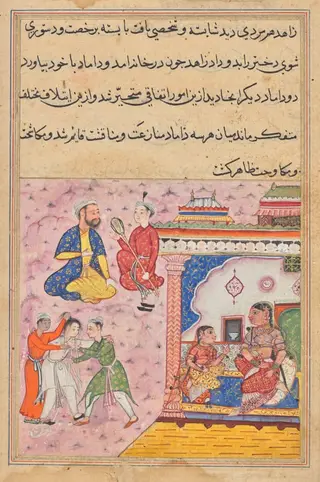 Three suitors fight amongst themselves for the hand of the devotee’s daughter, from a Tuti-nama (Tales of a Parrot): Twentieth Night
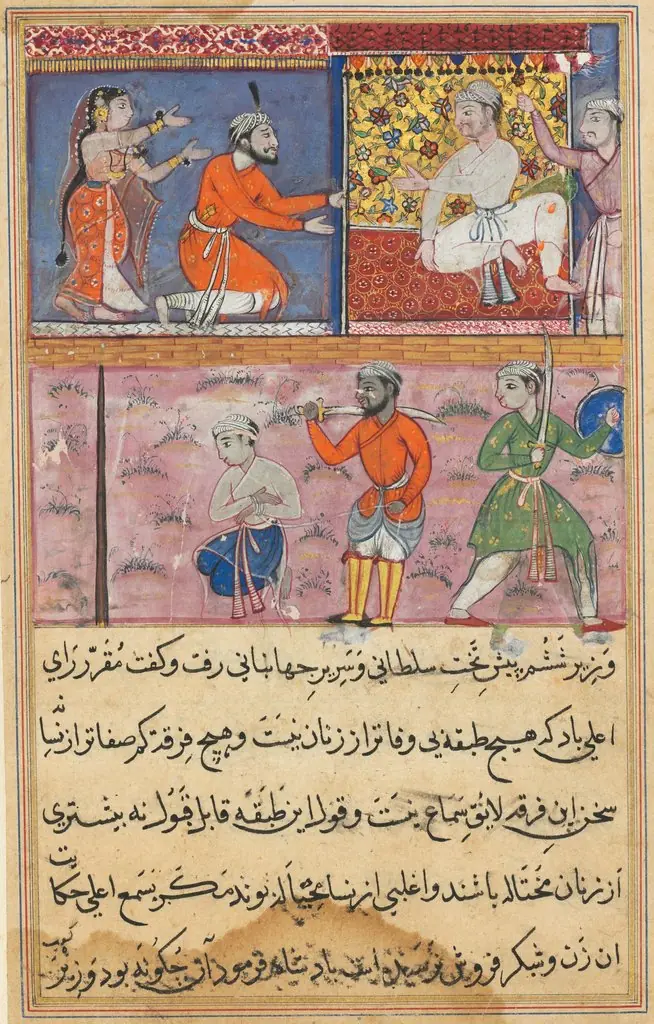 The prince sent back to the place of execution for the sixth time, from a Tuti-nama (Tales of a Parrot): Eighth Night
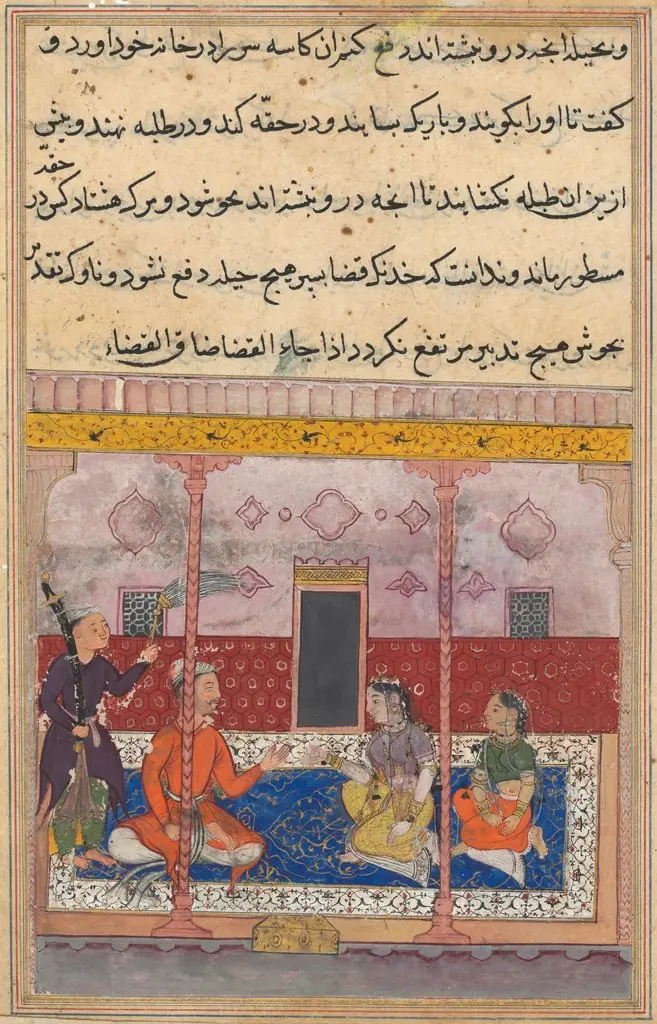 The merchant has the hateful skull ground and put into a box, from a Tuti-nama (Tales of a Parrot): Twenty-third Night