Artwork
H Beard Print Collection
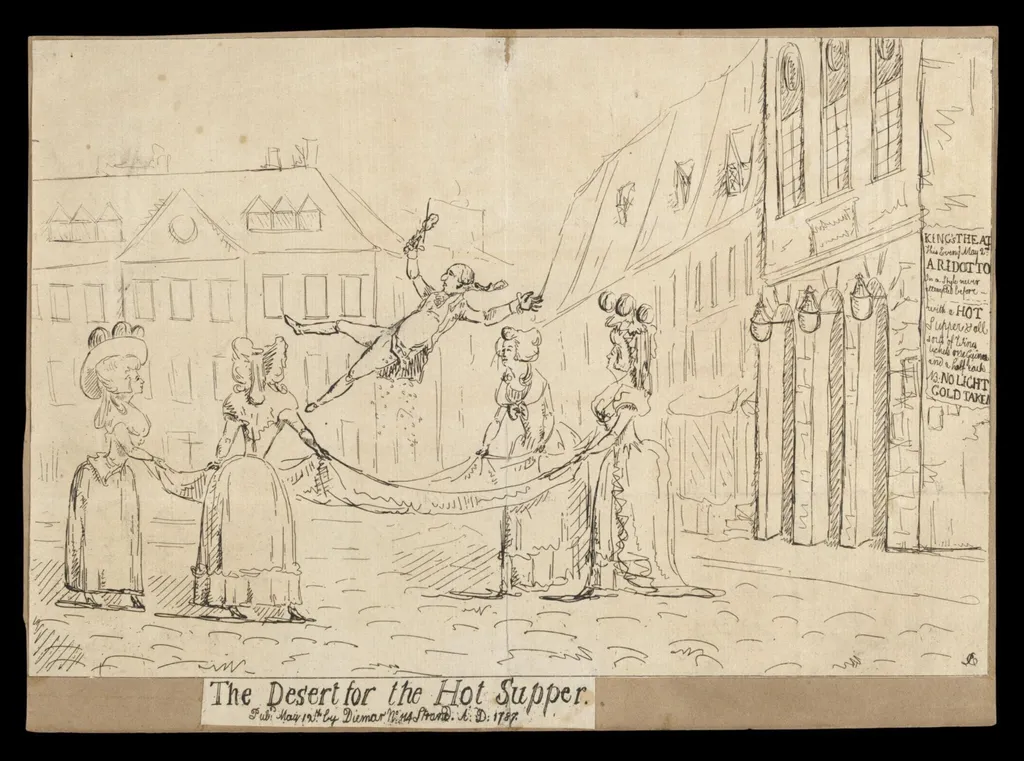
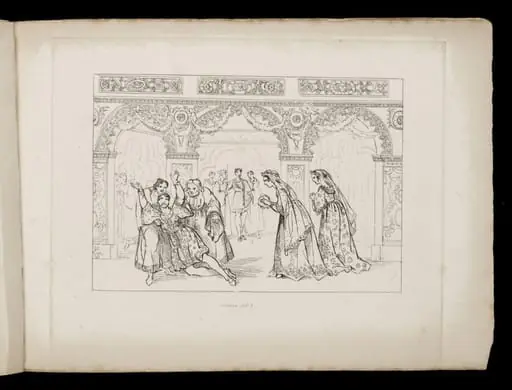
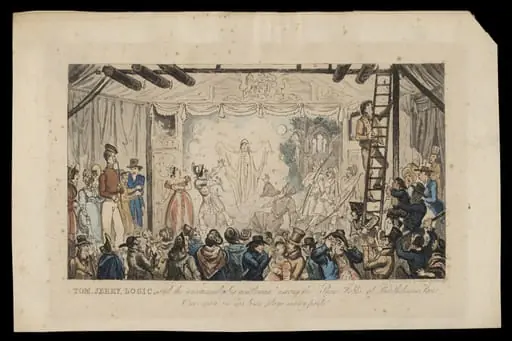
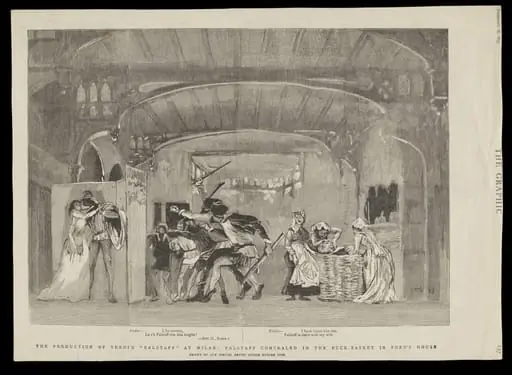
H Beard Print Collection is a print by the Romanticist artist Unknown. It dates from 12 and is held in the collection of the Victoria and Albert Museum. This etched print, titled 'The Desert for the Hot Supper,' was published on 12 May 1787 by Diemar.
About this work
This print shows a scene from "The Desert" for a hot supper. It's an etched print, which is an old technique. The details in this print are interesting because it was published by Diemar on a specific date, 12th May 1787.
The print is now part of the Harry Beard Collection at the Victoria and Albert Museum, where you can learn more about the technique used, such as chiaroscuro.
Overview
Its subject matter reflects domestic or satirical themes popular in the period, rendered with fine linear detail characteristic of the medium.
This etched print, titled 'The Desert for the Hot Supper,' was published on 12 May 1787 by Diemar. It belongs to the Harry Beard Collection, now held at the Victoria and Albert Museum. The work is a single-sheet print made using the etching technique, a method common in late 18th-century printmaking.
Its subject matter reflects domestic or satirical themes popular in the period, rendered with fine linear detail characteristic of the medium.
Subject & Meaning
The scene depicts a humorous or ironic moment tied to the phrase 'the desert for the hot supper,' likely referencing a culinary or social expectation. The title suggests a contrast between absence and desire, perhaps a barren landscape offered in place of a meal. The imagery, though not fully described, implies narrative wit, typical of prints meant for public amusement or commentary on domestic life in late Georgian England.
Technique & Style
Executed in etching, the print uses acid to incise lines into a metal plate, allowing for precise, delicate detail. The artist employed chiaroscuro effects through varying line density to suggest light and shadow, enhancing spatial depth without color. This technique was widely used for reproductive and satirical prints, enabling mass production while retaining tonal nuance. The fine cross-hatching and controlled ink application reflect skilled craftsmanship typical of the era’s print studios.
History & Provenance
The print was published by Diemar in London on 12 May 1787, placing it within a vibrant market for illustrated satires and domestic scenes. It entered the Harry Beard Collection, assembled by the 19th-century theatre enthusiast and print collector. The collection was later acquired by the Victoria and Albert Museum, where it remains accessible for study. Its preservation reflects the museum’s interest in ephemeral printed culture of the 18th and 19th centuries.
Context
In the 1780s, London saw a surge in printed satires and topical illustrations, often responding to social customs and popular phrases. Prints like this one circulated among the middle class, serving as both entertainment and subtle social critique. The use of a culinary metaphor in the title aligns with broader cultural preoccupations with domestic life, class, and the absurdities of etiquette, themes frequently explored in print media of the time.
Legacy
Though not attributed to a major artist, the print survives as an example of everyday print culture in late 18th-century Britain. Its inclusion in the Harry Beard Collection underscores its value as a historical artifact rather than an artistic rarity. It contributes to scholarly understanding of how language, humor, and visual imagery intersected in popular media, offering insight into the tastes and concerns of its original audience.
Artist & collection