Artwork
Khwaja Sahib
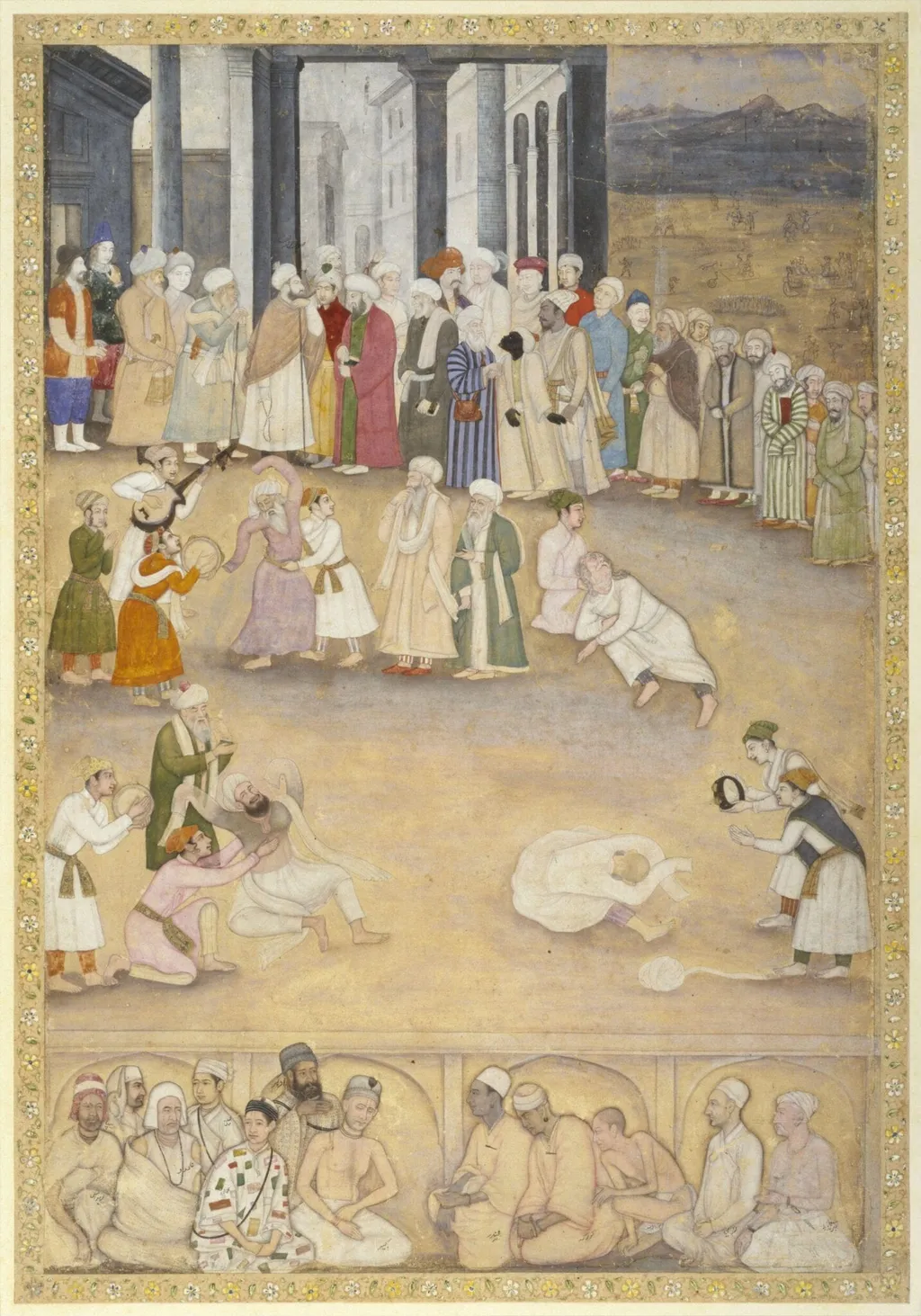
Khwaja Sahib is a paint painting by the Baroque artist Unknown. It dates from 1650 and is held in the collection of the Victoria and Albert Museum.
About this work
Overview
Created in the mid‑17th century under Shah Jahan’s reign, this Mughal painting portrays a gathering of mystics within the shrine of Muin ad‑Din Chishti. The composition centers on a group of Sufi devotees and courtiers, some kneeling, others seated, all absorbed in a shared spiritual atmosphere.
Subject & Meaning
The scene illustrates the ritual practices of the Chishti order, featuring ecstatic dancing, music and chanting aimed at attaining mystical states. Identified figures include three Muslim saints, Qutb ad‑Din Bakhtiyar Kaki (d. 1235), Muin ad‑Din Chishti (d. 1236) and the contemporary Mullah Shah Badakhshi, alongside a contingent of Hindu participants noted in tiny inscriptions.
Technique & Style
Executed in the refined Mughal court style, the work combines delicate brushwork with a balanced arrangement of figures. The artist employs a muted palette and fine detailing to convey the solemnity of the gathering, while the spatial depth is achieved through overlapping bodies and a subtle gradation of tones.
History & Provenance
The painting entered the collection of Warren Hastings, the first Governor‑General of British India, during the late 18th century. It later passed through various hands before becoming part of a public museum collection, where it remains accessible for study of Mughal religious art.
Context
The depiction reflects the syncretic religious environment of Mughal India, where Sufi orders like the Chishtis attracted followers across communal lines. By presenting both Muslim saints and Hindu figures together, the work underscores the inclusive nature of the shrine’s spiritual activities during Shah Jahan’s era.
Artist & collection









 Untitled
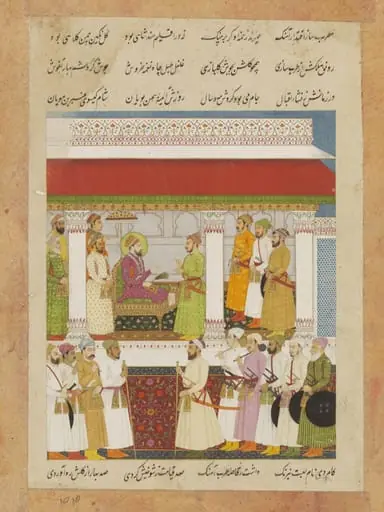 Shah Alam II
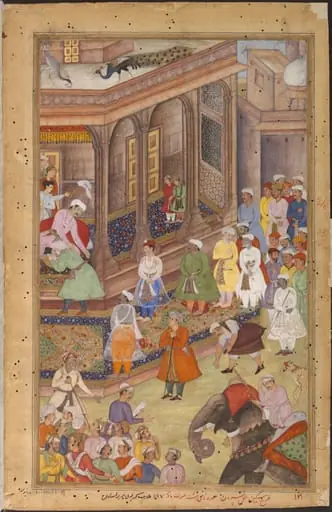 Untitled
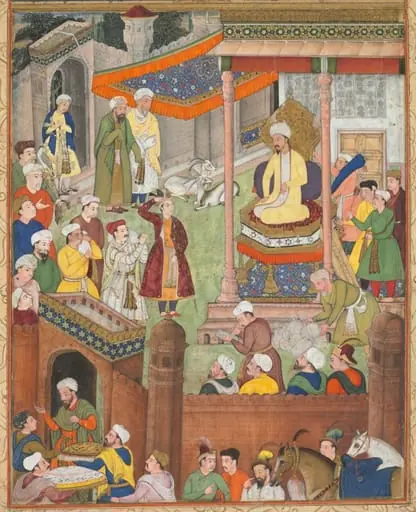 Babur receives booty and Humayun’s salute after the victory over Sultan Ibrahim in 1526, from an Akbar-nama (Book of Akbar) of Abu’l Fazl (Indian, 1551–1602)
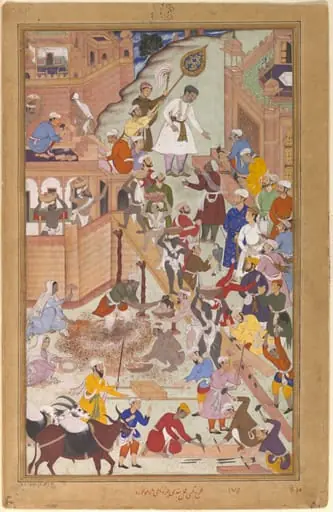 Akbar
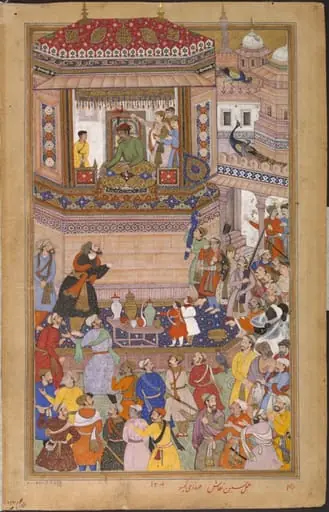
Akbar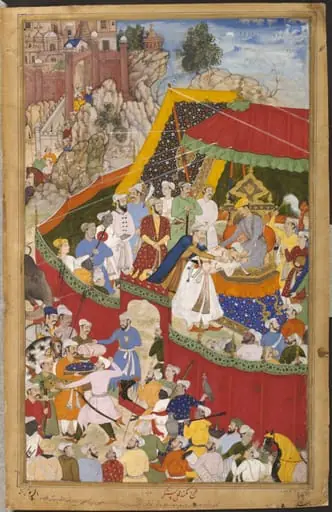 Rai Surjan Hada making Submission to Akbar
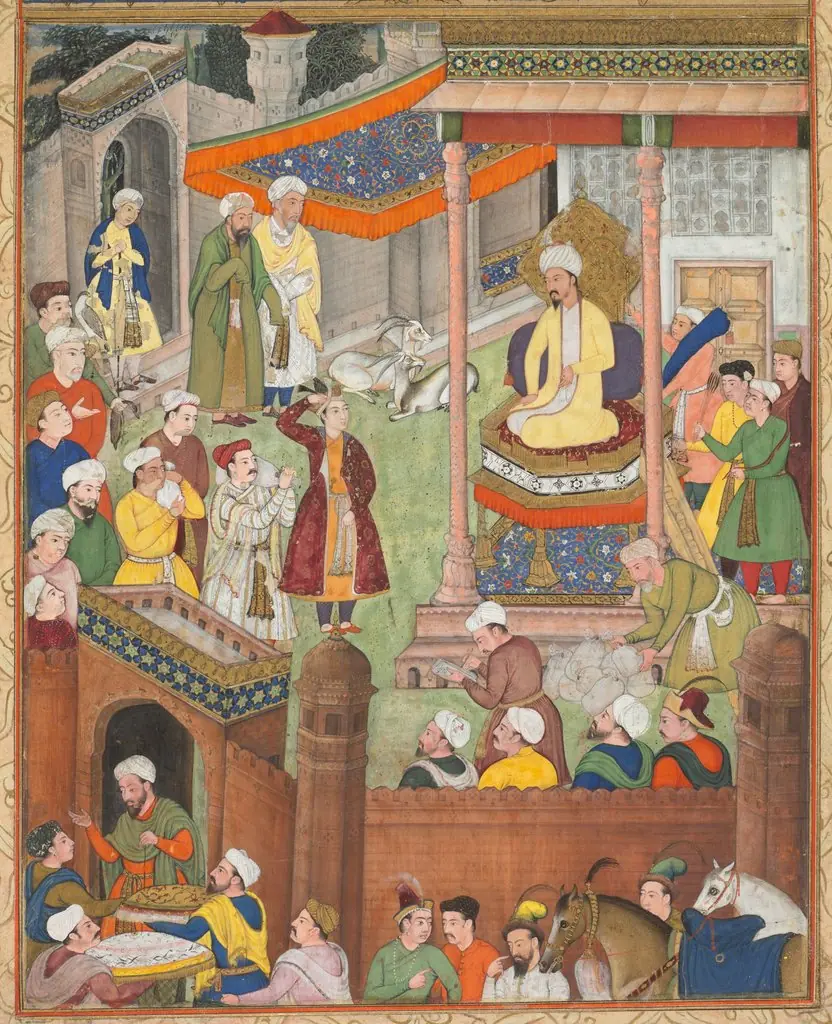 Babur receives booty and Humayun’s salute after the victory over Sultan Ibrahim in 1526, from an Akbar-nama (Book of Akbar) of Abu’l Fazl (Indian, 1551–1602)
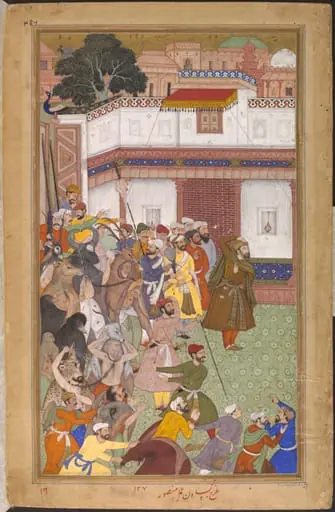
 The Young Emperor Akbar Arrests the Insolent Shah Abu’l-Maali, Page from a Manuscript of the Akbarnama
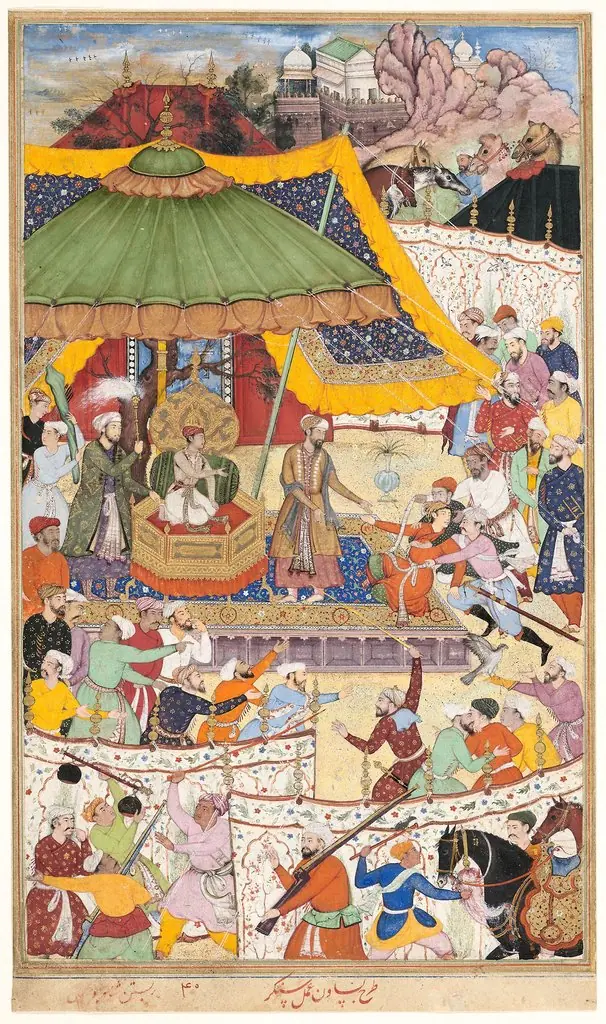 The Young Emperor Akbar Arrests the Insolent Shah Abu’l-Maali, page from a manuscript of the Akbarnama