Artwork
Maharana Sangram Singh II (r. 1710–34) Worshipping a Linga Under a Banyan Tree
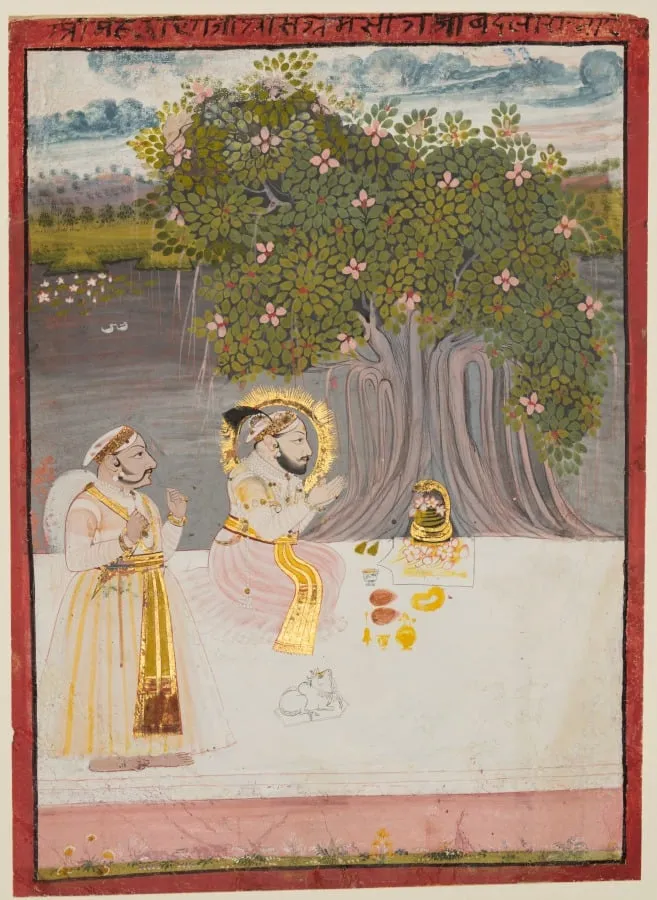
Maharana Sangram Singh II (r. 1710–34) Worshipping a Linga Under a Banyan Tree is an unspecified painting by the Baroque artist Unknown. It dates from 1714 and is held in the collection of the Cleveland Museum of Art. The painting depicts Maharana Sangram Singh II, ruler of Mewar from 1710 to 1734, kneeling beneath a sprawling banyan tree.
- Accession no.
- 2018.144
- Credit line
- Purchase and partial gift from the Catherine and Ralph Benkaim Collection; Severance and Greta Millikin Purchase Fund
About this work
Overview
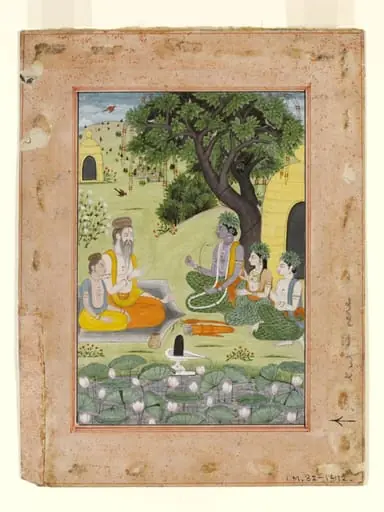
The painting depicts Maharana Sangram Singh II, ruler of Mewar from 1710 to 1734, kneeling beneath a sprawling banyan tree. He is shown in a posture of devotion, hands together, before a stone linga encircled by a golden four‑headed serpent. Surrounding figures present flowers, paan packets, coconuts and a garland, while a marble bull, Nandi, Shiva’s mount, stands nearby.
Subject & Meaning
The composition illustrates a private act of worship to Shiva, emphasizing the king’s piety rather than his political authority. The golden serpent entwining the linga alludes to older serpent‑deity traditions that were incorporated into Shaivite practice, suggesting a synthesis of local cultic elements with mainstream Hindu ritual.
Technique & Style
Executed in a detailed, narrative style typical of early‑18th‑century Rajput court painting, the work combines precise rendering of objects, such as a brass ewer of water, a porcelain cup of sandal paste, and a small bell, with a flattened spatial arrangement. The use of gold leaf on the serpent and the vivid coloration of offerings highlights the ceremonial importance of the scene.
History & Provenance
The painting originates from the Mewar court, where royal patronage supported a distinctive school of miniature art. It likely remained in the royal collection until the 20th century, after which it entered a museum or private collection, though specific acquisition records are not documented in the available sources.
Context
During Sangram Singh II’s reign, Mewar’s artistic production emphasized devotional subjects that reinforced the ruler’s legitimacy through religious devotion. The inclusion of everyday ritual items, paan, coconuts, and sandal paste, reflects contemporary courtly practices and the integration of local customs into Hindu worship.
Artist & collection