Artwork
Man with a Beard
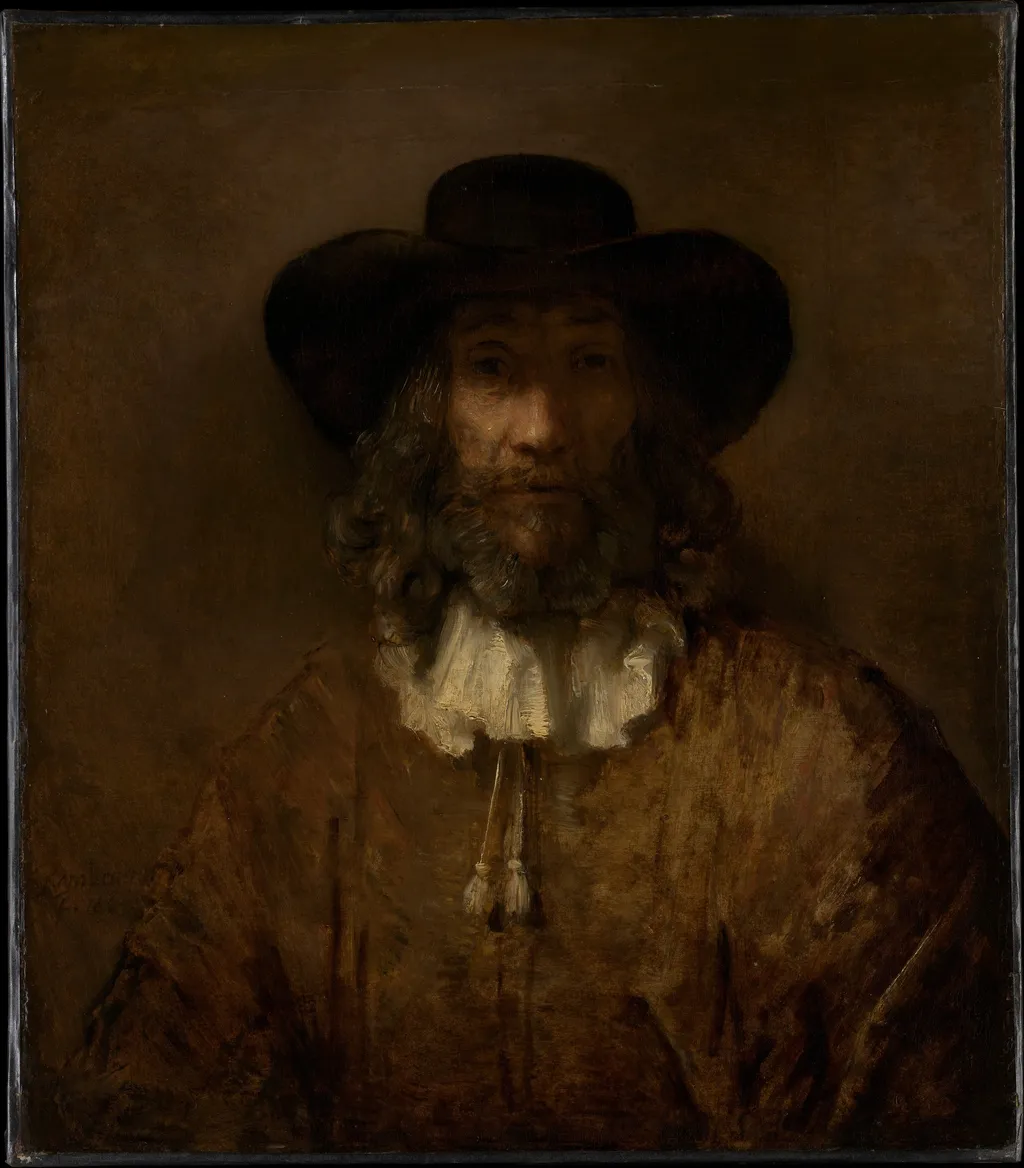
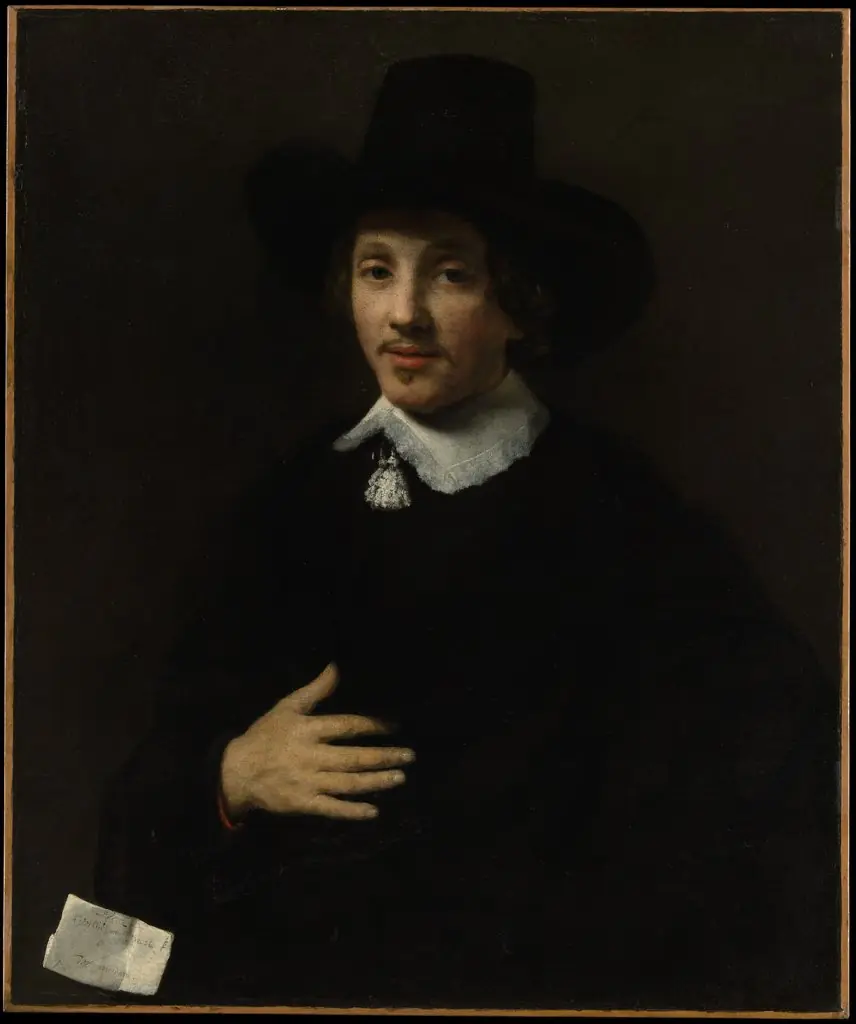
Man with a Beard is an oil painting. It dates from 1700 and is held in the collection of the Metropolitan Museum of Art.
About this work
Technique & Style
Tronies of this kind were head studies exploring expression and costume rather than portraits of identified sitters.
Executed circa 1700, this work is an oil painting on canvas in the style of Rembrandt. Classified as a tronie, it depicts a bearded man wearing a hat and measures 73.3 cm in height by 64.1 cm in width. Tronies of this kind were head studies exploring expression and costume rather than portraits of identified sitters. The materials and support align with standard Dutch Golden Age practices for such studies.
History & Provenance
Man with a Beard is an oil on canvas dating to 1700, held in the collection of the Metropolitan Museum of Art in New York. Classified as a tronie, it depicts a bearded man in a hat and is attributed to the Style of Rembrandt, indicating it was executed by a follower rather than as a specific commission. The available documentation does not record a specific accession number, earlier provenance, or exhibition history for the work.
Legacy
Man with a Beard exemplifies the single-head, expressive head studies (tronies) characteristic of Dutch Golden Age art. Its presence in the Metropolitan Museum of Art's collection supports the study and technical analysis of works painted in the style of Rembrandt.
Overview
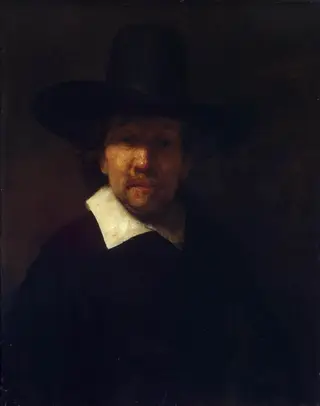
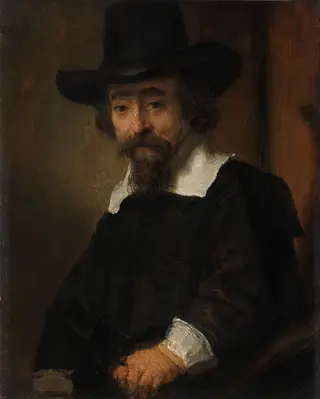
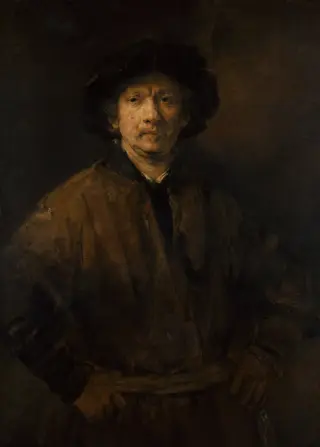
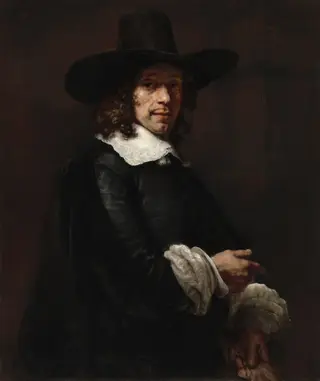
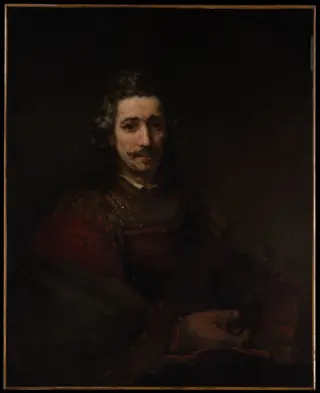
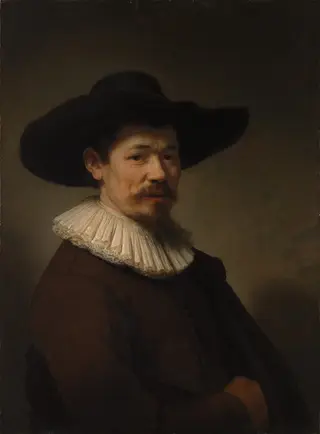
"Man with a Beard" is an oil painting depicting a solitary male figure. The subject, characterized by a prominent beard, wears a wide-brimmed hat and a simple brown jacket with a white collar. Set against a dark backdrop, the man's face and upper body are softly illuminated by a golden light.
This focused lighting and the subject's posture combine to create an impression of quiet introspection, inviting viewers into a moment of private thought.
Subject & Meaning
The painting's central figure is a man whose long, unkempt beard frames his face, contributing to a rugged appearance. His eyes are cast downward, conveying a sense of deep thought or internal focus rather than engagement with the viewer. This contemplative pose, coupled with the subdued atmosphere, encourages reflection on the subject's inner state and the universal experience of quiet introspection.
Artist & collection