Artwork
Nasir Jang
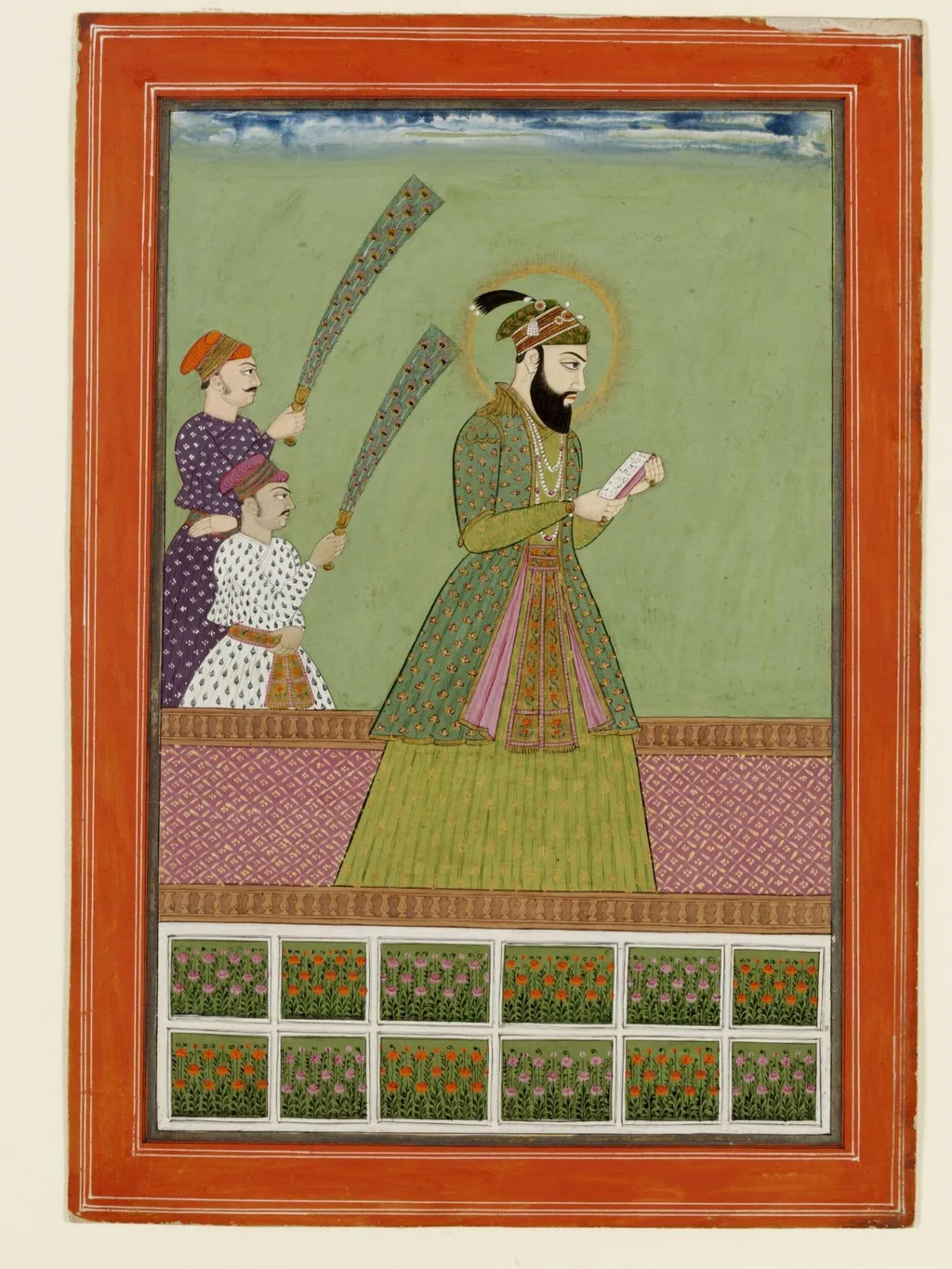
Nasir Jang is a paint painting by the Baroque artist Unknown. It dates from 1745 and is held in the collection of the Victoria and Albert Museum.
About this work
Overview
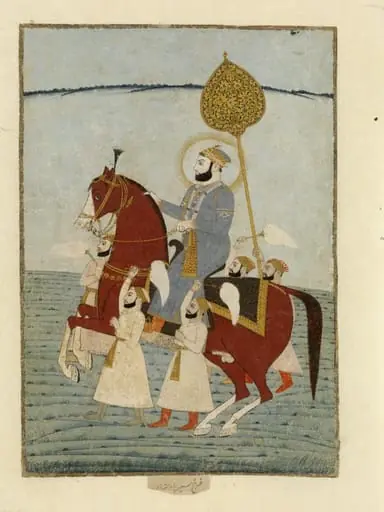
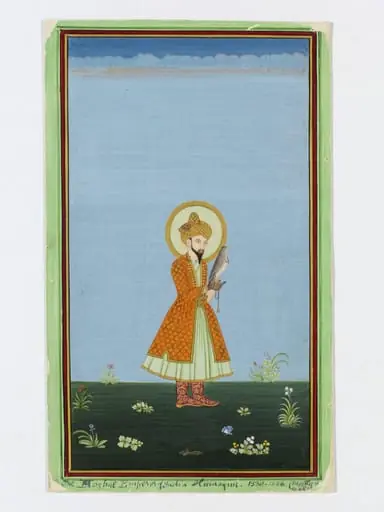
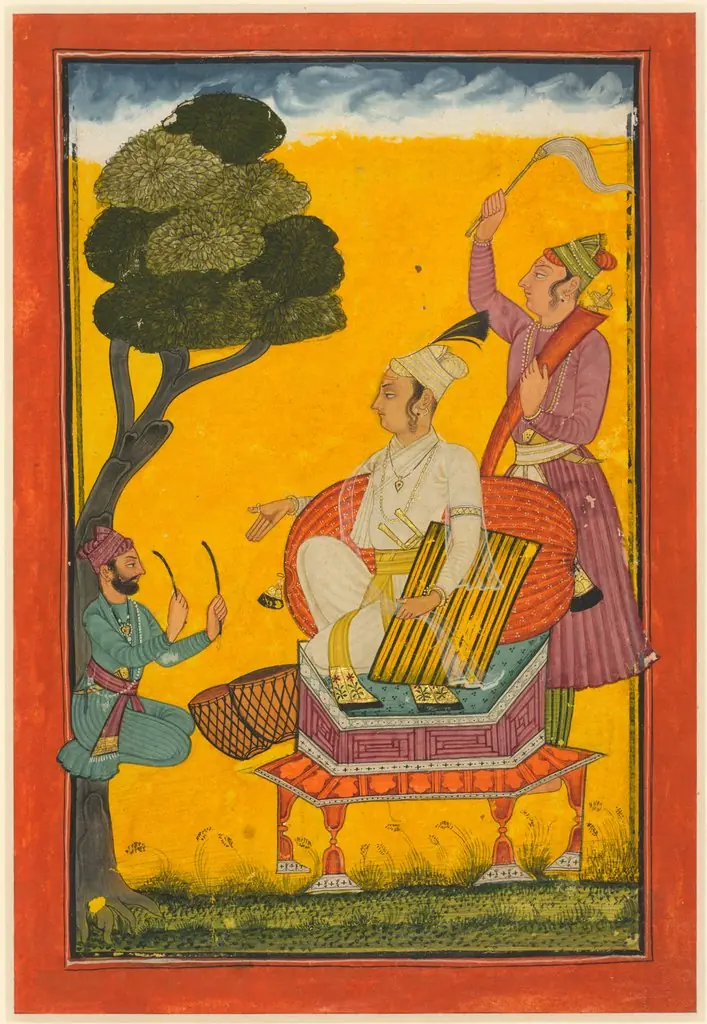
Executed in opaque watercolour on paper, it belongs to a group of four works acquired together.
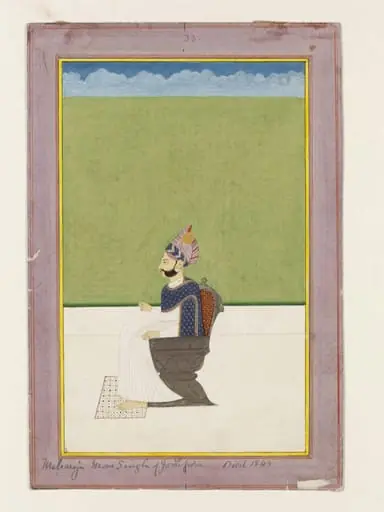
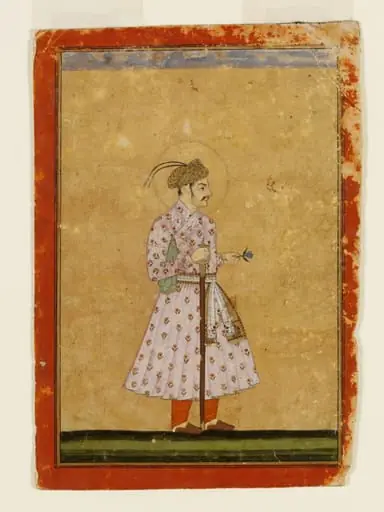
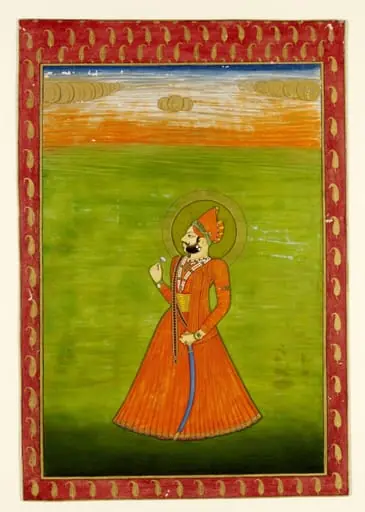
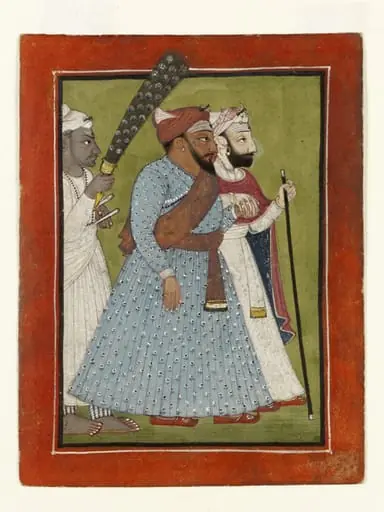
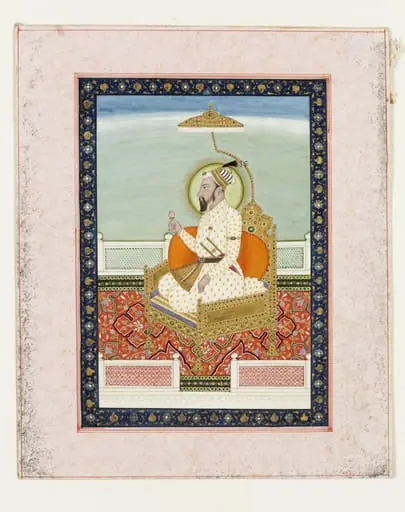
This 1745 portrait portrays Nasir Jang, the son of Nizam Asaf Jah I, ruler of Hyderabad. Executed in opaque watercolour on paper, it belongs to a group of four works acquired together. The composition follows regional conventions of Deccan court portraiture, blending naturalistic detail with symbolic elements to convey status and spiritual authority. The medium and format reflect local artistic practices of the mid-18th century.
Subject & Meaning
Nasir Jang is depicted holding a staff and a small book, attributes suggesting both temporal power and religious learning. A golden halo encircles his head, indicating sanctity or divine favor, while the figure behind him, holding a fan, may represent a court attendant. The arrangement implies a sacred or ceremonial context, positioning the subject as a ruler guided by spiritual wisdom rather than mere political might.
Technique & Style
The painting employs fine, precise brushwork to render intricate textile patterns and delicate facial features. Opaque watercolour allows for rich, flat areas of color, particularly in the ornate robes and the stylized green sky. The border of red and the grid of tiny floral motifs at the base are characteristic of Deccan manuscript illumination traditions, merging decorative precision with narrative intent.
History & Provenance
The painting was created in 1745 during Nasir Jang’s tenure as a regional prince. It was later acquired as part of a group of four related works, though its original location or patronage remains undocumented. Its survival suggests it was preserved within a collector’s circle, possibly within the Deccan court or among European collectors who assembled Indian artworks in the 19th century.
Context
Produced during the decline of Mughal central authority, Deccan courts like Hyderabad cultivated distinct artistic identities. This portrait reflects a fusion of Persianate elegance, local Deccan aesthetics, and emerging regional sovereignty. Similar works were used to affirm dynastic legitimacy, blending Islamic iconography with indigenous visual languages to assert both spiritual and political presence.
Legacy
Though not widely exhibited, this painting exemplifies the sophistication of 18th-century Deccan portraiture. It contributes to scholarly understanding of how regional rulers used visual culture to project authority beyond military or administrative power. Its stylistic features continue to inform studies of Indo-Islamic art, particularly in the interplay between secular rule and religious symbolism.
Artist & collection