Artwork
Our Lady of Mercy, called “The Pilgrim of Quito”
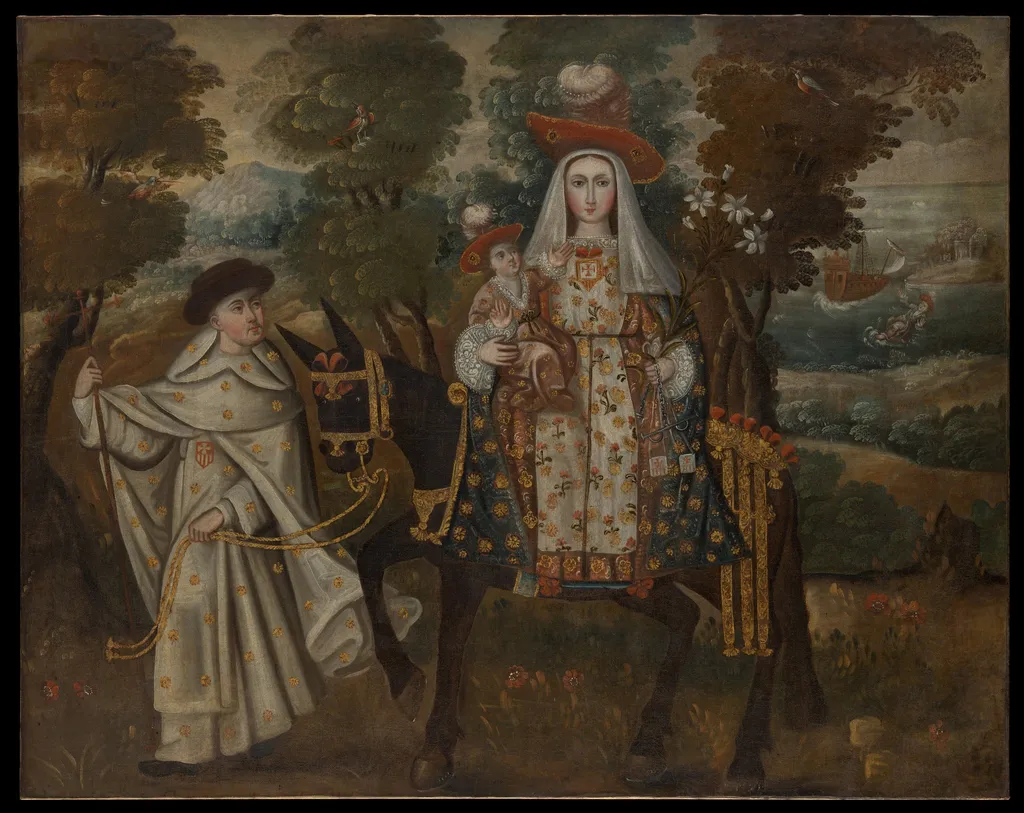
Our Lady of Mercy, called “The Pilgrim of Quito” is an unspecified painting. It dates from 1735 and is held in the collection of the Metropolitan Museum of Art.
About this work
History & Provenance
The work was commissioned as a devotional image and reflects the artistic output of the mid‑18th‑century Quito school.
The painting titled Our Lady of Mercy, called “The Pilgrim of Quito,” was created in 1735 by an unknown artist. It entered the collection of the Metropolitan Museum of Art, where it remains on display. The work was commissioned as a devotional image and reflects the artistic output of the mid‑18th‑century Quito school.
The painting is held by the Metropolitan Museum of Art, where it is listed under its collection. It bears the accession or inventory number 1987.123.456, reflecting its formal entry into the museum’s holdings. The work has been exhibited in the museum’s European Paintings galleries, allowing public access to this 1735 depiction of the Virgin Mary extending her mantle to protect the faithful.
Overview
The work titled Our Lady of Mercy, called “The Pilgrim of Quito” presents a tranquil landscape populated by three standing figures. A man in a white, gold‑embroidered robe grips a staff, while beside him a woman in an ornate dress and wide‑brimmed hat holds a child. Boats, trees and distant hills fill the background, rendered in muted, blended tones that convey a serene atmosphere.
Subject & Meaning
The composition suggests a devotional scene in which the female figure, identified as Our Lady of Mercy, accompanies a child, possibly the Christ child, under the protection of a pilgrim or guardian figure. The man’s staff and the simple cross on his robe reinforce themes of pilgrimage and spiritual guidance, while the richly patterned attire of the woman underscores her sanctified status.
Technique & Style
Executed with delicate brushwork, the painting employs a restrained palette of soft hues that merge the figures into the surrounding landscape. Fine detailing appears in the floral motifs of the woman’s dress and the feathered embellishment of her hat, demonstrating a careful attention to textile texture and decorative elements typical of colonial Quito art.
Context
Set within the visual tradition of 18th‑century Andean religious painting, the work aligns with the era’s emphasis on Marian iconography and the integration of local landscape elements. The inclusion of everyday details such as boats and hills situates the sacred scene within a recognizable Quito environment, bridging devotional imagery and local identity.
Artist & collection

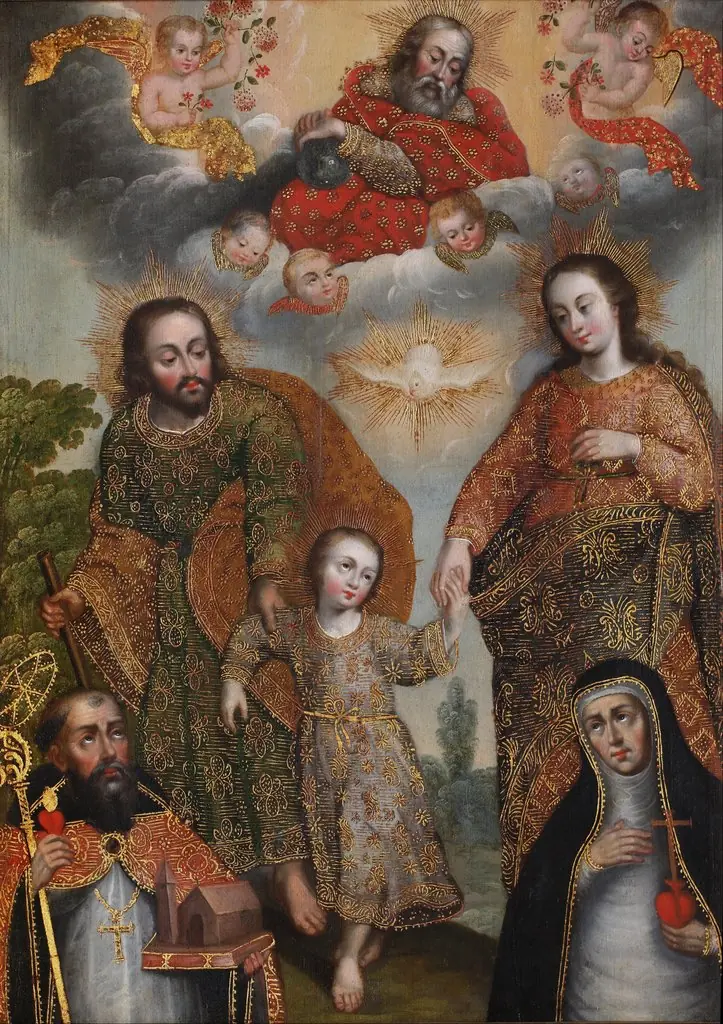 Double Trinity with Saint Augustine and Saint Catherine of Siena
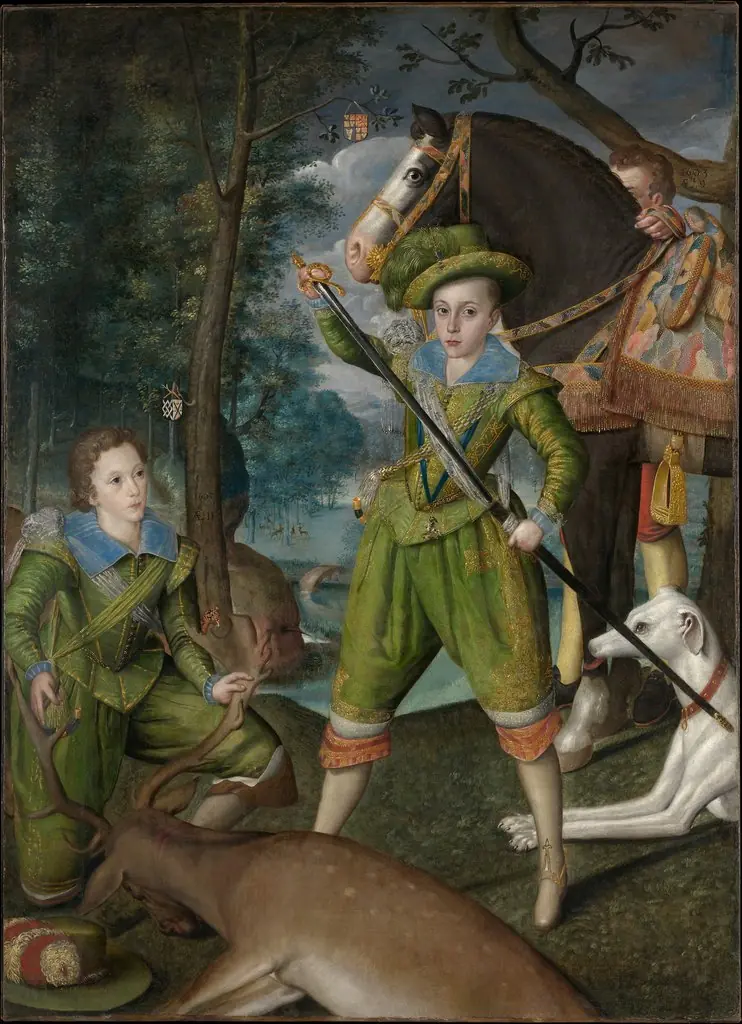 Henry Frederick (1594–1612), Prince of Wales, with Sir John Harington (1592–1614), in the Hunting Field
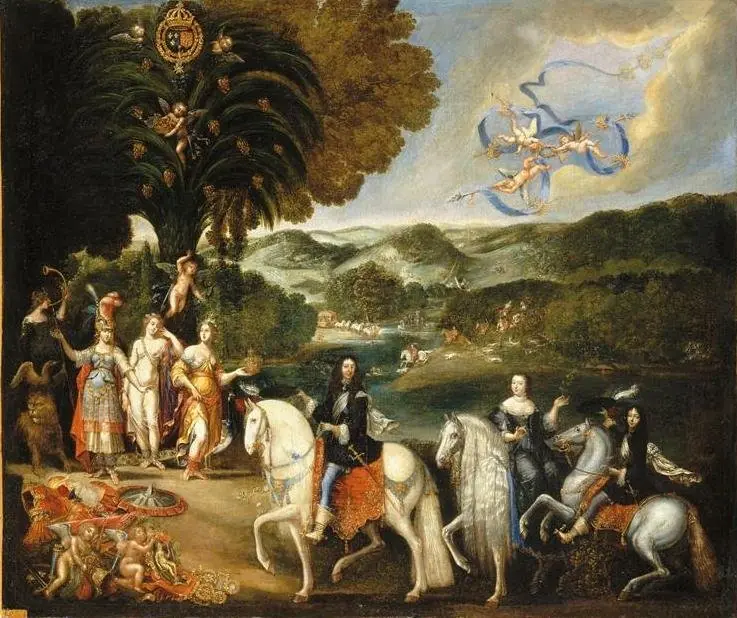 Allegory of the Marriage of Louis XIV in 1631
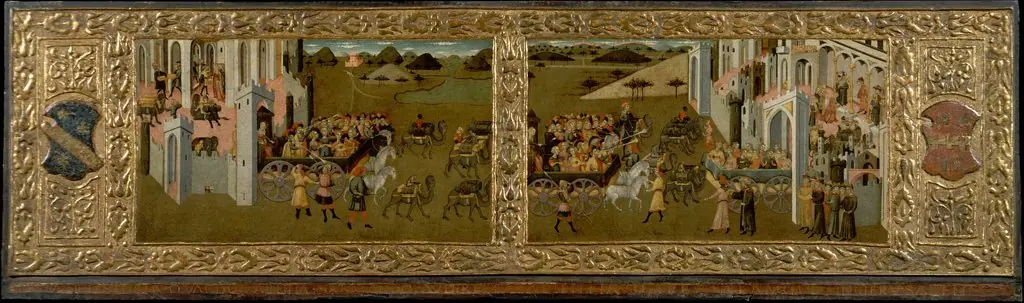 King Solomon and the Queen of Sheba
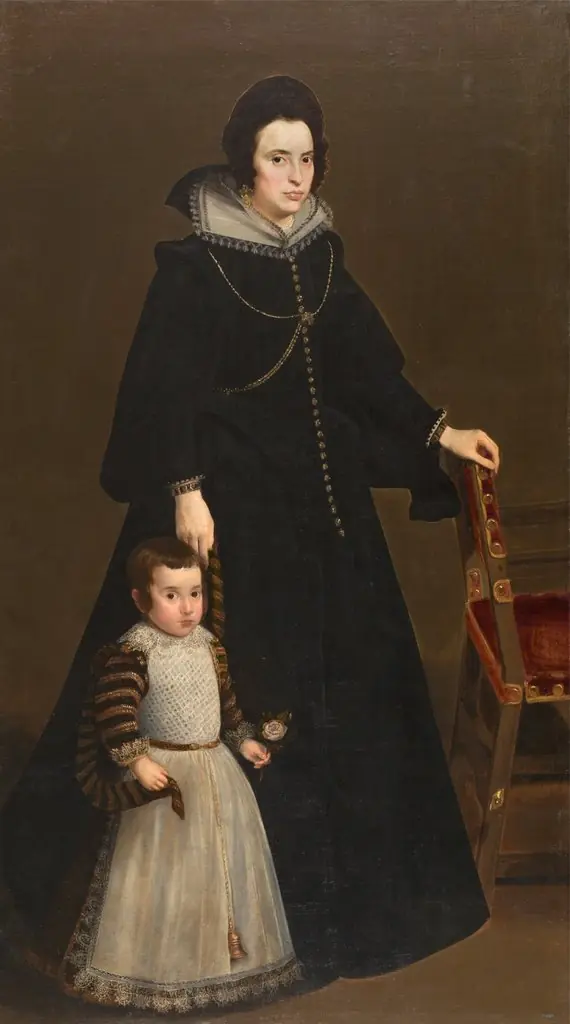 Doña Antonia de Ipeñarrieta y Galdós and Her Son Don Luis
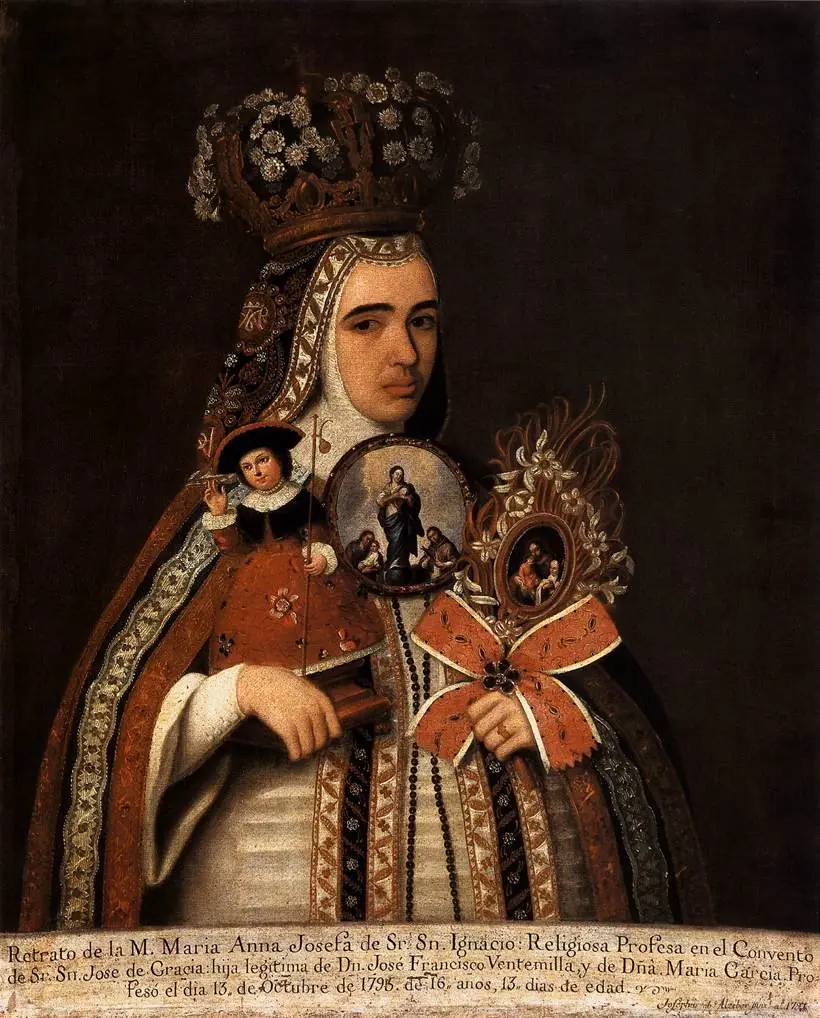 Sor María Ana Josefa de Señor San Ignacio
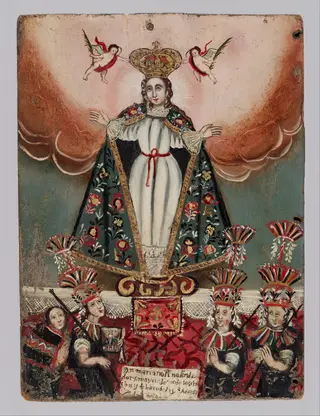 The Virgin Mary with Indigenous (Aymara) Donors
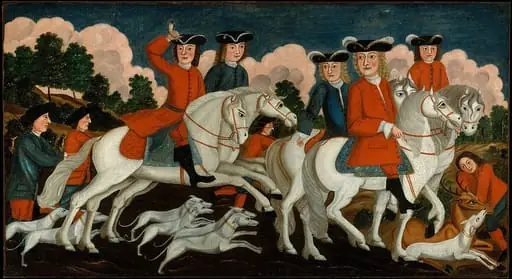 The Hunting Party—New Jersey
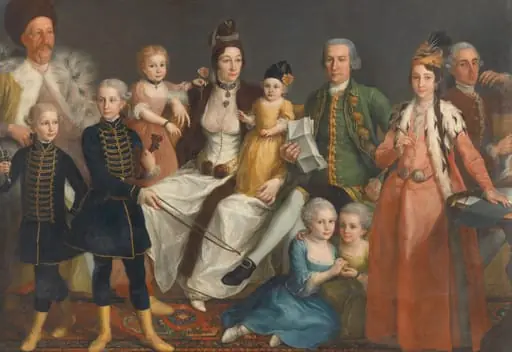 Portrait of the Van Lennep Family, a Merchant Family in Izmir