Artwork
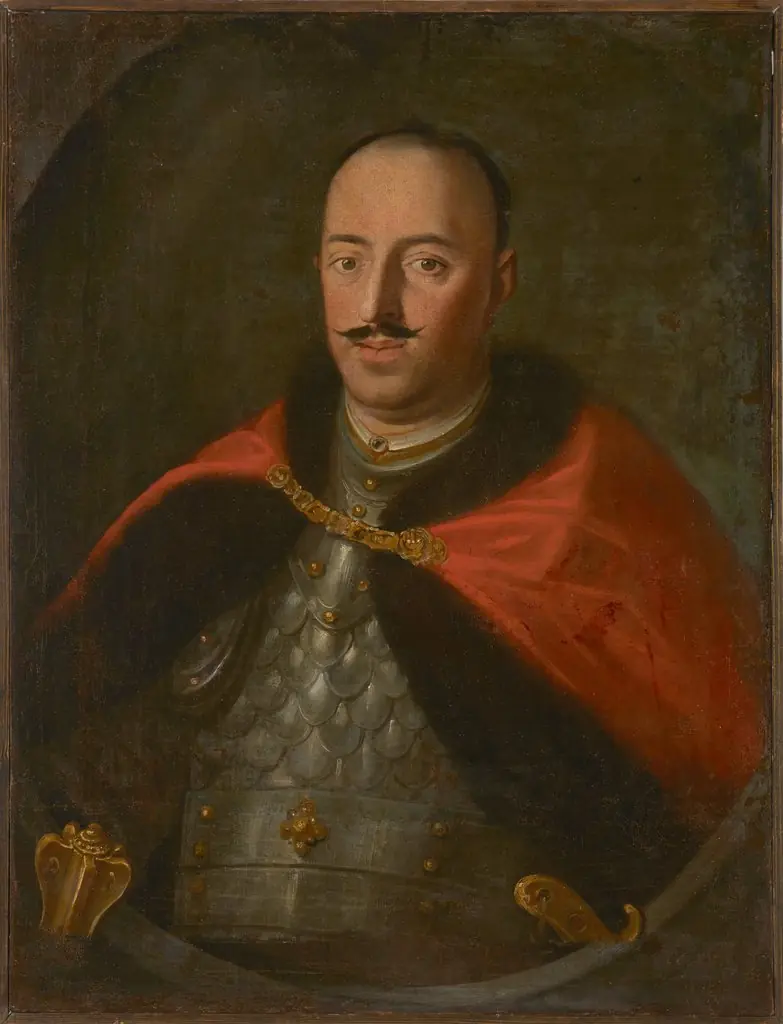
Portrait of Demian (Dmitri) Skumin Tyszkiewicz, Leliwa coat of arms (?–1609), castellan of Minsk
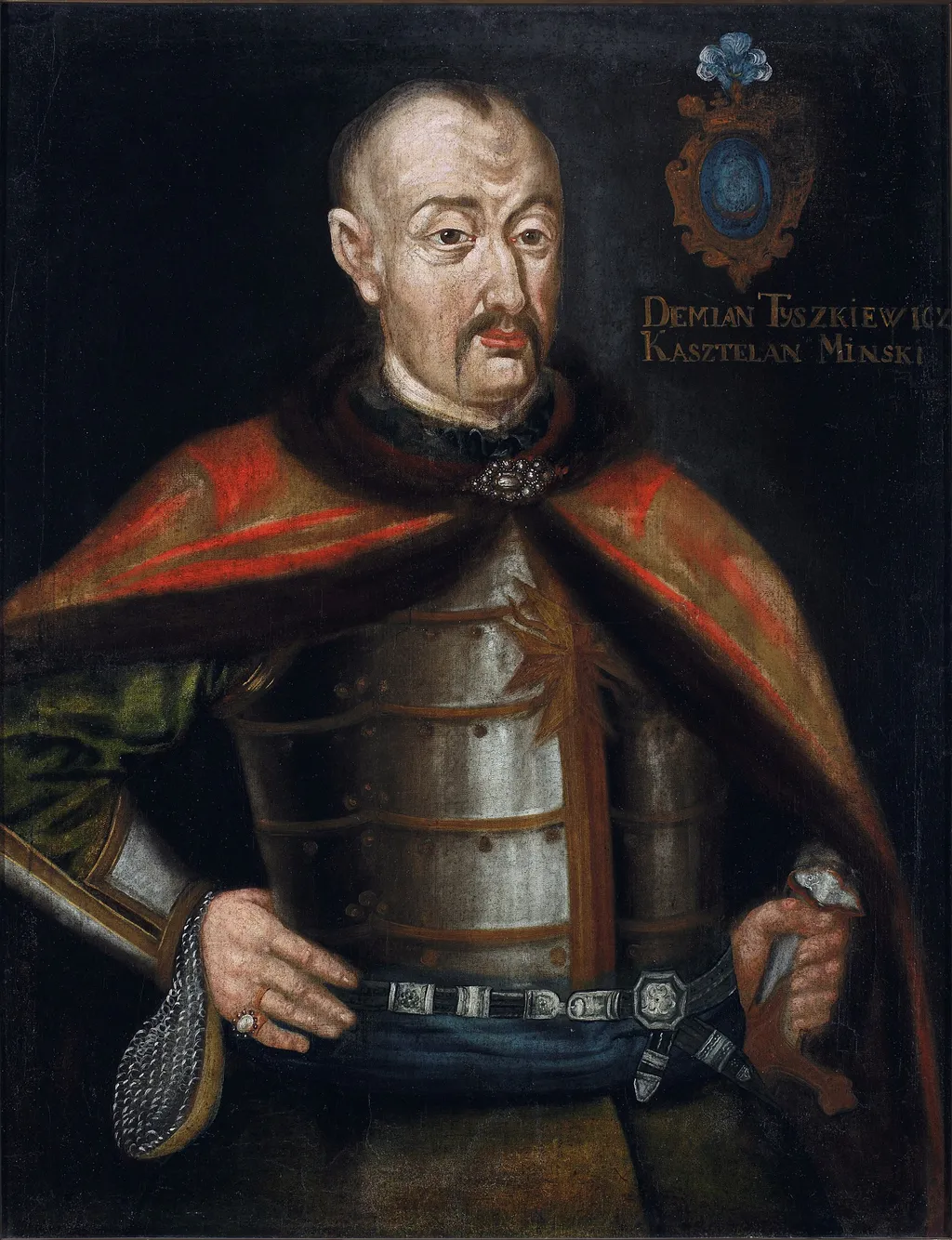
Portrait of Demian (Dmitri) Skumin Tyszkiewicz, Leliwa coat of arms (?–1609), castellan of Minsk is an oil painting by the Neoclassicist artist Unknown. It dates from 1797 and is held in the collection of the National Museum in Warsaw.
About this work
Overview
Created by an unknown artist in 1793, the work depicts the 17th-century nobleman and castellan of Minsk, Dymitr Tyszkiewicz.
Portrait of Demian (Dmitri) Skumin Tyszkiewicz, Leliwa coat of arms (?-1609), castellan of Minsk is an oil on canvas painting measuring 88.5 by 68 centimeters. Created by an unknown artist in 1793, the work depicts the 17th-century nobleman and castellan of Minsk, Dymitr Tyszkiewicz. The painting is held in the collection of the National Museum in Warsaw. It serves as a historical representation of the Polish-Lithuanian elite, combining heraldic identification with the militaristic sarmatian portraiture tradition.
Subject & Meaning
The painting portrays Dymitr Tyszkiewicz, a nobleman of the Leliwa coat of arms who held the office of castellan of Minsk until his death in 1609. He is shown in a half-length pose facing slightly right, wearing polished steel plate armor with brass or gold edging, a dark ruffled collar, and a red-lined brown cloak with fur trim. His right hand rests on his hip near a decorated belt and sword hilt, while his left hand grips a pair of gloves. A ring with a light stone adorns his right hand, and chain mail hangs from his right sleeve. A painted coat of arms featuring a blue oval and crest appears above his left shoulder, accompanied by a gold inscription identifying him as Demian Tyszkiewicz, castellan of Minsk. These elements emphasize his aristocratic lineage, military readiness, and political rank.
Technique & Style
Executed in oil on canvas, the portrait exhibits the formal qualities of sarmatian portraiture, a style emphasizing heraldic display and aristocratic status. The artist employed smooth blending to render the face and hands, contrasting with more textured handling in the fabrics and metal. Light falls from the left, illuminating the sitter against a nearly black background to heighten the reflective quality of the polished armor and the jeweled clasp at his throat. The paint surface shows fine craquelure throughout. The work is classified as an imagination portrait, a stylistic category indicating it was created long after the sitter's death, relying on conventional visual formulas rather than direct life observation.
History & Provenance
The portrait was painted in 1793, nearly two centuries after the death of its subject in 1609, placing its creation firmly in the late 18th century. Prior to entering the National Museum in Warsaw, the painting was associated with the Society for the Care of the Monuments of the Past in Warsaw, an organization active between 1906 and 1944. Earlier provenance links the work to a palace in Ohojsko, Belarus. The painting remains in the collection of the National Museum in Warsaw as an accession of the institution.
Context
The painting belongs to the tradition of sarmatian portraiture, a genre popular among the nobility of the Polish-Lithuanian Commonwealth. These works functioned as assertions of noble identity and lineage, often depicting ancestors in armor with personal insignia. Because the portrait was created in 1793, it reflects a retrospective or imaginative construction of a 17th-century figure, coinciding with the period of the Commonwealth's partitions. The involvement of the Society for the Care of the Monuments of the Past in the painting's history underscores its role as a cultural artifact preserved for its historical and genealogical significance rather than its origin as a life study.
Legacy
As an imagination portrait preserved through institutions like the Society for the Care of the Monuments of the Past, the work has served as a visual document of noble heritage and the sarmatian cultural ideal in the Polish-Lithuanian Commonwealth. Its continued presence in the National Museum in Warsaw ensures its role in the study of historical portraiture, genealogical imagery, and the material culture of the Commonwealth's elite.
Artist & collection









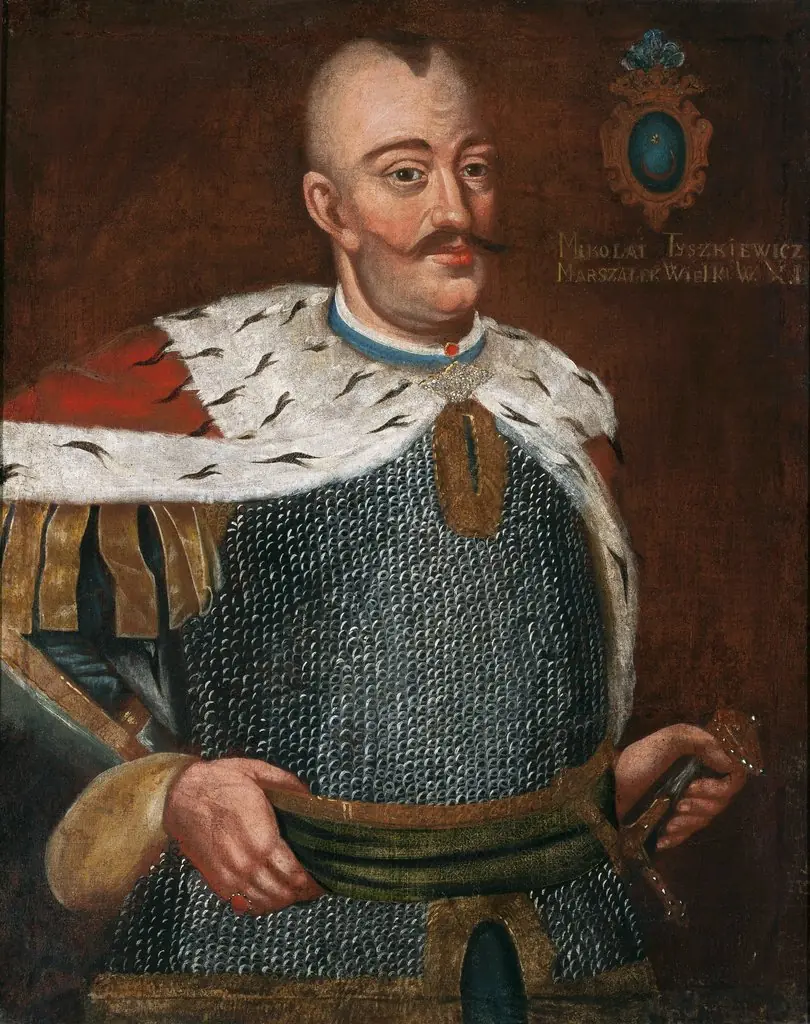
- Portrait of Mikołaj Tyszkiewicz, Leliwa coat of arms, marshal of the Grand Duchy of Lithuania
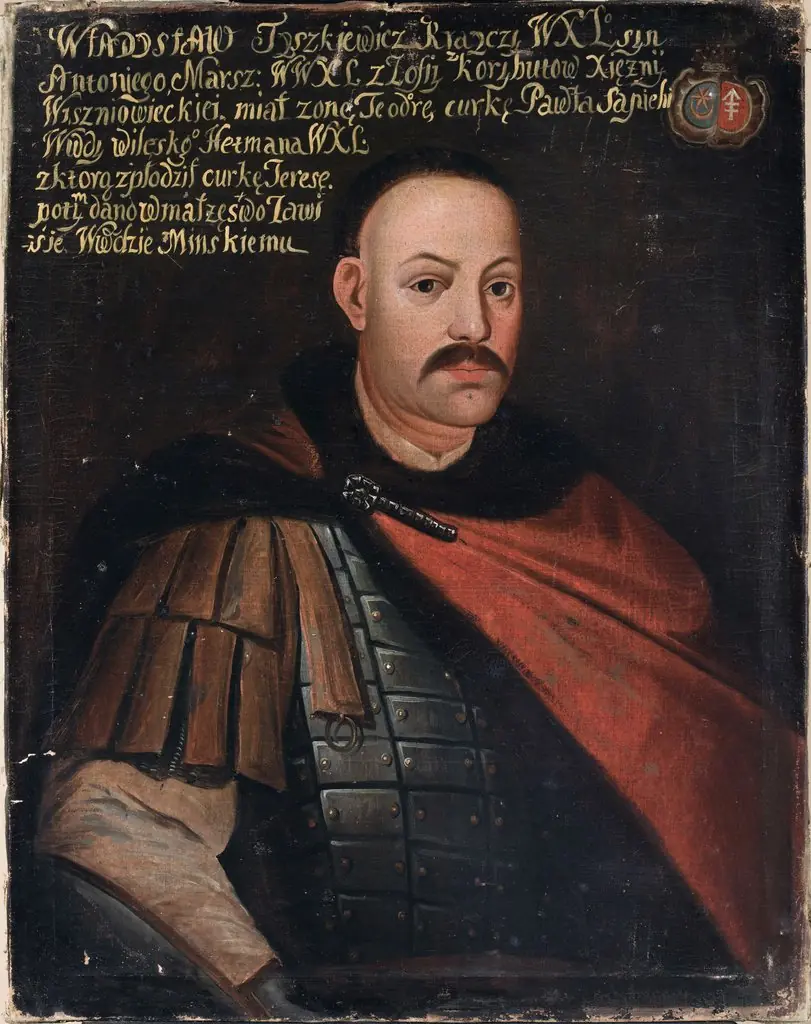 Portrait of Władysław Tyszkiewicz, Leliwa coat of arms (1644–1684), carver of the Grand Duchy of Lithuania
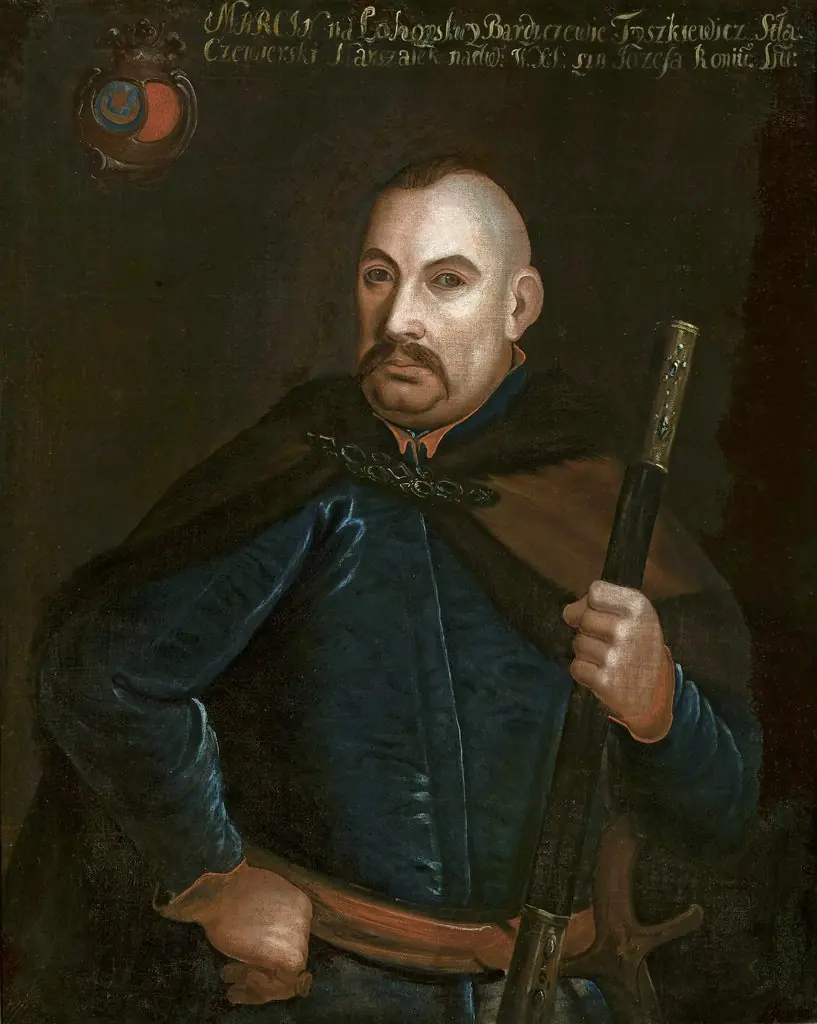 Portrait of Marcin Tyszkiewicz, Leliwa coat of arms (?–after 1631), court marshal of the Grand Duchy of Lithuania
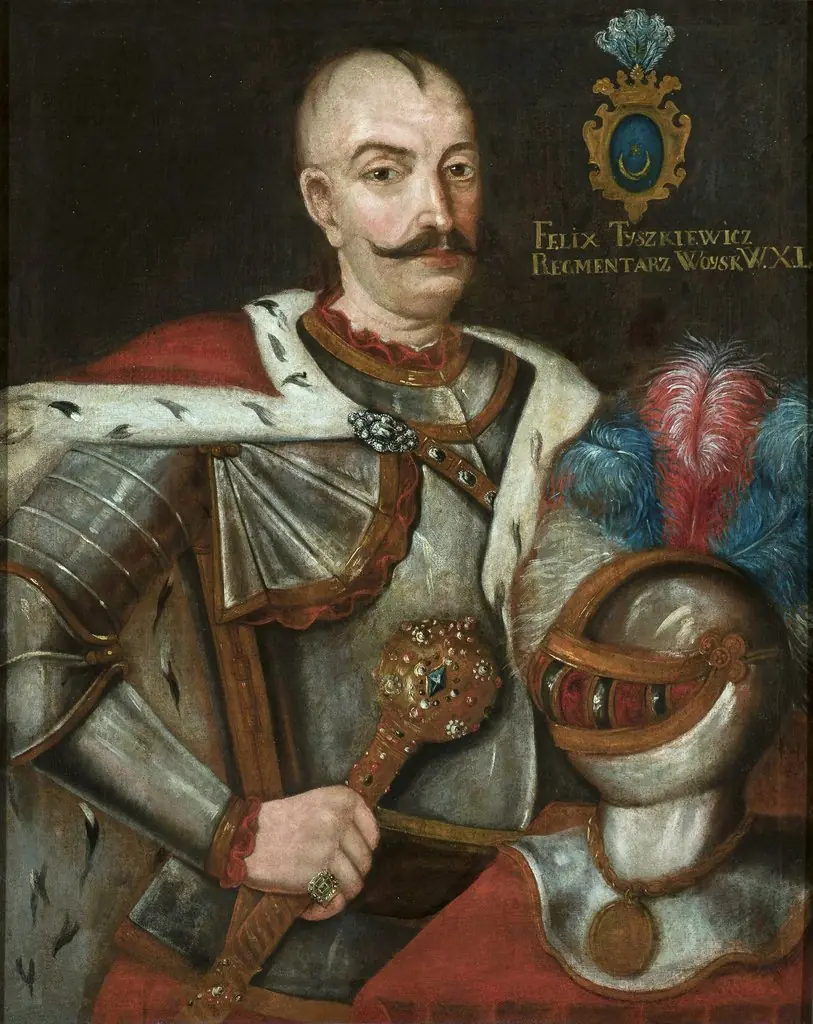 Portrait of Felix Tyszkiewicz (?–1649), Leliwa coat of arms, regimentarius (deputy hetman) of the Grand Duchy of Lithuania
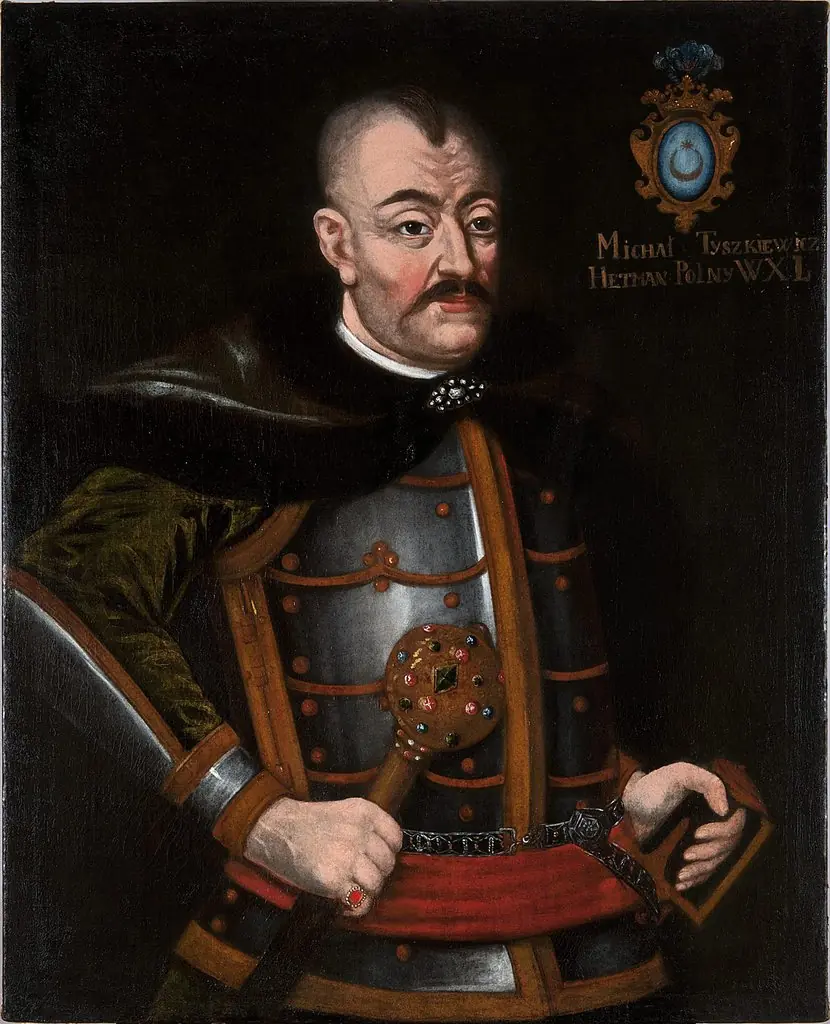 Portrait of Michał Tyszkiewicz, Leliwa coat of arms (?–after 1549), field hetman of the Grand Duchy of Lithuania
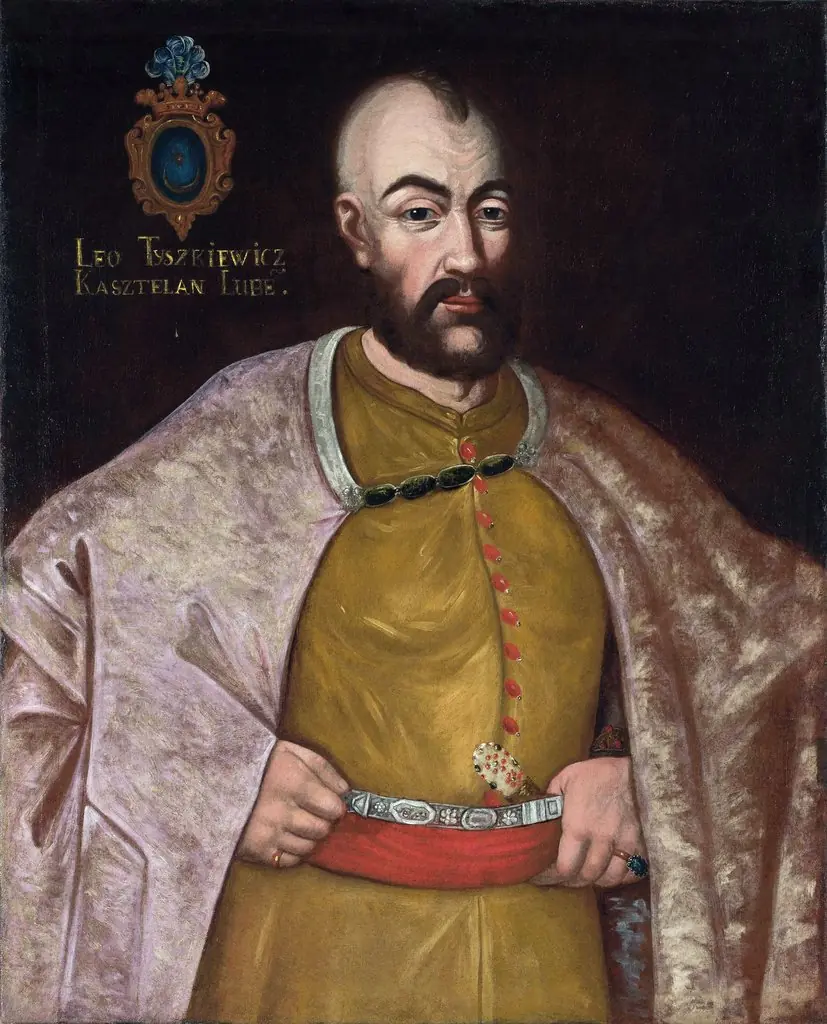 Portrait of Leo (Lew) Tyszkiewicz, Leliwa coat of arms (?–before 1515), castellan of Liubech (?)
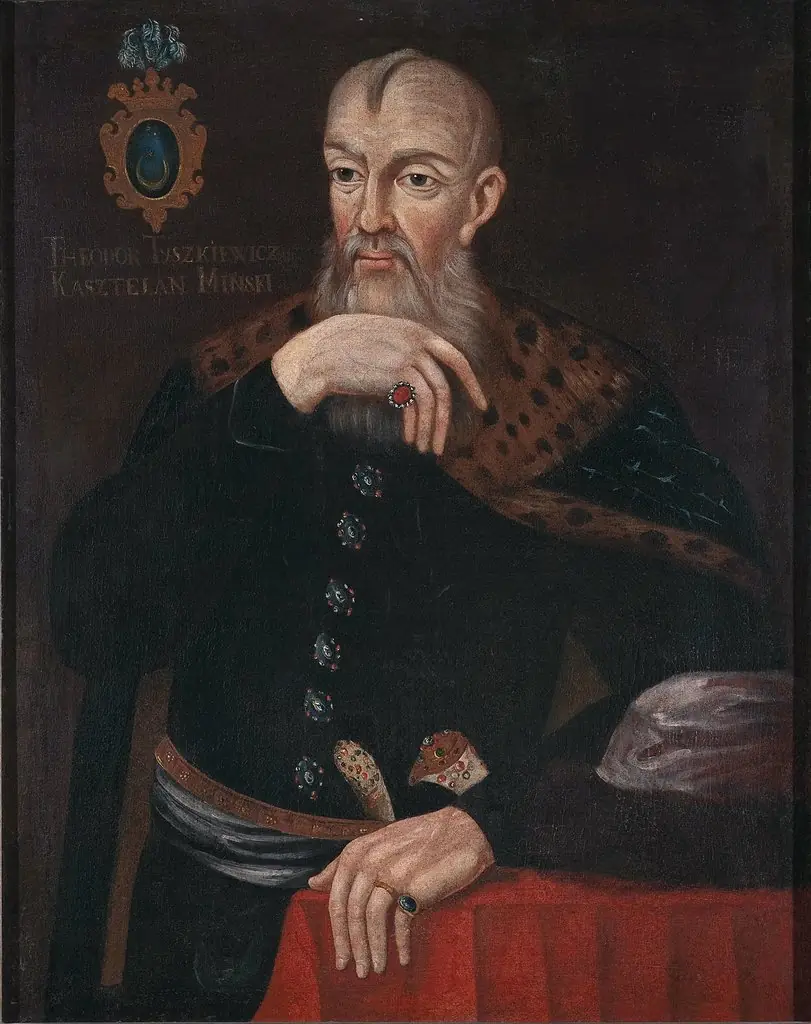 Portrait of Teodor Tyszkiewicz (fl. 2nd half of the 16th c.?), Leliwa coat of arms, castellan of Minsk
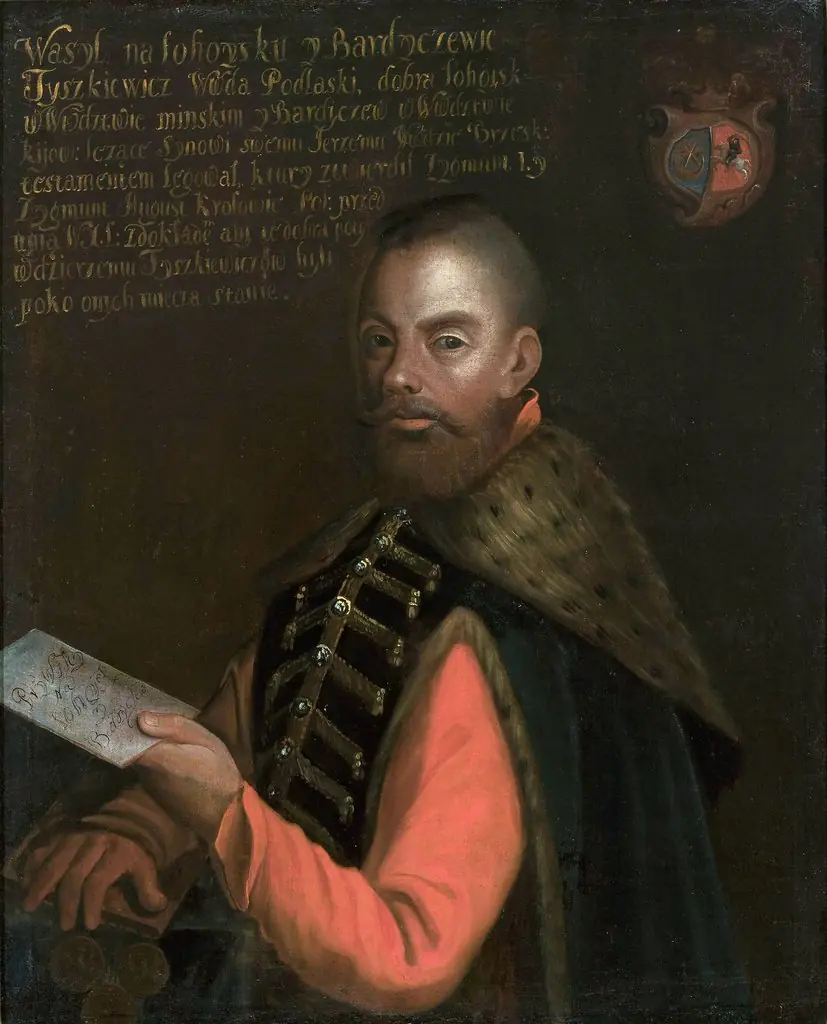 Portrait of Wasyl Tyszkiewicz, Leliwa coat of arms (?–1571), voivode of Podlasie
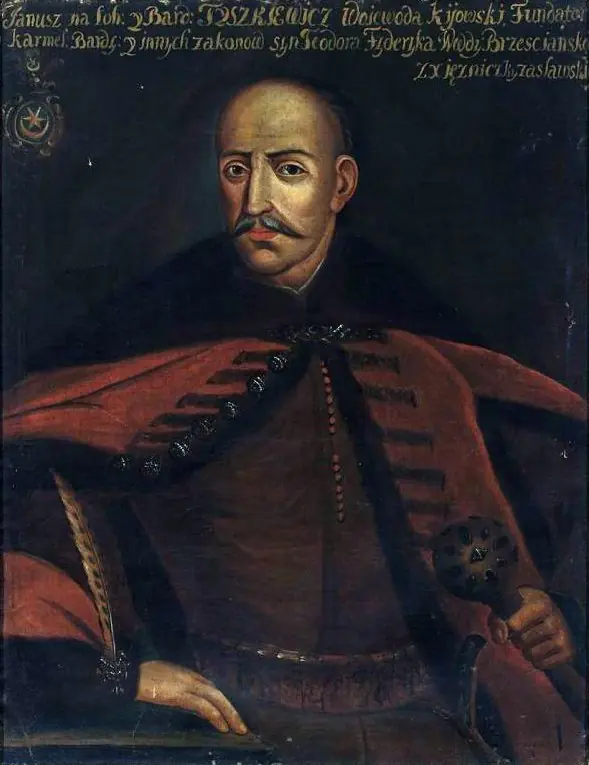 Portrait of Janusz Tyszkiewicz (1570–1649), Leliwa coat of arms, voivode of Kiev
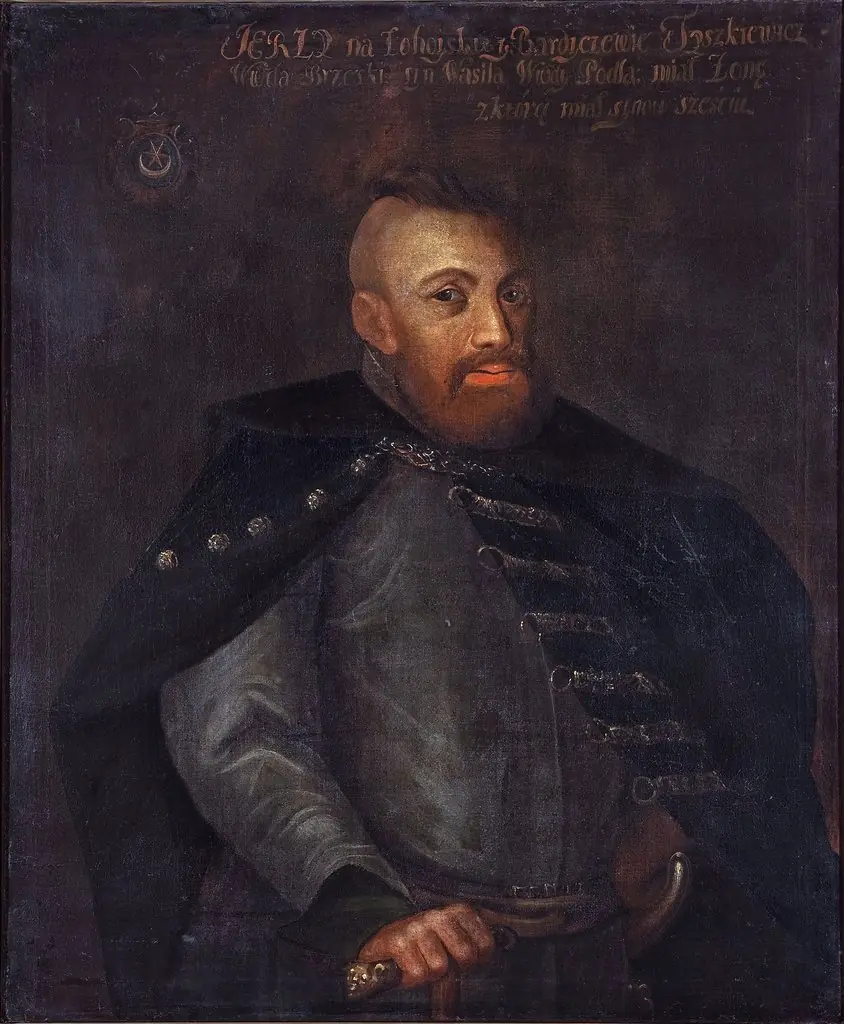 Portrait of Jerzy Tyszkiewicz, Leliwa coat of arms (?–1576), voivode of Brest
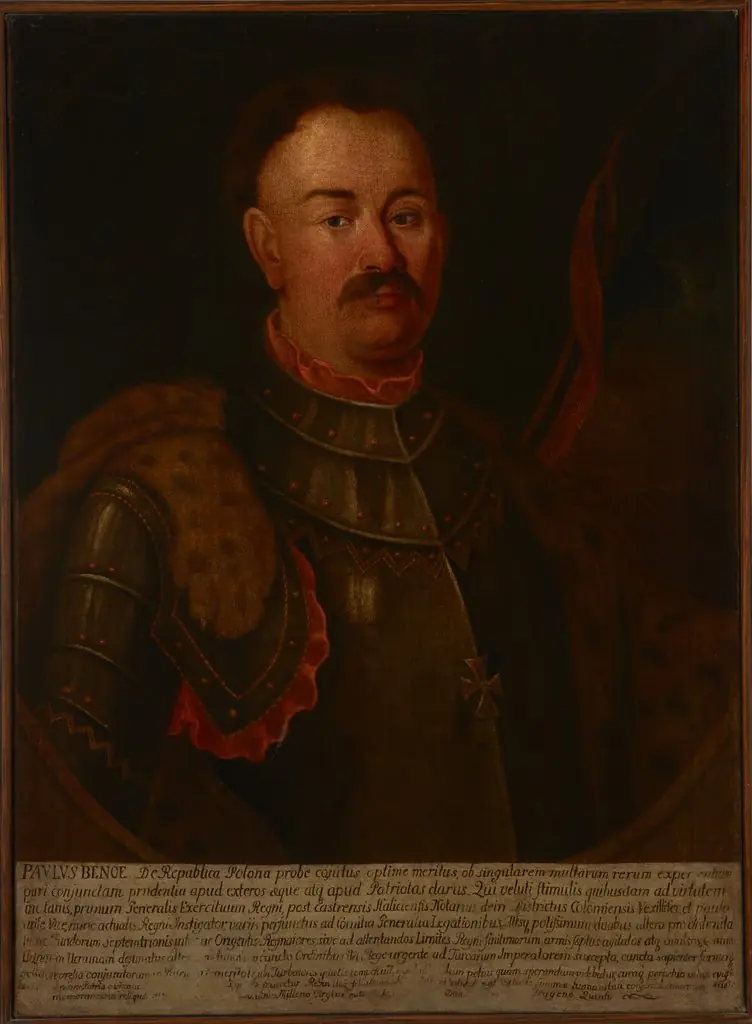 Portrait of Paweł Benoe, Castellan of Warsaw (? -1755)
 Portrait of Piotr Dembiński, Nieczuja coat of arms (1660–1734), Castellan of Biecz