Artwork
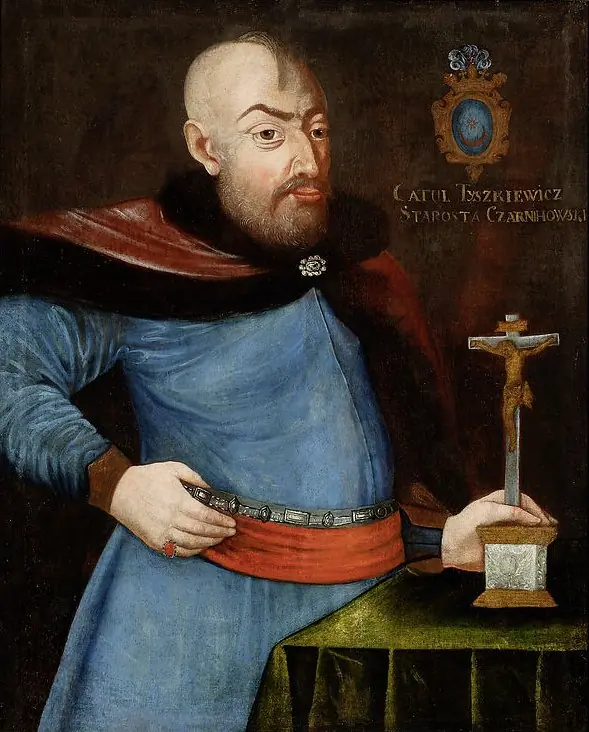
Portrait of Teodor Tyszkiewicz (fl. 2nd half of the 16th c.?), Leliwa coat of arms, castellan of Minsk
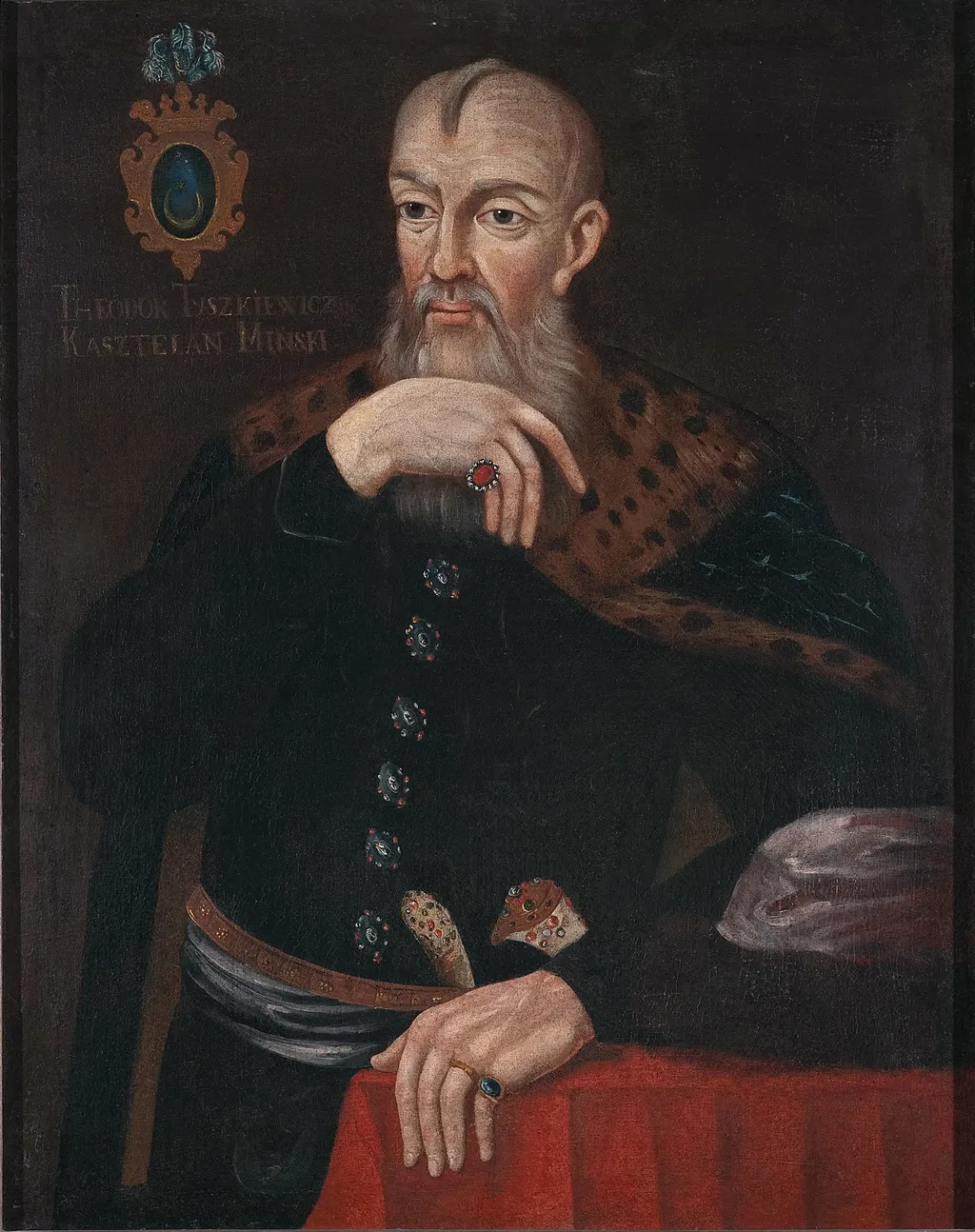
Portrait of Teodor Tyszkiewicz (fl. 2nd half of the 16th c.?), Leliwa coat of arms, castellan of Minsk is an oil painting by the Neoclassicist artist Unknown. It dates from 1797 and is held in the collection of the National Museum in Warsaw.
About this work
Overview
The Portrait of Teodor Tyszkiewicz is an oil-on-canvas painting dated 1793, depicting a Polish-Lithuanian nobleman of the previous century.
The Portrait of Teodor Tyszkiewicz is an oil-on-canvas painting dated 1793, depicting a Polish-Lithuanian nobleman of the previous century. Attributed to an unknown artist, the work measures 94 by 74 centimeters and is held in the collection of the National Museum in Warsaw under inventory number MP 3204 MNW. The portrait is significant as a late eighteenth-century commemorative image of a sixteenth-century castellan, representing the period practice of producing posthumous portraits of esteemed ancestors to assert family lineage and social standing within the Polish-Lithuanian Commonwealth.
Subject & Meaning
The subject is Teodor Tyszkiewicz, identified by the Leliwa coat of arms, who served as castellan of Minsk and flourished during the second half of the sixteenth century. The upper left of the composition displays his heraldic arms within a gold frame: a blue oval bearing a crescent and star, topped with a crest. Below the arms, partially legible gold lettering provides further identification. The sitter is presented as a dignified elder statesman with a high forehead, receding gray hair, and a long gray beard and mustache. His right hand, adorned with a large ring set with a red stone, rests upon his chest in a gesture of sincerity or oath-taking, while his left hand, wearing a ring with a dark stone, rests upon a red draped surface. The black garment with ornate buttons, fur-trimmed collar, and white ruffled cuff signal wealth and office. The overall iconography serves to memorialize a revered ancestor and legitimate the social prestige of the Tyszkiewicz family line.
Technique & Style
The painting is executed in oil on canvas, a standard support for formal portraiture of the era. The artist employs a relatively even, diffuse lighting that illuminates the face and hands while submerging the background in deep, nearly black shadow. This chiaroscuro effect focuses attention on the physiognomy and costume of the sitter. The paint surface exhibits fine craquelure throughout, consistent with its age and medium. The handling is precise in the rendering of textiles, the fur-trimmed collar with its dark spots, and the jewelry, while the facial features are modeled with sufficient naturalism to suggest an attempt at likeness, even though the subject had been dead for roughly two centuries. The composition follows a conventional vertical format for three-quarter-length portraiture, with the seated figure positioned against a neutral dark ground that eliminates spatial context and emphasizes the sitter's presence.
History & Provenance
The work was created in 1793, long after the death of its subject, indicating it was commissioned as a retrospective portrait for a descendant or family member seeking to preserve visual memory of an important ancestor. The painting entered the collection of the National Museum in Warsaw, one of Poland's oldest art museums founded in 1862, and is currently located at Aleje Jerozolimskie 3 in Warsaw. The museum's modernist building was erected between 1927 and 1938. The portrait is listed as being in the public domain and has been disseminated through image archives including Look and Learn and Alamy. No exhibition history is recorded in the available sources.
Context
The portrait belongs to a broad European tradition of ancestral portraiture, particularly strong in the Polish-Lithuanian Commonwealth, where noble families commissioned images of forebears to document lineage and reinforce claims to titles and estates. The late eighteenth-century date of execution places it in a period of political turmoil for the Commonwealth, which would be partitioned for the final time in 1795, two years after this portrait was painted. The decision to commemorate a sixteenth-century castellan from Minsk, a region contested between Polish, Lithuanian, and later Russian spheres of influence, suggests an assertion of local noble identity during an era of imperial threat. The work is catalogued in Wikidata and appears in digital museum aggregators, though scholarly literature specifically devoted to this painting appears limited. Its attribution to an anonymous painter reflects the workshop-based and often undocumented nature of such commemorative commissions.
Legacy
As a public domain work held by a major national institution, the portrait circulates in digital image repositories and serves as a document of both sixteenth-century noble identity and late eighteenth-century commemorative practice. The painting's afterlife is primarily archival and educational, providing visual evidence for the self-representation of the Polish-Lithuanian szlachta across centuries. Its continued preservation in the National Museum in Warsaw ensures its availability for research into costume, heraldry, and the social functions of portraiture in the former Commonwealth. The work has not, on the basis of available sources, been the subject of extensive individual critical attention, but rather forms part of the broader corpus of anonymous Polish portrait painting that awaits further scholarly investigation.
Artist & collection









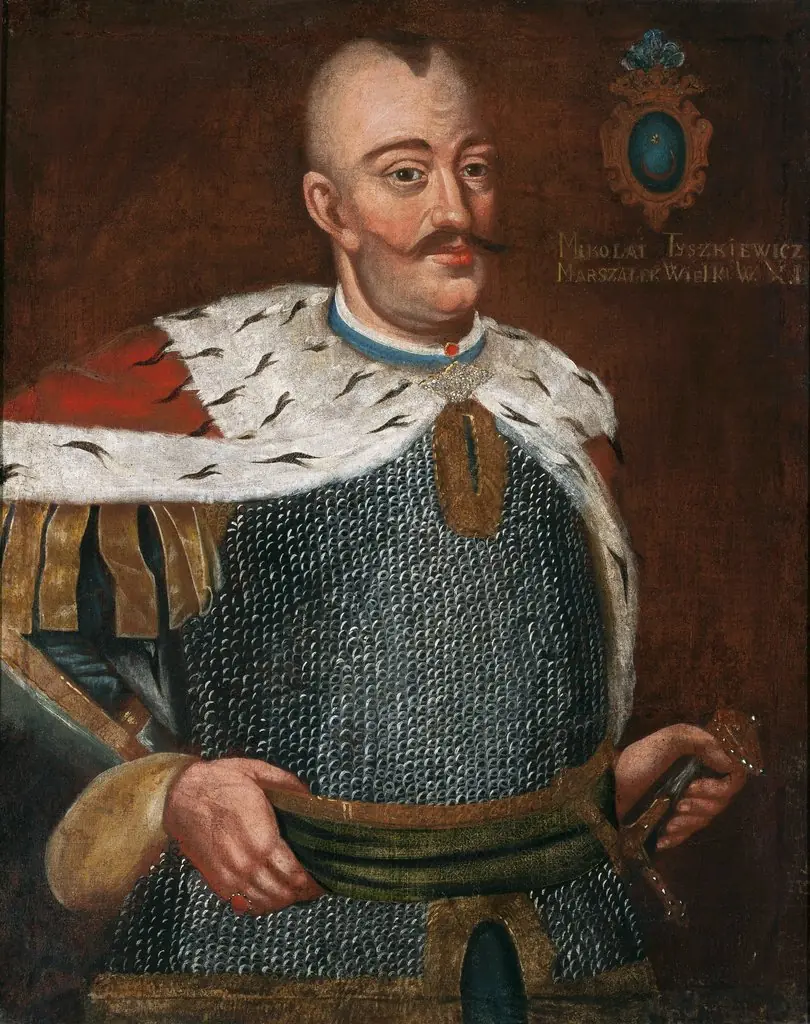
- Portrait of Mikołaj Tyszkiewicz, Leliwa coat of arms, marshal of the Grand Duchy of Lithuania
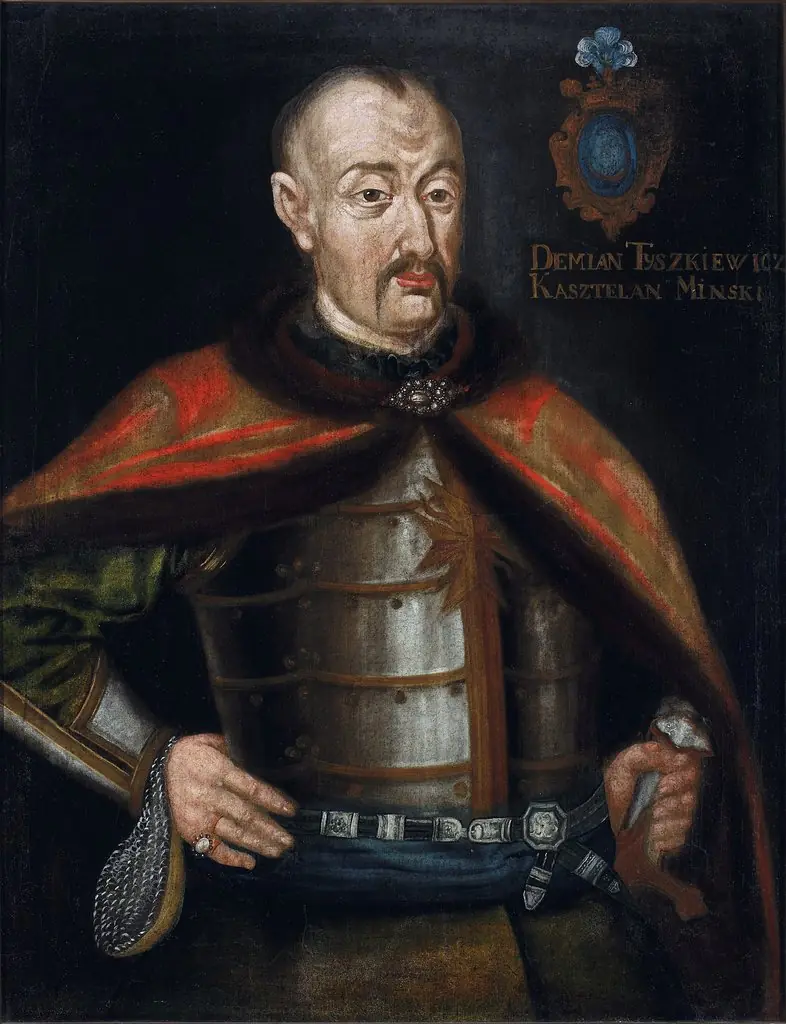 Portrait of Demian (Dmitri) Skumin Tyszkiewicz, Leliwa coat of arms (?–1609), castellan of Minsk
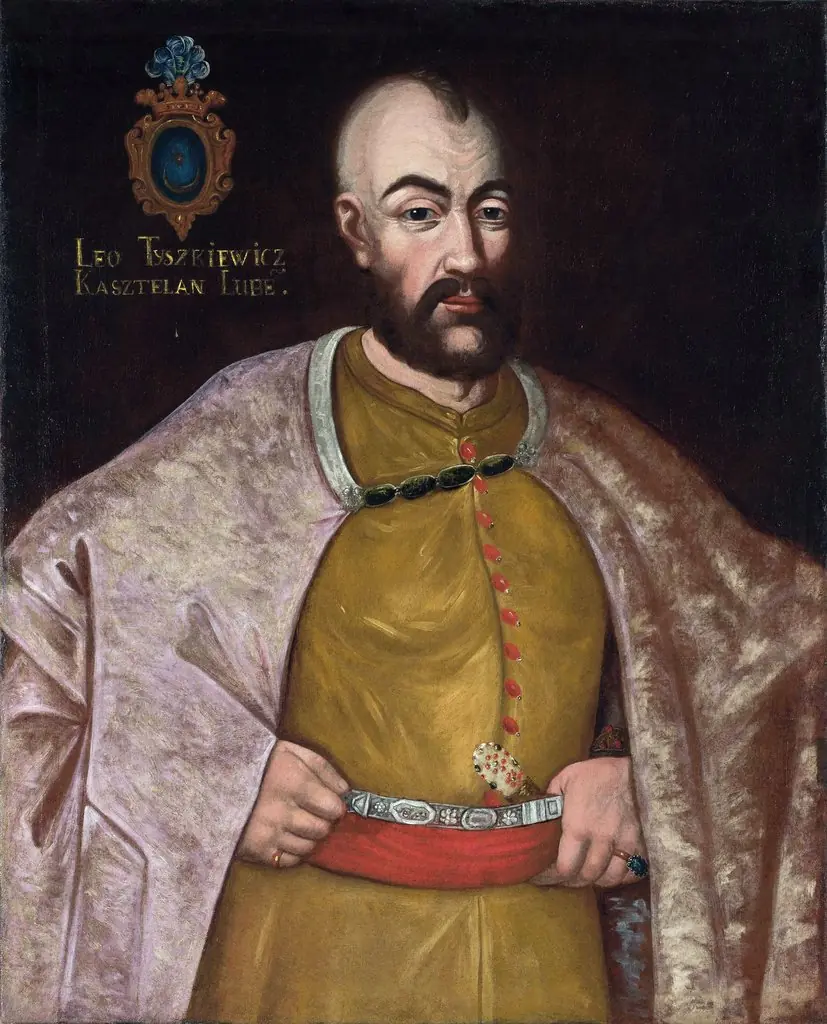 Portrait of Leo (Lew) Tyszkiewicz, Leliwa coat of arms (?–before 1515), castellan of Liubech (?)
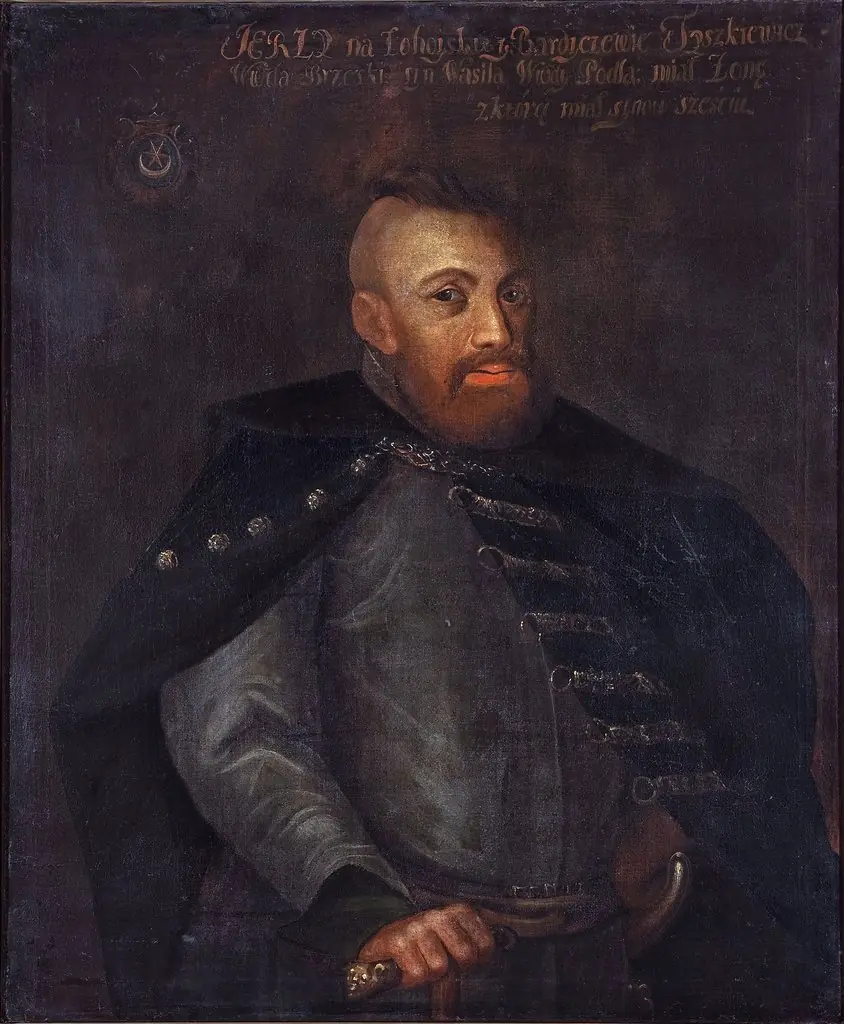 Portrait of Jerzy Tyszkiewicz, Leliwa coat of arms (?–1576), voivode of Brest
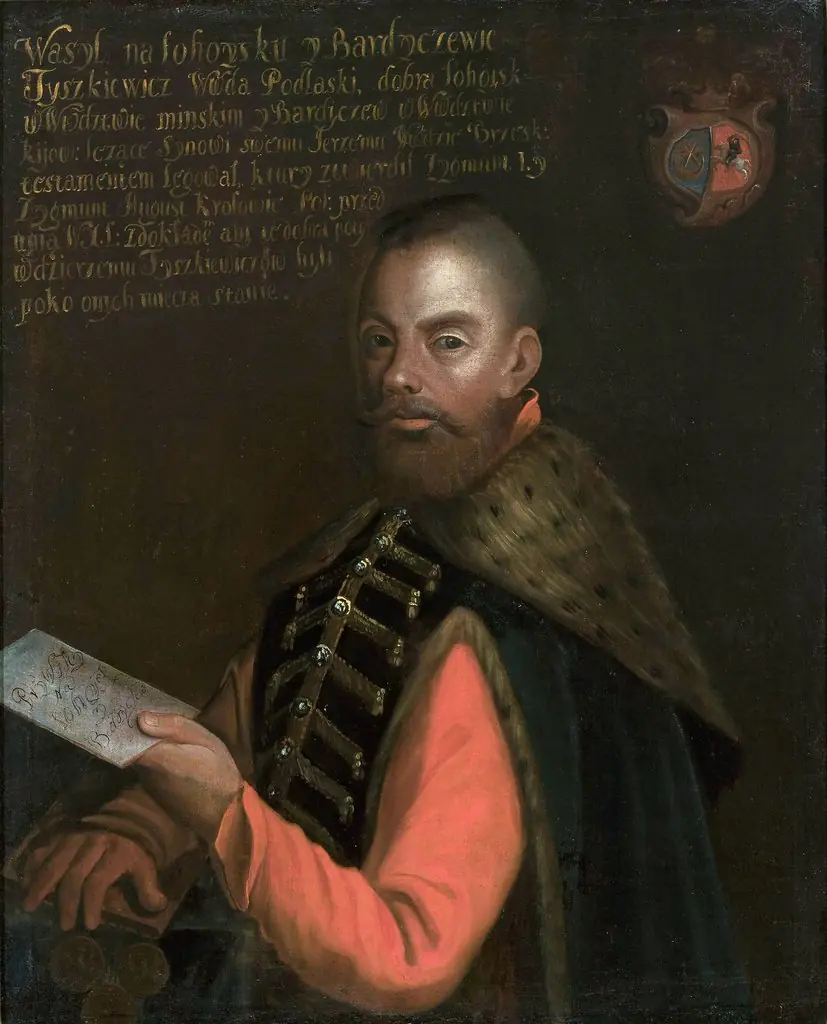 Portrait of Wasyl Tyszkiewicz, Leliwa coat of arms (?–1571), voivode of Podlasie
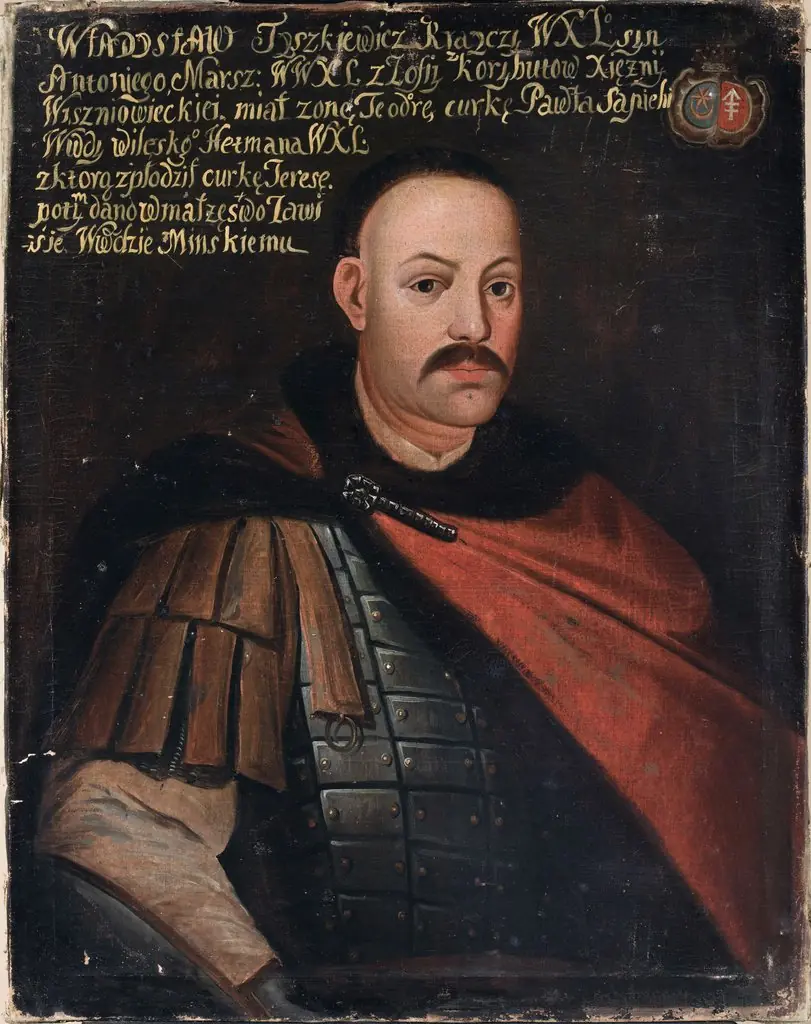 Portrait of Władysław Tyszkiewicz, Leliwa coat of arms (1644–1684), carver of the Grand Duchy of Lithuania
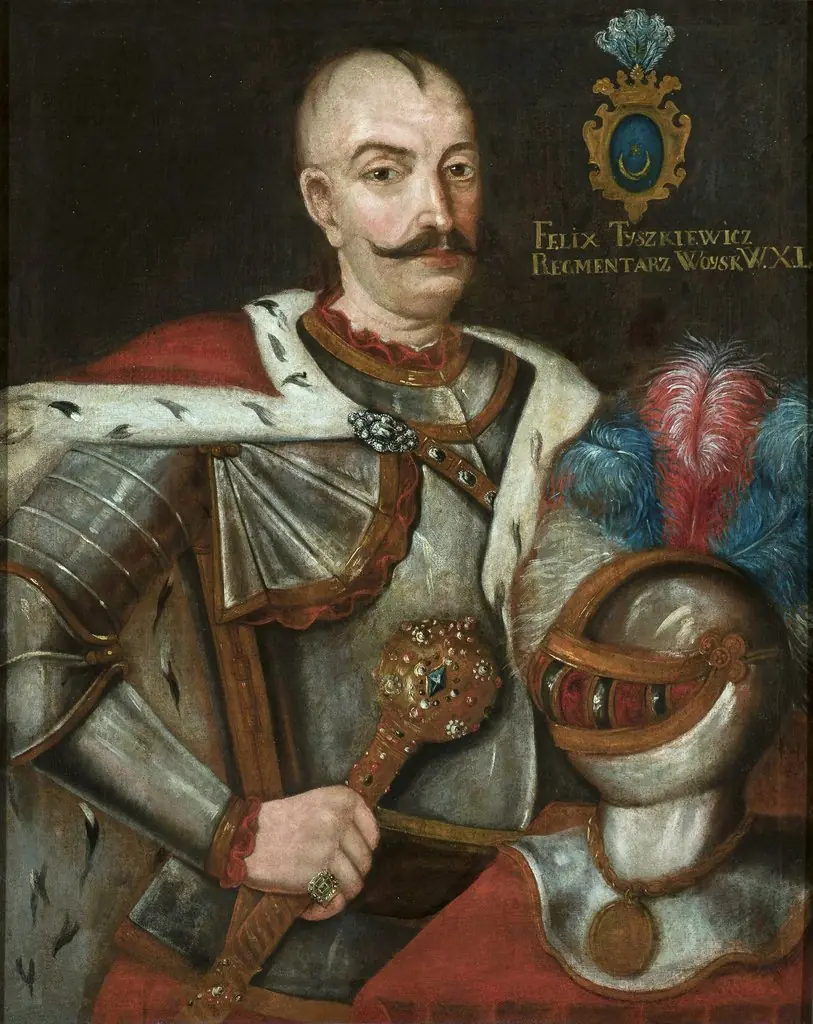 Portrait of Felix Tyszkiewicz (?–1649), Leliwa coat of arms, regimentarius (deputy hetman) of the Grand Duchy of Lithuania
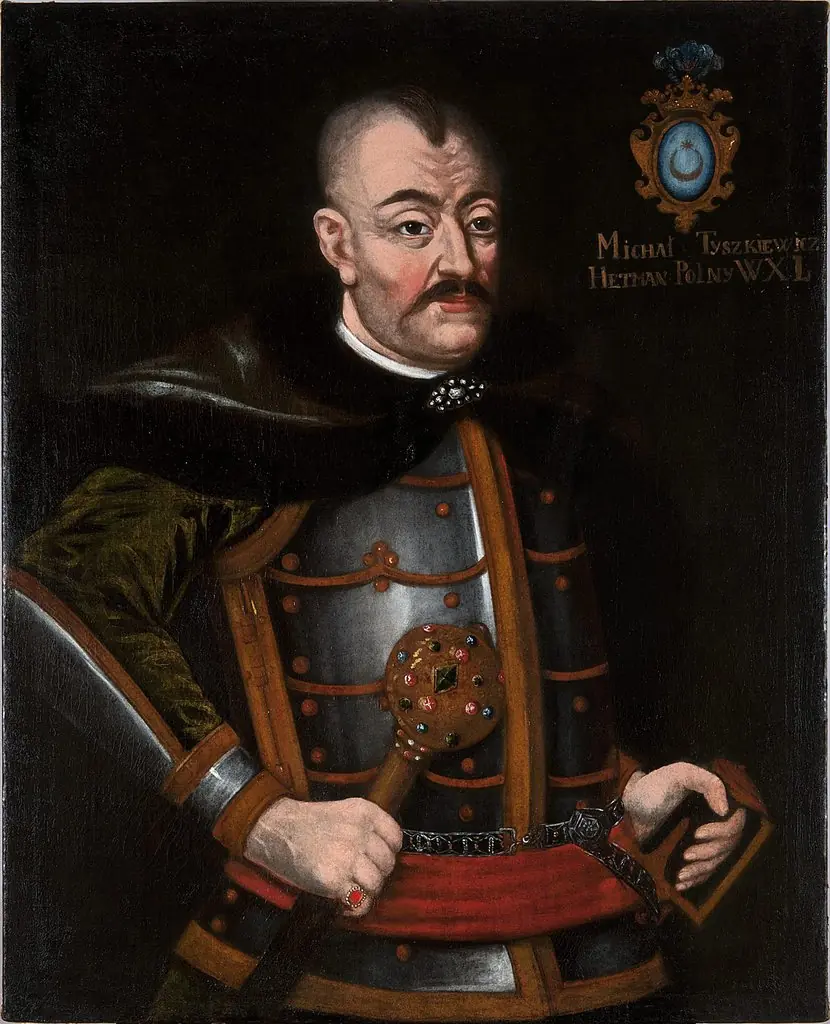 Portrait of Michał Tyszkiewicz, Leliwa coat of arms (?–after 1549), field hetman of the Grand Duchy of Lithuania
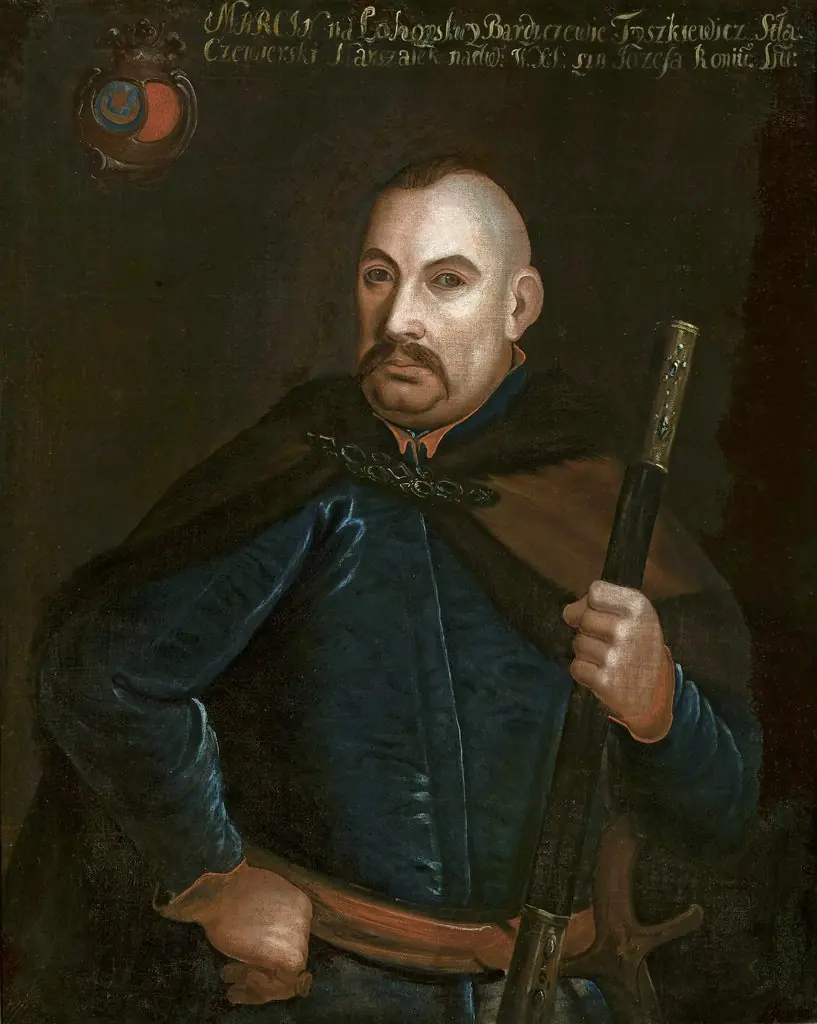 Portrait of Marcin Tyszkiewicz, Leliwa coat of arms (?–after 1631), court marshal of the Grand Duchy of Lithuania
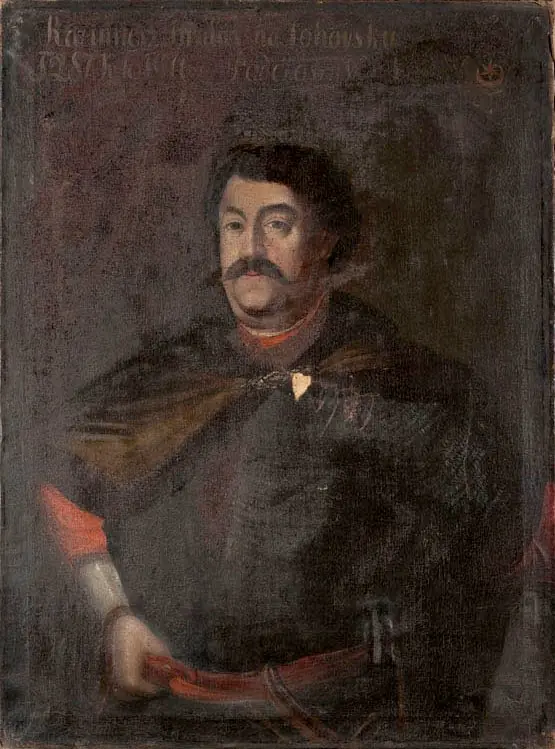 Portrait of Kazimierz Tyszkiewicz, Leliwa coat of arms (?–1652), cup-bearer of the Grand Duchy of Lithuania
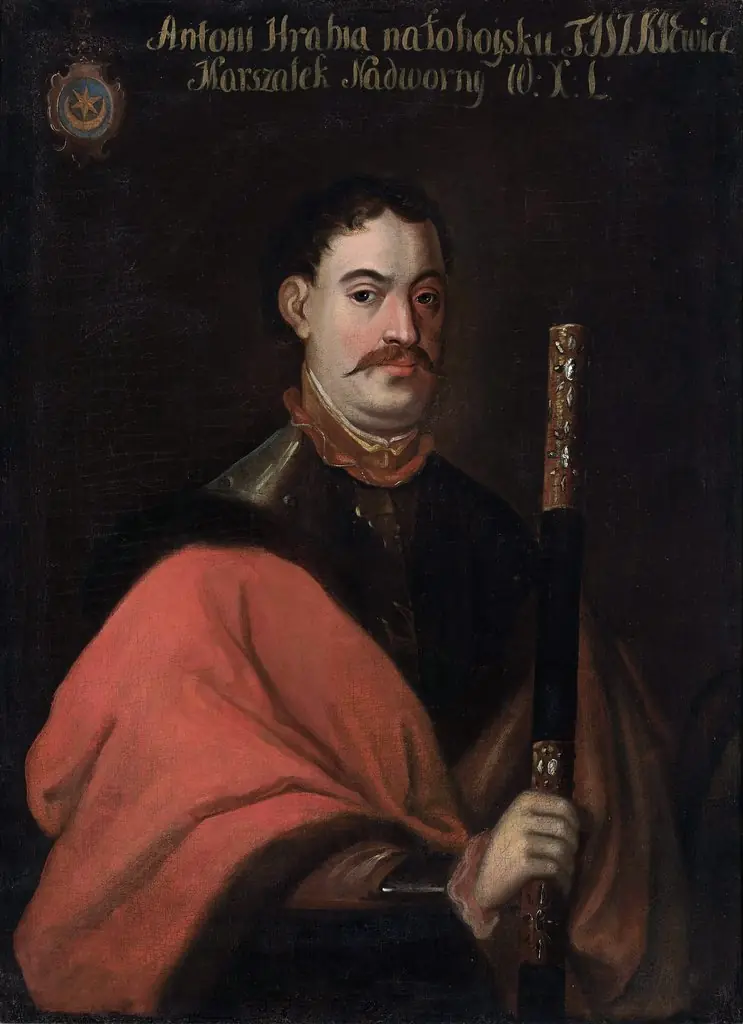 Portrait of Antoni Jan Tyszkiewicz (1609–1649), Leliwa coat of arms, court marshal of the Grand Duchy of Lithuania
 Portrait of Catul (Kalinik?) Tyszkiewicz, Leliwa coat of arms, starosta of Chernihiv