Artwork
Seated Portrait of Emperor Song Huizong
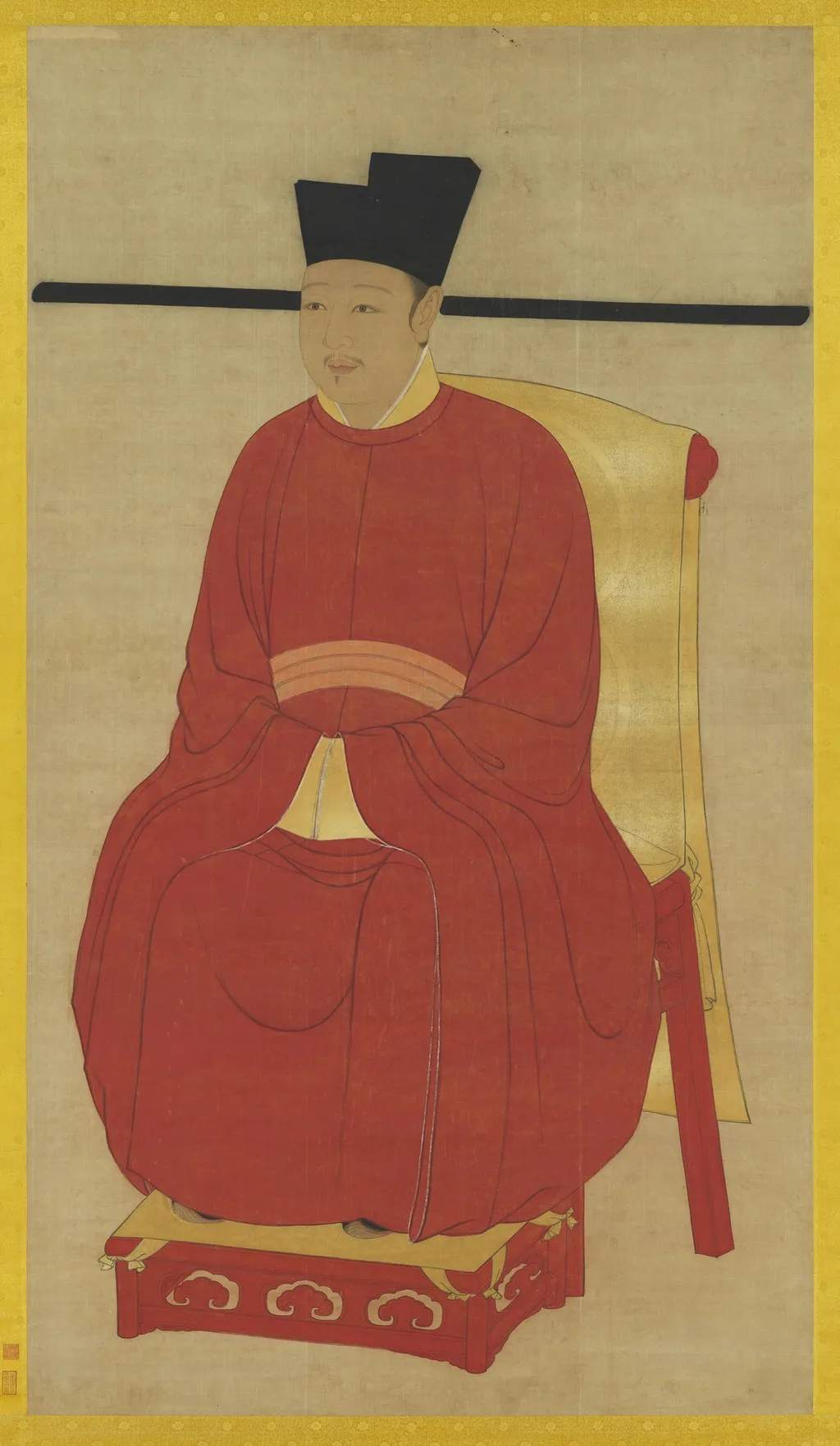
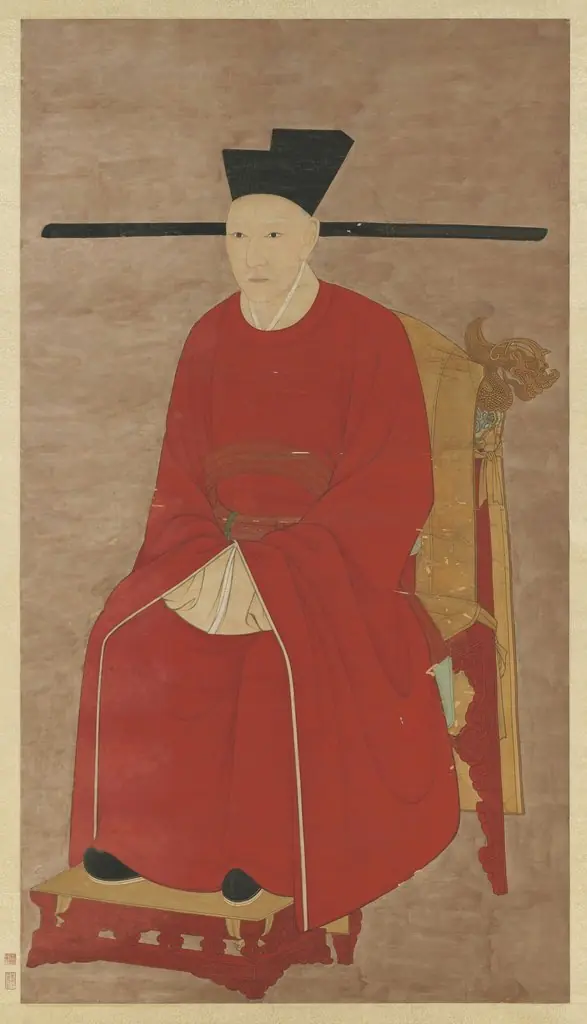
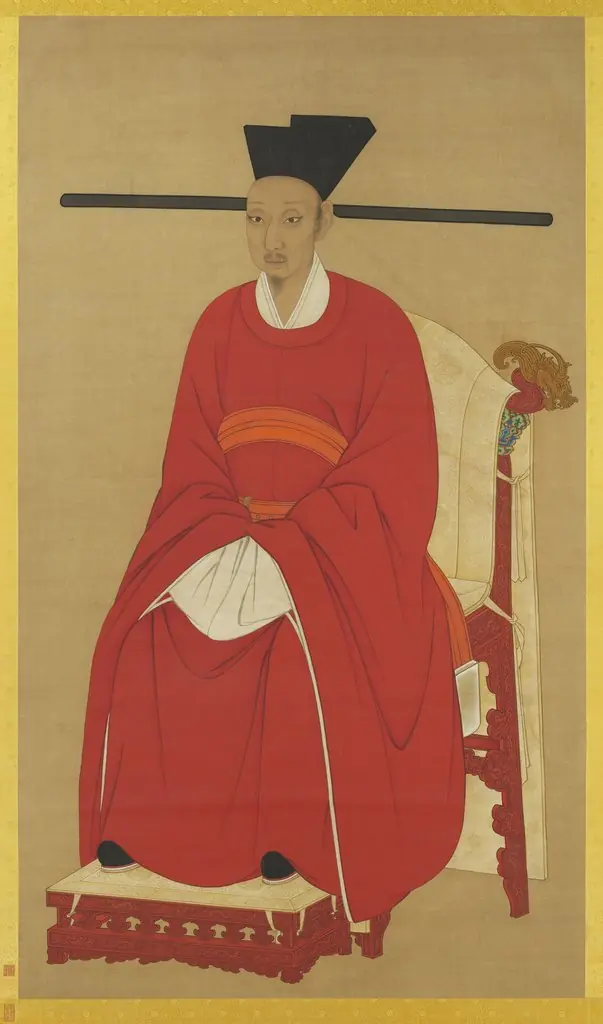
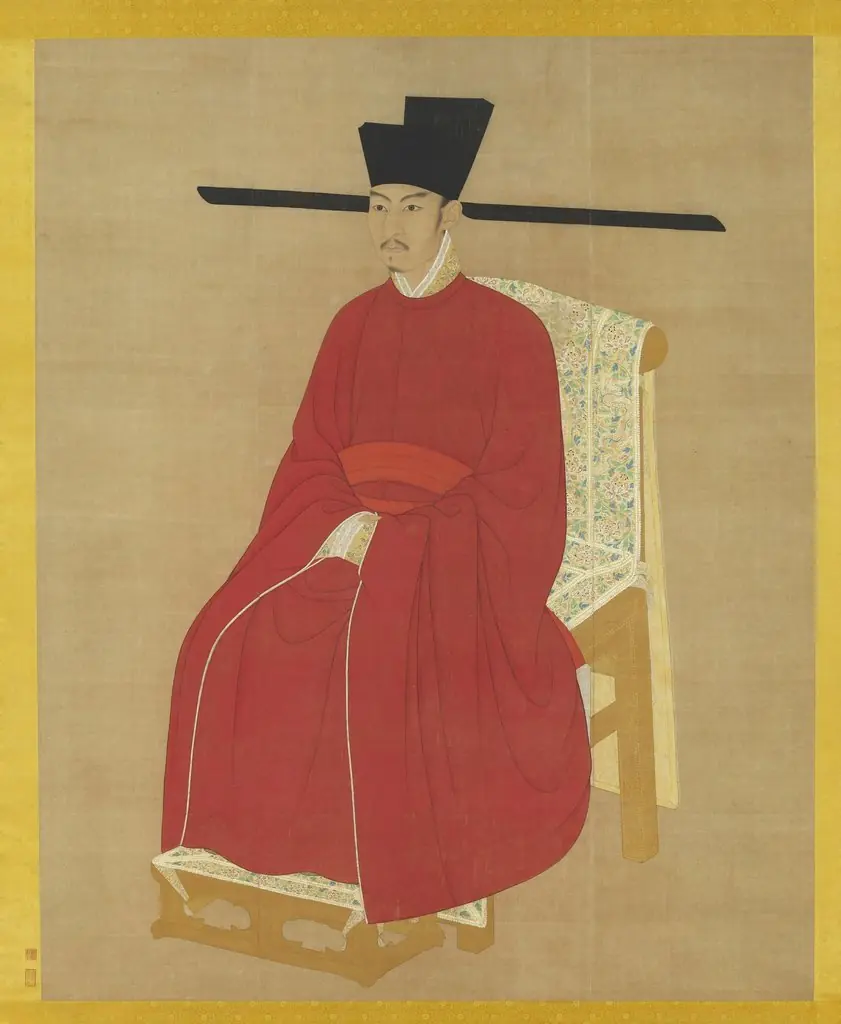
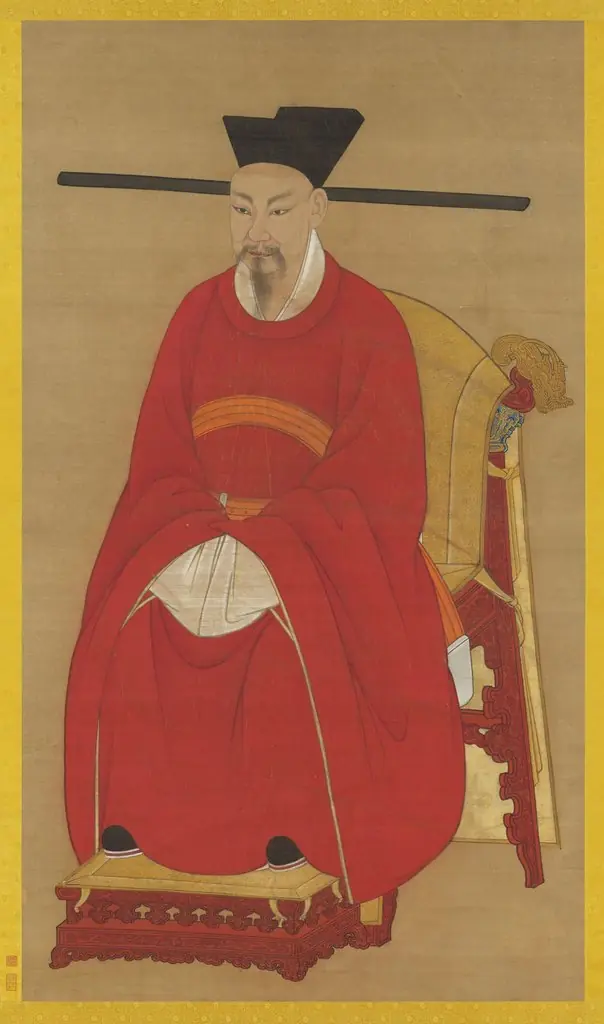
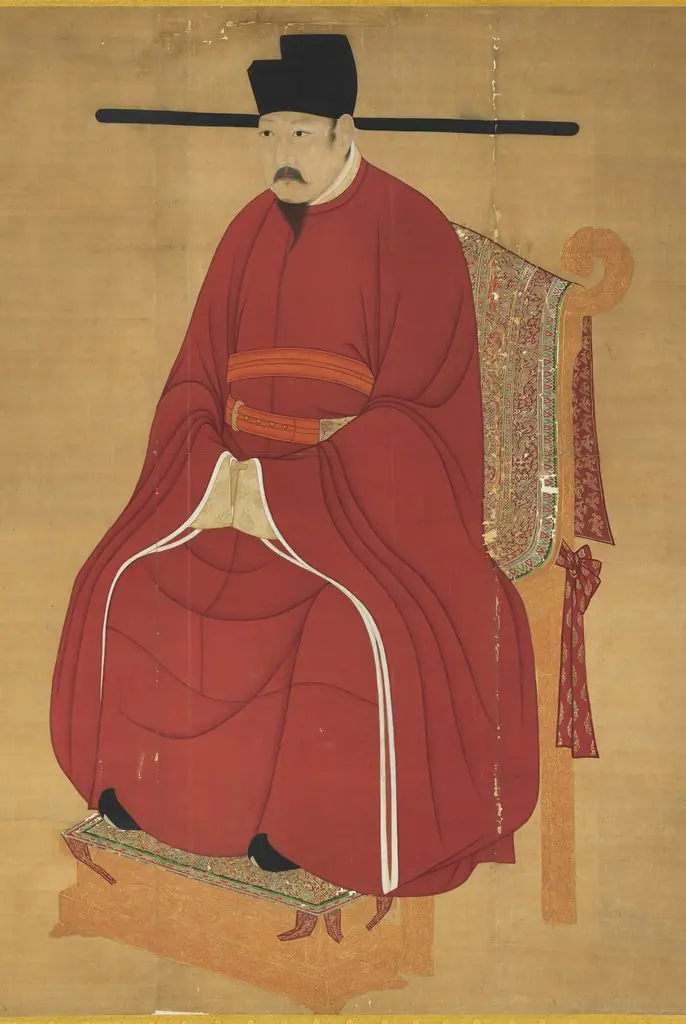
Seated Portrait of Emperor Song Huizong is an unspecified painting by the Song dynasty painting artist Unknown. It is held in the collection of the National Palace Museum. The work is a painted portrait of an imperial figure seated on a red chair.
About this work
Overview
The work is a painted portrait of an imperial figure seated on a red chair. He wears a long red robe trimmed with a yellow collar and a black hat, his hands joined in front of him. The composition is set against a light brown backdrop, capped by a thin black horizontal line at the top, and the figure’s gaze is directed downward with a neutral expression.
Subject & Meaning
The sitter is identified as Emperor Song Huizong, a ruler noted for his patronage of the arts. The pose, hands clasped, eyes lowered, conveys a contemplative, perhaps ritualized demeanor, aligning with courtly conventions of modesty and authority in the Song dynasty.
Technique & Style
Executed with meticulous brushwork, the painting displays fine detailing in the fabric folds, collar edging, and hat. The limited palette of reds, yellows, and subdued earth tones, combined with the stark horizontal line, reflects the refined aesthetic favored by Song court painters, emphasizing clarity and controlled composition.
History & Provenance
The portrait is attributed to the period of the Song dynasty, when imperial portraiture served both documentary and ceremonial purposes. Its survival suggests it was likely kept within the imperial collection before entering later museum holdings, though specific ownership records are not detailed.
Context
During Emperor Huizong’s reign (1100–1126), the court cultivated a sophisticated visual culture, integrating poetry, calligraphy, and painting. Portraits such as this functioned as visual affirmations of the emperor’s legitimacy and cultivated taste, often displayed in palace spaces.
Legacy
The painting exemplifies the high level of technical skill and courtly representation characteristic of Song portraiture, offering scholars insight into imperial iconography and the aesthetic values of the era.
Artist & collection