Artwork
Vitré
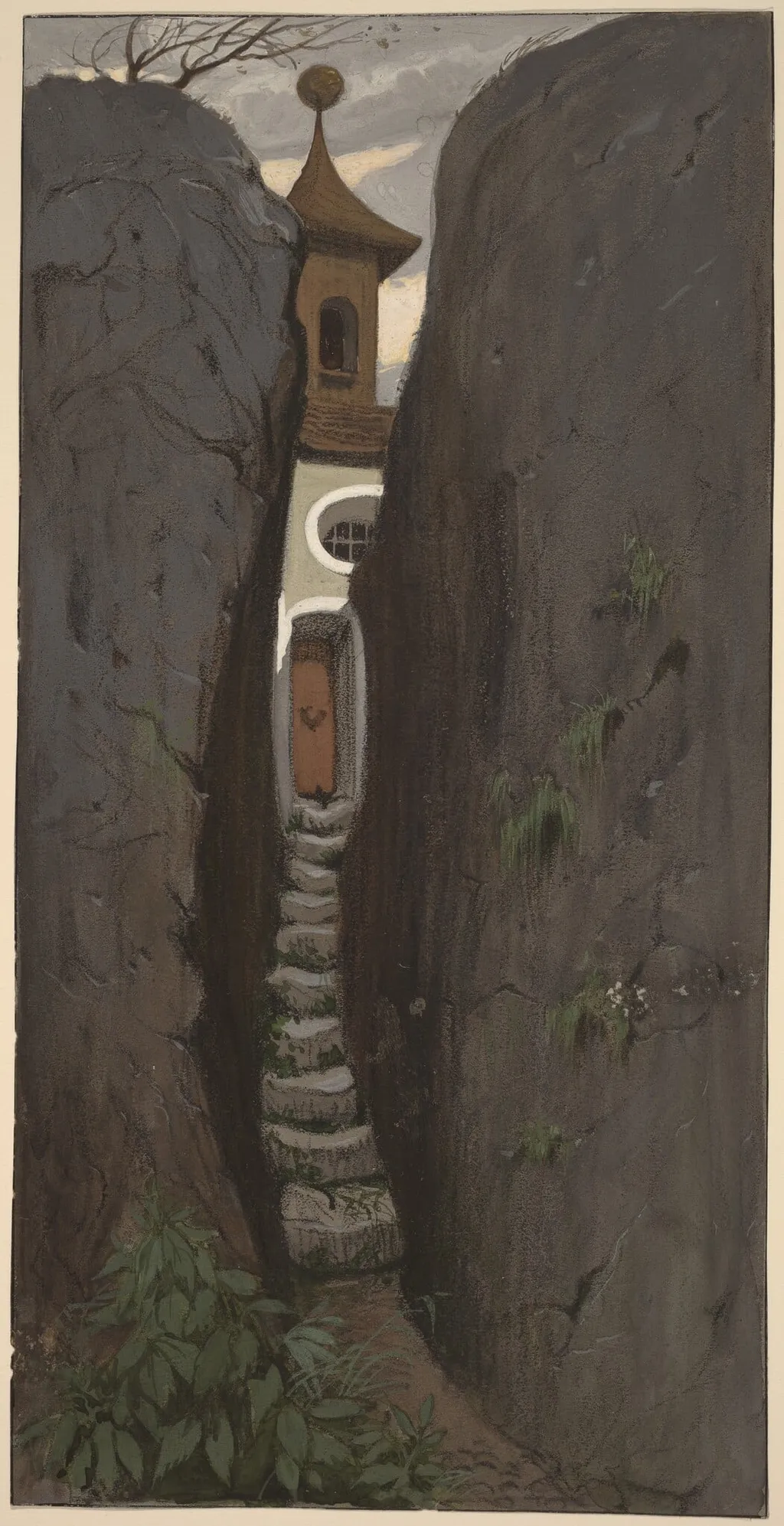
Vitré is a gouache drawing by the Impressionist artist Elihu Vedder. It dates from 1877 and is held in the collection of the National Gallery of Art.
About this work
Overview
Created around 1877, Vitré is a drawing by American artist Elihu Vedder, executed in gouache, crayon, and watercolor on gray wove paper. It belongs to a body of work produced during his time in Europe, where he explored landscape and symbolic imagery. The piece exemplifies Vedder’s interest in mixed media and his tendency to merge visual poetry with observed natural forms.
Subject & Meaning
Vedder does not depict a specific event or narrative but evokes a contemplative mood through subdued tones and layered textures.
The subject of Vitré is a quiet, atmospheric landscape, likely inspired by the French town of Vitré in Brittany. Vedder does not depict a specific event or narrative but evokes a contemplative mood through subdued tones and layered textures. The work suggests introspection, aligning with his broader symbolic approach, where place becomes a vessel for inner reflection rather than topographical record.
Technique & Style
Vedder employed gouache for opaque washes, crayon for bold linear accents, and watercolor for translucent glazes, all on a gray paper that subtly modulates the composition’s tonality. The layered application creates depth without sharp definition, favoring atmospheric ambiguity. His technique reflects a deliberate restraint, avoiding overt detail in favor of emotional resonance and material tactility.
History & Provenance
The drawing was made during Vedder’s extended stays in Europe, following his early success in the United States. It likely originated in his personal collection and remained within American private hands for much of the 20th century. Its current location reflects institutional acquisition, though its full provenance prior to the 1980s remains partially undocumented.
Context
In the late 1870s, Vedder was immersed in European artistic circles and increasingly drawn to literary symbolism. While his illustrations for The Rubaiyat brought him wider recognition, works like Vitré reveal a quieter, more personal engagement with place and medium. The drawing aligns with broader 19th-century trends in which artists used sketchlike media to explore mood over narrative.
Legacy
Though less known than his Rubaiyat illustrations, Vitré exemplifies Vedder’s sustained interest in the expressive potential of drawing. It contributes to a broader understanding of American artists who absorbed European aesthetic traditions without fully assimilating them. The work remains a quiet testament to his preference for introspective, materially rich compositions over grand public statements.
Artist & collection
Artist
Elihu Vedder (26 February 1836 – 29 January 1923) was an American symbolist painter, book illustrator and poet from New York City.

 The Fable of the Miller, His Son, and the Donkey
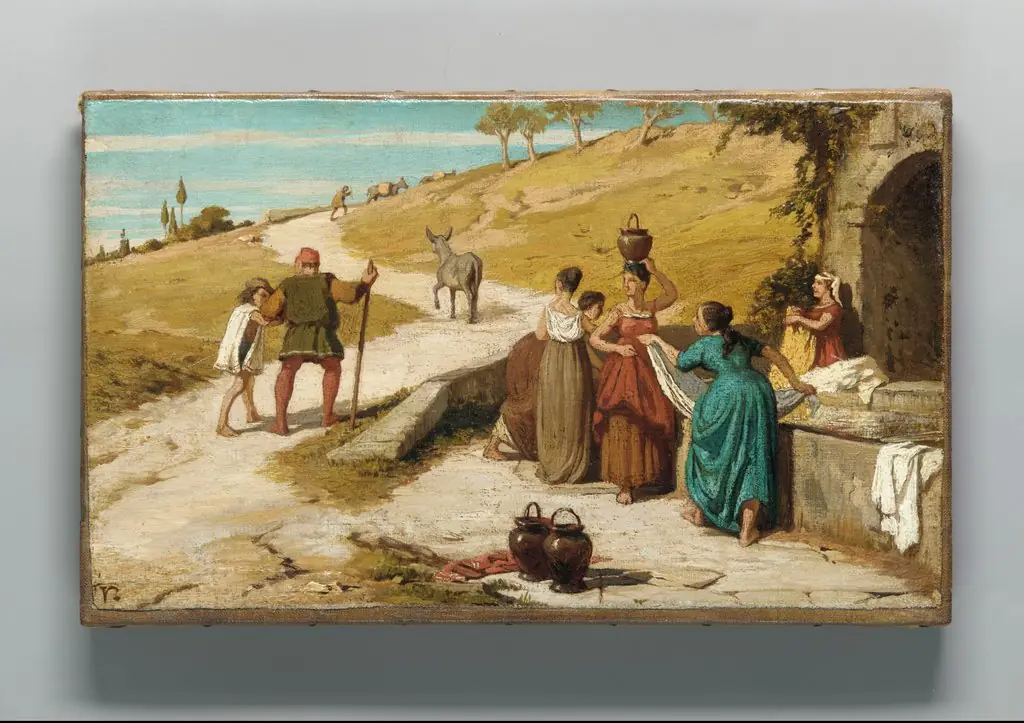 The Fable of the Miller, His Son, and the Donkey
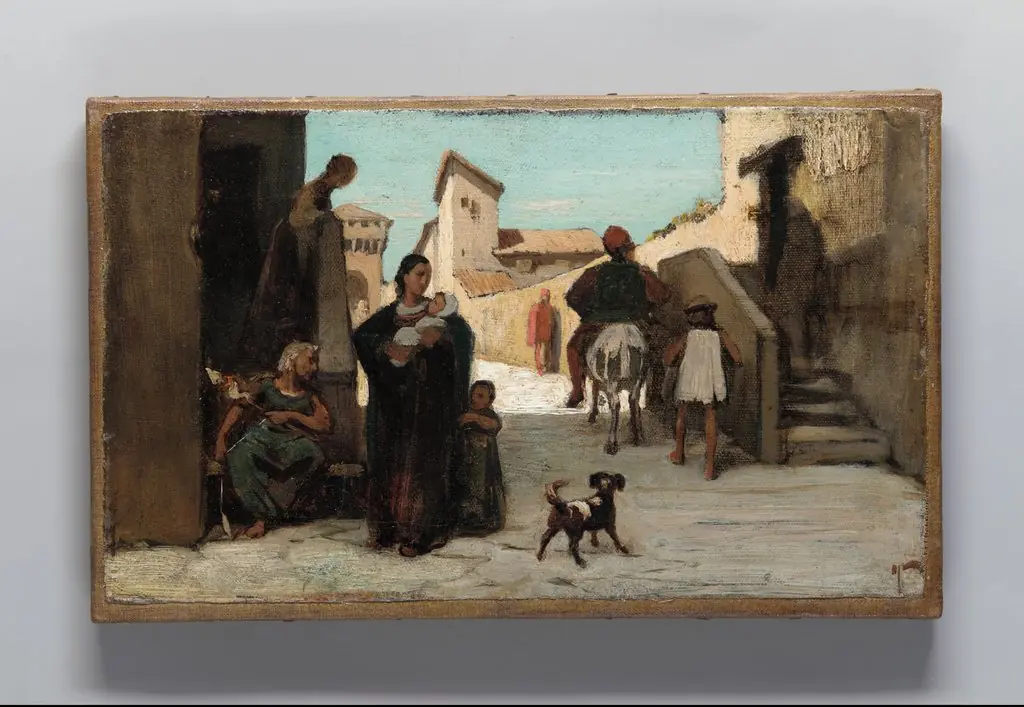 The Fable of the Miller, His Son, and the Donkey
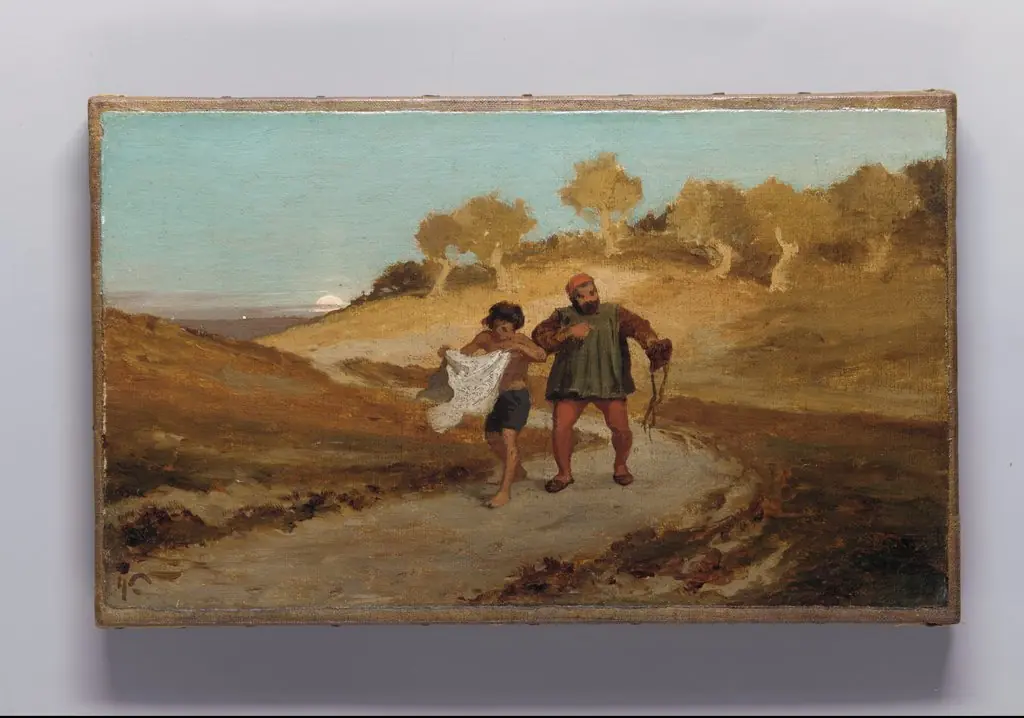 The Fable of the Miller, His Son, and the Donkey
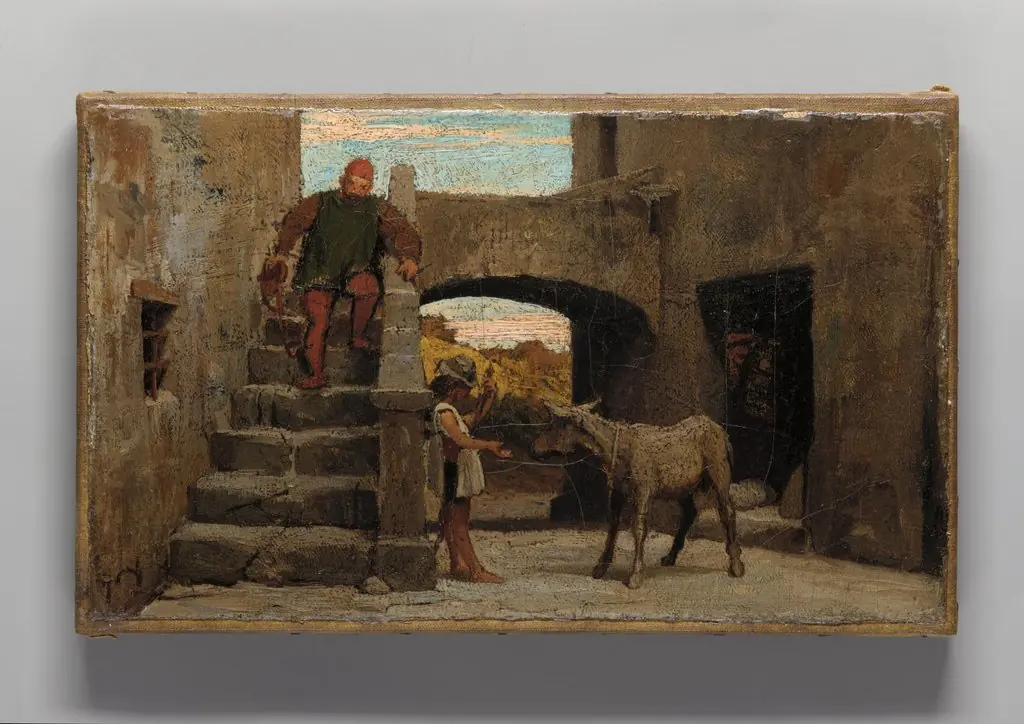 The Fable of the Miller, His Son, and the Donkey
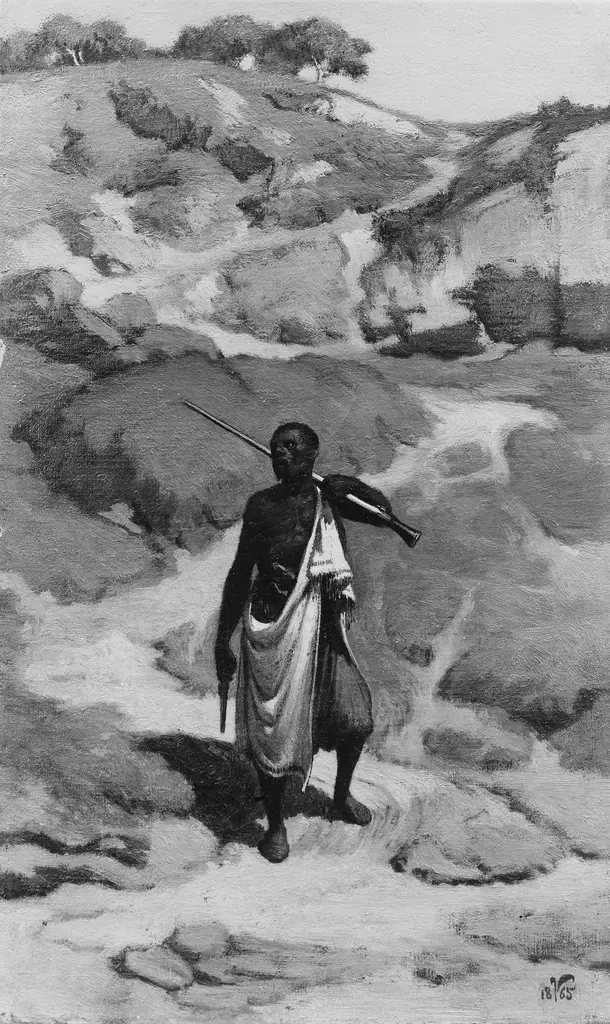 The African Sentinel
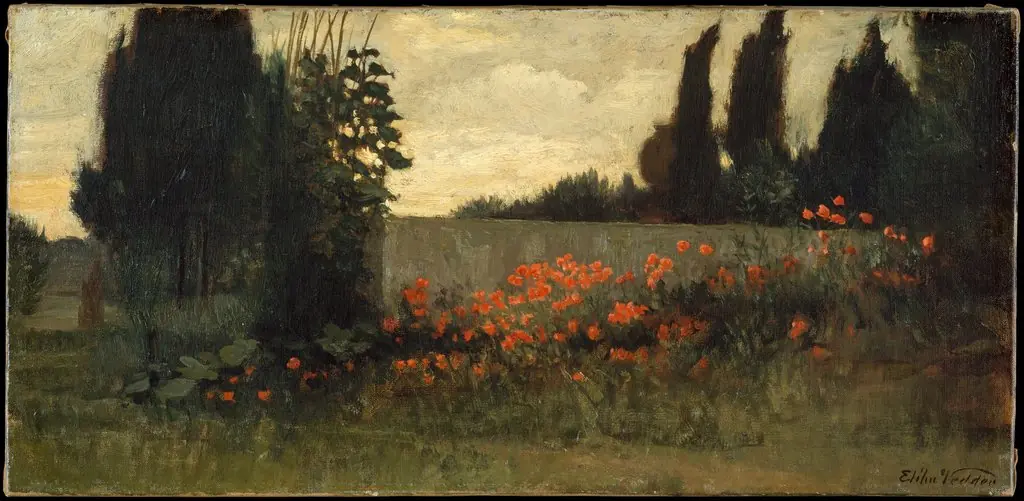 Cypress and Poppies
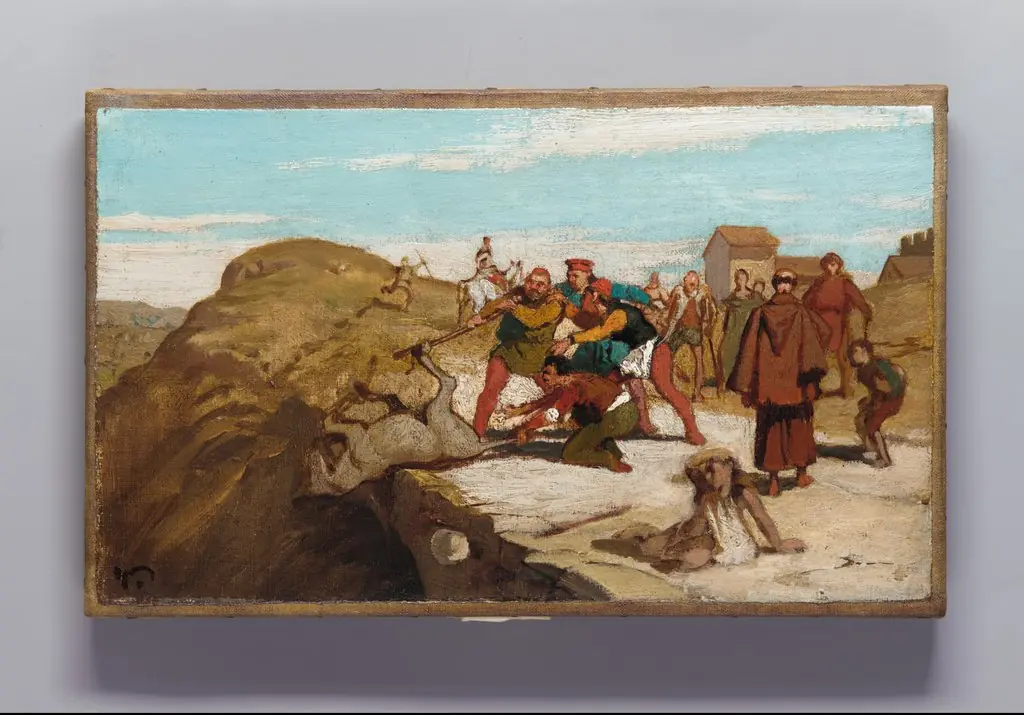 The Fable of the Miller, His Son, and the Donkey
- Capri
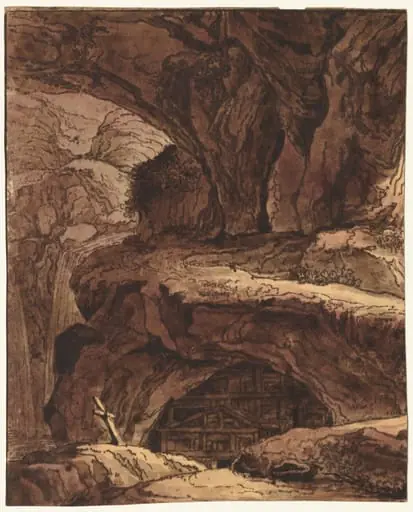 Rocky Landscape with a Cave Chapel
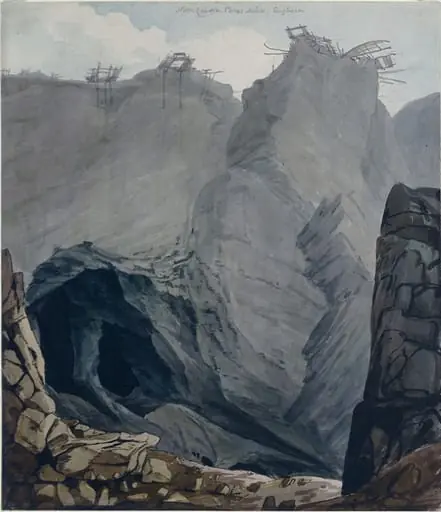 North Cavern, Parys Mine, Anglesea
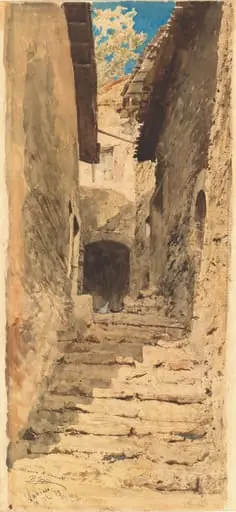 A View in Subiaco
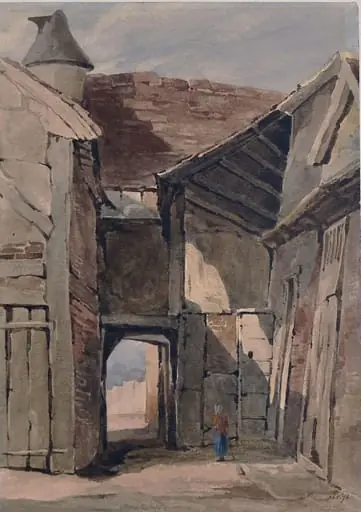 Old House, Bristol
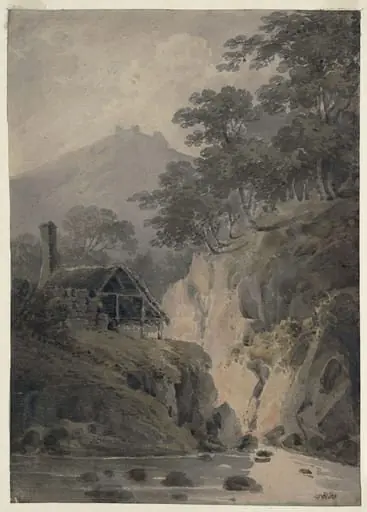 Rocky landscape in Cornwall
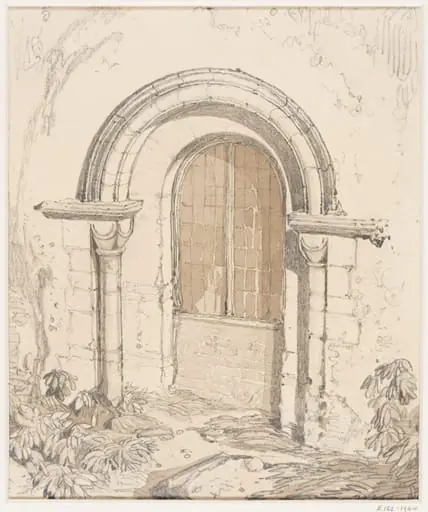 Norman doorway of St. Mary's Church, Thetford, Suffolk
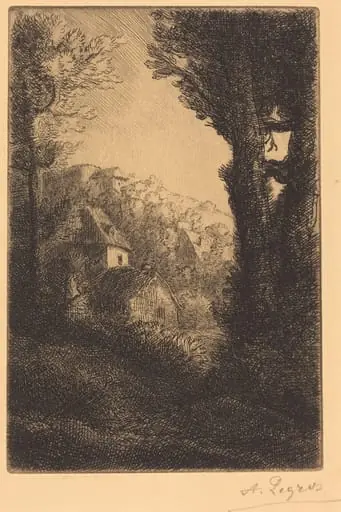 Farm on a Hillside in Sunlight (La ferme du coteau; Effet de soleil sur le coteau)
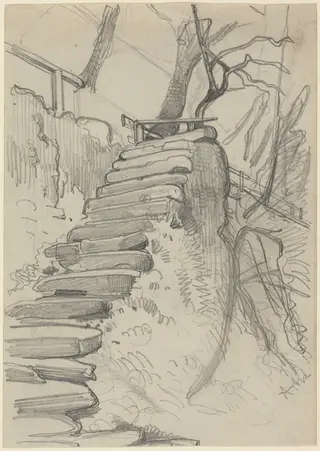 Flight of Stone Steps in a Garden
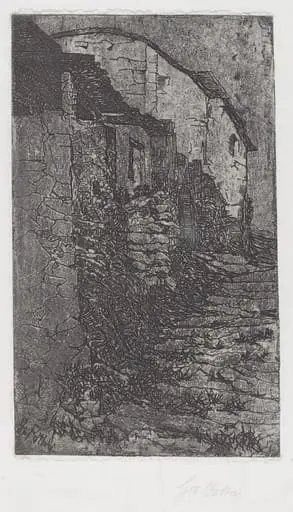 Bauco near Rome (Bauco presso Roma)
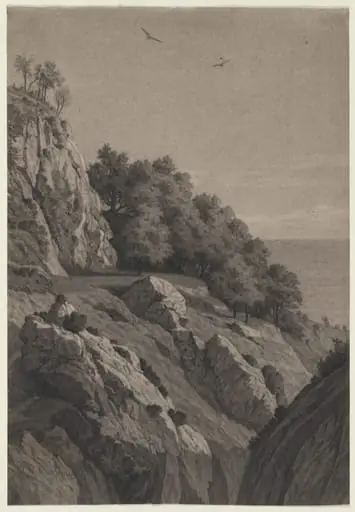 Rocky Cliff on a Coast
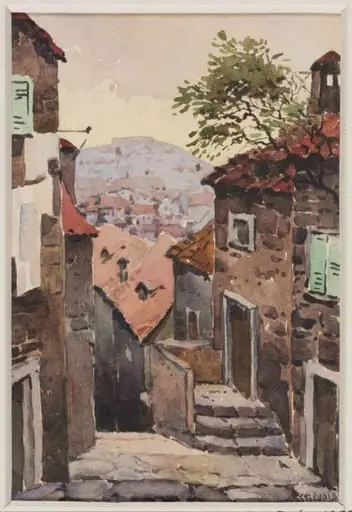 Ragusa