Artwork
Traveling to the Southern Sacred Peak
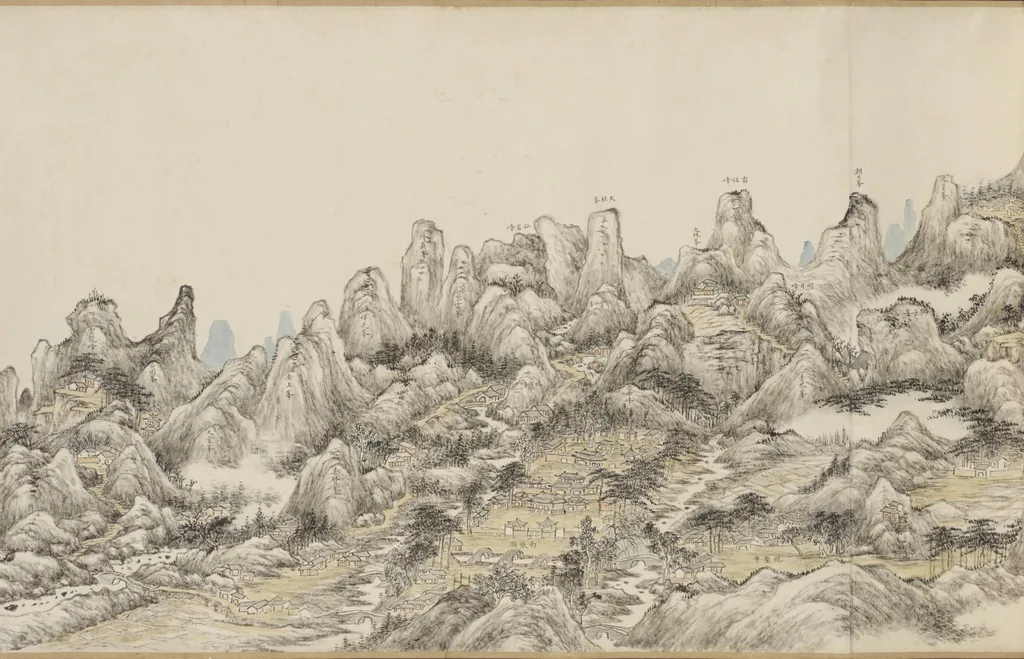
Traveling to the Southern Sacred Peak is an unspecified painting by the Chinese Orthodox School artist Zhang Ruocheng. It is held in the collection of the Los Angeles County Museum of Art.
About this work
Overview
Traveling to the Southern Sacred Peak, painted in 1800 by Zhang Ruocheng, is an ink-and-wash landscape that presents a quiet mountainous region punctuated by a modest settlement. The composition balances foreground elements, trees and low‑rise structures, with distant peaks rendered in muted tones, creating a sense of atmospheric depth that guides the viewer’s eye toward the titular summit.
Subject & Meaning
The work portrays a village nestled among rolling hills, its inhabitants engaged in everyday activities, while the surrounding terrain suggests a pilgrimage toward a revered southern peak. The juxtaposition of human dwellings with the imposing natural environment reflects traditional Chinese notions of harmony between society and the sacred landscape, inviting contemplation of spiritual journey and communal life.
Technique & Style
Executed with a restrained palette of grays, accented by subtle blues and browns, the painting employs layered washes and fine brushwork to model foliage, architecture, and rock formations. Delicate shading and textured strokes generate a three‑dimensional effect, while the overall composition adheres to the literati tradition of emphasizing mood and suggestion over precise realism.
History & Provenance
Created at the turn of the 19th century, the piece entered the collection of the Los Angeles County Museum of Art in the late 20th century, where it has been displayed as part of the museum’s Asian art holdings. Its acquisition records indicate it was transferred from a private collection that had previously held the work for several generations.
Context
Zhang Ruocheng was active during a period when Chinese landscape painting was transitioning from courtly patronage to more personal, scholarly expression. This painting aligns with that shift, embodying the literati emphasis on conveying inner sentiment through natural scenery, while also reflecting contemporary interest in documenting rural life and regional topography.
Own this work as a print
Artist & collection

- Landscape Album in Various Styles: Scenery of Mt. Changbai after Huang Gongwang
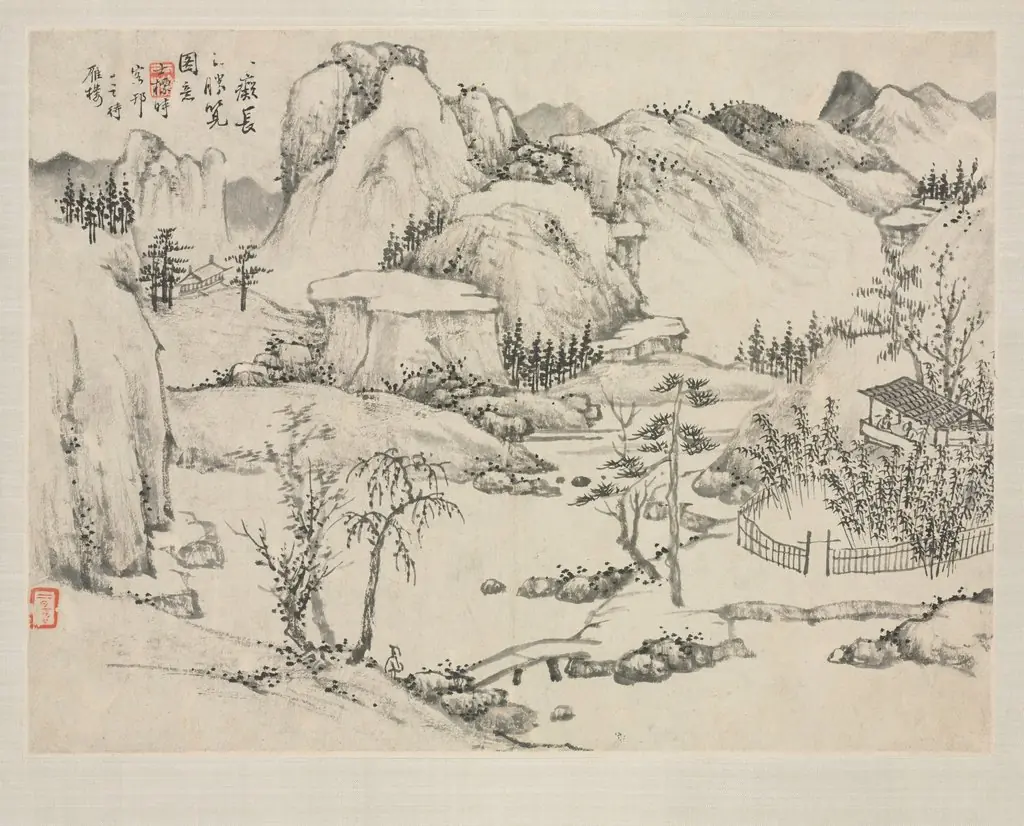 Landscape Album in Various Styles: Scenery of Mt. Changbai after Huang Gongwang
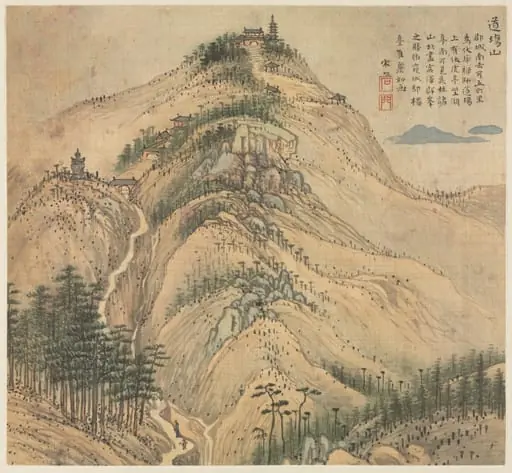 Mt. Daochang
 Spring Landscape
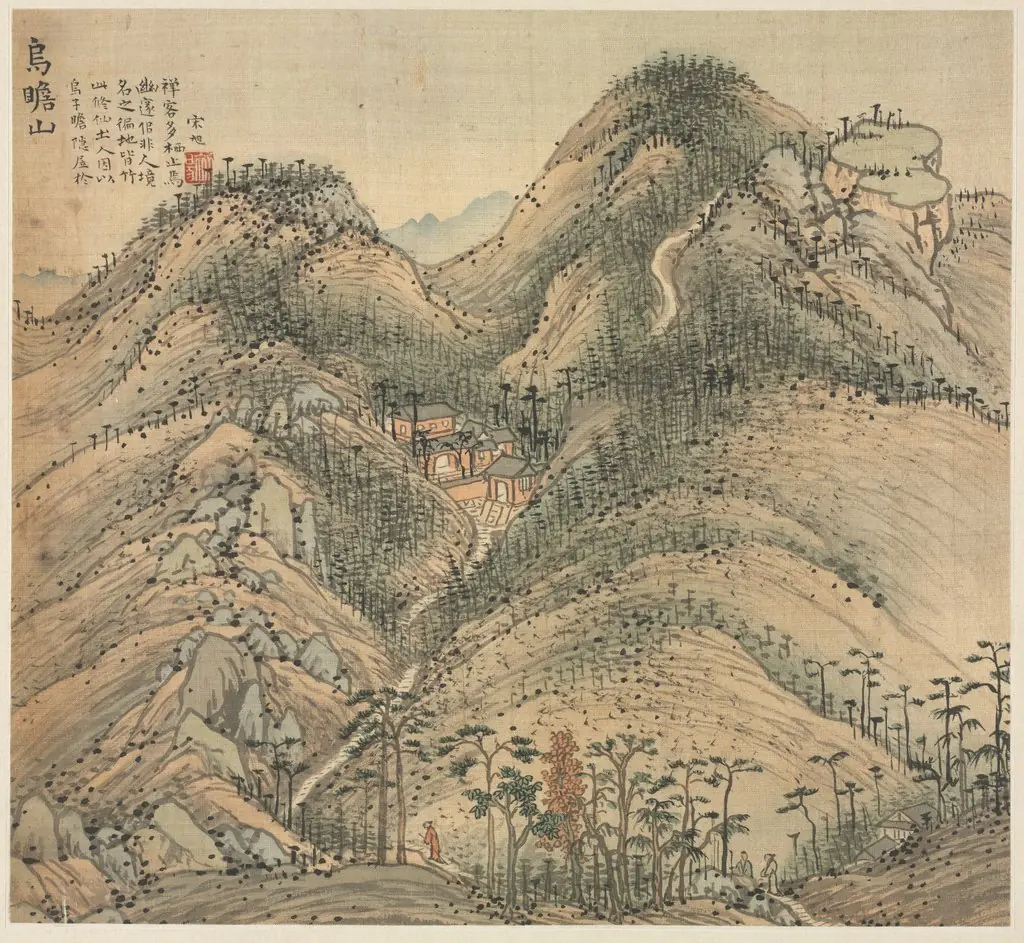 Mt. Wuzhan
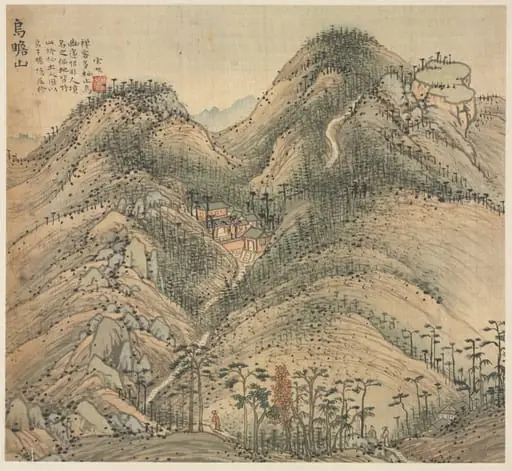 Mt. Wuzhan
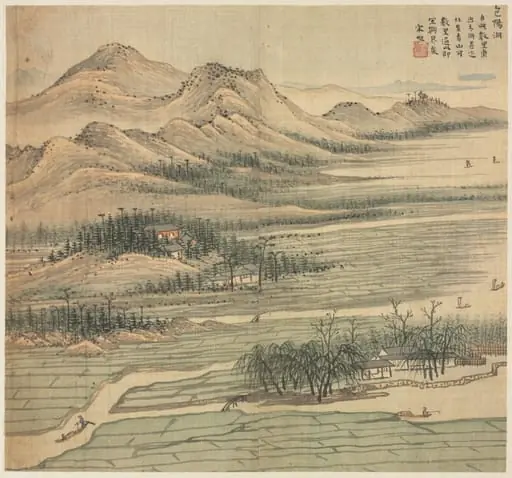 Baoyang Lake
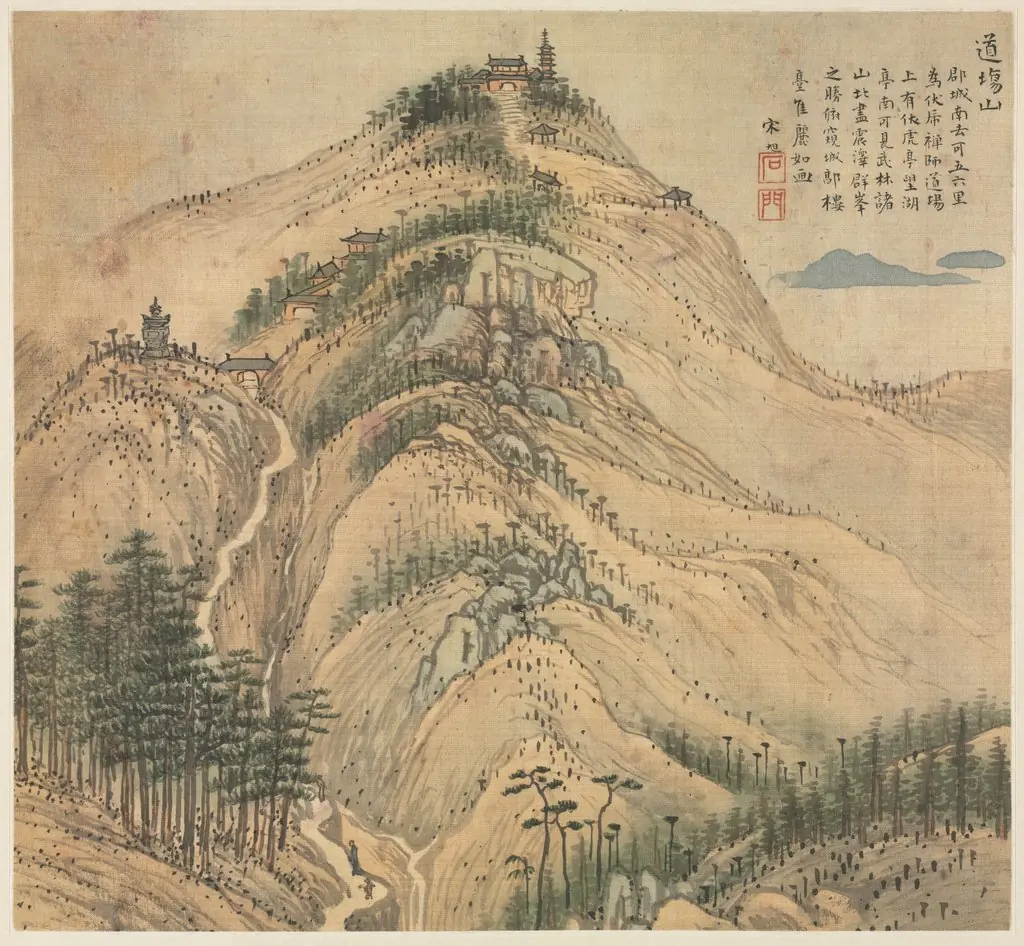 Mt. Daochang
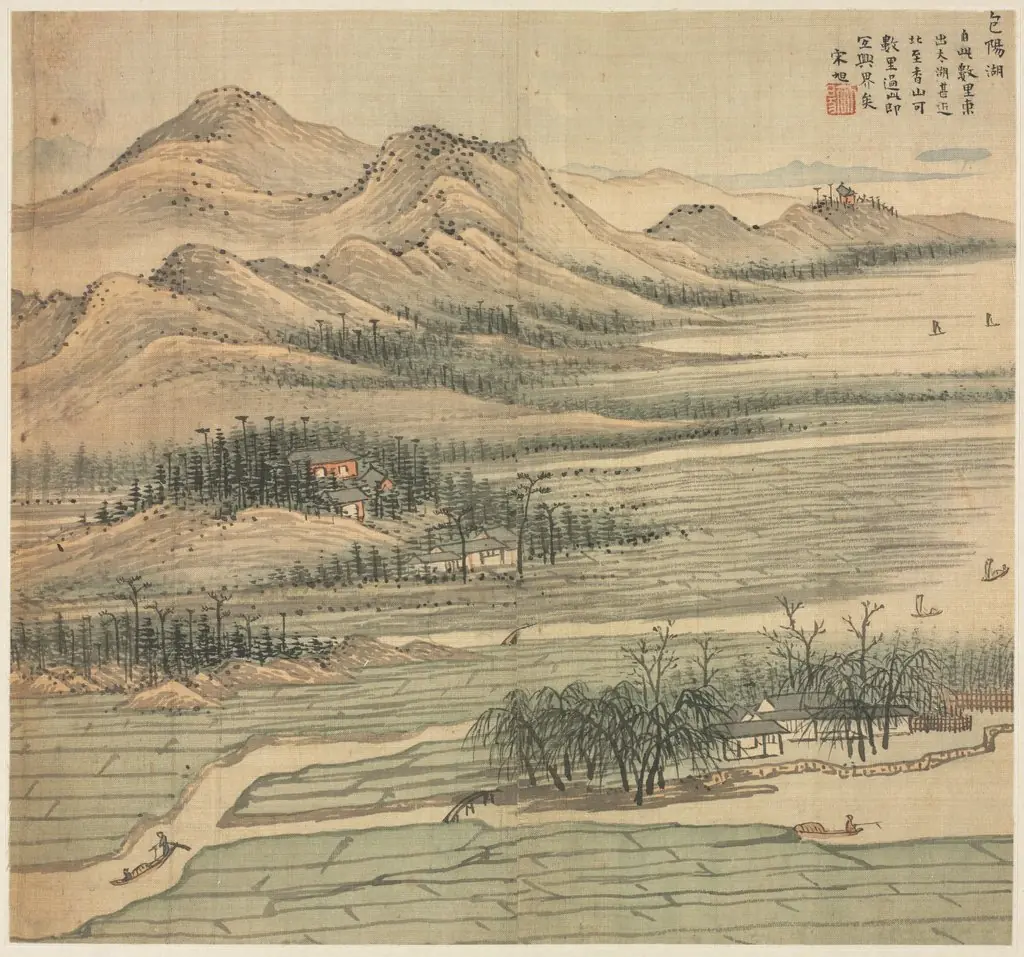 Baoyang Lake
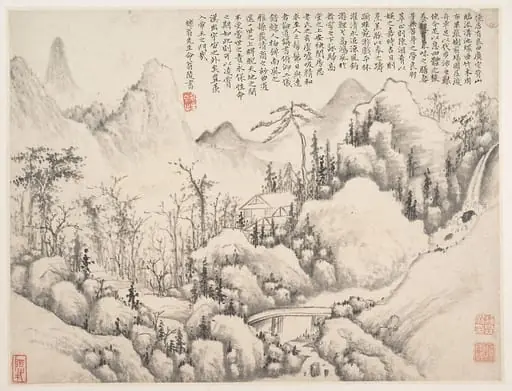 清 施霖 山莊圖 冊頁|Mountain Retreat, leaf from Album for Zhou Lianggong
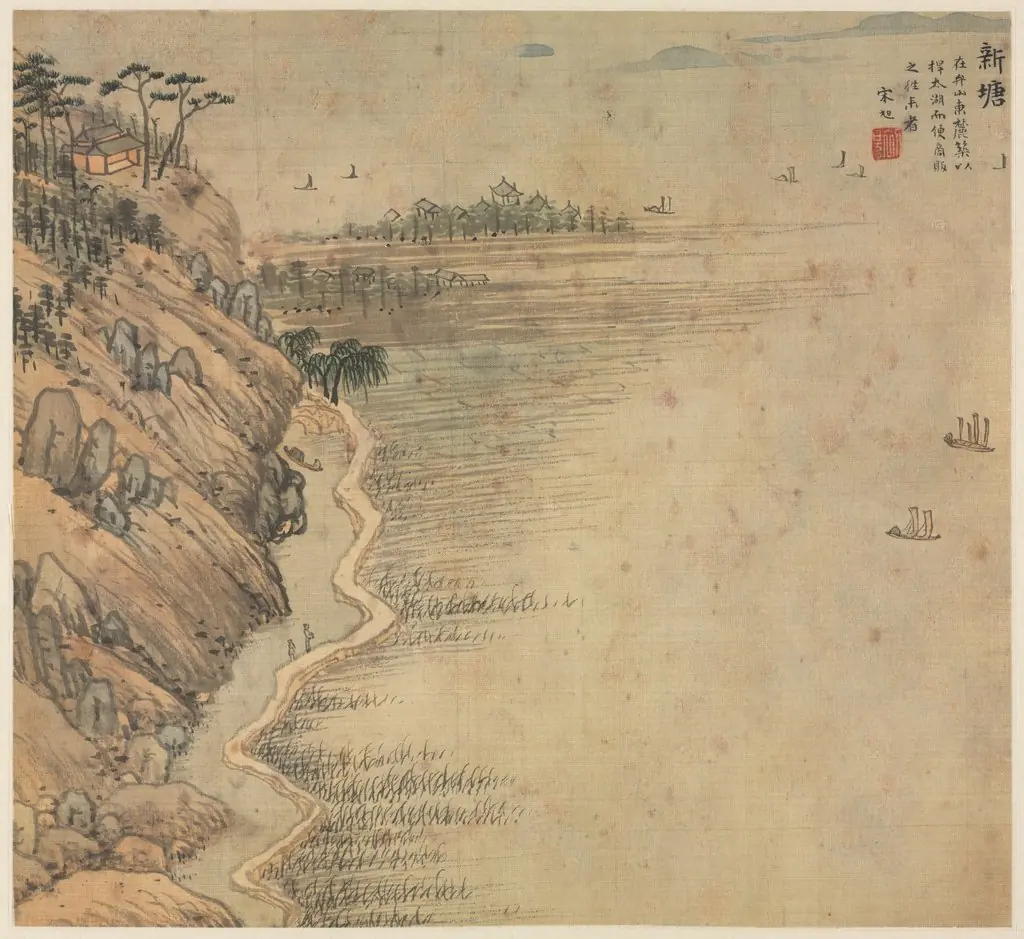 Xintang (Immortal's Peak)
 Xintang (Immortal's Peak)