Artist
Subject
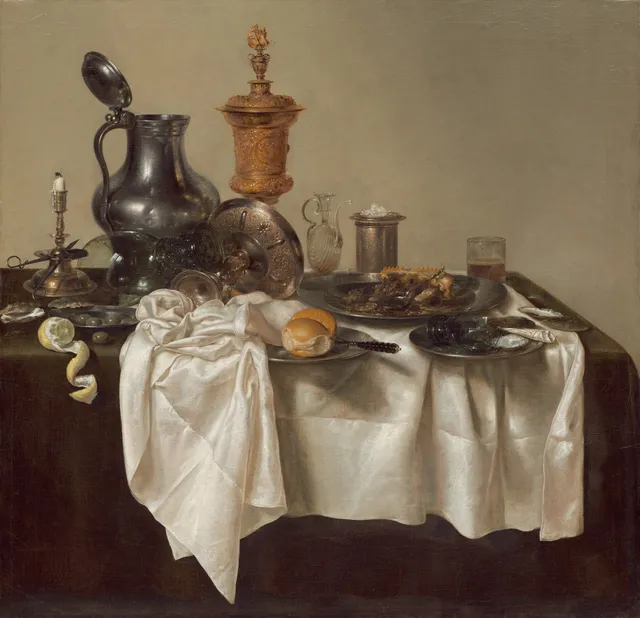
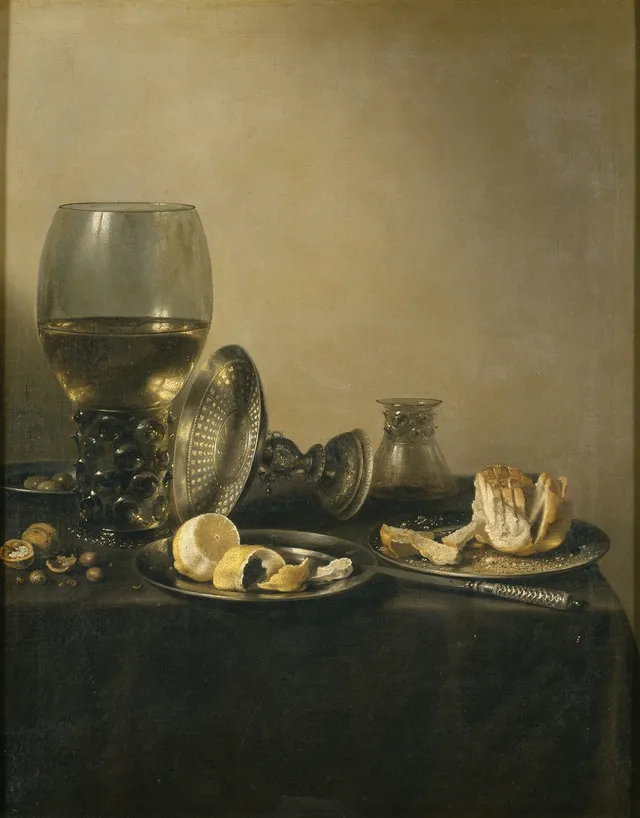
Tazza is a subject in art. The gallery holds 27 works in this subject in art, including works by Pieter Claesz, Jan Davidsz. de Heem and Willem Claesz Heda.
A tazza (, Italian: tazza, lit. 'cup' pronounced ; pl. tazze Italian: ) is a wide but shallow saucer-like dish either mounted on a stem and foot or on a foot alone.
Artist

Artist
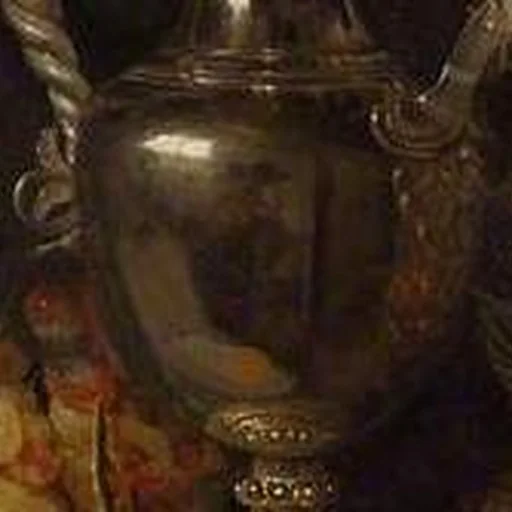
A tazza is a wide, shallow, saucer-like dish mounted on a stem and foot or on a foot alone. The term, derived from the Italian word for cup, has been broadly adopted by archaeologists and connoisseurs to describe this specific vessel form. Historically, tazze served multiple functions: as drinking vessels, for serving small food items, or as decorative objects for display. They are most commonly crafted from metal, glass, or ceramics, though examples exist in other materials. The form also scales to monumental proportions, with the name occasionally applied to large sculptured objects such as fountain basins.
In art and material culture, the tazza carries connotations of wealth, hospitality, and display. During the Renaissance, it was a popular vessel for wine and for presenting fruits and delicacies. Tazze made of precious materials like silver and crystal were often richly decorated, serving as symbols of status and luxury, while simpler pewter versions functioned as practical tableware within broader services. Beyond domestic contexts, the form acquired specific cultural roles, such as in Portuguese synagogues where tazze were used to collect charitable donations during the Purim festival.
The use and representation of the tazza evolved significantly from antiquity through the Renaissance and into the early modern period. Originating in the ancient world, the form was realized in elite Hellenistic carved stone. During the Renaissance, it became a prominent object in precious metalwork, exemplified by the Aldobrandini tazze, a series of sixteen silver pieces depicting Roman emperors. By the 17th century, the vessel had become a staple motif in European still life painting, where its reflective surfaces and shallow bowl allowed artists to showcase technical skill in rendering glass, metal, and the textures of the food and drink placed upon it.
Among the most historically significant tazze is the Farnese Tazza, a 2nd century BC Hellenistic Egyptian cameo cup carved from four layered sardonyx agate. Measuring 20 cm wide, it is housed in the Naples National Archaeological Museum under inventory number MANN 27611. From the Renaissance, the Aldobrandini tazze stand out as a canonical series of sixteen silver pieces depicting Roman emperors, now dispersed across various global collections. The Etruscan National Museum in Rome also holds a broad collection of these vessels. In a departure from decorative arts, a colossal tazza carved from malachite, one of the largest such pieces in North America, serves as the focal point of the main reading room at the Linda Hall Library in Kansas City, Missouri. Czar Nicholas II of Russia gave this monumental piece to August Heckscher in 1910, and Helen Spencer donated it to the library in 1972.
The legacy of the tazza extends beyond its origins as a tableware item into the realms of monumental sculpture and institutional collecting. The adoption of the term to describe massive decorative objects, such as the malachite centerpiece in Kansas City, demonstrates the enduring formal influence of the vessel's wide, shallow, footed silhouette. Furthermore, the continued presence of Renaissance and ancient examples in major museum collections, alongside the Etruscan National Museum's dedicated holdings, ensures the tazza remains a subject of study for historians of decorative arts and archaeology alike.
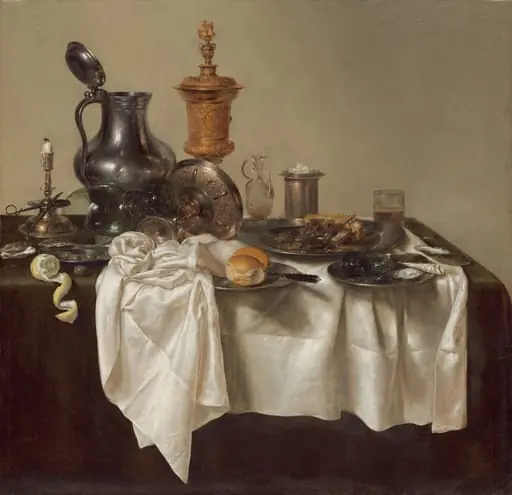 Banquet Piece with Mince Pie
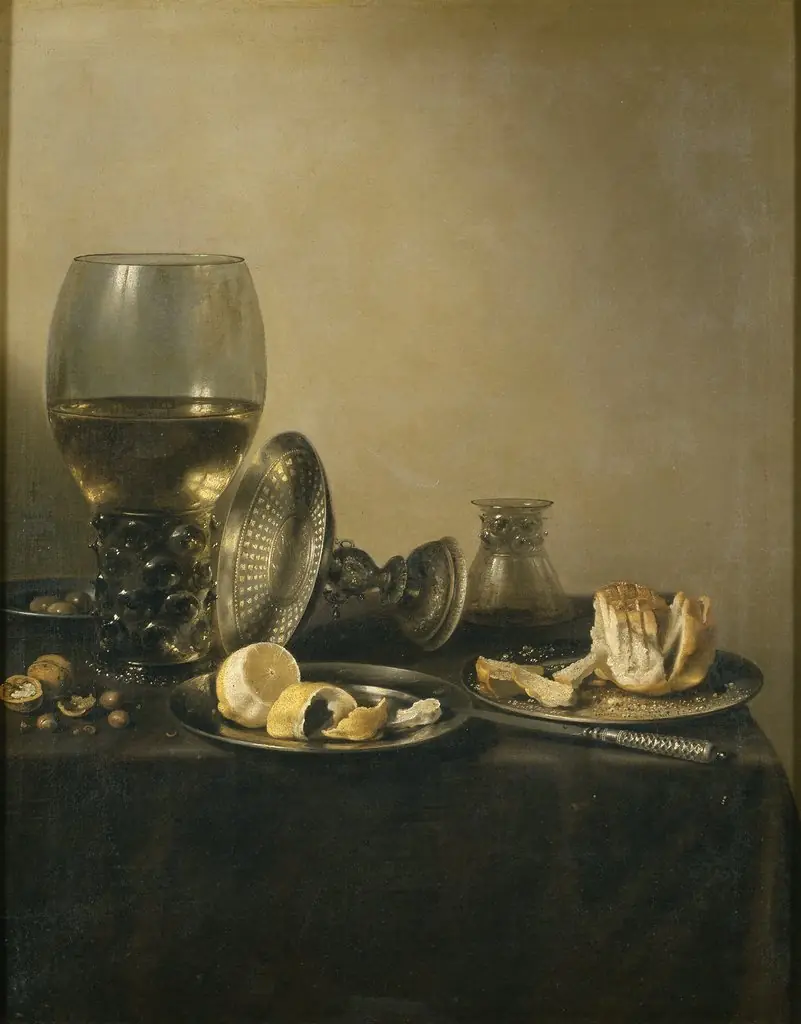 Still Life
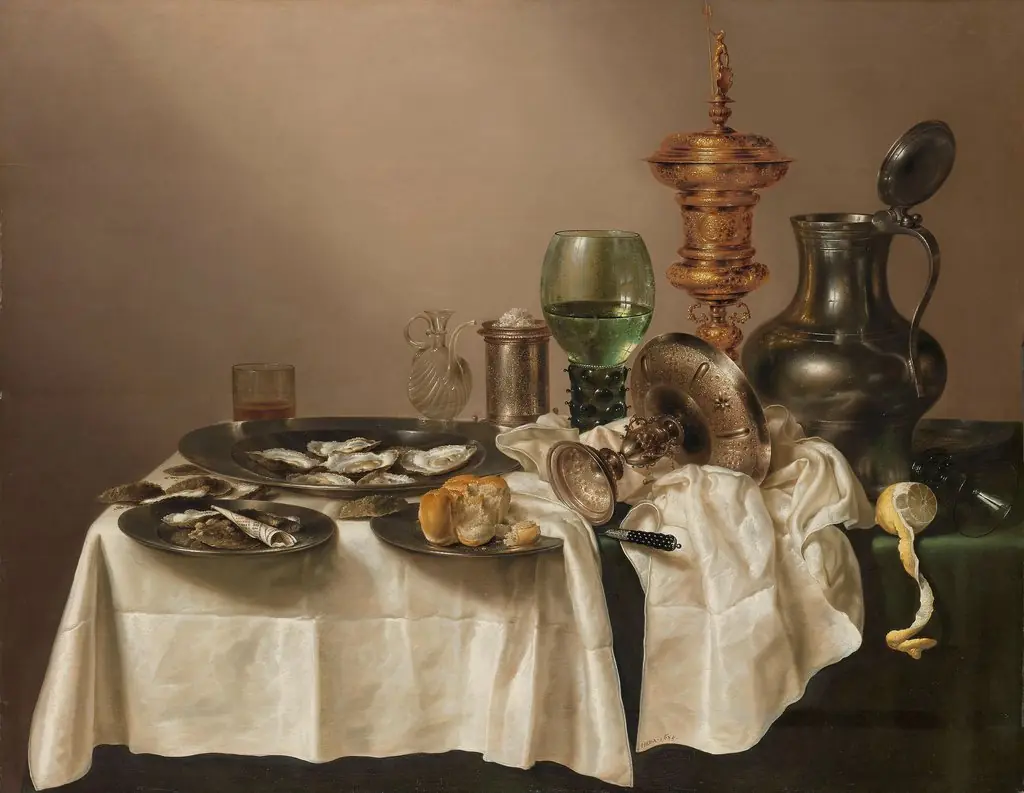 Still Life with a Gilt Cup
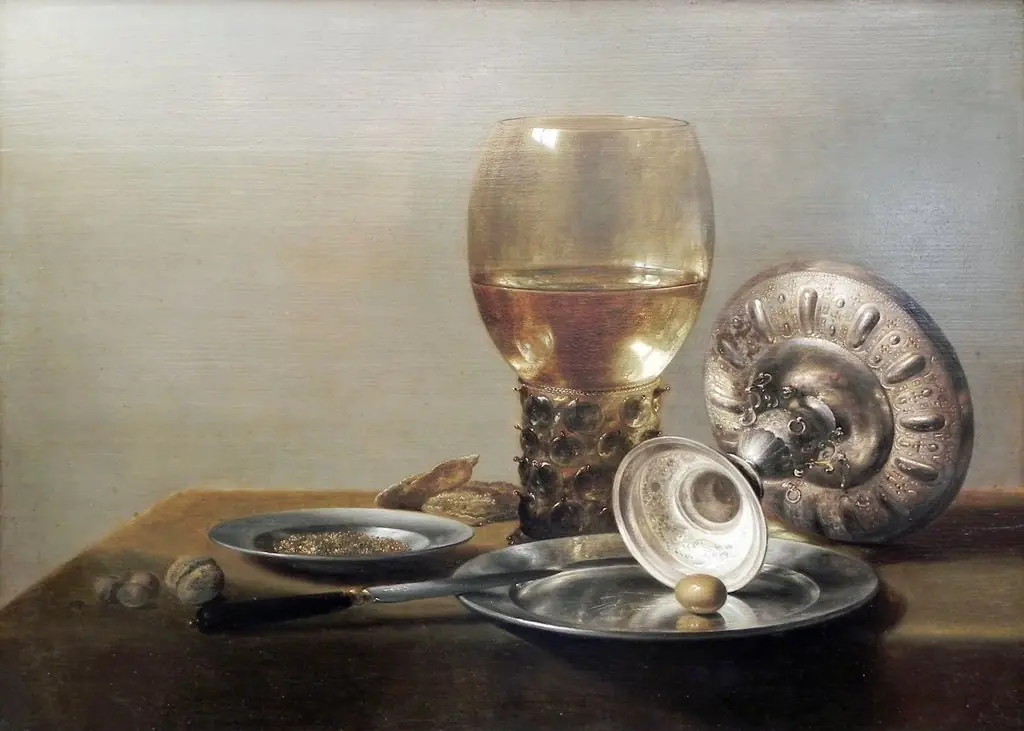 Still-life with Wine Glass and Silver Bowl
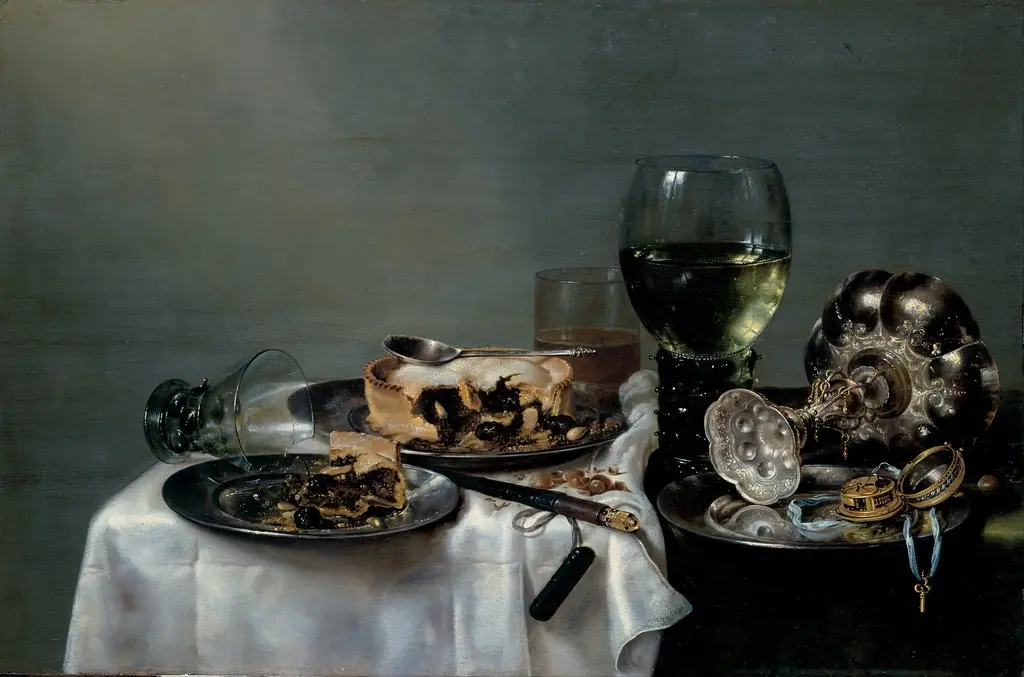 Breakfast Table with Blackberry Pie
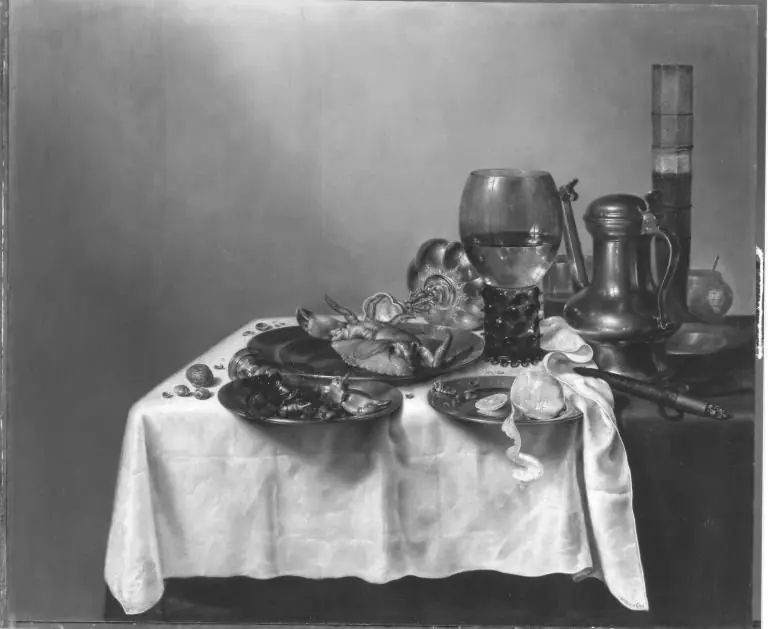 Still life with passglass, Jan Steen pitcher and roemer
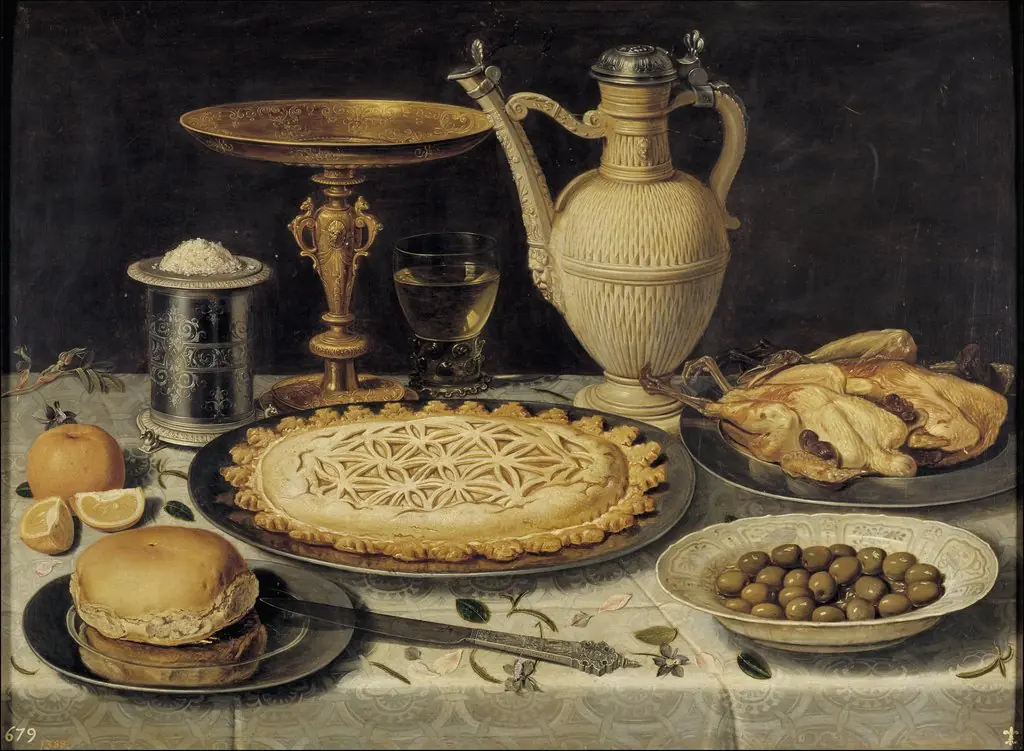 Still life with tazza, stoneware jug, saltcellar and dainties
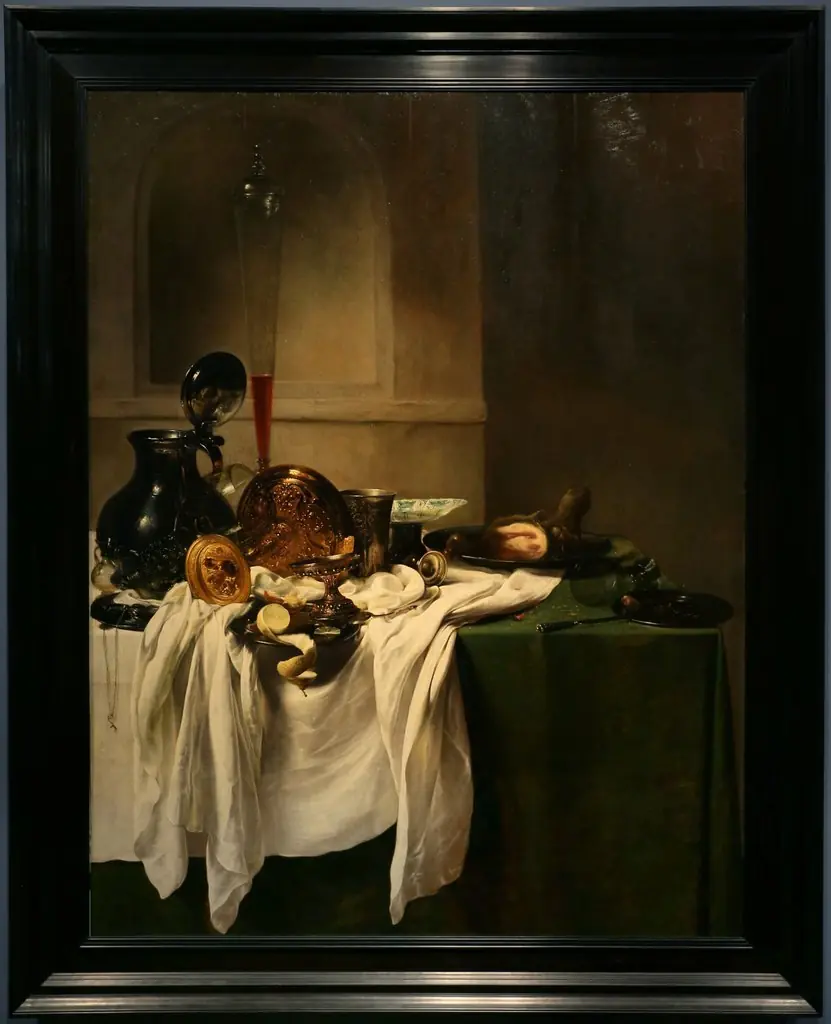 Still life of a laid table with ham and a view of a niche
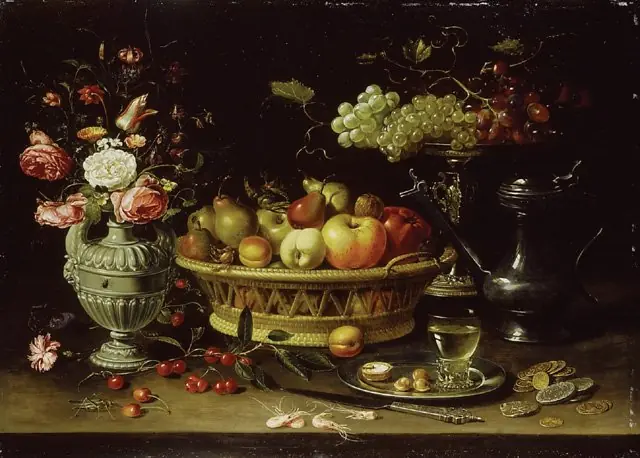 Still life of fruit and flowers
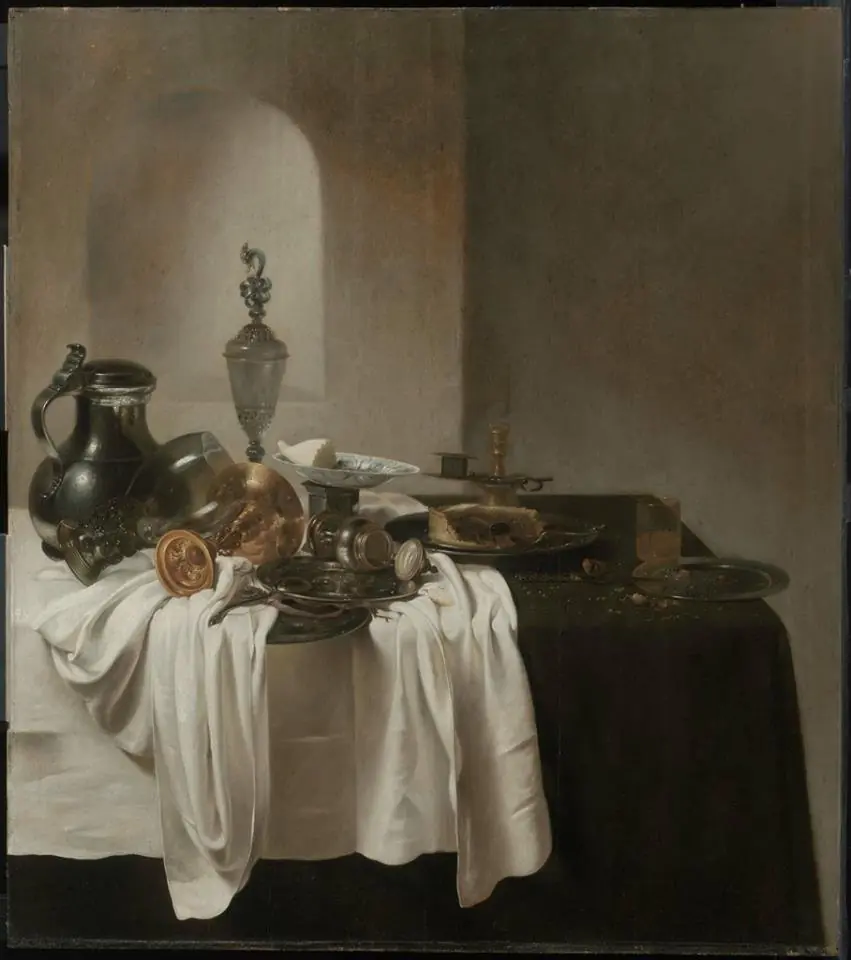 Breakfast Still Life with Glass and Metalwork
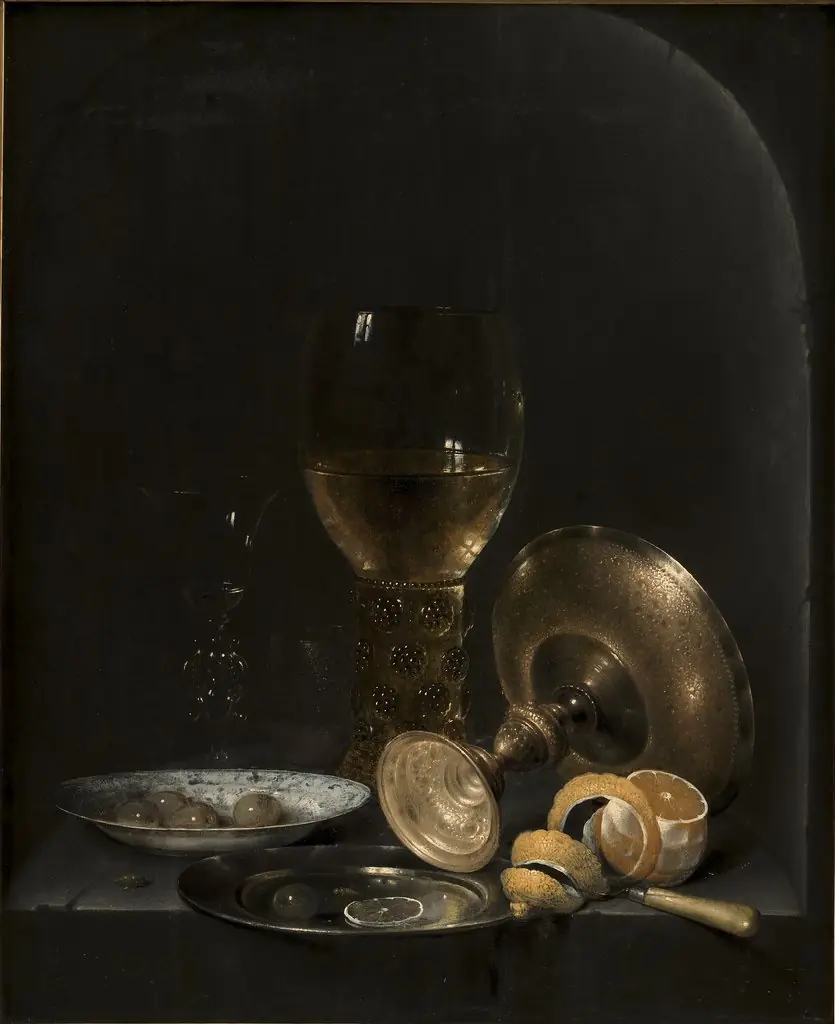 Still life. Breakfast Piece in a Stone Niche
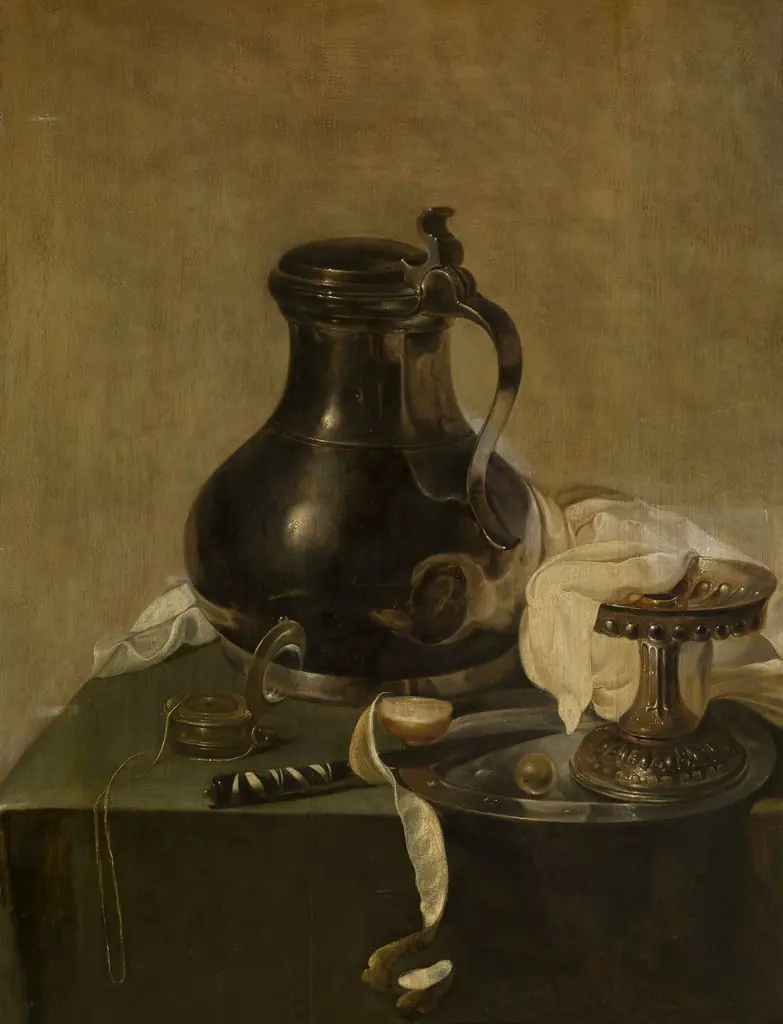 Still life with pewter jug
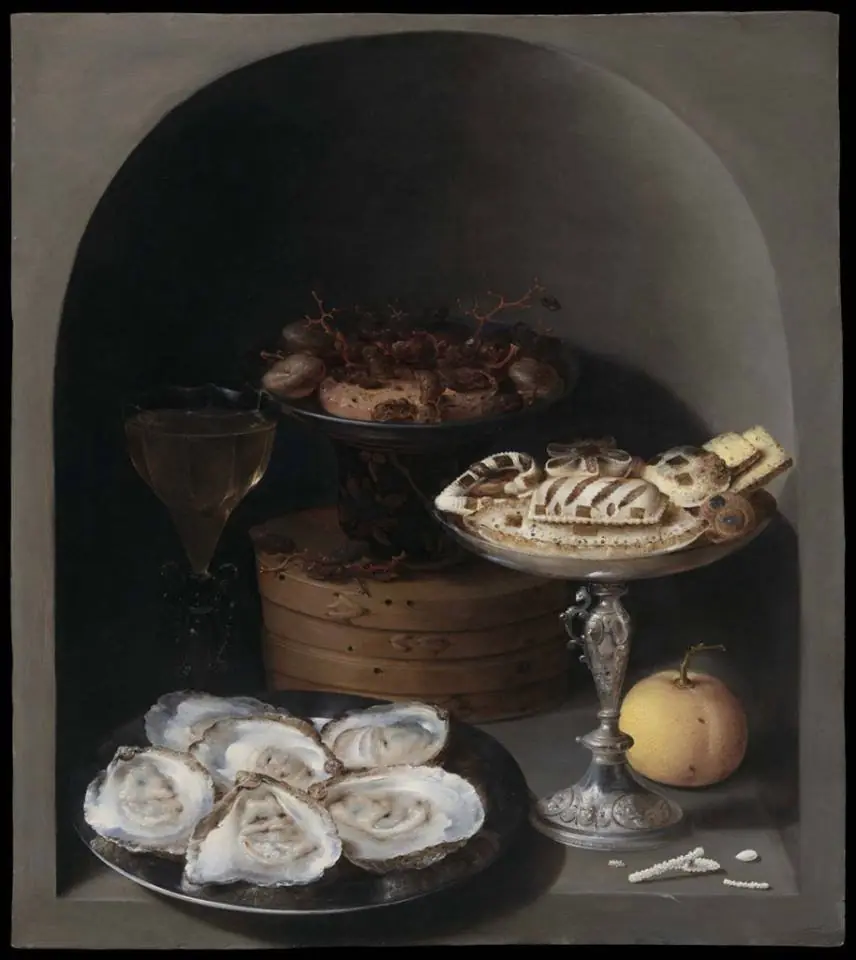 Still Life with Oysters, Sweetmeats and Dried Fruit in a Stone Niche
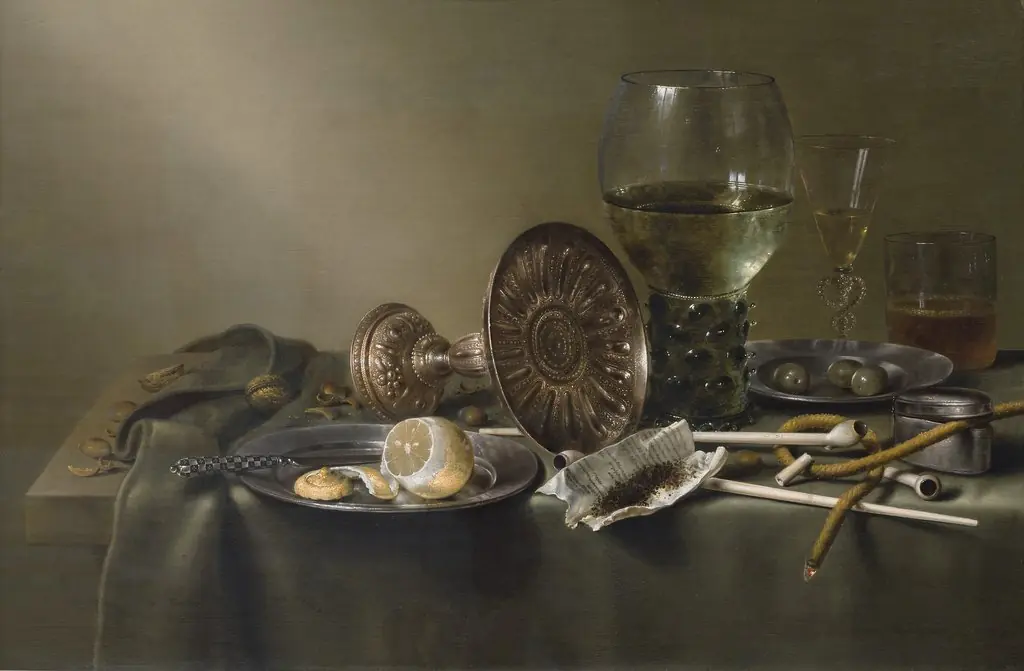 Still Life with Glasses and Tobacco
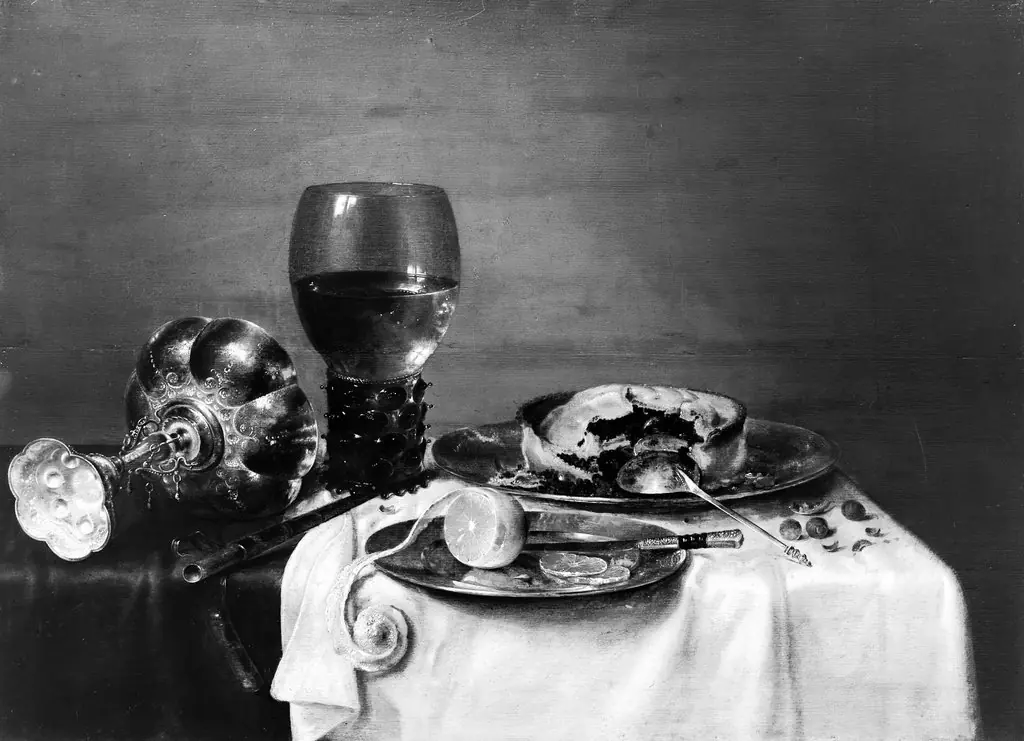 Stilleben mit Römer
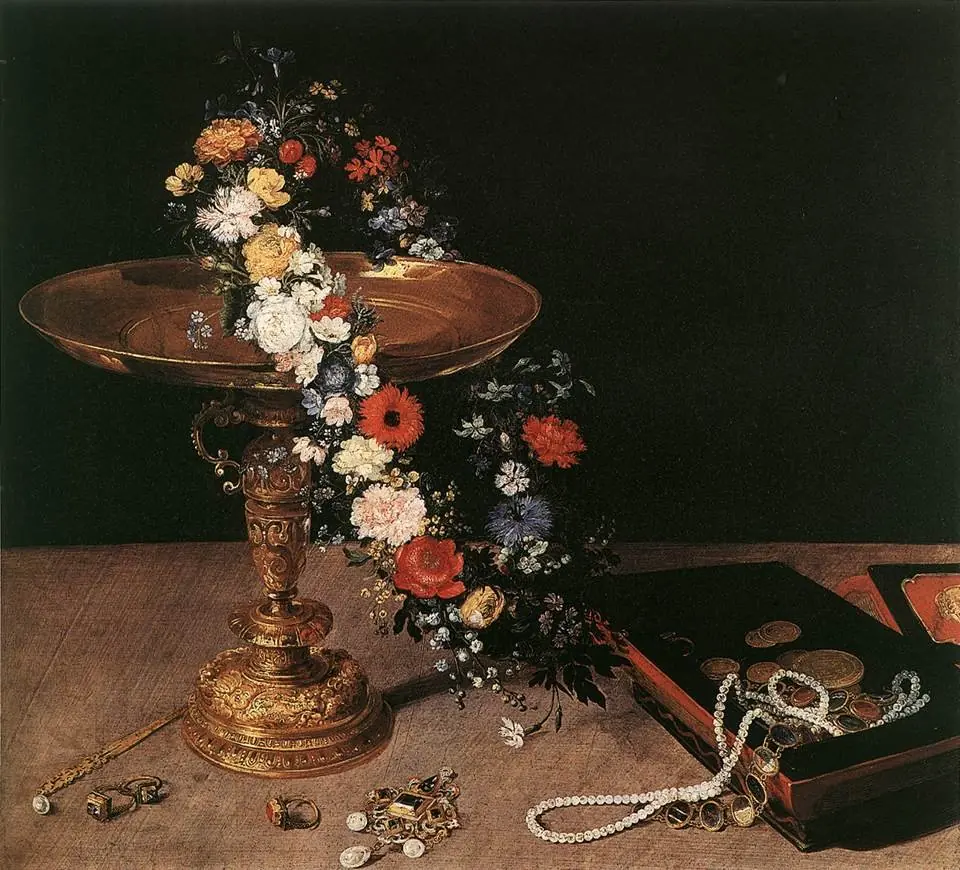 Still-Life with Garland of Flowers and Golden Tazza
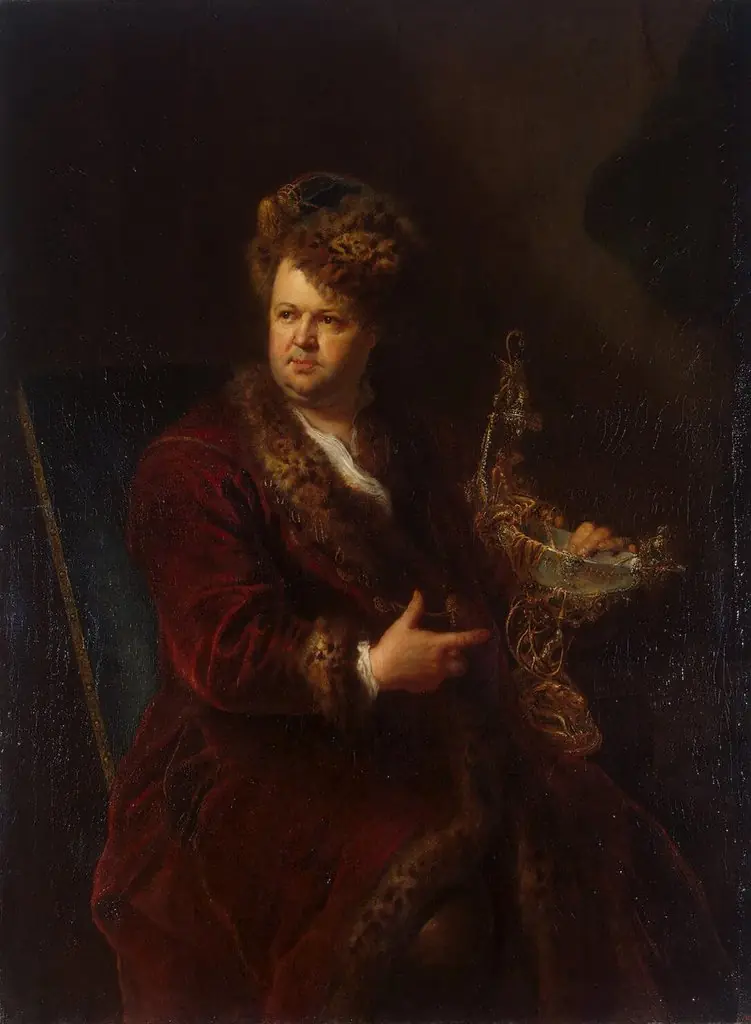 Portrait of Johann Melchior Dinglinger
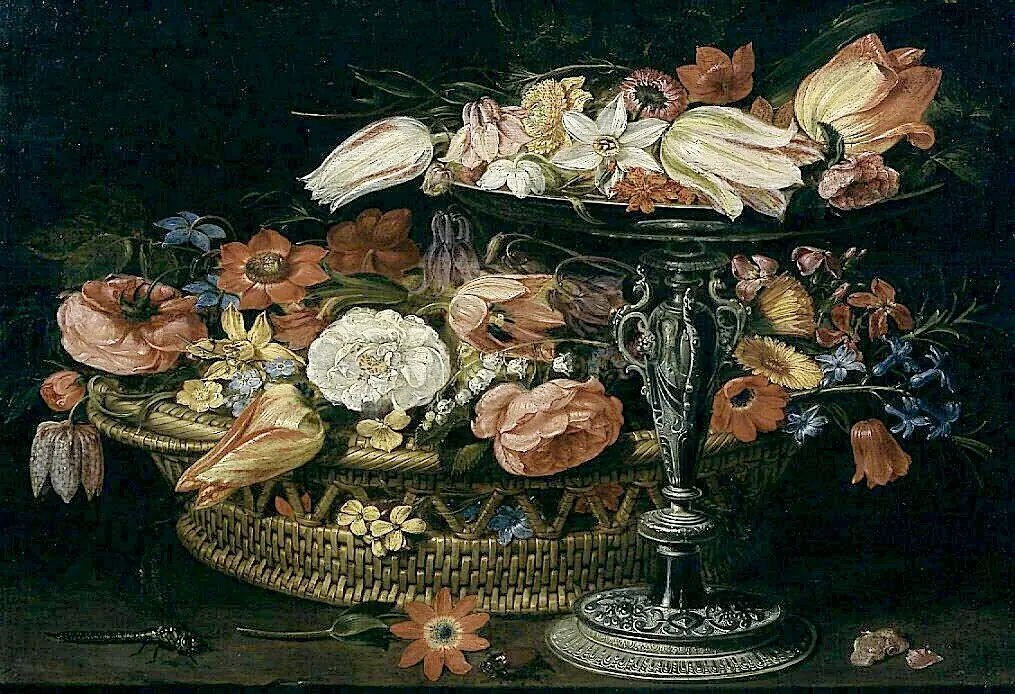 Floral Still Life
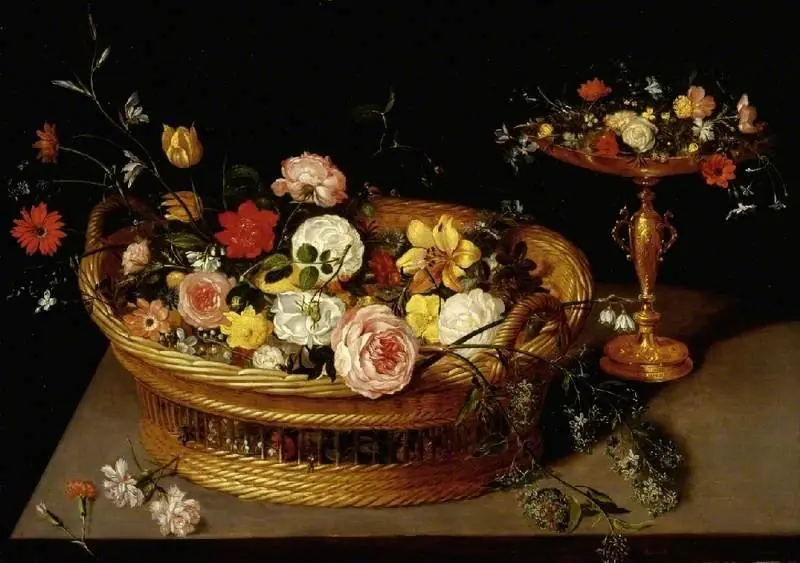 A basket of flowers
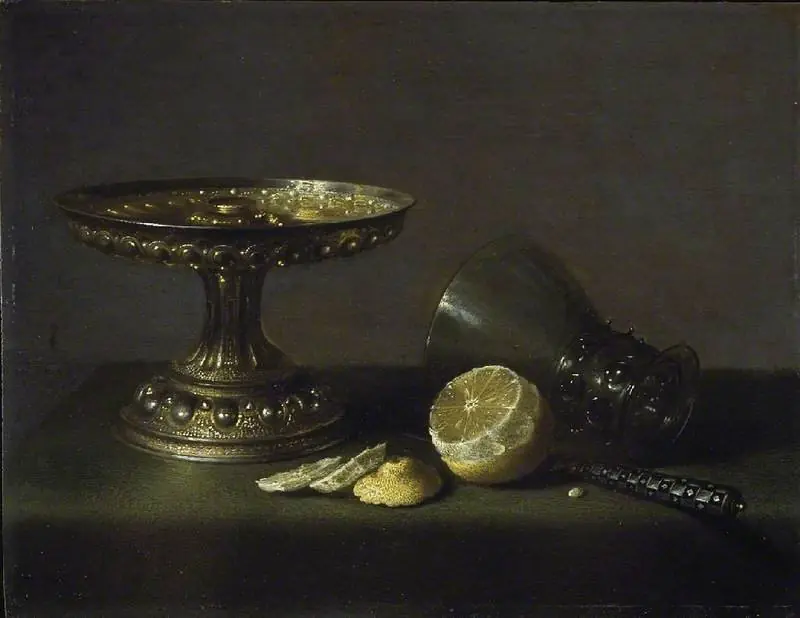 Still-life
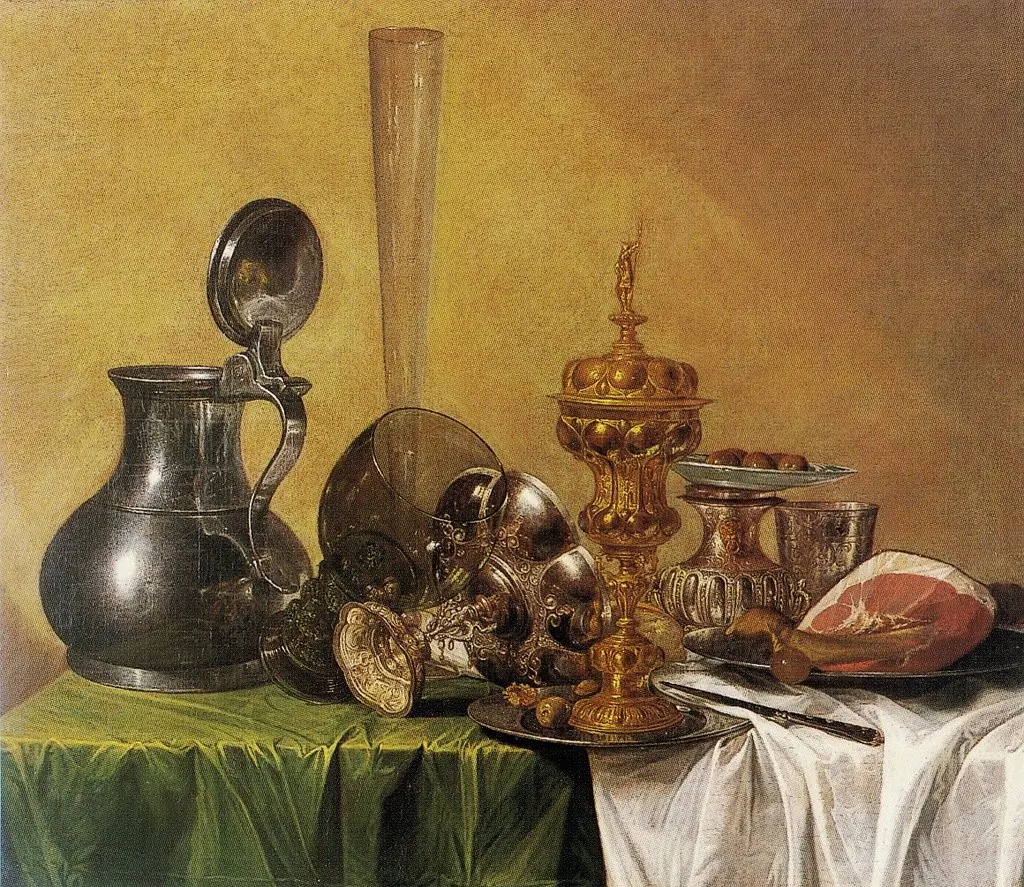 Still Life with Ham, Covered Beaker, Tazza, Rummer and Jug on a Table
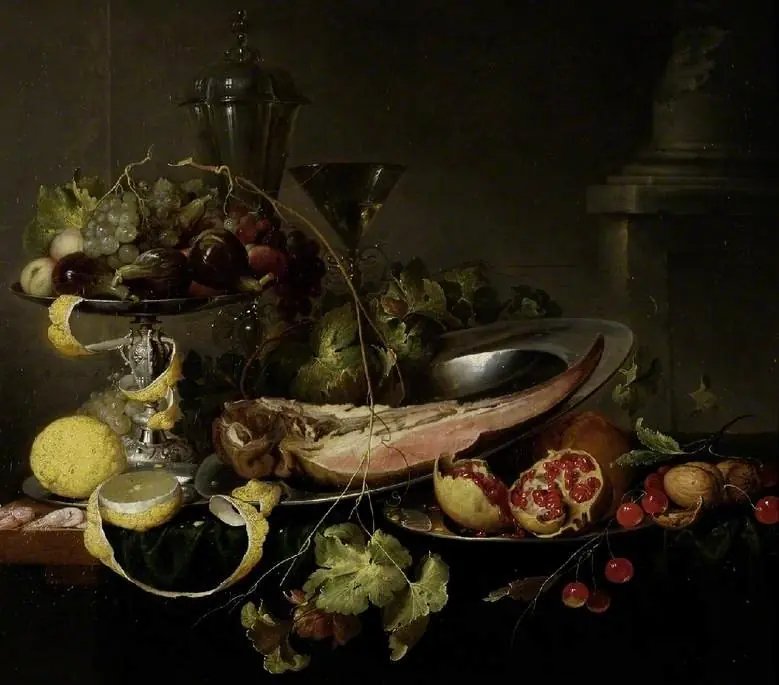 Still-life with fruit
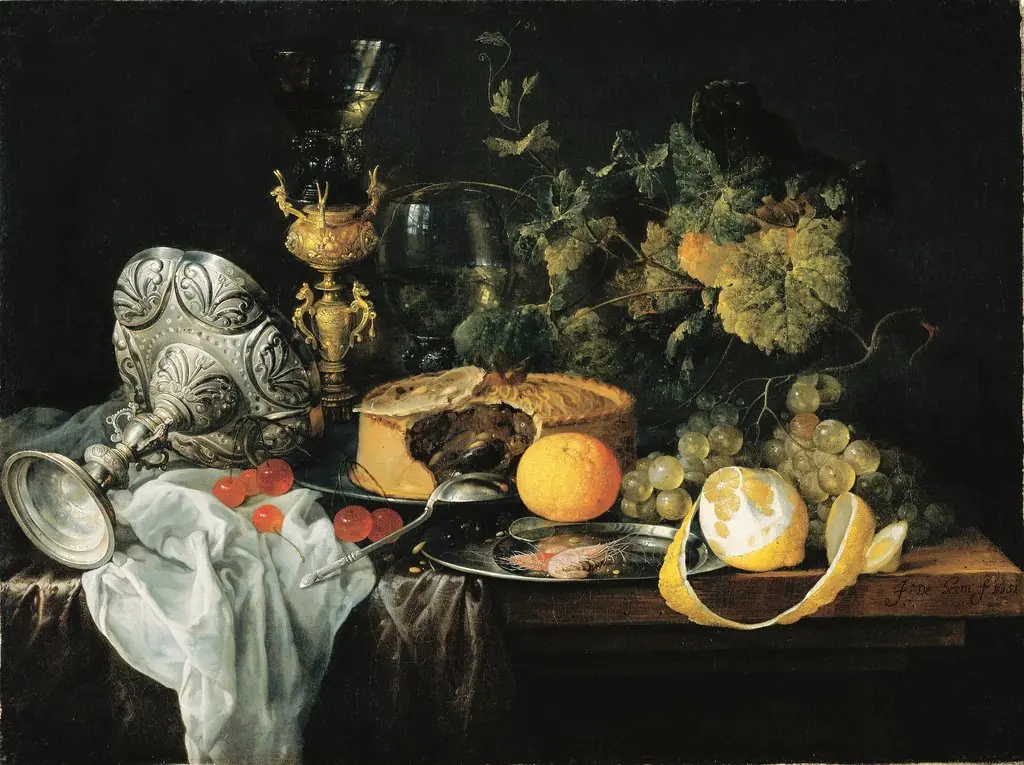 Sumptuous Still Life with Fruits, Pie and Goblets, 1651
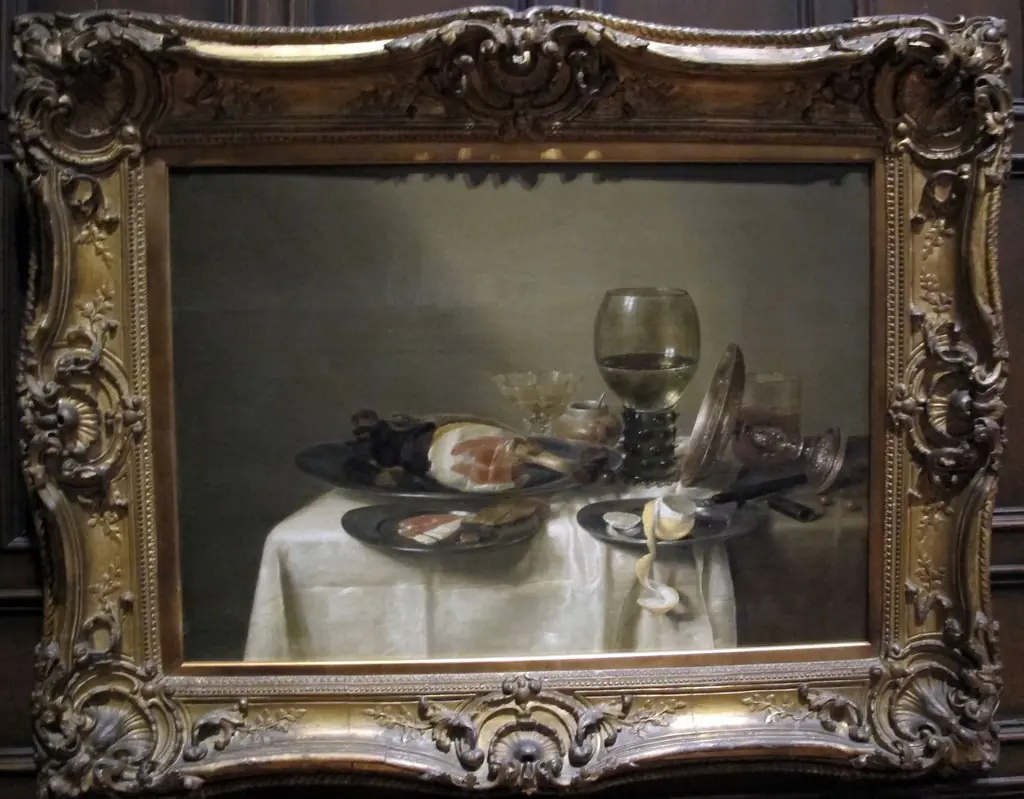 Still Life with a Ham and a Roemer
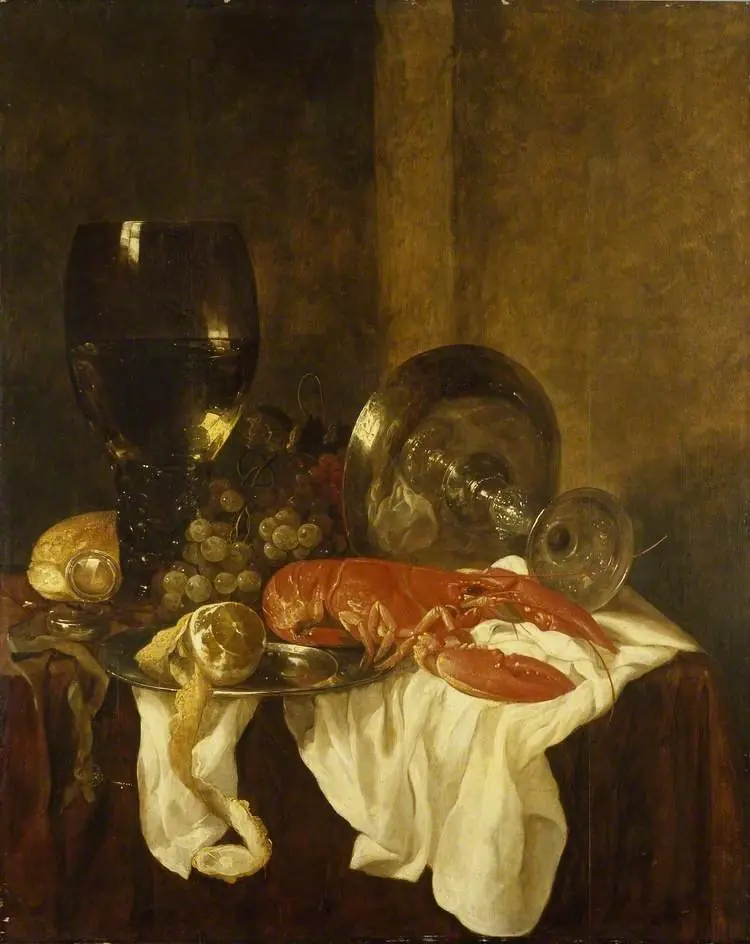 Still Life with a Lobster
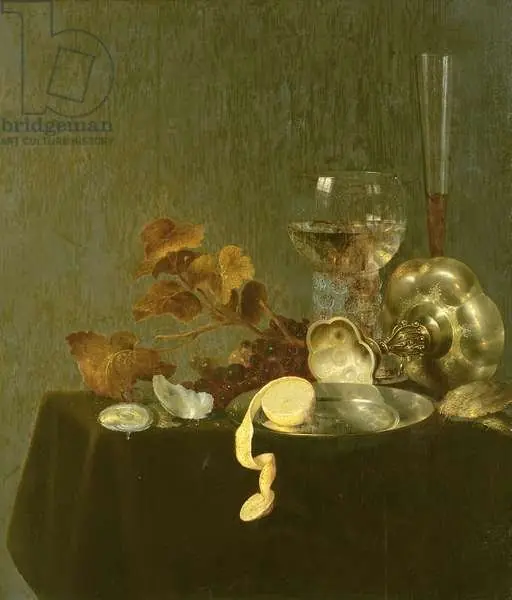 Still life with roemer and tazza
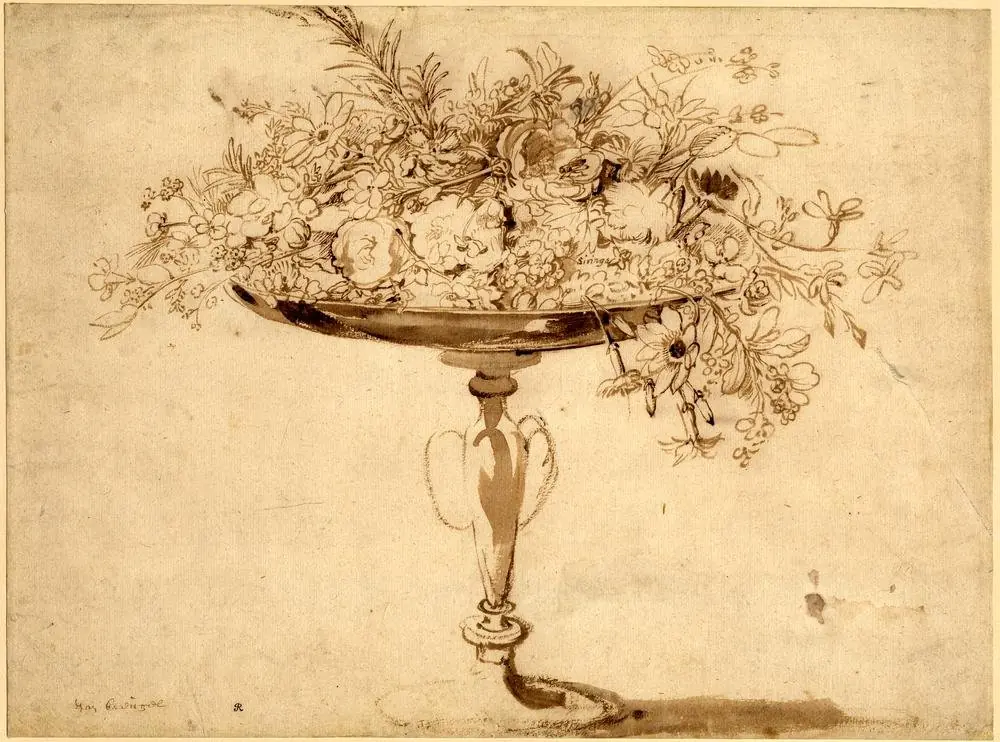 A tazza-shaped vase with flowers tumbling over the bowl
Tazza is a subject in art. A tazza (, Italian: tazza, lit.
Artifact World Gallery holds 27 public-domain Tazza works, all free to view and download.
Key Tazza artists in the collection include Pieter Claesz, Jan Davidsz. de Heem and Willem Claesz Heda.
Tazza works in the collection are held by Fitzwilliam Museum, Ashmolean Museum and Museum of Fine Arts Boston.
Your cart is empty
Browse artworks →