Artwork
En hyrdedreng, der driver en flok får
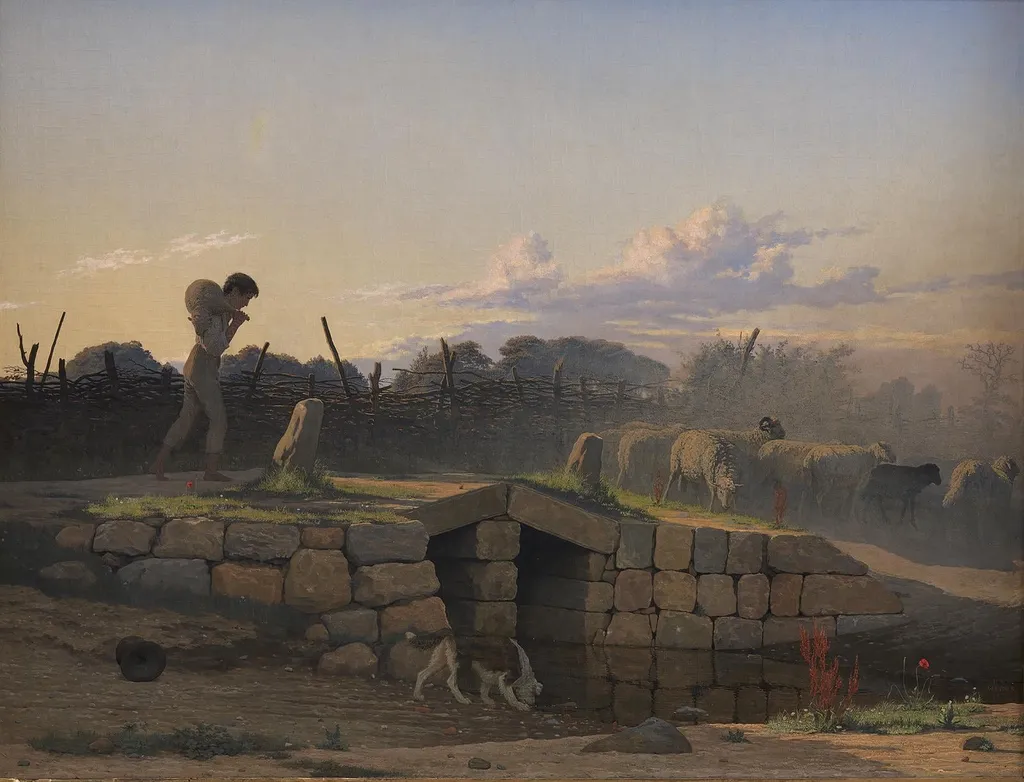
En hyrdedreng, der driver en flok får is a photography by the Romanticist artist Unknown. It dates from 1838 and is held in the collection of the Statens Museum for Kunst. Painted in 1838, this work portrays a young shepherd guiding a flock of sheep through a rural landscape.
About this work
Overview
The composition emphasizes the boy’s solitary presence amid natural elements, with careful attention to light and texture.
Painted in 1838, this work portrays a young shepherd guiding a flock of sheep through a rural landscape. Executed in oil on canvas, it belongs to the collection of the Museum of Ethnography. The scene is unembellished, focusing on a quiet moment of rural labor rather than dramatic narrative. The composition emphasizes the boy’s solitary presence amid natural elements, with careful attention to light and texture.
Subject & Meaning
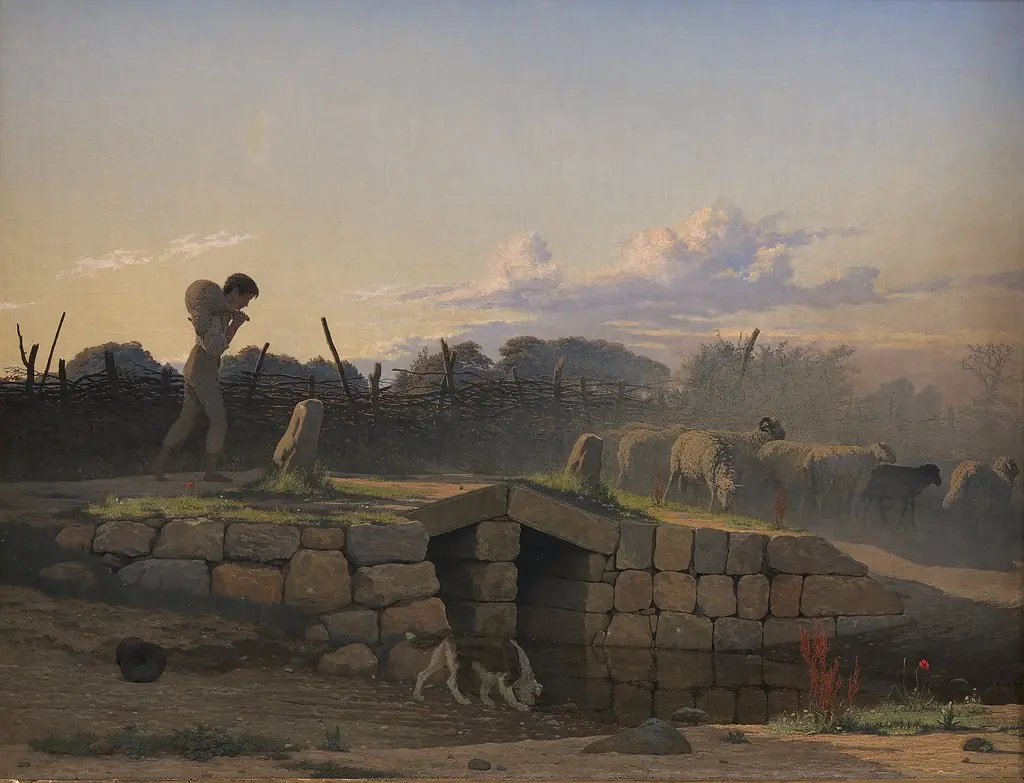
The central figure is a boy in modest attire, burdened by a heavy pack, leading sheep along a narrow path. His posture suggests quiet diligence, not hardship. The sheep, closely grouped and illuminated by soft sunlight, reinforce a sense of order and routine.
The image conveys no overt symbolism; instead, it presents an unidealized view of agricultural life, valuing stillness and continuity over spectacle.
Technique & Style
The artist employs chiaroscuro to model forms with subtle gradations of light and shadow, giving volume to the boy’s clothing and the wool of the sheep. Brushwork is restrained, favoring naturalistic rendering over expressive flourish. The background recedes with muted tones, while the path and stone wall guide the viewer’s gaze toward the central figure. Light falls diagonally, enhancing the sense of depth and spatial cohesion.
History & Provenance
The painting entered the Museum of Ethnography’s collection in the late 19th century, likely acquired during a period of growing interest in ethnographic and rural life studies. Its origins trace to Denmark, where the artist worked in the early 1830s. No record of prior ownership or exhibition exists prior to its museum acquisition, suggesting it was not widely circulated in public collections before then.
Context
Created during a time when European art increasingly turned to peasant life as a subject, this work aligns with regional traditions of Nordic realism. Unlike romanticized rural scenes, it avoids sentimentality, reflecting a local aesthetic that valued observation over idealization. The presence of a stone wall and native trees points to a specific Danish or Scandinavian landscape, grounding the image in its geographic and cultural setting.
Legacy
Though not widely reproduced or studied outside institutional circles, the painting remains a quiet example of 19th-century Nordic genre painting. It contributes to a broader understanding of how rural labor was visually documented in Denmark during a period of social change. Its preservation in an ethnographic museum underscores its role as a record of everyday life rather than a celebrated artistic achievement.
Artist & collection









 Landscape
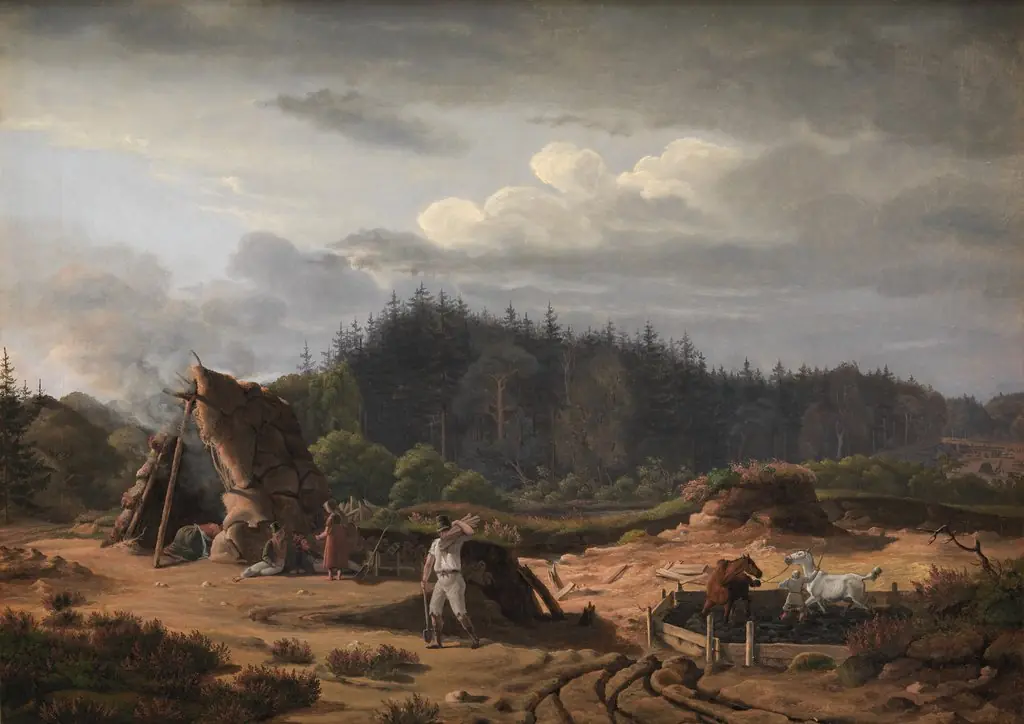 A Bog with Peat Cutters. Høsterkøb, North Zealand
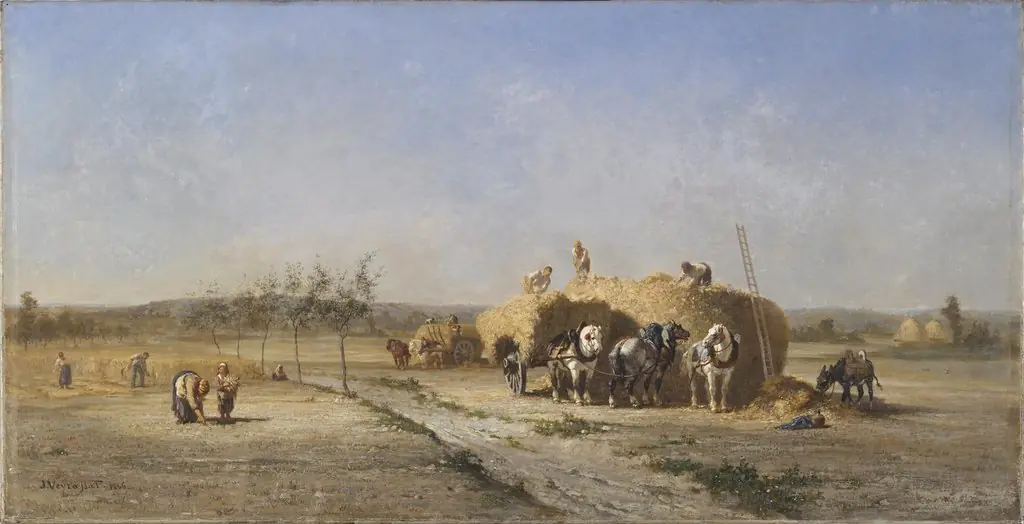 Harvest Scene
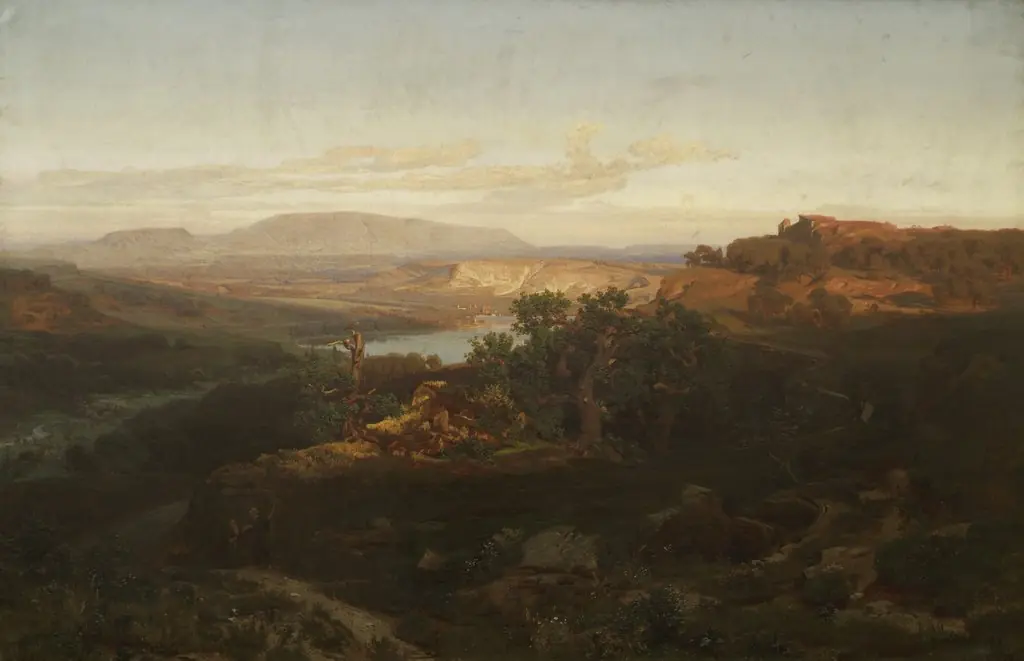 Gegend in der Rheinpfalz
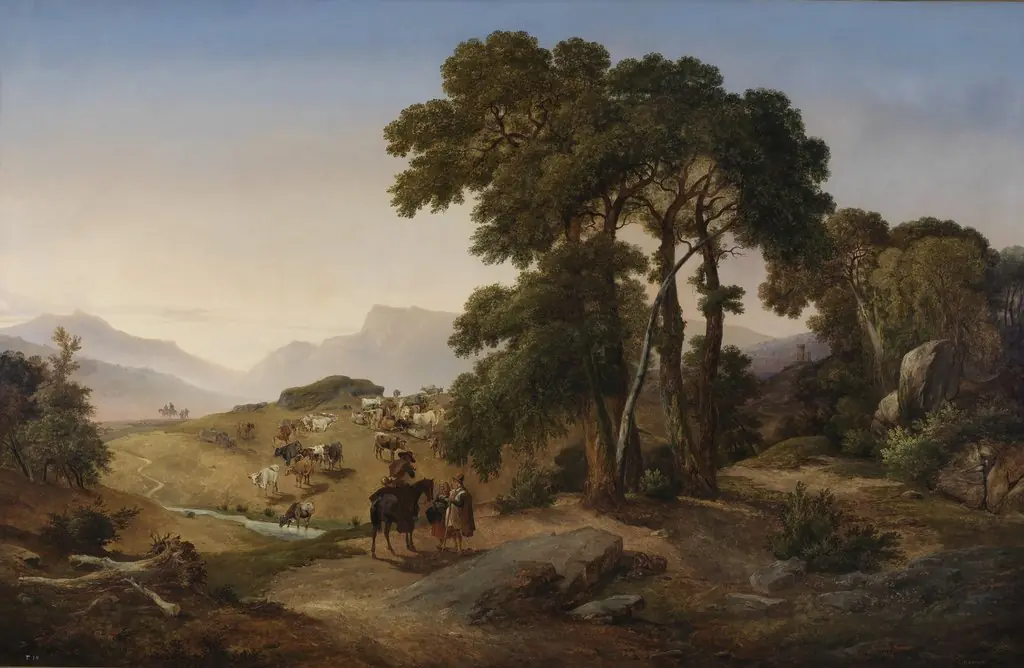 Landscape
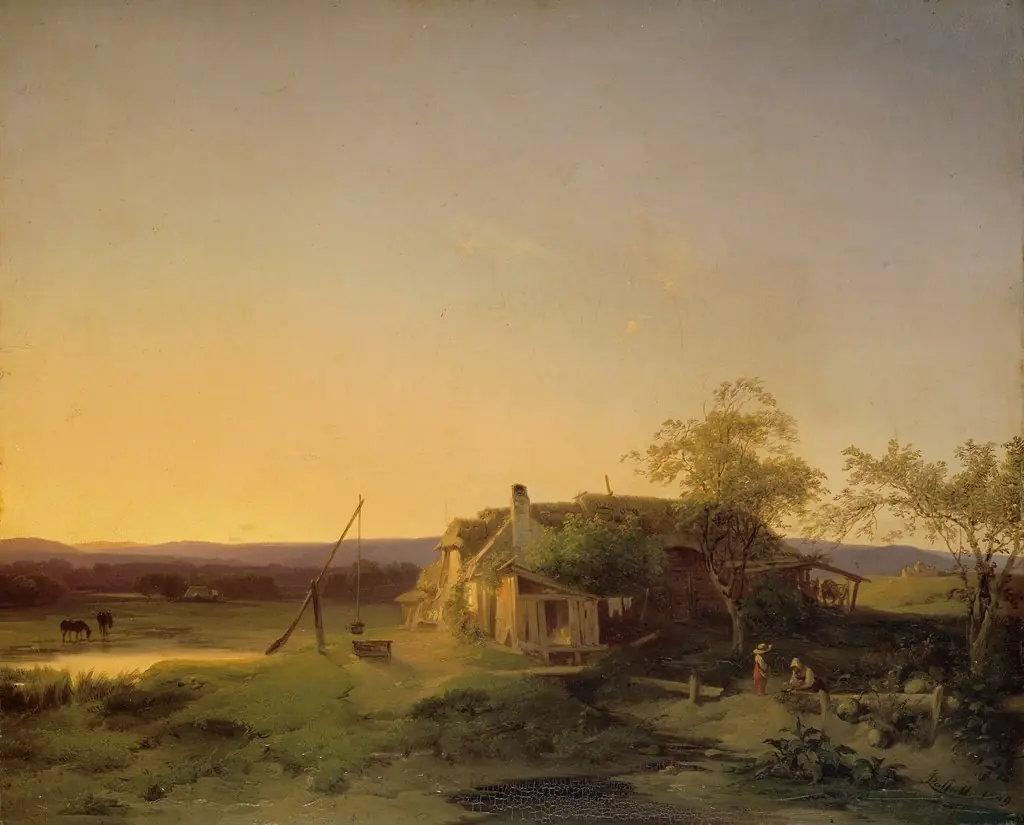 Evening Landscape
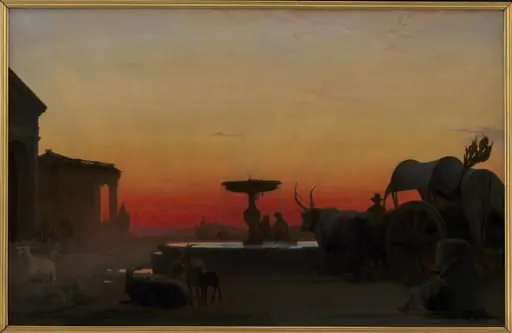 A Square in Ariccia, Italy. After Sunset
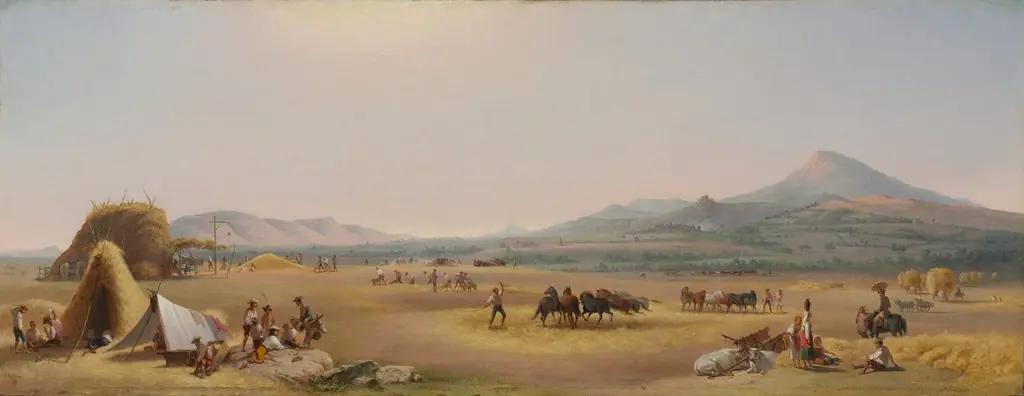 Harvest on the Roman Campagna
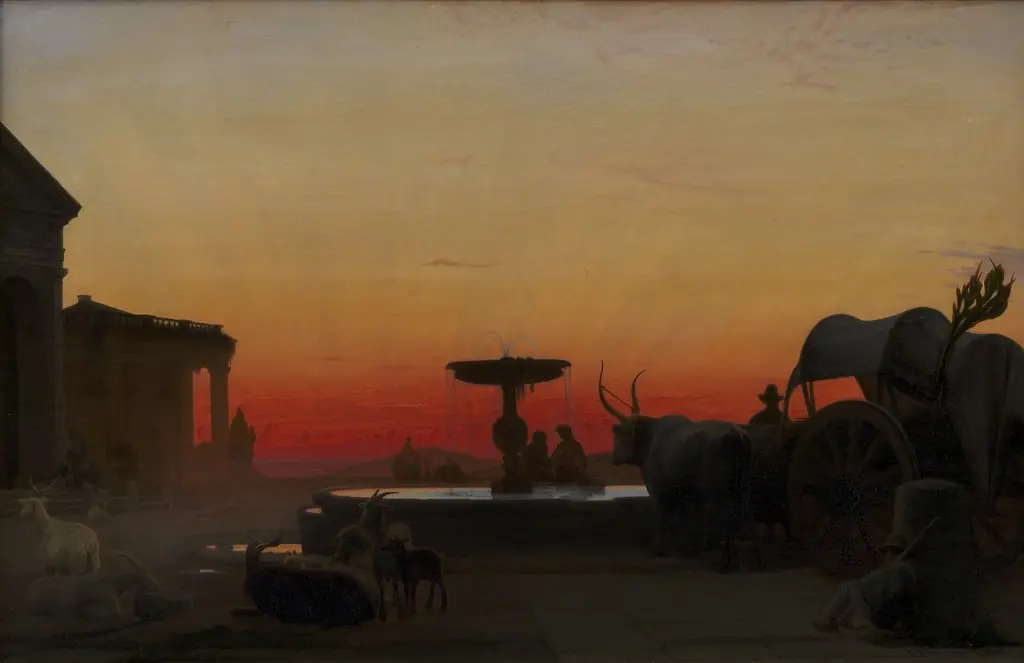 A Square in Ariccia, Italy. After Sunset
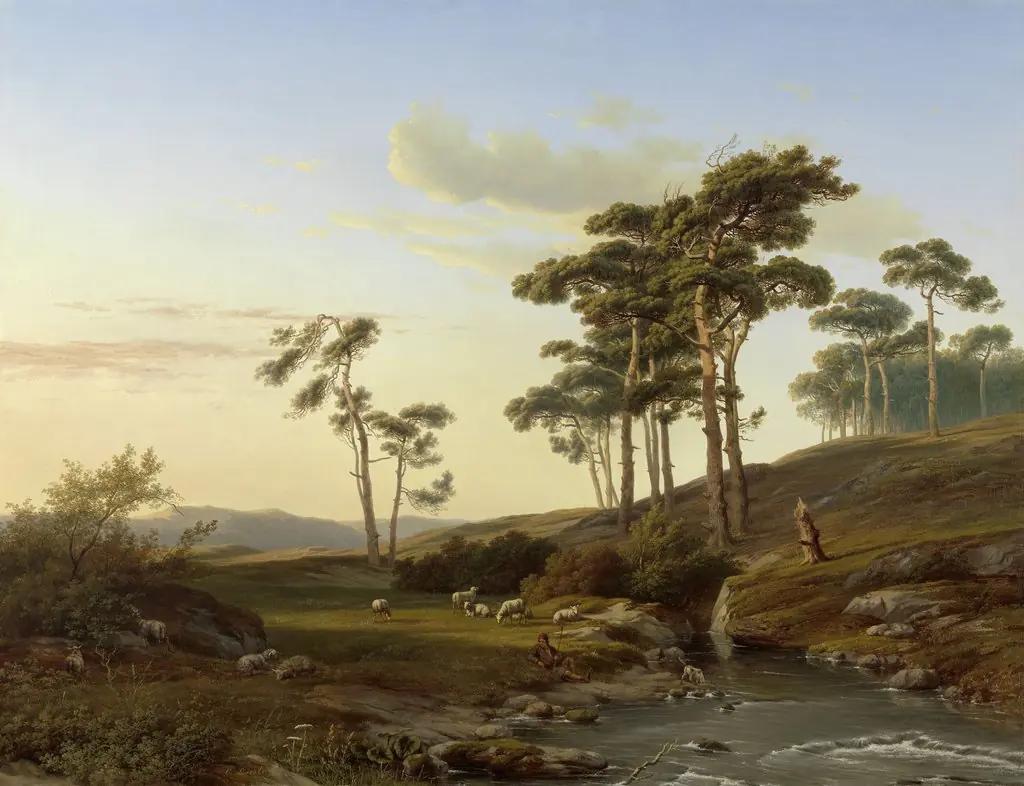 Avondstemming met herder
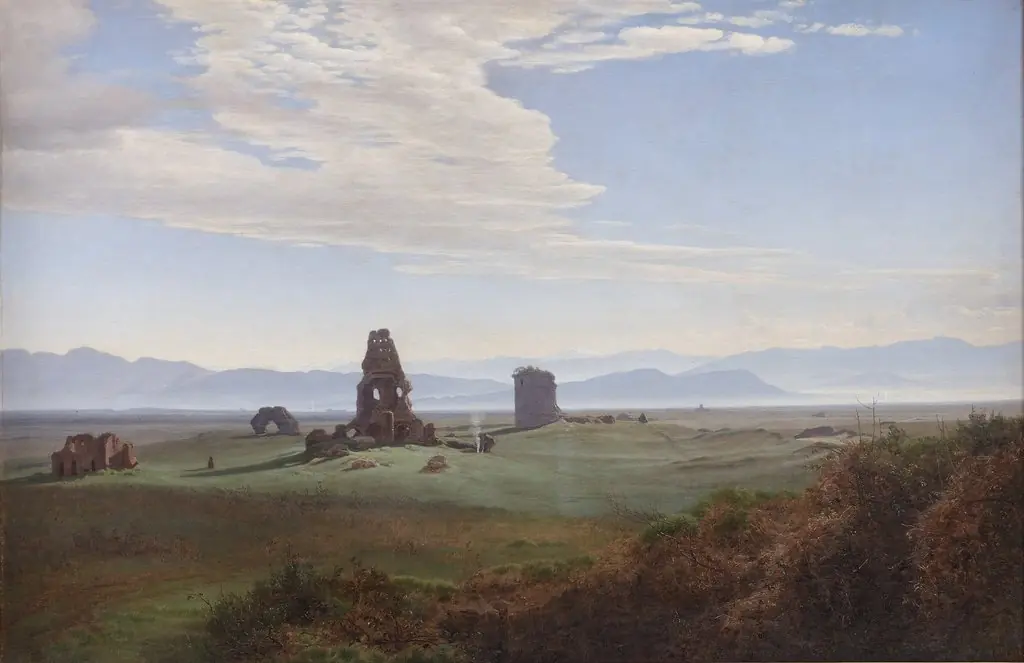 Ruins in the Roman Campagna
- En hyrdedreng, der driver en flok får