Artwork
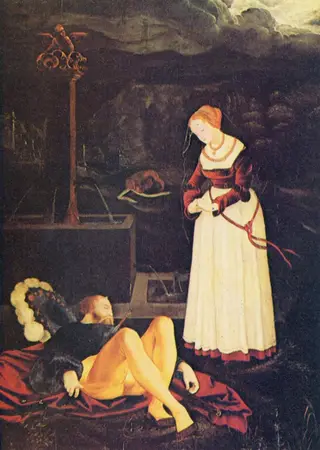
Schlafender Grabwächter mit Streitkolben und Schwert
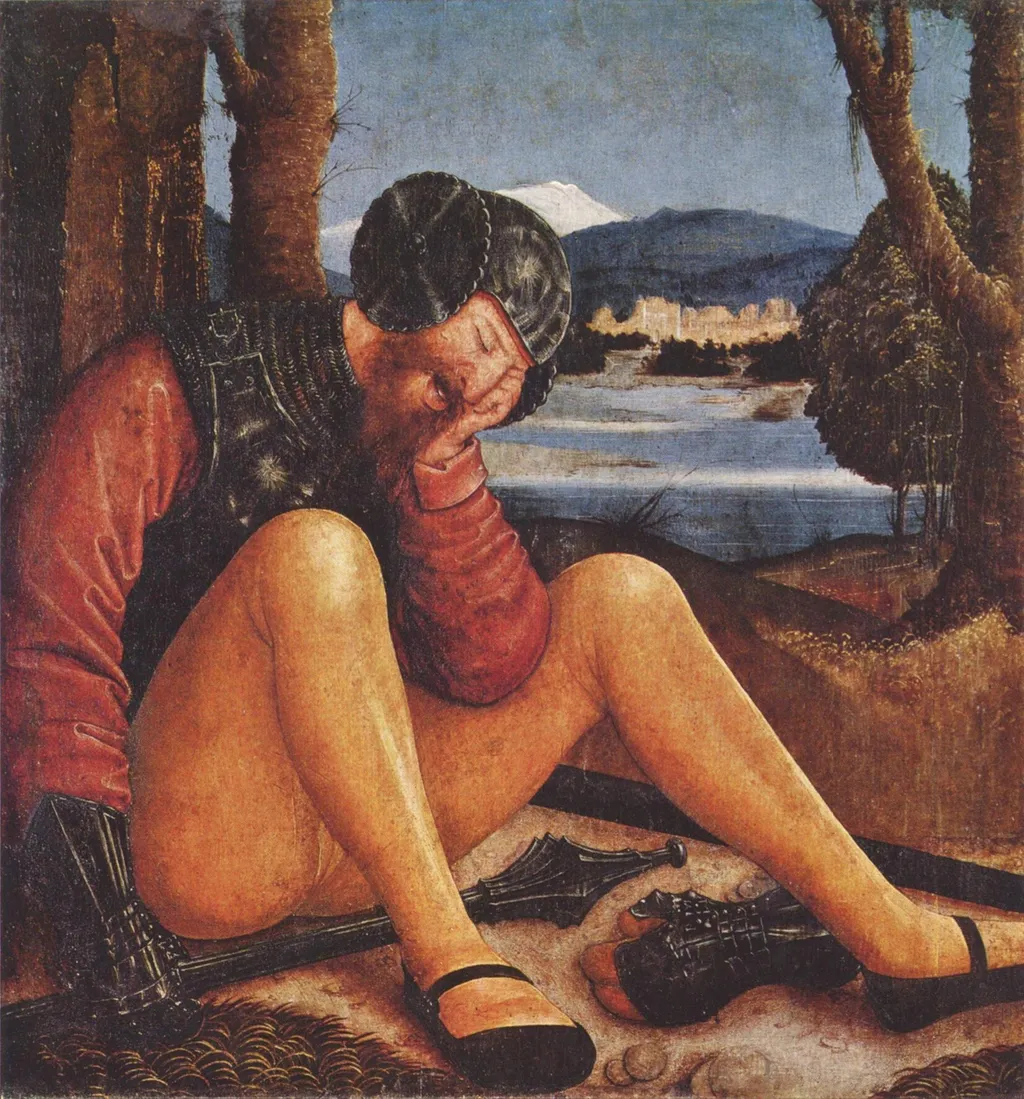
Schlafender Grabwächter mit Streitkolben und Schwert is an oil painting by the High Baroque Italian artist Bernhard Strigel. It is held in the collection of the Bavarian State Painting Collections.
About this work
Overview
Schlafender Grabwächter mit Streitkolben und Schwert, an oil painting from circa 1550, is attributed to Bernhard Strigel, a prominent figure of the Swabian school. The work is part of the Alte Pinakothek's collection.
Subject & Meaning
The presence of a sword and the figure's attire (red shirt, black pants, shoes, and hat) add to the enigmatic nature of the depiction.
The painting portrays a seated, armed man in a state of slumber or deep contemplation, set against a serene landscape. Though the specific narrative context is unclear, the scene suggests a moment of introspection or vigilance, potentially alluding to a biblical or religious theme, given the subject's association with guarding (implied by 'Grabwächter'). The presence of a sword and the figure's attire (red shirt, black pants, shoes, and hat) add to the enigmatic nature of the depiction.
Technique & Style
Executed in oil paint, the work showcases Strigel's adherence to the detailed, expressive traditions of the Swabian school. Notable is the potential use of glazing techniques, which would contribute to the painting's depth and luminosity, particularly in capturing the contrast between the figure's somber pose and the idyllic background.
History & Provenance
Created around 1550 by Bernhard Strigel, who served Emperor Maximilian I and was active in Augsburg, Innsbruck, and Vienna, the painting reflects the artist's versatility beyond portraiture and historical themes. It is now housed in the Alte Pinakothek.
Context
Despite the initial attribution to the High Baroque Italian movement in the source, Schlafender Grabwächter actually aligns more closely with the Northern European artistic traditions of its time, given Strigel's Swabian school affiliation. The serene landscape background, with its distant water, trees, and mountains, contrasts with the figure's introspective state, highlighting a balance between tranquility and solemnity.
Legacy
As part of the Alte Pinakothek's collection, the painting contributes to the museum's rich holdings of early European art, offering insights into the artistic practices and thematic explorations of the 16th century. However, its specific influence or renown within Strigel's oeuvre or the broader artistic canon is not prominently highlighted in available information.
Own this work as a print
Artist & collection
Artist
Bernhard Strigel (c. 1461 – 4 May 1528) was a German portrait and historical painter of the Swabian school, the most important of a family of artists established at Memmingen. He was born at Memmingen and was probably a…

![Margarethe Vöhlin [reverse], by Bernhard Strigel](https://artifactworldgallery.com/img/bernhard-strigel--margarethe-vohlin-reverse--01f4c80425fbb8fe-w320.webp)
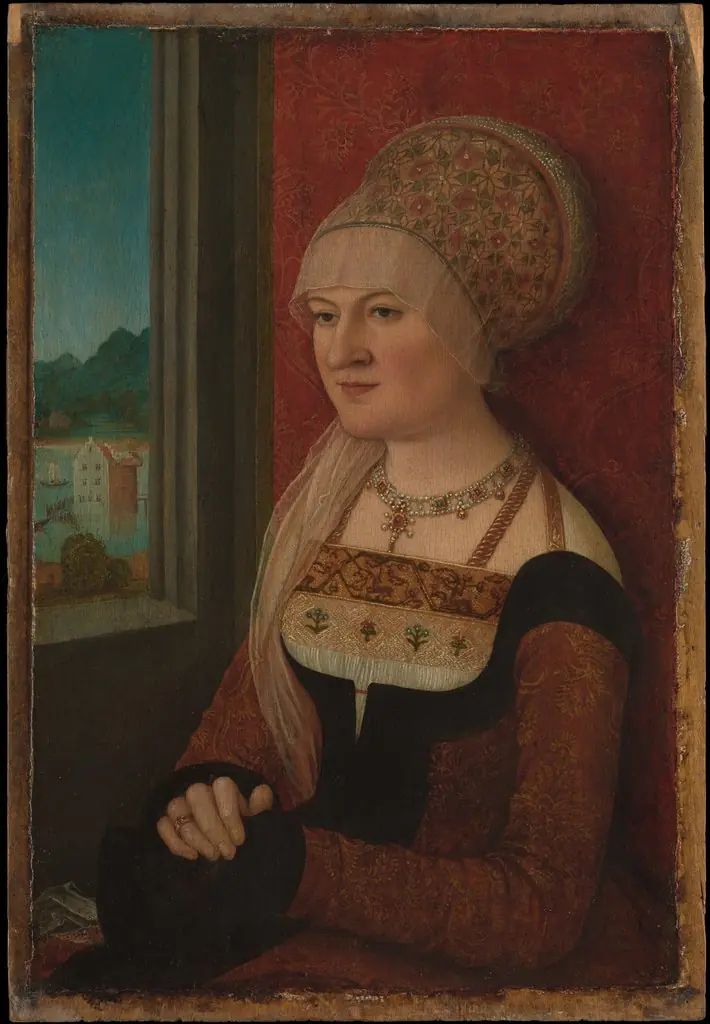
![Margarethe Vöhlin [obverse], by Bernhard Strigel](https://artifactworldgallery.com/img/bernhard-strigel--margarethe-vohlin-obverse--435992056faaebf8-w320.webp)
![Hans Roth [obverse], by Bernhard Strigel](https://artifactworldgallery.com/img/bernhard-strigel--hans-roth-obverse--9904e8cf2692db0d-w320.webp)
![Hans Roth [reverse], by Bernhard Strigel](https://artifactworldgallery.com/img/bernhard-strigel--hans-roth-reverse--9e98efc46bbdf23c-w320.webp)
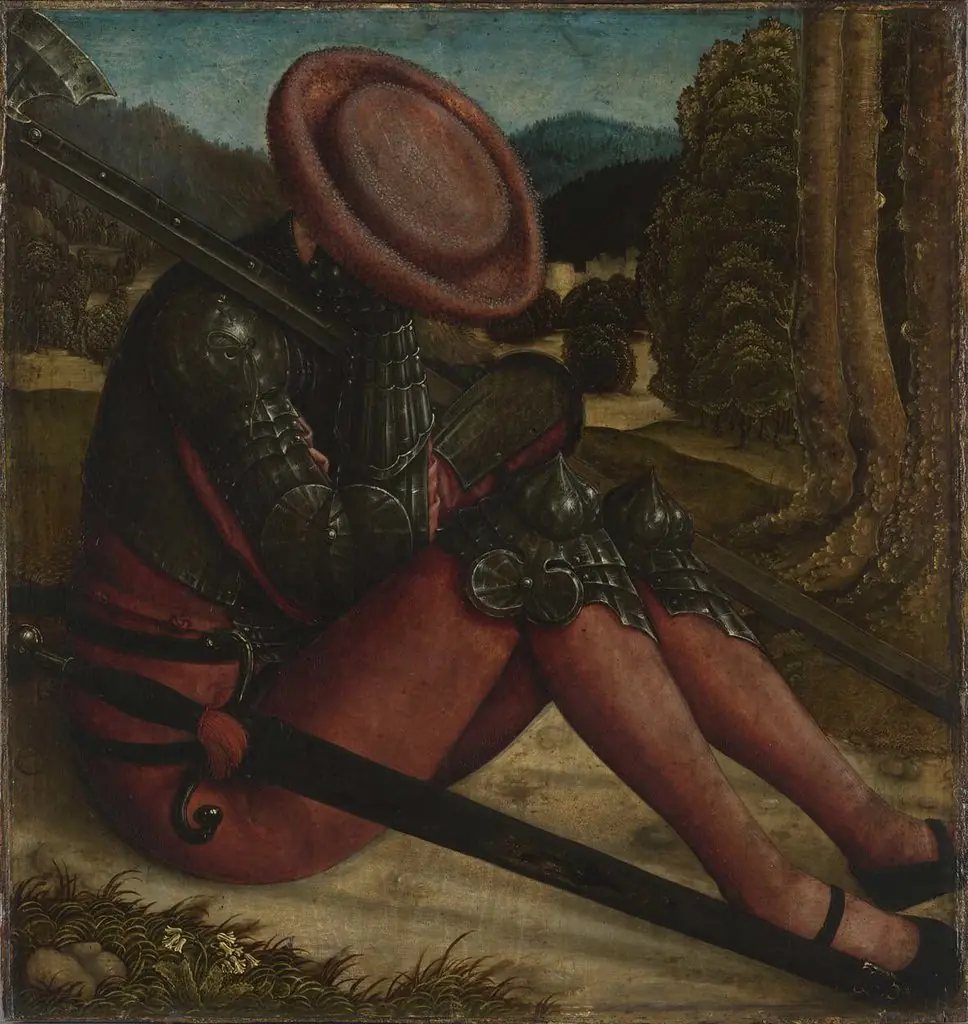
- Sleeping guardian of a grave with sword and halberd
 Pyramus and Thisbe
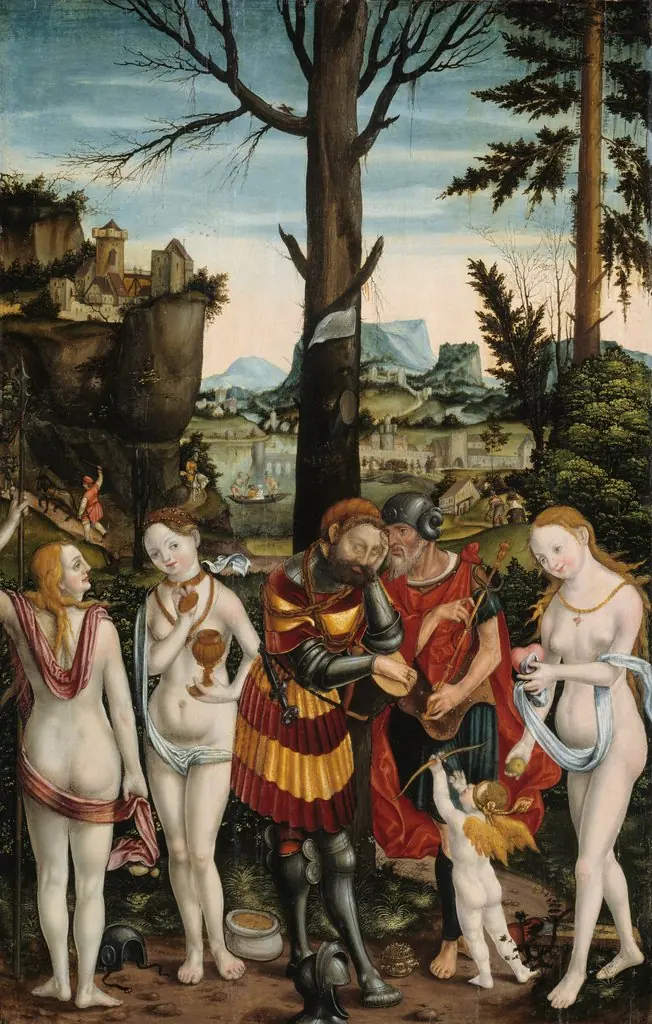 The Dream of Paris
 The Dream of Paris
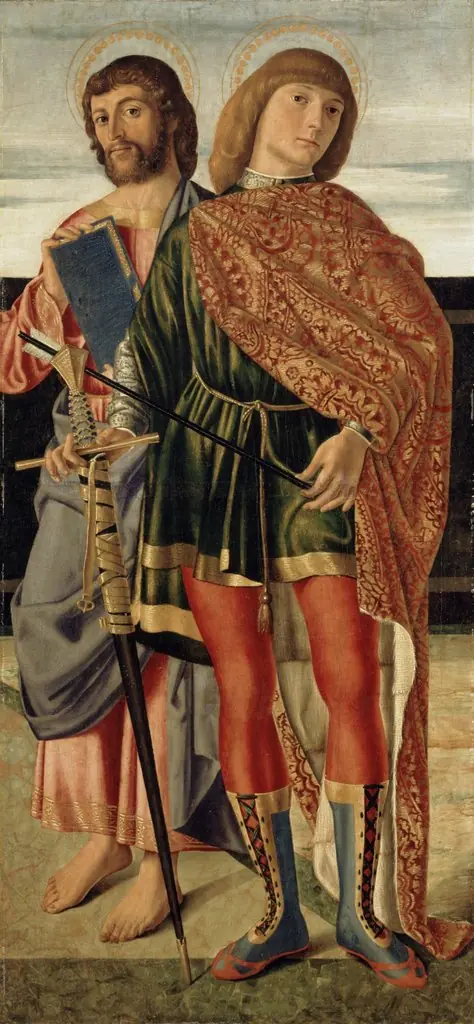 Saint Matthew and Saint Sebastian
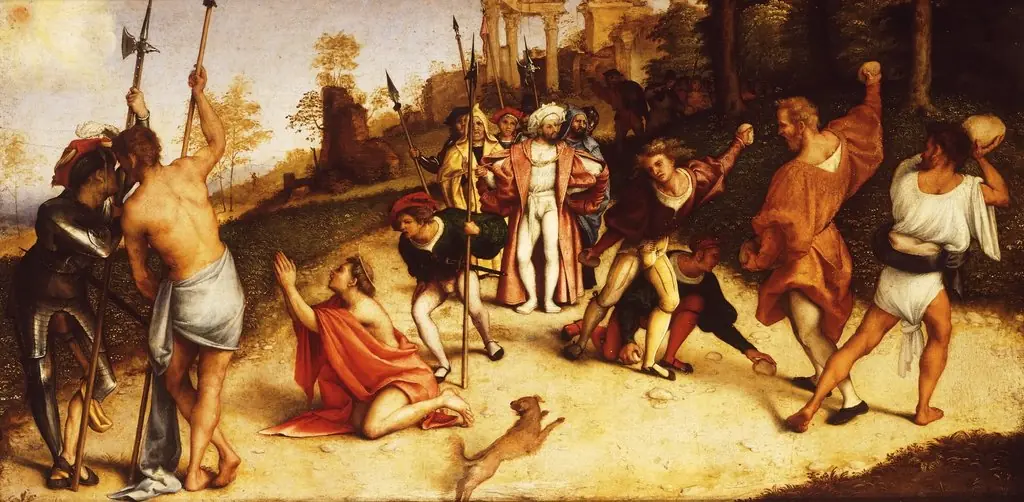 Martyrdom of St Stephen, division of Martinengo Altarpiece
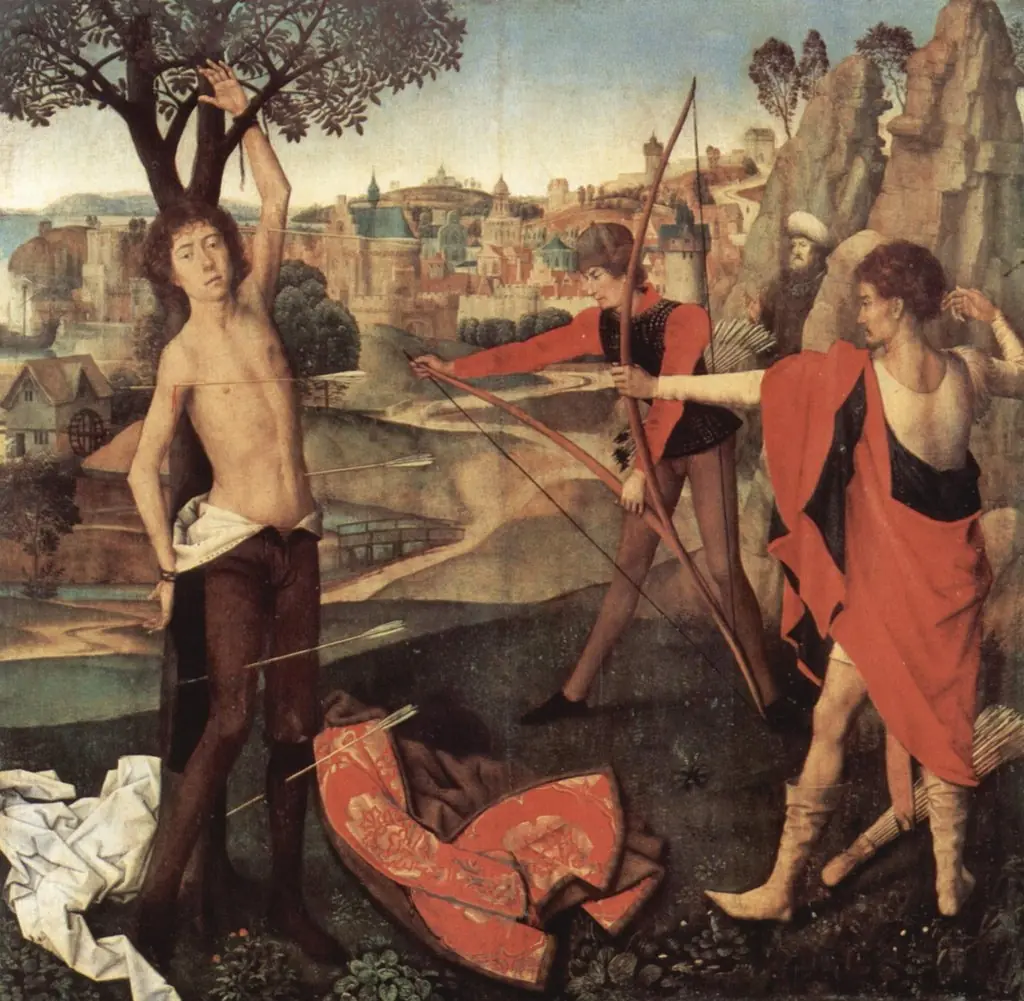 The Martyrdom of St Sebastian
![The Crucifixion with the Virgin, Saint John, Saint Jerome, and Saint Mary Magdalene [left panel], by Pietro Perugino](https://artifactworldgallery.com/img/pietro-perugino--the-crucifixion-with-the-virgin-saint-john-saint-jerome-and--1017dec17318baa5-w320.webp) The Crucifixion with the Virgin, Saint John, Saint Jerome, and Saint Mary Magdalene [left panel]
The Crucifixion with the Virgin, Saint John, Saint Jerome, and Saint Mary Magdalene [left panel]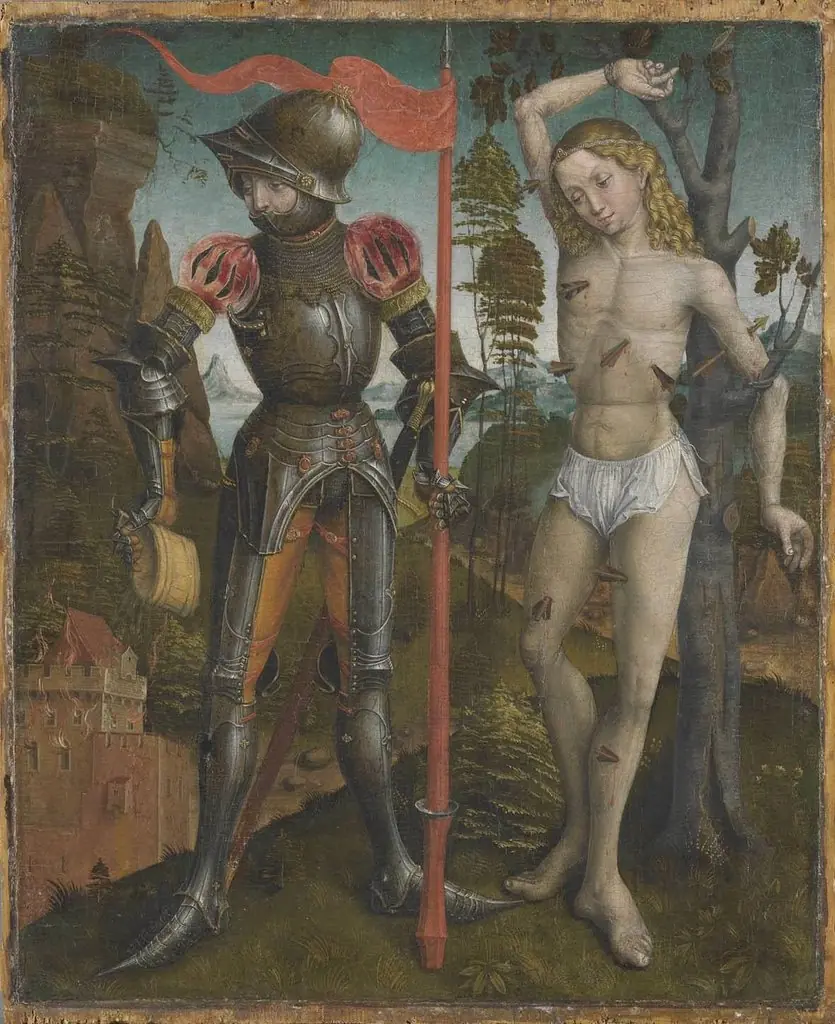 Die hll. Florian und Sebastian
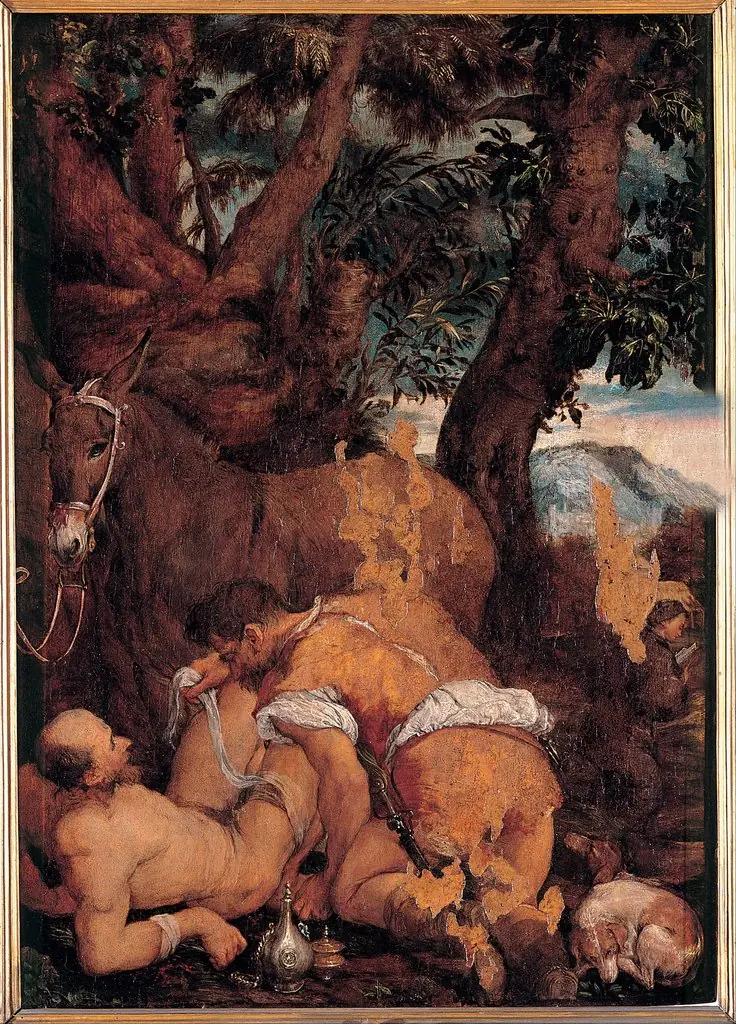 The Good Samaritan (1550)
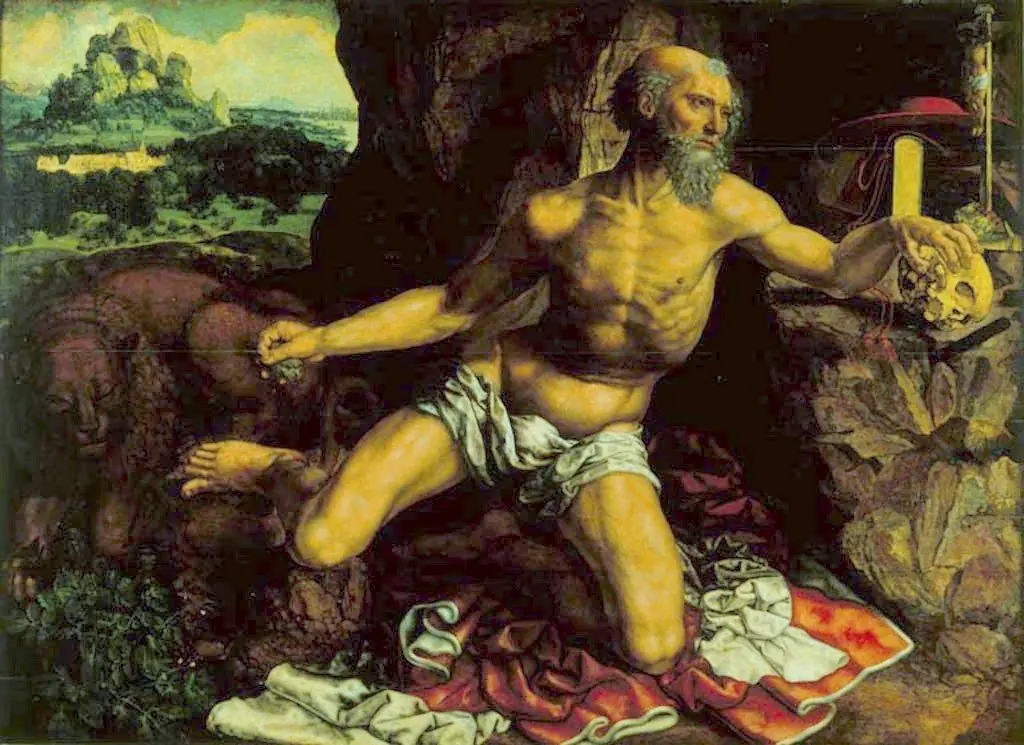 Saint Jerome
 Apollo and Diana in forest landscape