Artwork
Copper Chief, His Wife, and Children
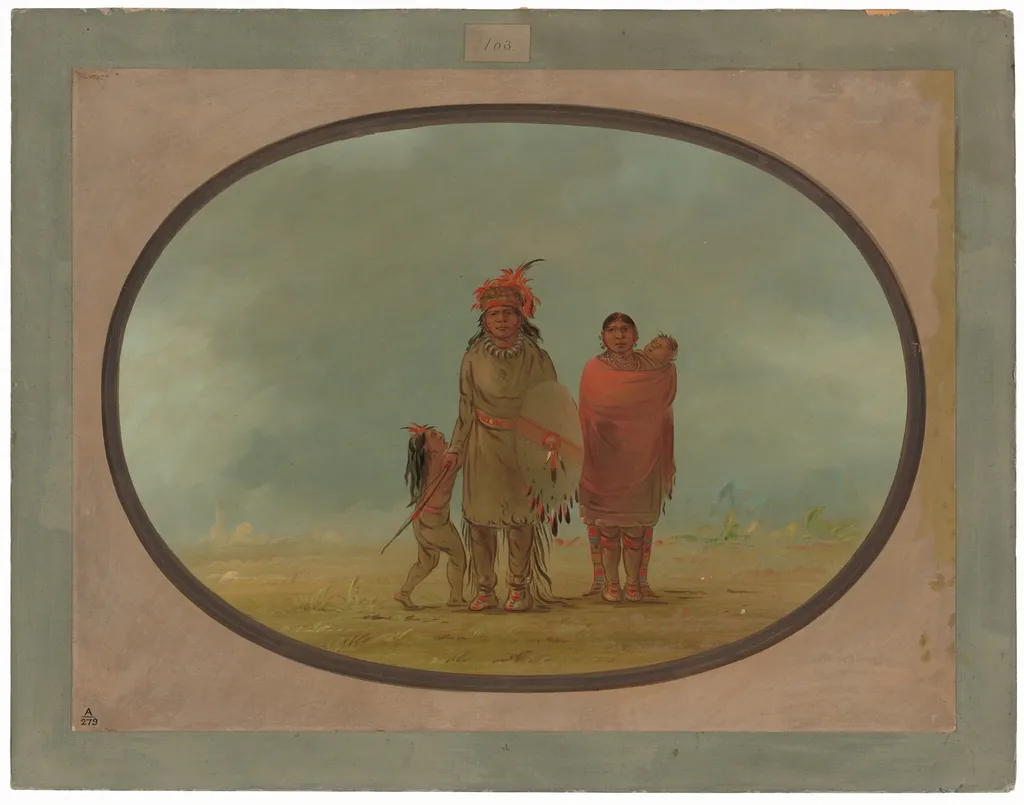
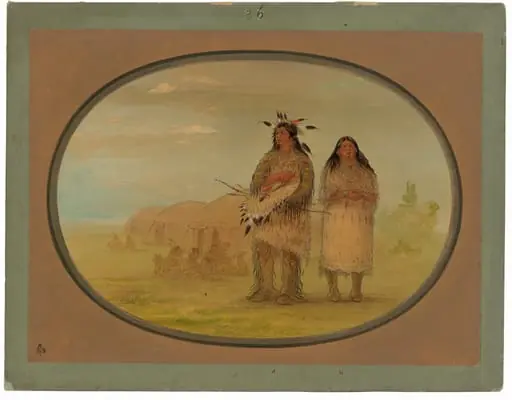
Copper Chief, His Wife, and Children is an oil painting by the American Folk Art artist George Catlin. It dates from 1862 and is held in the collection of the National Gallery of Art. Created in 1862, this oil painting on card, later mounted on paperboard, portrays a Native American family of four.
About this work
Subject & Meaning
The composition reflects Catlin's interest in capturing the everyday life and relationships of Plains peoples during a period of significant cultural change.
The painting depicts a Crow leader named Copper Chief alongside his wife and children, illustrating a family group within a Plains warrior tradition. The work functions as both a portrait and a narrative scene emphasizing kinship and leadership within Indigenous social structures. Its meaning is tied to Catlin's broader goal of documenting Native American cultures before perceived disappearance, presenting them with dignity and complexity rather than ethnographic stereotype.
The composition reflects Catlin's interest in capturing the everyday life and relationships of Plains peoples during a period of significant cultural change. The subject's portrayal conveys status and continuity, linking personal and communal identity through familial bonds.
The depiction aligns with Catlin's documented intent to record Native American subjects with ethnographic precision and artistic sensitivity, aiming to preserve representations of cultures he believed were at risk of disappearing due to westward expansion and assimilation policies. His approach combined documentary observation with romanticized aesthetic choices, reflecting 19th-century ethnographic sensibilities while seeking to present subjects as individuals rather than mere specimens.
Technique & Style
George Catlin painted Copper Chief, His Wife, and Children in 1862 using oil on card mounted on paperboard. The painting measures 46.6 cm in height and 61.9 cm in width, reflecting deliberate compositional balance and naturalistic rendering characteristic of 19th-century American portraiture. Its surface handling demonstrates careful application of pigment to achieve lifelike textures in the figures' clothing and facial features, while the overall style maintains the documentary realism associated with Catlin's ethnographic subject matter.
The artwork resides at the National Gallery of Art in Washington, D.C., where it has been part of the permanent collection since 1965.
History & Provenance
Copper Chief, His Wife, and Children was painted by George Catlin in 1862. The work descended by family inheritance to Catlin's three daughters, Clara Gregory Catlin, Louise Catlin Kinney, and Elizabeth Wing Catlin, before being acquired from Elizabeth Wing Catlin by the American Museum of Natural History in 1912. In 1959 it was purchased through Kennedy Galleries in New York by the collector Paul Mellon of Upperville, Virginia, who gifted it to the National Gallery of Art, Washington, D.C., in 1965, where it remains today.
No exhibition history beyond this chain of ownership is documented in the available sources.
Overview
Created in 1862, this oil painting on card, later mounted on paperboard, portrays a Native American family of four. The work belongs to George Catlin’s extensive visual record of Indigenous peoples, reflecting his practice of traveling the frontier to document tribal life through direct observation.
Context
The image reflects the period’s ethnographic curiosity and the growing American audience’s desire for visual information about frontier peoples. By depicting a domestic scene rather than a ceremonial or battle tableau, Catlin offered a more intimate glimpse into the daily life of the tribe he encountered.
Own this work as a print
Artist & collection

Artist
George Catlin ( KAT-lin; July 26, 1796 – December 23, 1872) was an American lawyer, painter, author, and traveler, who specialized in portraits of Native Americans in the American frontier.

 Bulls Fighting
 Expedition Encamped on a Texas Prairie. April 1686
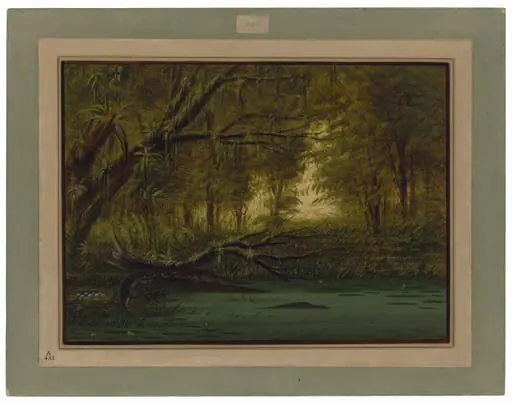 An Alligator's Nest
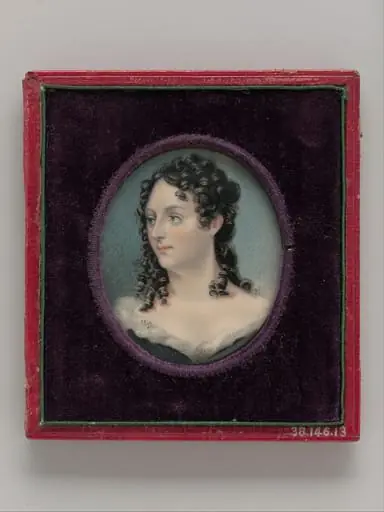 Mrs. George Catlin (Clara Bartlet Gregory)
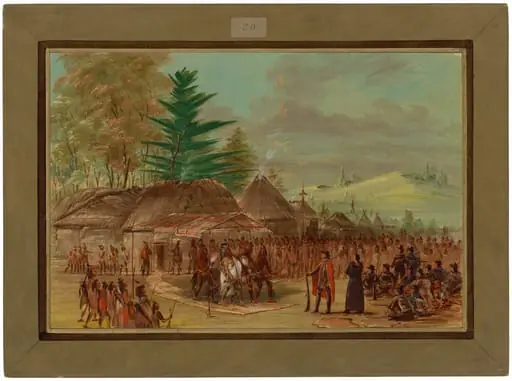 Chief of the Taensa Indians Receiving La Salle. March 20, 1682
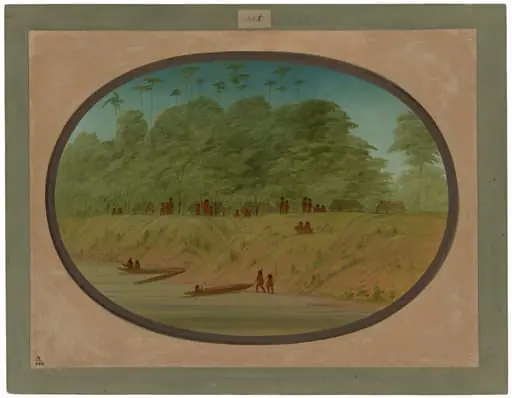 A Small Village - Payaguas Indians
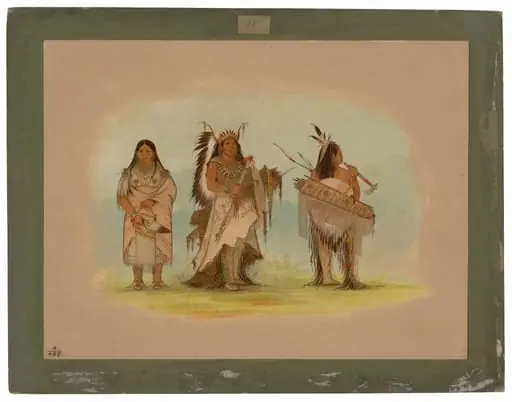 Omaha Chief, His Wife, and a Warrior
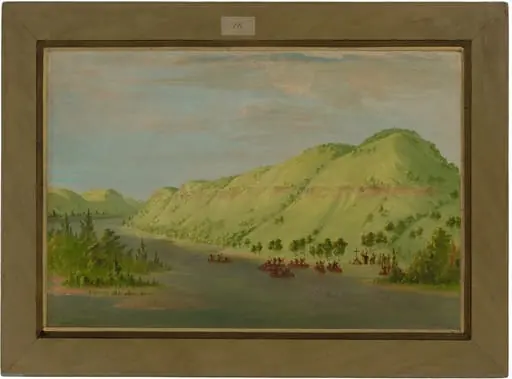 Father Hennepin Leaving the Mississippi to Join La Salle. May 8, 1680
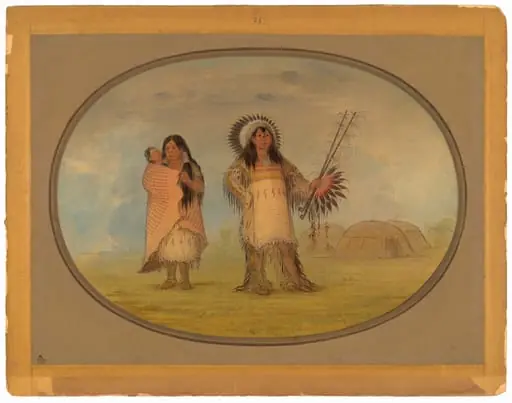 Mandan Civil Chief, His Wife, and Child
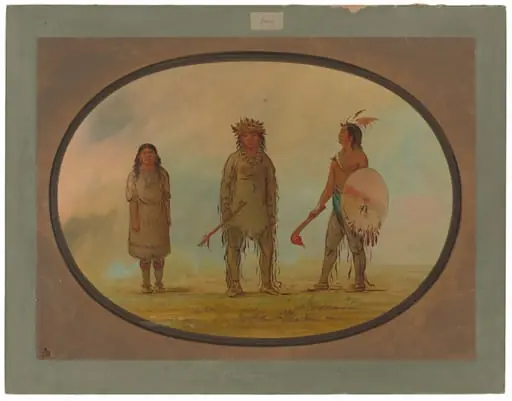 Athapasca Chief, His Wife, and a Warrior
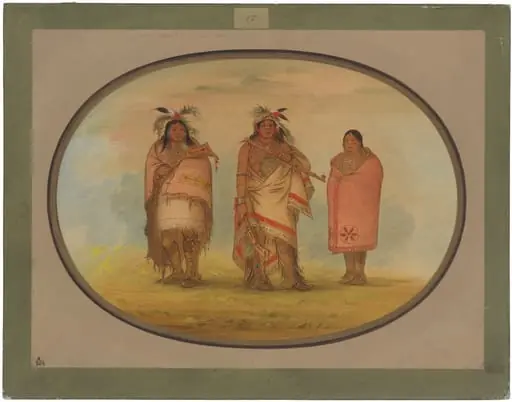 Menomonie Chief, His Wife, and Son
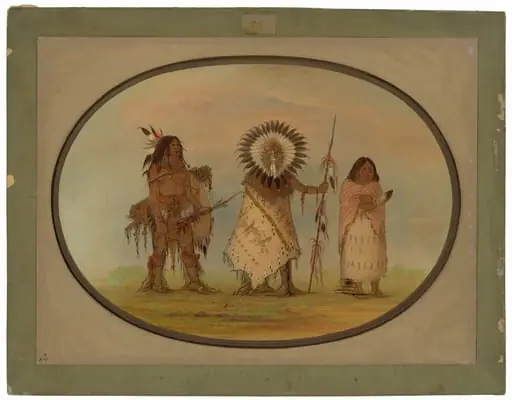 Crow Chief, His Wife, and a Warrior
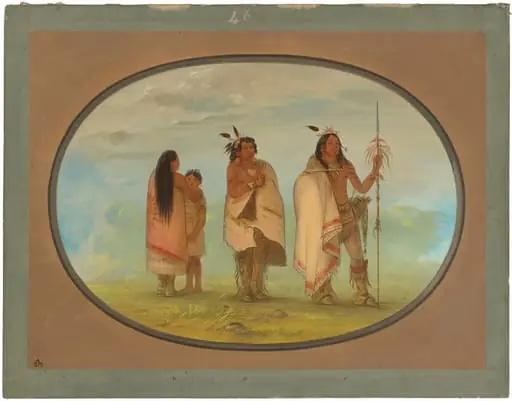 Weeco Chief, His Wife, and a Warrior
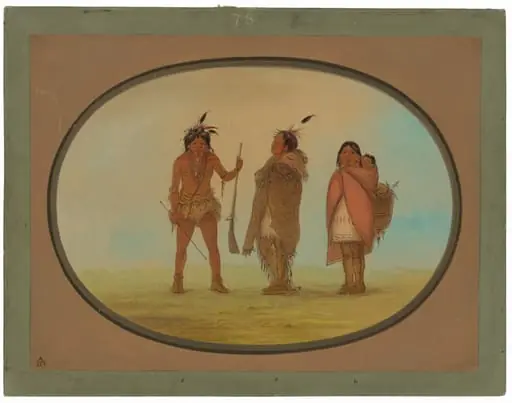 Arapaho Chief, His Wife, and a Warrior
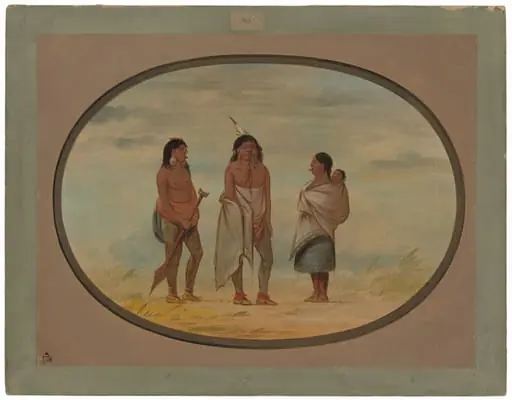 Nayas Indian Chief, His Wife, and a Warrior
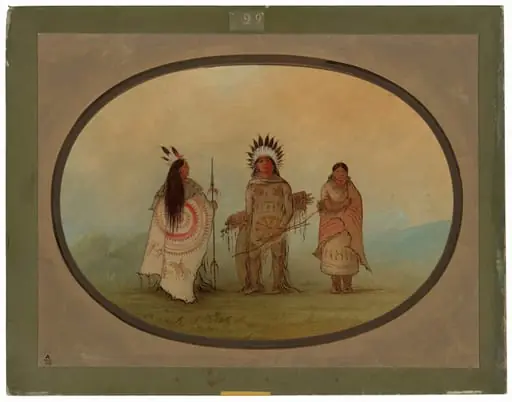 A Crow Chief, a Warrior, and His Wife
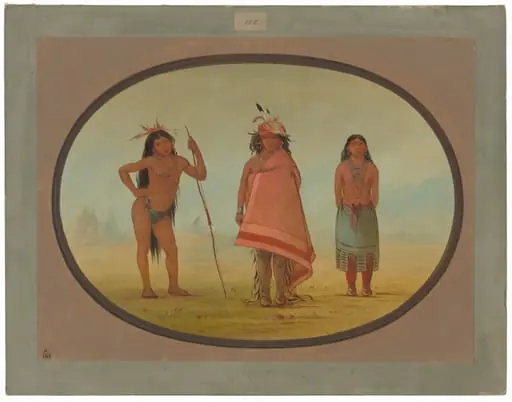 Cochimtee Chief, His Wife, and a Warrior
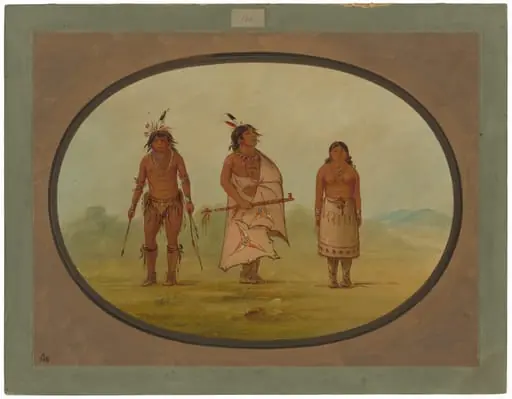 Mohave Chief, a Warrior, and His Wife
 Riccarree Chief and His Wife