Artwork
The field captain George of Frundsberg (1473-1528)
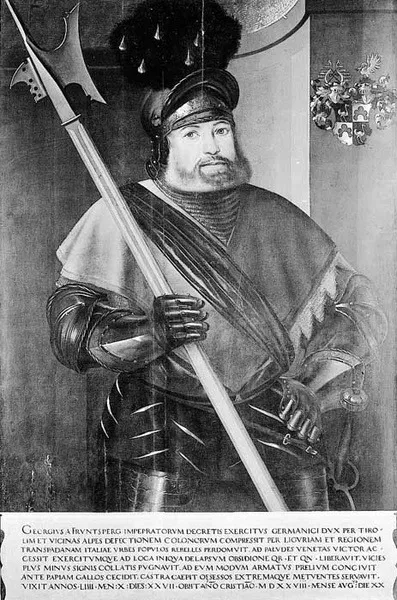
The field captain George of Frundsberg (1473-1528) is an unspecified painting by the Early Baroque Italian artist Christoph Amberger. It dates from 1538 and is held in the collection of the Gemäldegalerie Berlin.
About this work
Overview
Painted in 1538 by Christoph Amberger of Augsburg, this portrait depicts George von Frundsberg, a prominent German military commander of the early 16th century.
Painted in 1538 by Christoph Amberger of Augsburg, this portrait depicts George von Frundsberg, a prominent German military commander of the early 16th century. Amberger, influenced by the stylistic precision of Hans Holbein the Younger, rendered the subject with restrained elegance. The work resides in the Gemäldegalerie, Berlin, and exemplifies the tradition of German portraiture during the Reformation era, emphasizing dignity over ornamentation.
Subject & Meaning
George von Frundsberg was a respected leader of the Landsknechte, mercenary infantry forces loyal to the Habsburgs. The portrait captures him not in battle, but as a figure of authority, standing still, sword in hand, clad in fine but unadorned armor and a dark cloak. His direct gaze and composed demeanor convey a sense of duty and gravitas, reflecting his reputation as a disciplined commander rather than a flamboyant noble.
Technique & Style
Amberger employed a muted palette and precise brushwork to define the textures of fabric, metal, and skin. The dark, neutral background isolates the figure, focusing attention on the subtle modeling of his face and the crisp lines of his attire. The lighting is even and deliberate, avoiding theatrical contrast. This restrained approach aligns with Northern Renaissance ideals, prioritizing psychological presence over dramatic effect.
History & Provenance
Commissioned shortly after Frundsberg’s death in 1528, the portrait likely served as a commemorative tribute. It entered the collection of the Berlin Gemäldegalerie in the 19th century, following the consolidation of German princely holdings. Its survival through centuries of political upheaval underscores its status as a documented likeness of a key military figure, preserved for its historical rather than purely aesthetic value.
Context
Created during a period of religious and military turmoil in the Holy Roman Empire, the portrait reflects the rising importance of professional soldiers in imperial service. Unlike courtly portraits, it avoids heraldic symbols, instead emphasizing personal bearing. Amberger’s work aligns with a broader trend in German art that valued realism and individual character, particularly in depictions of civic and military leaders.
Legacy
The portrait remains one of the few confirmed likenesses of Frundsberg, offering insight into how military leaders were visually represented in post-1520 Germany. Amberger’s restrained style influenced later regional portraitists who favored sober realism. The painting continues to be studied for its documentation of 16th-century dress, military iconography, and the evolving role of the individual in early modern portraiture.
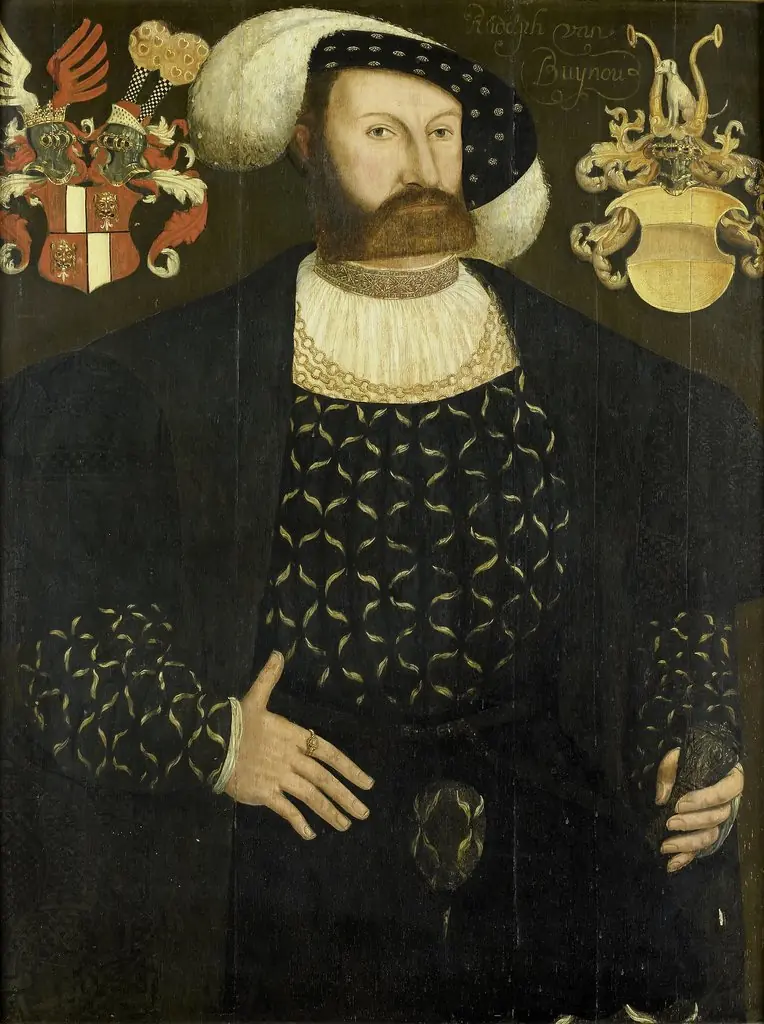
Artist & collection
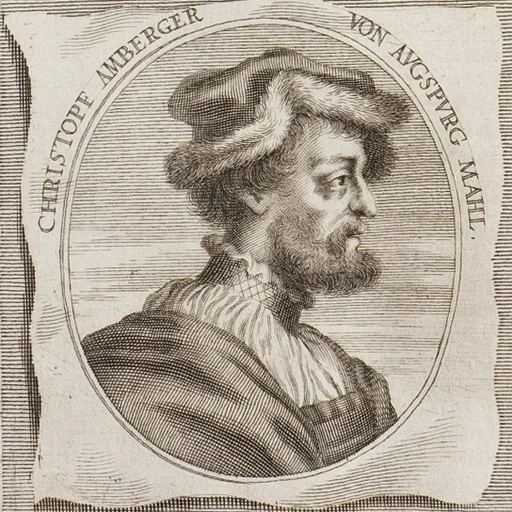
Artist
Christoph Amberger (c. 1505 – 1562) was a painter of Augsburg in the sixteenth century, a disciple of Hans Holbein, his principal work being the history of Joseph in twelve pictures.

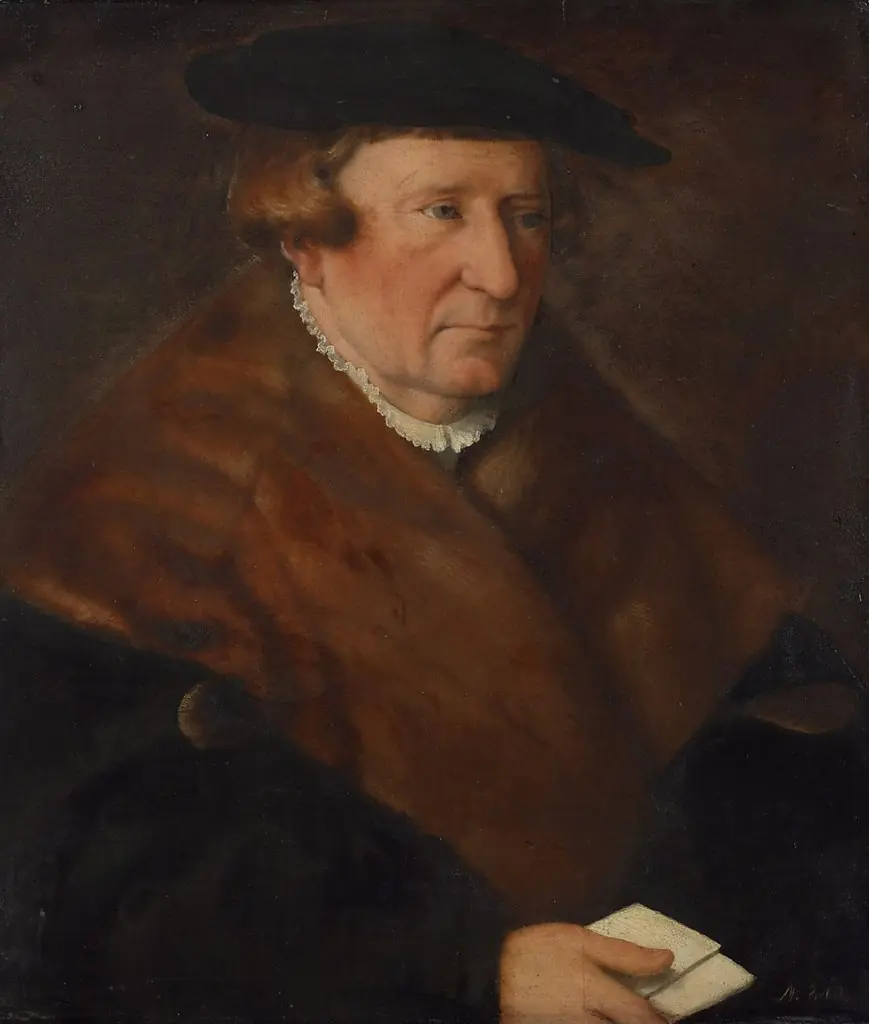
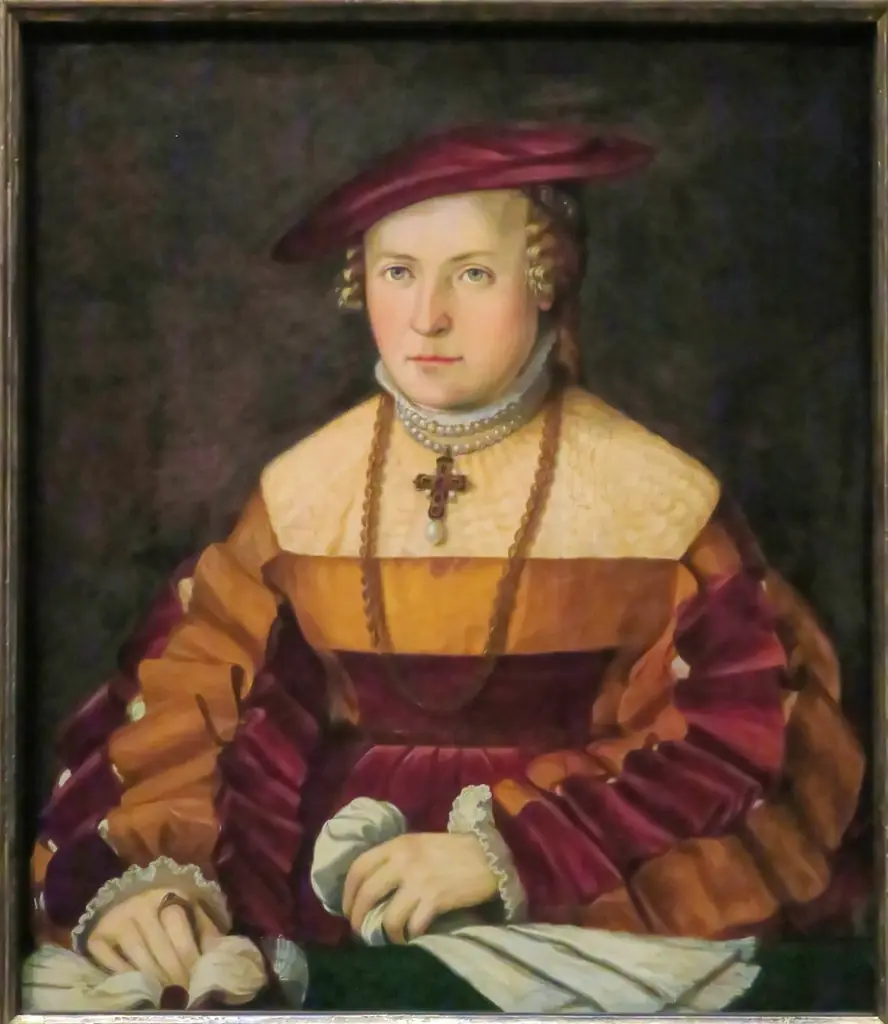
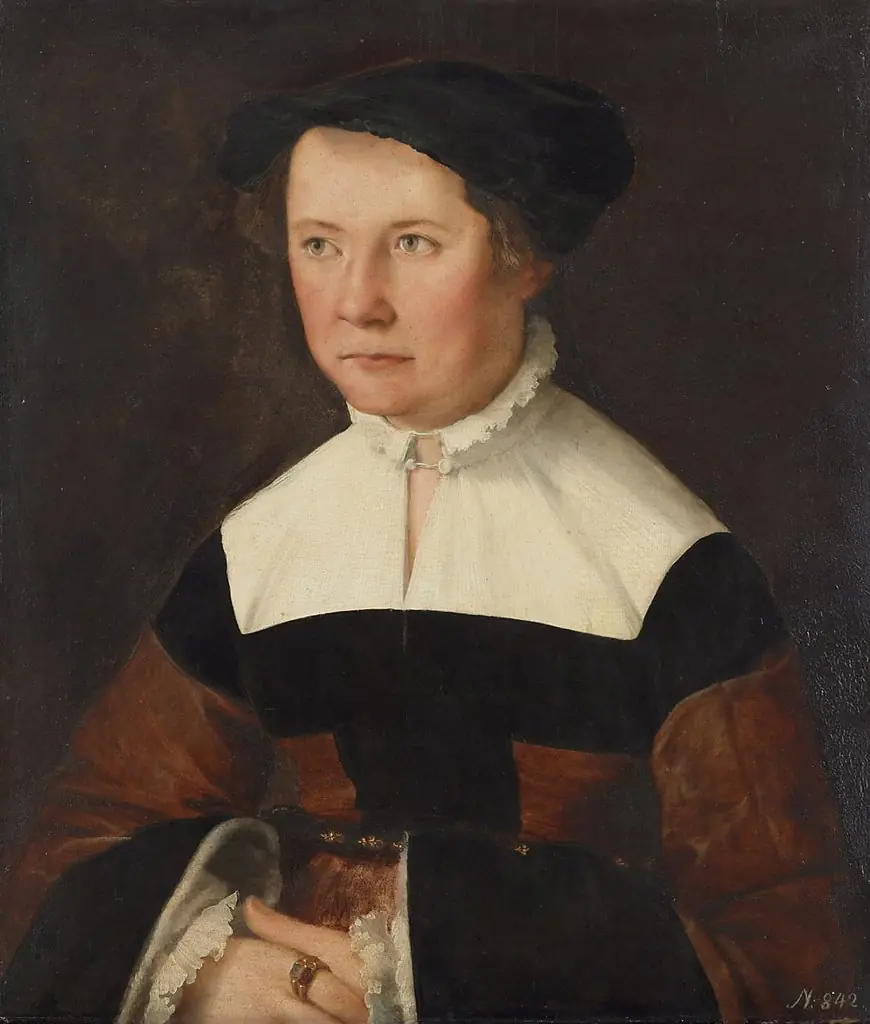
- Presumed Posthumous Portrait of Rudolph van Buynou (Bunau), Drossard of Stavoren and Chief Magistrate of Gaasterland
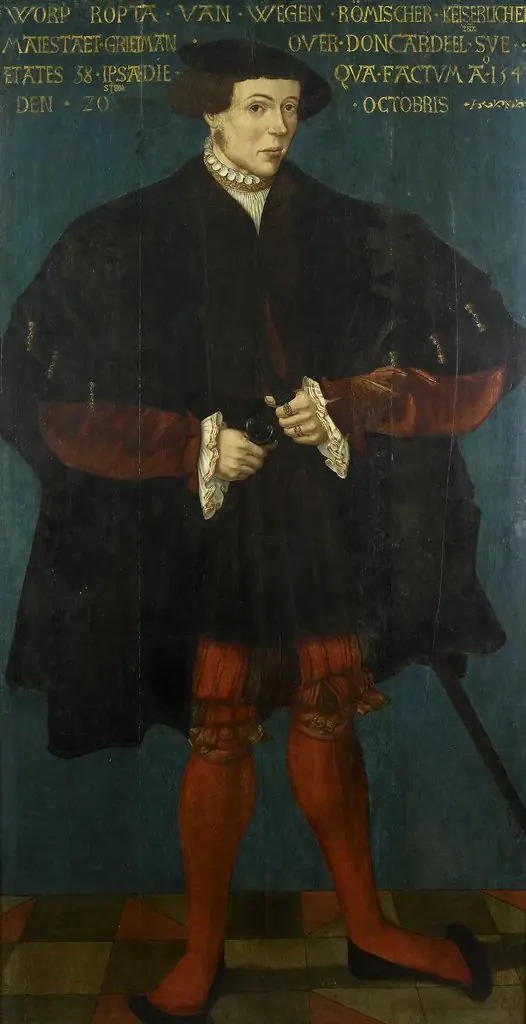 Portrait of Worp van Ropta, Chief Magistrate of East Dongeradeel
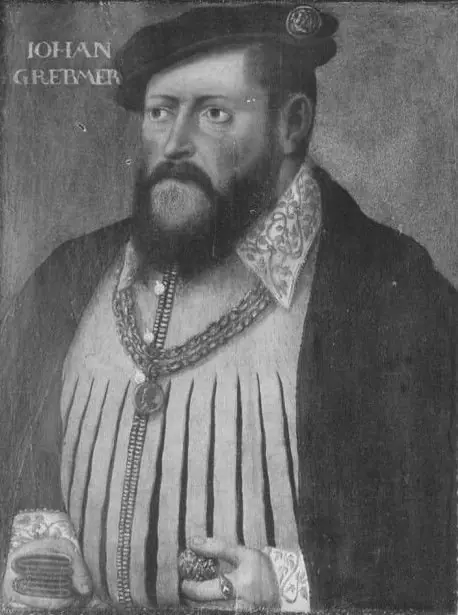 Bildnis des herzoglichen Kammerdieners Johann Grebmer zu Neuenhaus
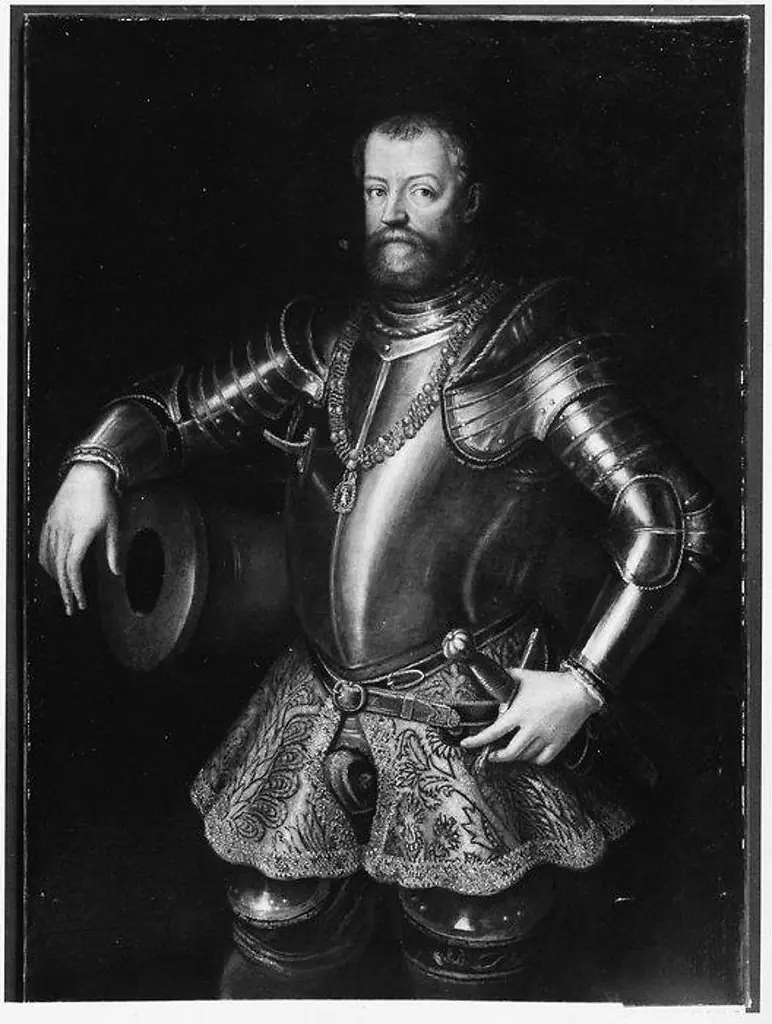 Alfonso I d'Este (1476–1534), Duke of Ferrara
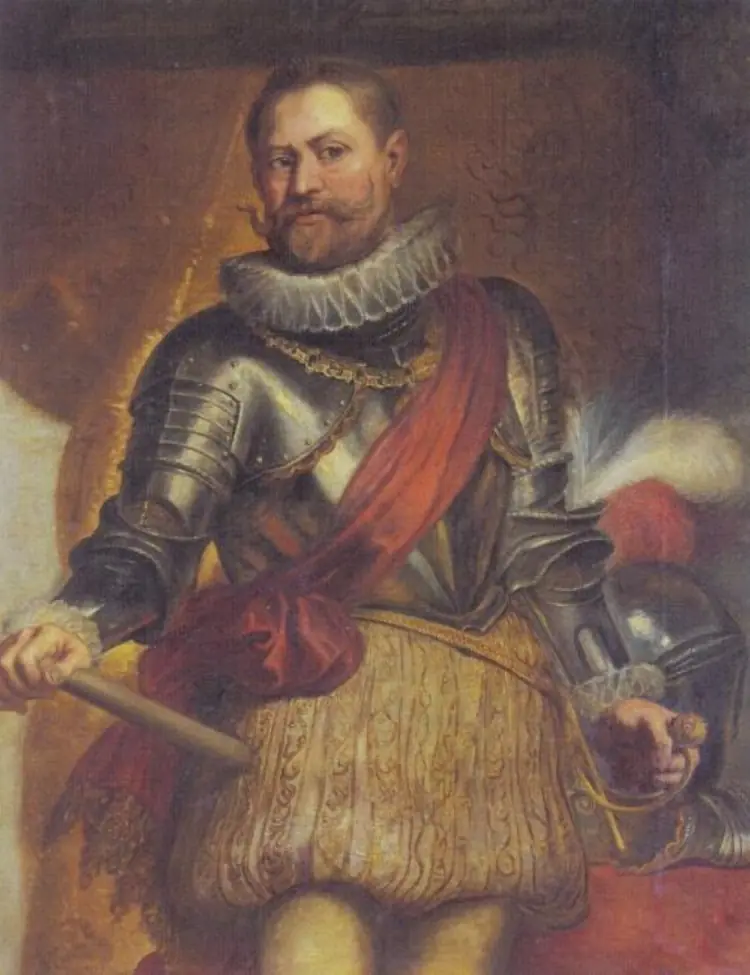 Portrait of Ernest, Archduke of Austria (1553-1595)
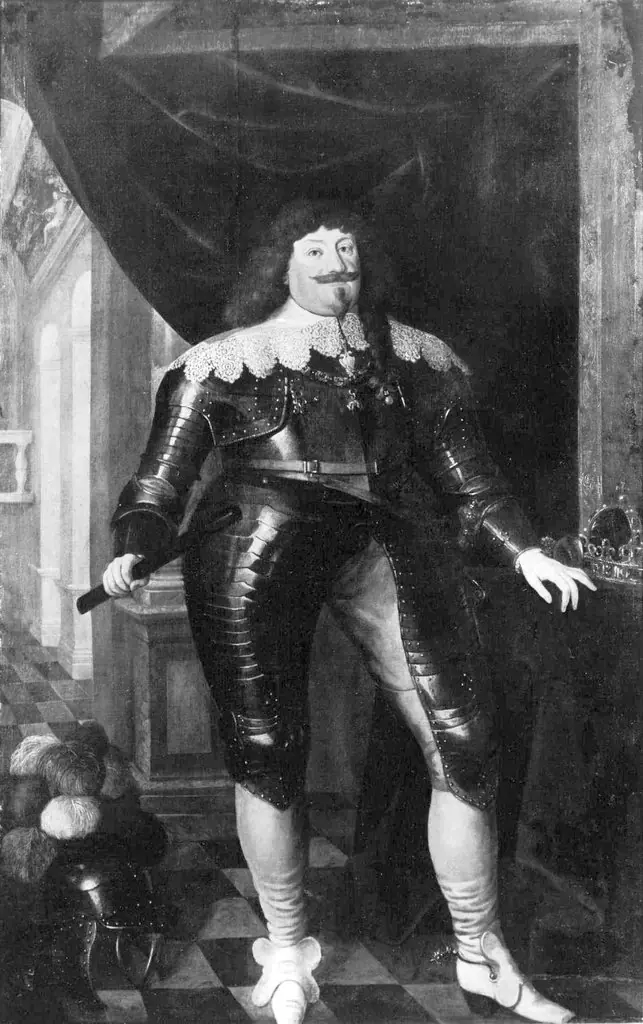 Portrait of King Władysław IV Vasa
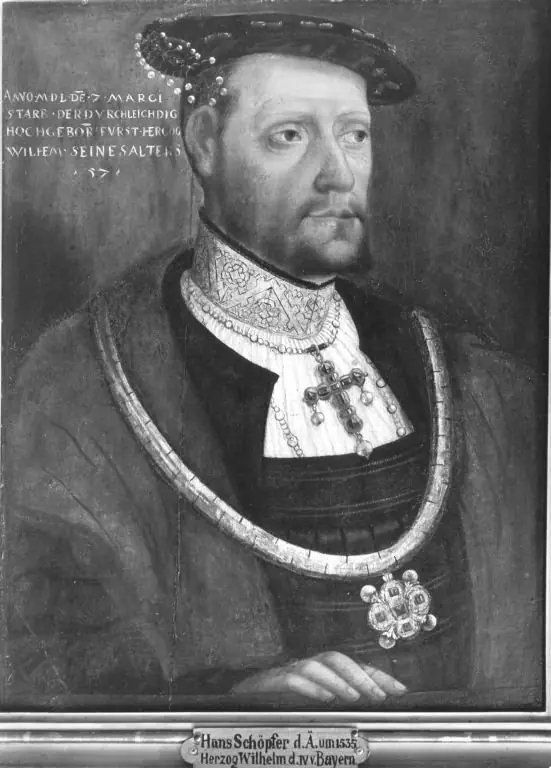 Herzog Wilhelm IV. von Bayern
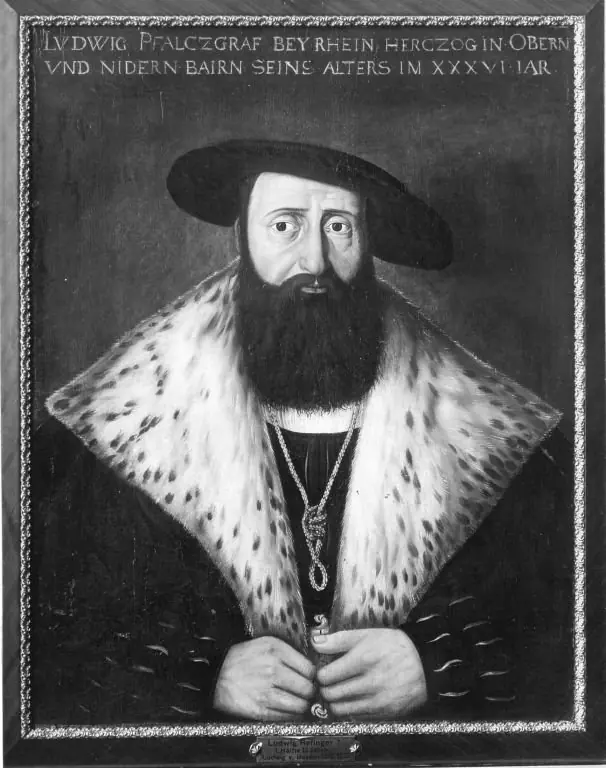 Portrait of Louis X of Bavaria
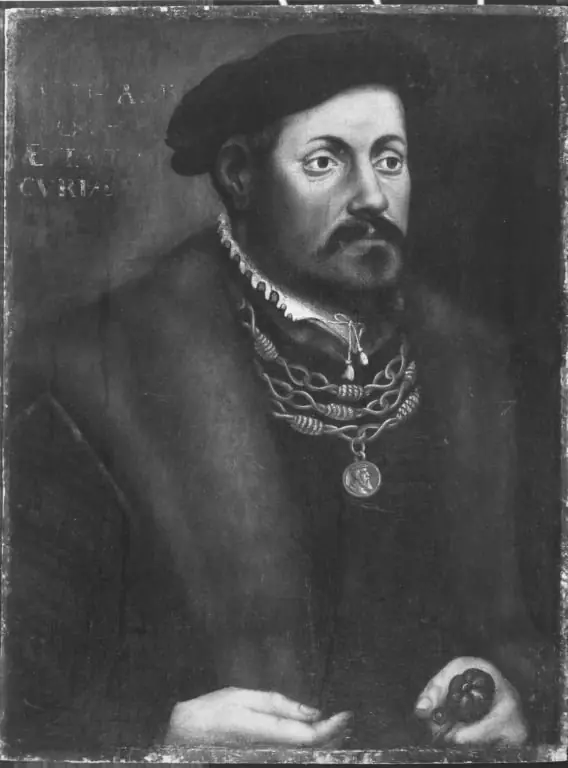 Portret of the councillor Wilhelm Lösch of Bavaria
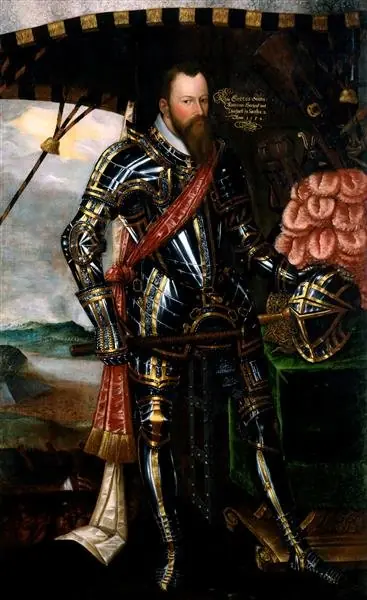 Kurfürst Moritz von Sachsen (1521-1553)
 Painting of Eitelfriedrich III von Zollern (1520)
 Leopold Dick