Artwork
Portrait of a Female Donor
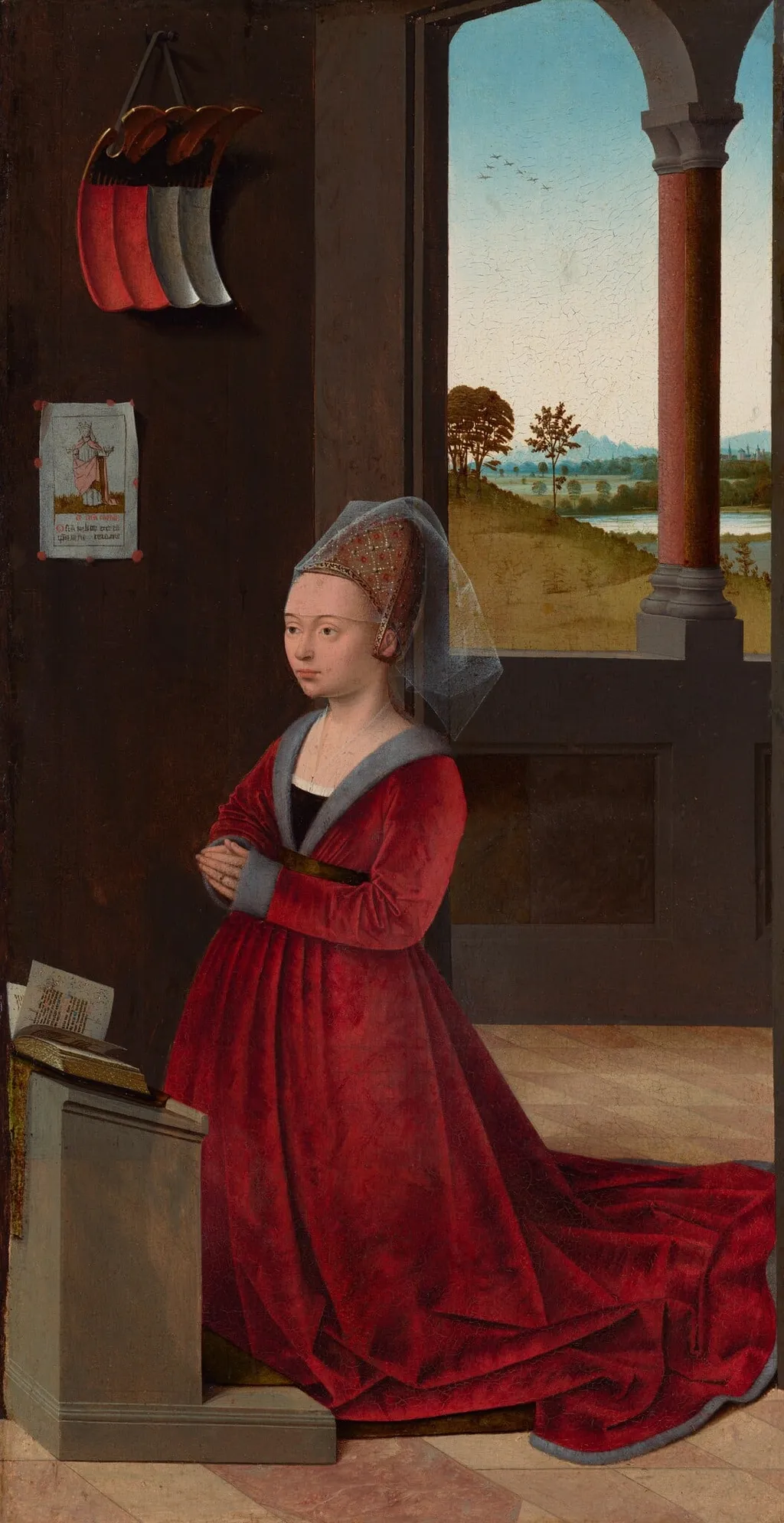
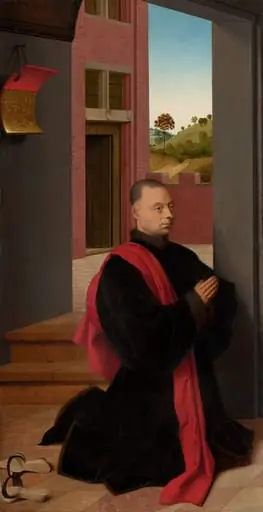
Portrait of a Female Donor is an oil painting by the Renaissance artist Petrus Christus. It dates from 1455 and is held in the collection of the National Gallery of Art.
- Inscription
- Inscribed:center left on woodcut: O s...a elisab. / O... / ...
About this work
Technique & Style
Executed in 1455, this portrait is an oil painting on a wooden panel support.
Executed in 1455, this portrait is an oil painting on a wooden panel support. The work measures 41.8 cm in height and 21.6 cm in width. As a product of the mid-15th century Netherlandish tradition, the application of oil paint on panel allowed for the detailed rendering characteristic of the artist's work.
The physical object currently resides within the Samuel H. Kress Collection at the National Gallery of Art in Washington, D.C.
History & Provenance
Dated to 1455, this oil on panel portrait by Petrus Christus has an uncertain early history. While sometimes associated with a private collection in Genoa, scholarly review finds no documentary basis for this origin in major eighteenth- or nineteenth-century guides to the city; the claim appears to rest solely on an unattributed note within curatorial files, and no matching donor portraits appear in the records of Carlo Giuseppe Ratti or Federigo Alizeri.
The first confirmed owner is Count Alessandro Contini Bonacossi, who possessed the work by 1937. That same year, the Samuel H. Kress Foundation purchased the painting from the Count. In 1961, the Foundation donated the artwork to the National Gallery of Art in Washington, D.C., where it remains part of the Samuel H. Kress Collection.
Overview
Created around 1455, this oil on panel work is attributed to the early Netherlandish painter Petrus Christus. It depicts a kneeling woman in a red garment, set within a modest interior that opens onto a tranquil landscape through a window. The composition balances the figure’s solemn posture with a simple domestic setting.
Subject & Meaning
The figure is presented as a donor, likely a patron who contributed to a religious institution, indicated by her modest gold chain and the presence of a saint’s portrait on the wall. Her kneeling pose and clasped hands suggest prayer or devotion, while the red dress emphasizes her status within the modest surroundings.
Context
The work belongs to a tradition of donor portraits that combined personal piety with visual commemoration. In the mid‑15th century, such images often accompanied altarpieces or were displayed in chapels, linking the patron’s earthly presence with the sacred space.
Artist & collection
Artist
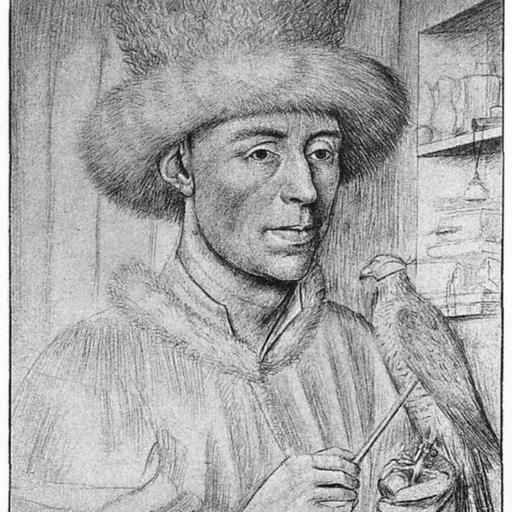
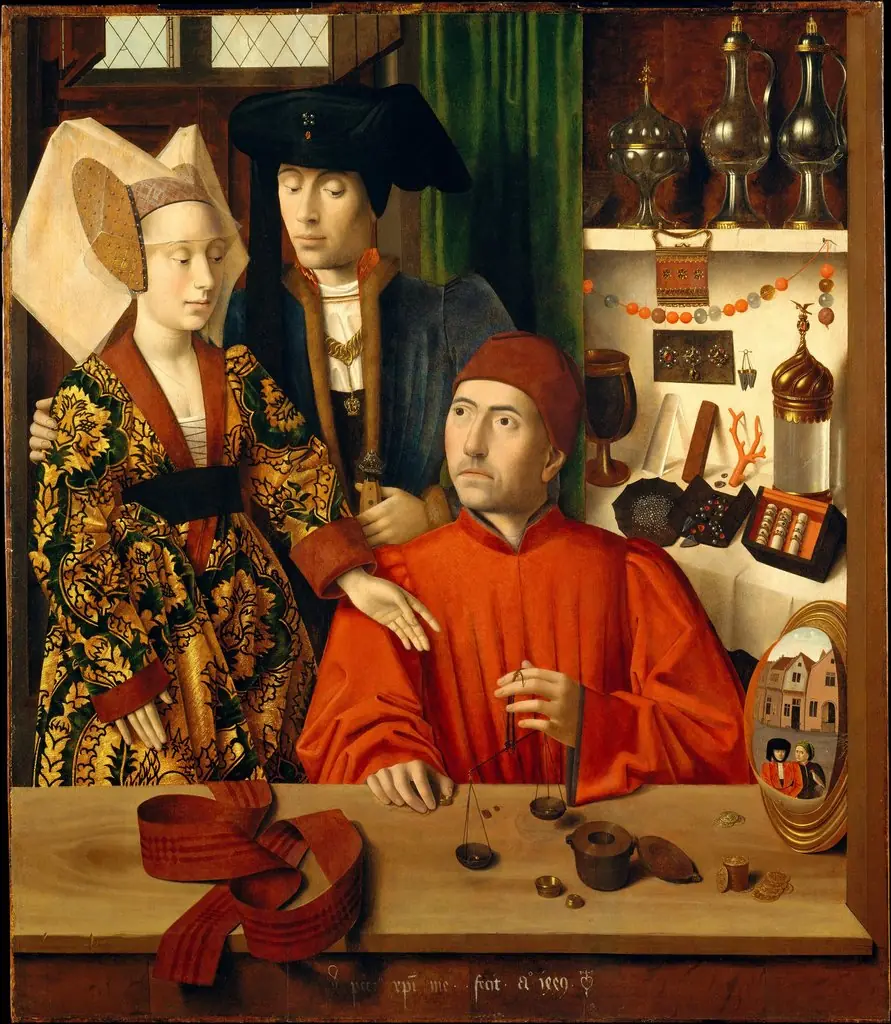
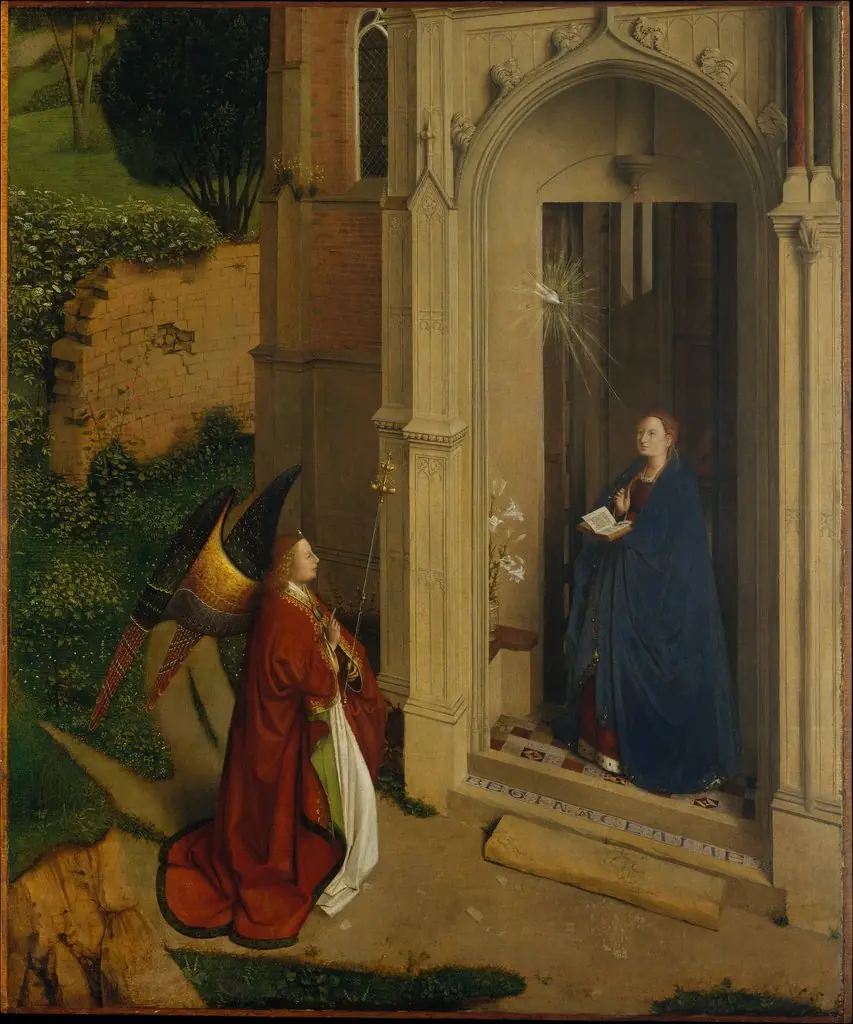
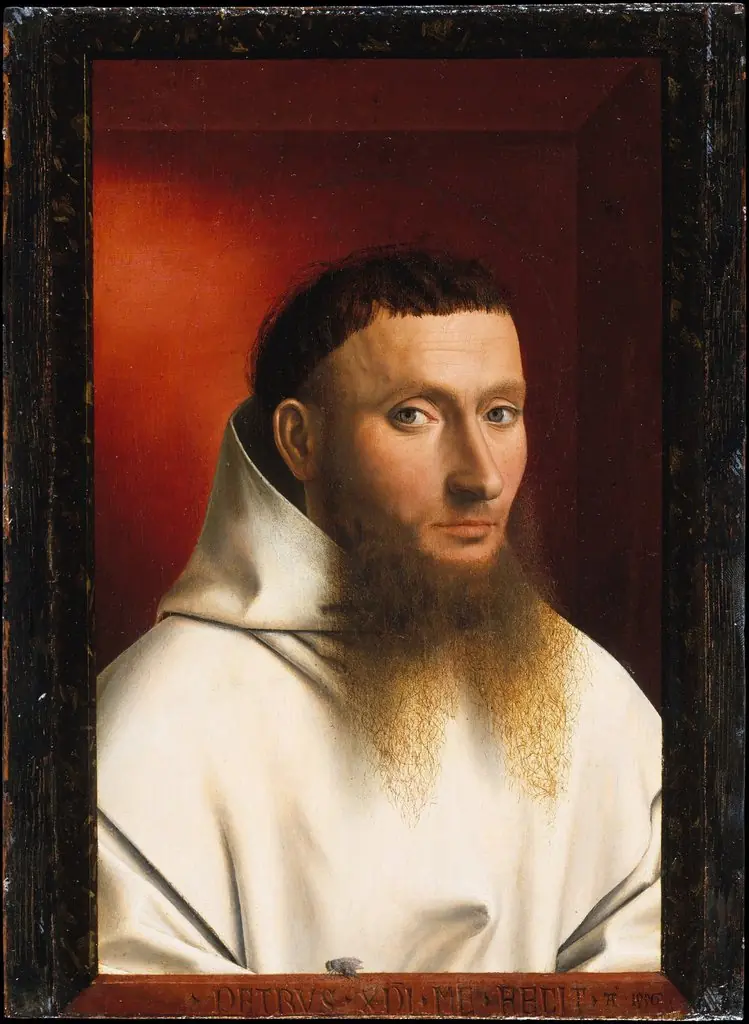
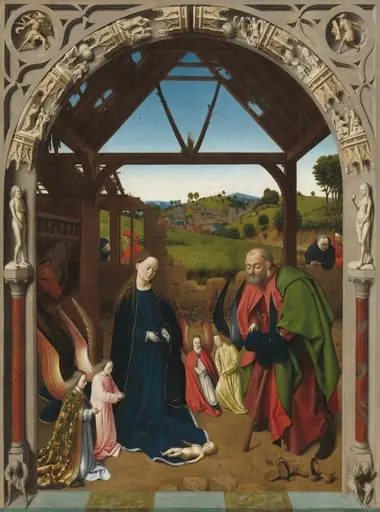
Petrus Christus (Dutch:; c. 1410/1420 – c. 1475/1476) was an Early Netherlandish painter active in Bruges from 1444, where, along with Hans Memling, he became the leading painter after the death of Jan van Eyck. He was…

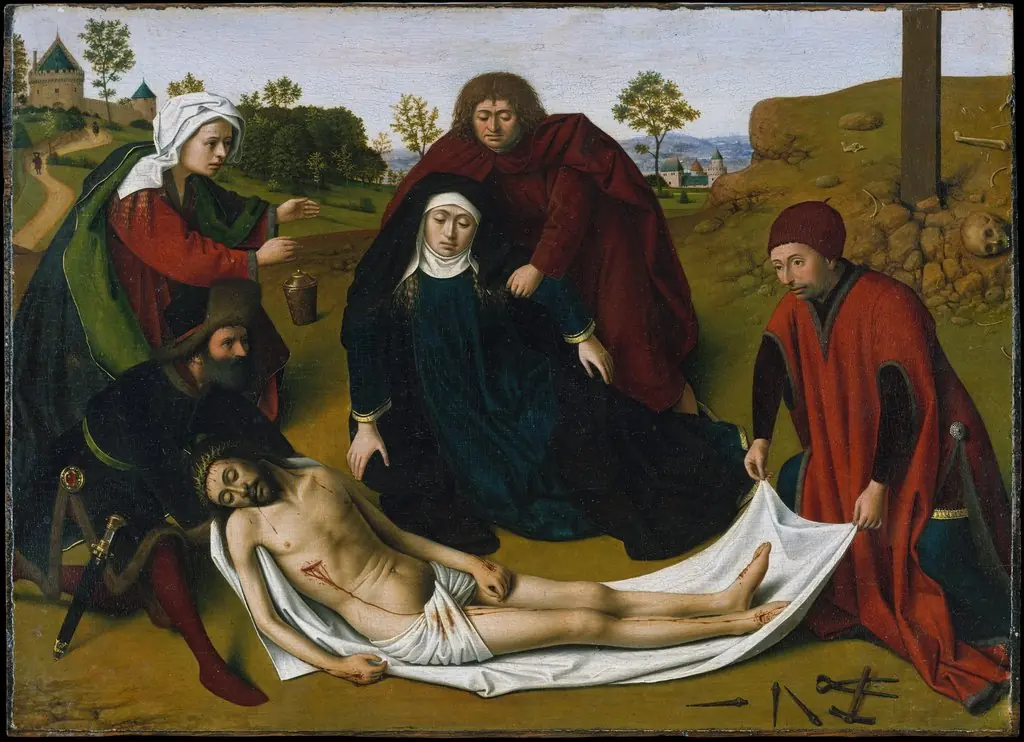
 Portrait of a Young Woman
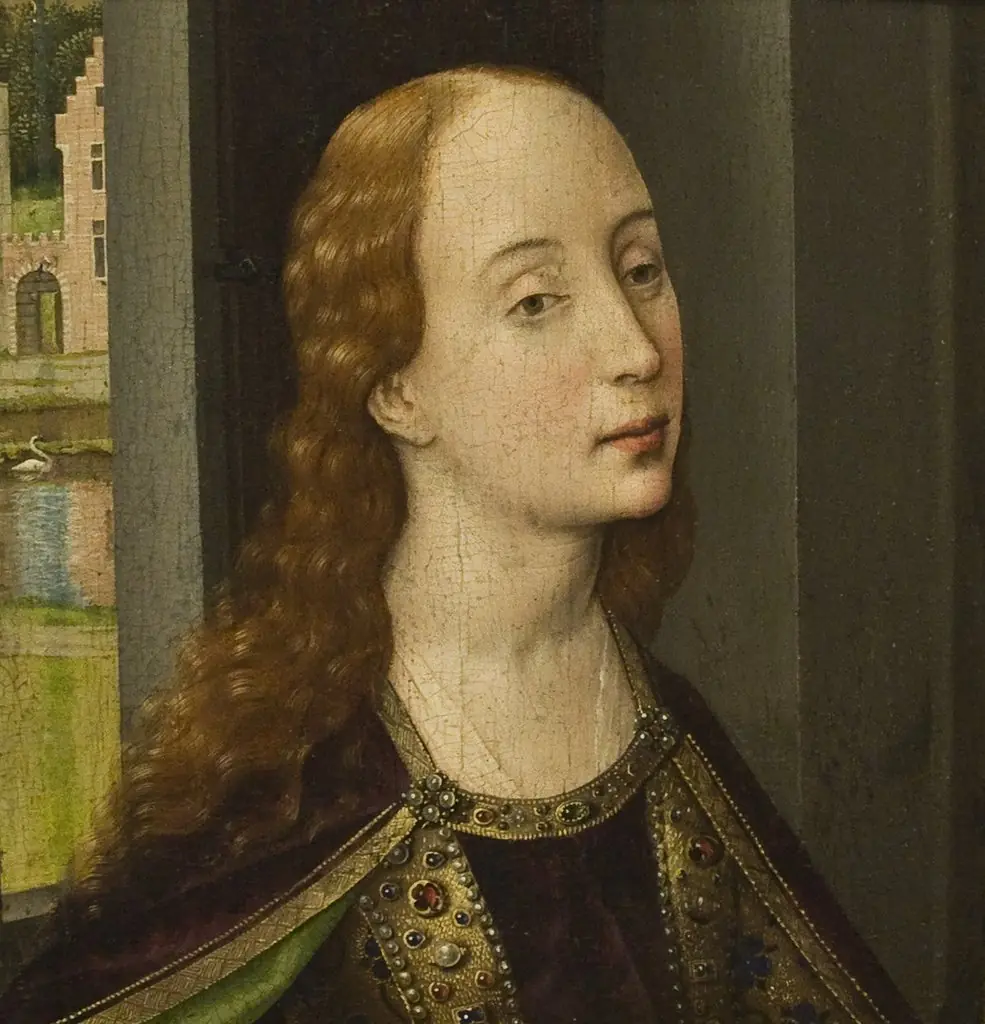 Bust of the Catherine (?)
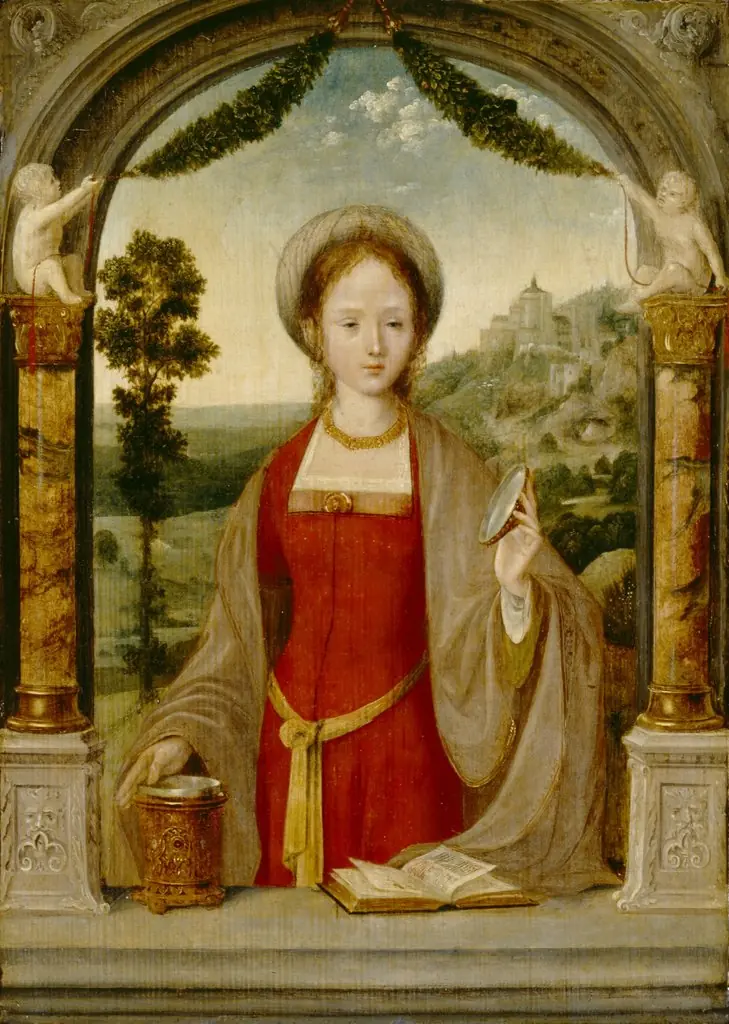 Mary Magdalene
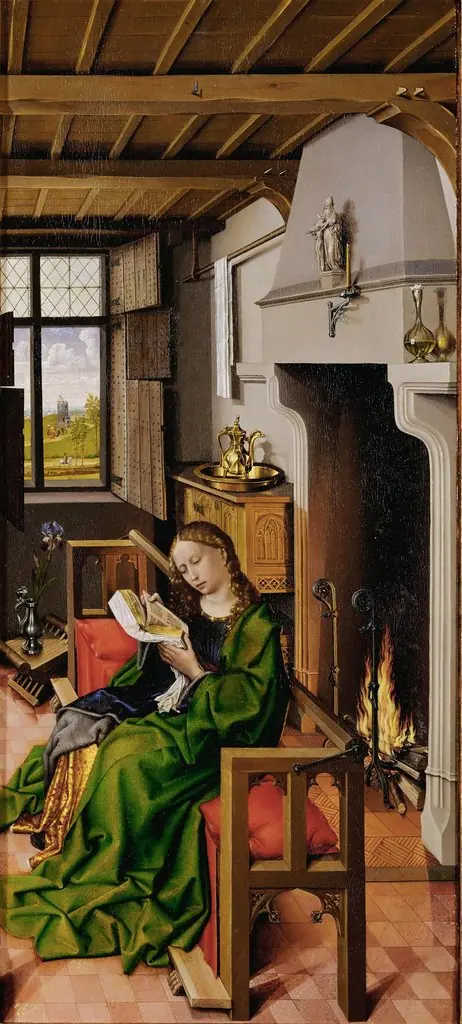 Saint Barbara Reading
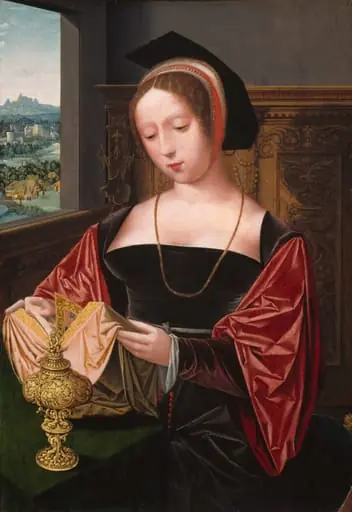
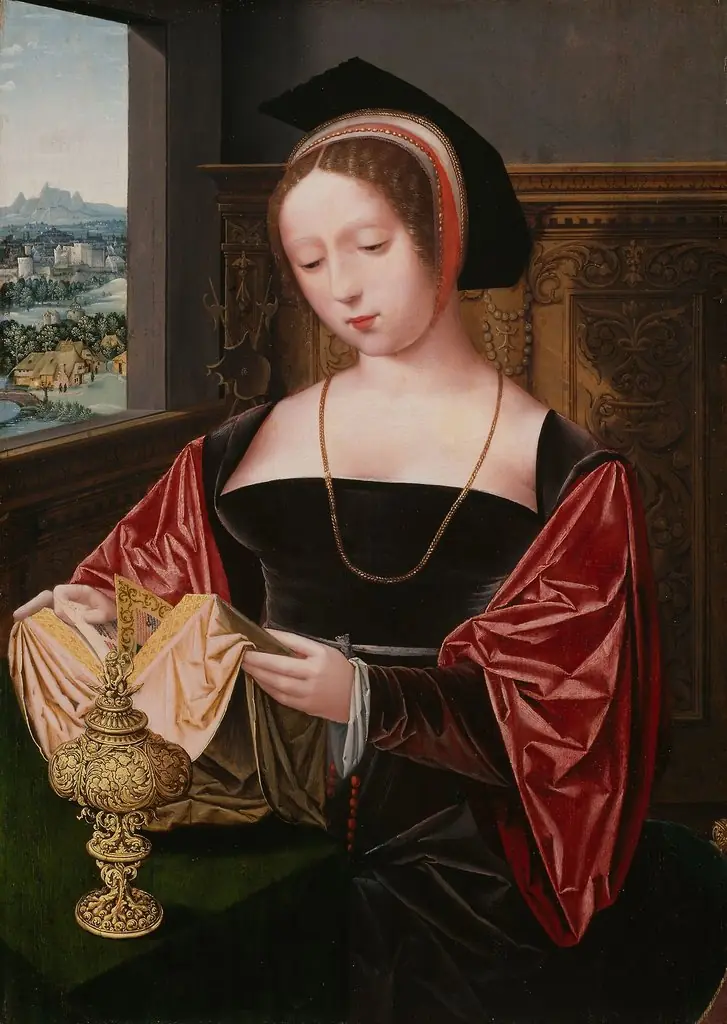 A Lady Reading as Mary Magdalene
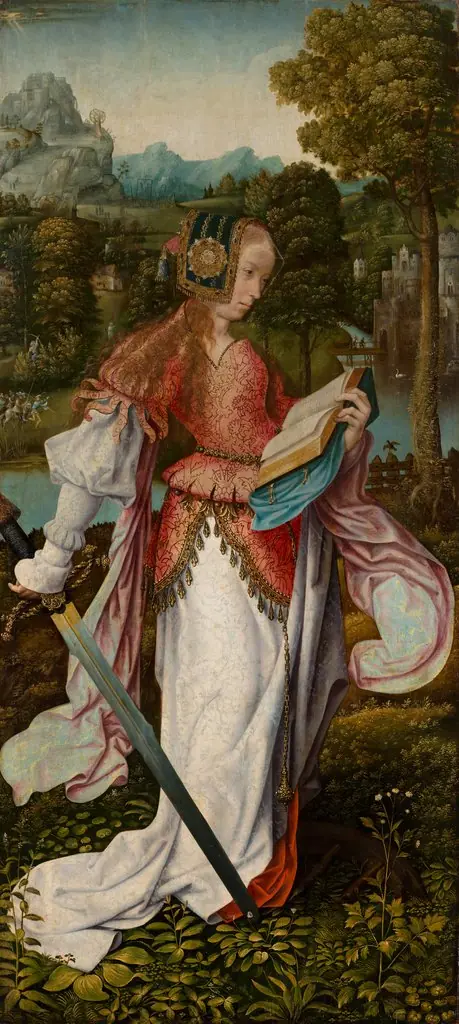 Saint Catherine
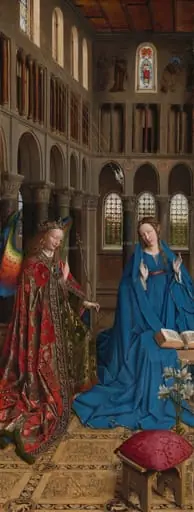 The Annunciation
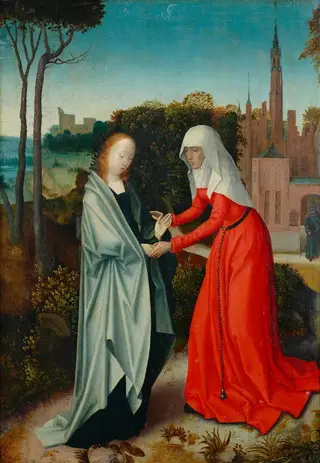 Heimsuchung Mariae zwischen St. Ursula mit den Zehntausend Jungfrauen und St. Martha. Aussenseiten der Flügel: Verkündigung Mariae
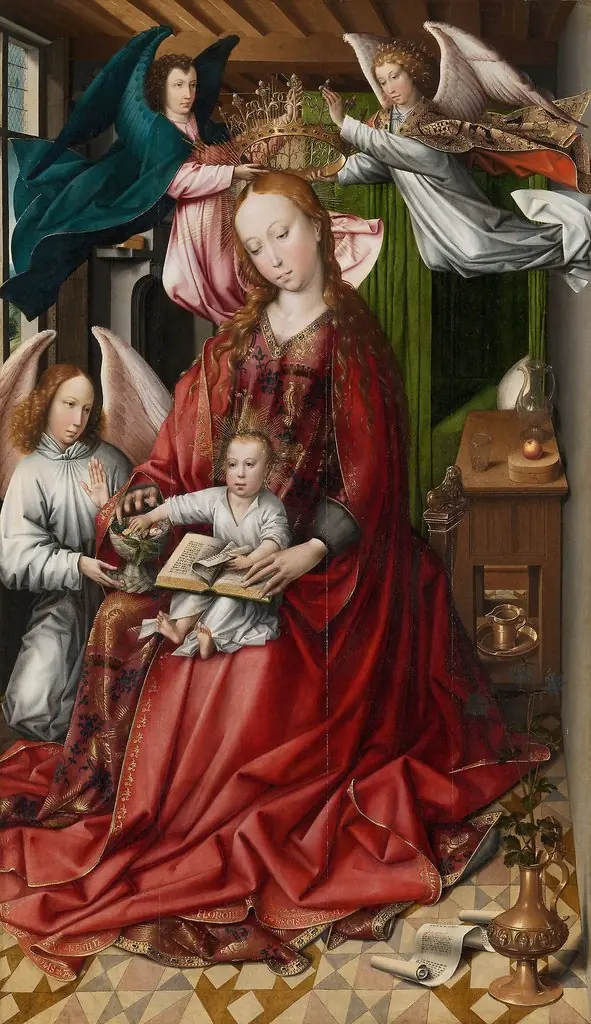 Virgin and Child Crowned by Angels
 The Virgin and Child Enthroned
 Dymphna and her Companions about to Embark
- A Lady Reading (Saint Mary Magdalene)