Artwork
Camille Monet on a Garden Bench
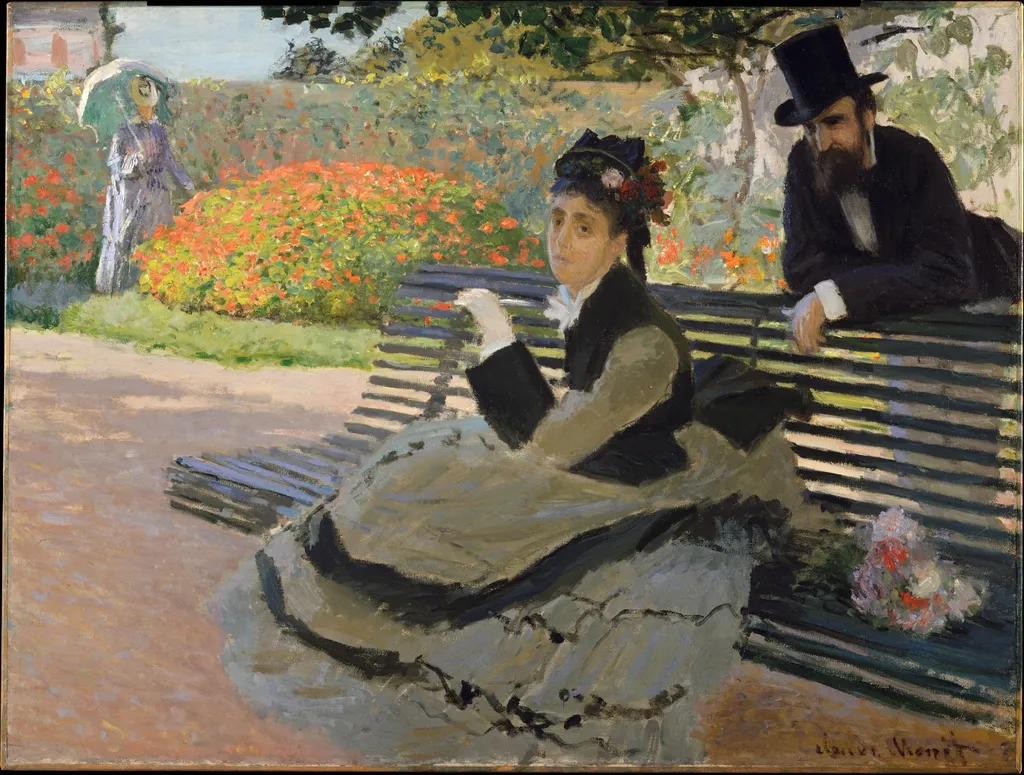
Camille Monet on a Garden Bench is an oil painting by the Impressionist artist Claude Monet. It dates from 1873 and is held in the collection of the Metropolitan Museum of Art.
About this work
Subject & Meaning
The painting depicts Camille Monet seated on a garden bench in Argenteuil, accompanied by an unidentified man in a top hat and a woman with a parasol.
The painting depicts Camille Monet seated on a garden bench in Argenteuil, accompanied by an unidentified man in a top hat and a woman with a parasol. Its iconography centers on Camille holding a letter, later identified by Monet as news of her father’s death in September 1873, conveyed through a faint horizontal white brushstroke in her left hand. The composition’s somber mood contrasts with Monet’s usual bucolic garden scenes, emphasizing private sorrow within a public leisure setting.
The man’s ambiguous presence, variously interpreted as a neighbor, admirer, or even a personification of death, introduces narrative tension, while the parasol-clad woman’s gaze toward the central figures suggests an external witness to the unfolding event. Monet’s use of shifting light and shadow further underscores the emotional weight, with the bright garden backdrop giving way to a darkened foreground where a hastily painted bouquet of red flowers on the bench serves as a chromatic counterpoint to Camille’s muted gray-green dress.
Technique & Style
Executed in oil on canvas in 1873, Camille Monet on a Garden Bench exemplifies Monet’s plein-air practice and Impressionist technique. The composition employs rapid, abbreviated brushwork to capture fleeting light effects across the sunlit garden and shadowed foreground, with particular attention to the contrast between the bright red geraniums and the muted tones of Camille’s grey-green damask dress. The handling is notably wet-into-wet in passages such as the loosely painted bouquet on the bench, where short, unblended strokes establish color accents without linear definition.
The horizontal format (60.6 × 80.3 cm) frames the scene within a garden at Argenteuil, where Monet emphasized optical sensation over descriptive detail, using broken color and tonal gradation to convey the shifting conditions of natural light.
History & Provenance
Claude Monet painted Camille Monet on a Garden Bench in 1873, an oil on canvas measuring 60.6 × 80.3 cm. The work originated in the garden of Monet’s home in Argenteuil, where his first wife Camille Doncieux is depicted seated on a bench, holding a letter that may refer to her father's death later that year. After leaving the artist’s studio the painting passed through Berlin dealer Bruno and Paul Cassirer, was bought by Eduard Arnhold for about 10,000 marks, and entered the Arnhold collection, later passing to his widow Johanna, daughter Elisabeth, and then to Basel dealer Peter Gutzwiller. It was sold in New York through Knoedler & Co to Edwin Vogel, then to Sam Salz, Henry Ittleson Jr., Acquavella Galleries, Alex Reid & Lefevre, and finally to Walter and Leonore Annenberg, who gifted it to the Metropolitan Museum of Art in 2002.
Since 2002, Camille Monet on a Garden Bench has been held by the Metropolitan Museum of Art in New York, gifted to the museum following the death of Walter Annenberg. Prior to entering the museum's collection, the painting was exhibited at the Berlin Secession in 1903. Later exhibitions include New York Collects at the Metropolitan Museum of Art in 1968, and a multi-venue touring exhibition titled Masterpieces of Impressionism & Post-Impressionism: The Annenberg Collection, which traveled to the Philadelphia Museum of Art in 1989, the National Gallery of Art in Washington and the Los Angeles County Museum of Art in 1990, and the Metropolitan Museum of Art in 1991.
Most recently, it was featured in the 2013 exhibition Impressionism, Fashion, and Modernity at the Metropolitan Museum of Art.
Context
Painted in 1873 during Monet's residence in Argenteuil, this work represents a pivotal moment in the artist's transition away from figure-centric genre scenes toward the landscape and series paintings that would define his later career. Scholars note that while the garden setting appears in numerous contemporary works, this canvas is distinct for its somber mood, reflecting the news of Camille Doncieux's father's death received in September 1873. Art historical analysis highlights the tension between the idyllic Impressionist technique and the narrative ambiguity of the figures, particularly the man in the top hat whom Monet identified merely as a neighbor, though some interpret him as a symbol of death.
The painting exemplifies the movement's focus on capturing fleeting light effects on fabric and foliage while simultaneously engaging with modern social dynamics and personal grief. It remains one of the few outdoor scenes where human figures dominate the composition before Monet shifted his primary focus to environmental studies.
Legacy
Since its first public showing at the 1903 Berlin Secession, the work has been featured in major retrospectives of the Annenberg Collection, including exhibitions at the Metropolitan Museum of Art (1968, 1991) and traveling shows in Philadelphia, Washington, and Los Angeles. Its provenance through Eduard Arnhold, subsequent ownership by Annenberg, and donation to the Met in 2002 cemented its status as a cornerstone of Monet’s oeuvre. Scholars highlight its somber mood and the ambiguous figure of the neighbor, interpreting it as a meditation on mortality.
The painting is cited as Monet’s last major outdoor genre scene with figures, influencing later works such as “Woman on a Bench” and “The Walk”.
Overview
This oil painting, created by Claude Monet in 1873, is titled Camille Monet on a Garden Bench. It captures a tranquil outdoor scene featuring the artist's wife. The work exemplifies the emerging Impressionist style, characterized by its focus on light and atmosphere.
It is currently part of the collection at The Metropolitan Museum of Art, offering a glimpse into domestic life during the period.
Own this work as a print
Artist & collection
Artist
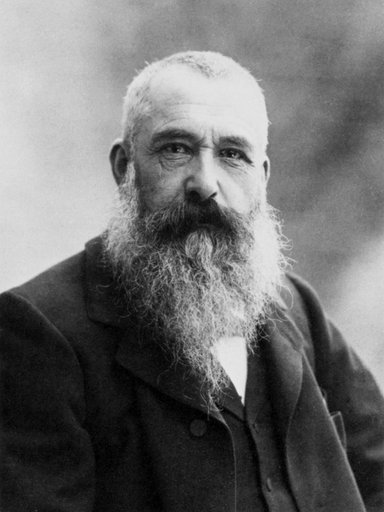
Oscar-Claude Monet was a French painter and founder of Impressionism who is seen as a key precursor to modernism, especially in his attempts to paint nature as he perceived it.

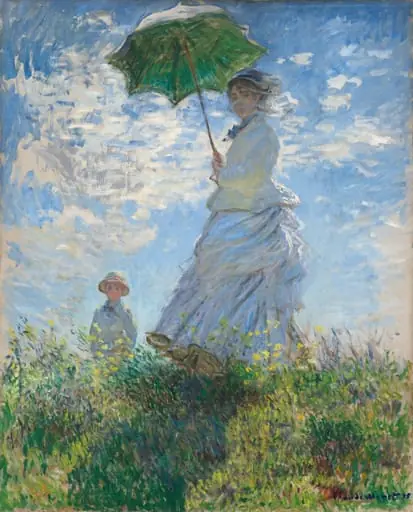
- Camille Monet und ihr Sohn Jean in Argenteuil
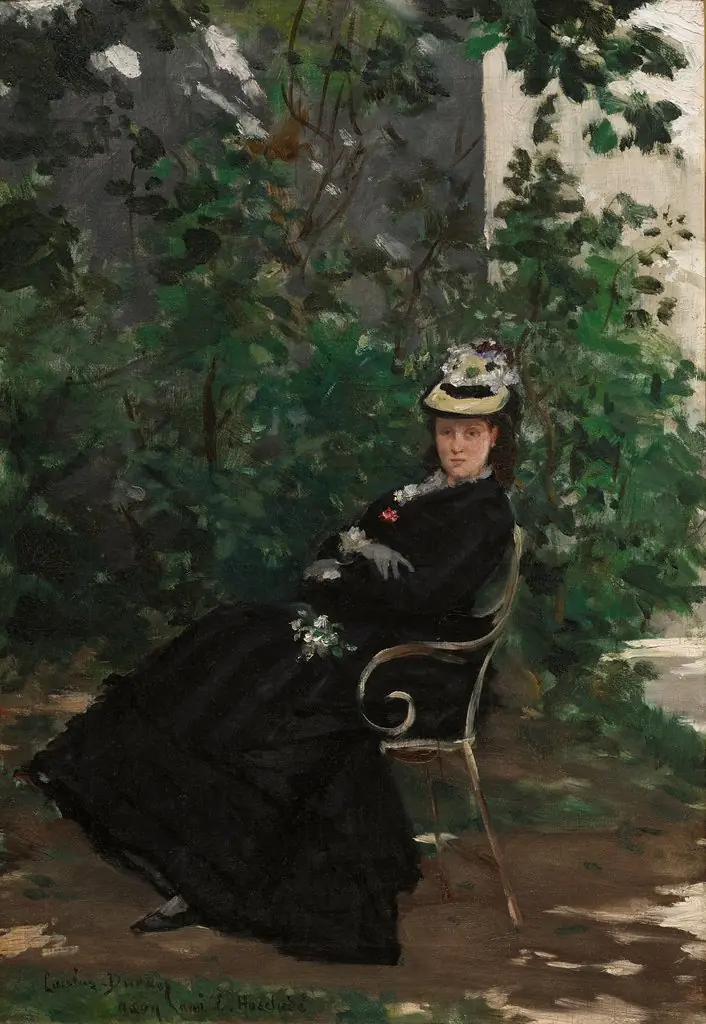 Portrait of Madame Alice Hoschede
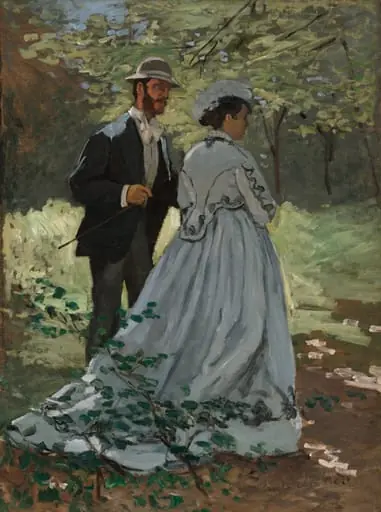 Bazille and Camille (Study for "Déjeuner sur l'Herbe")
 Dancers Backstage
 Madame Monet and Her Son
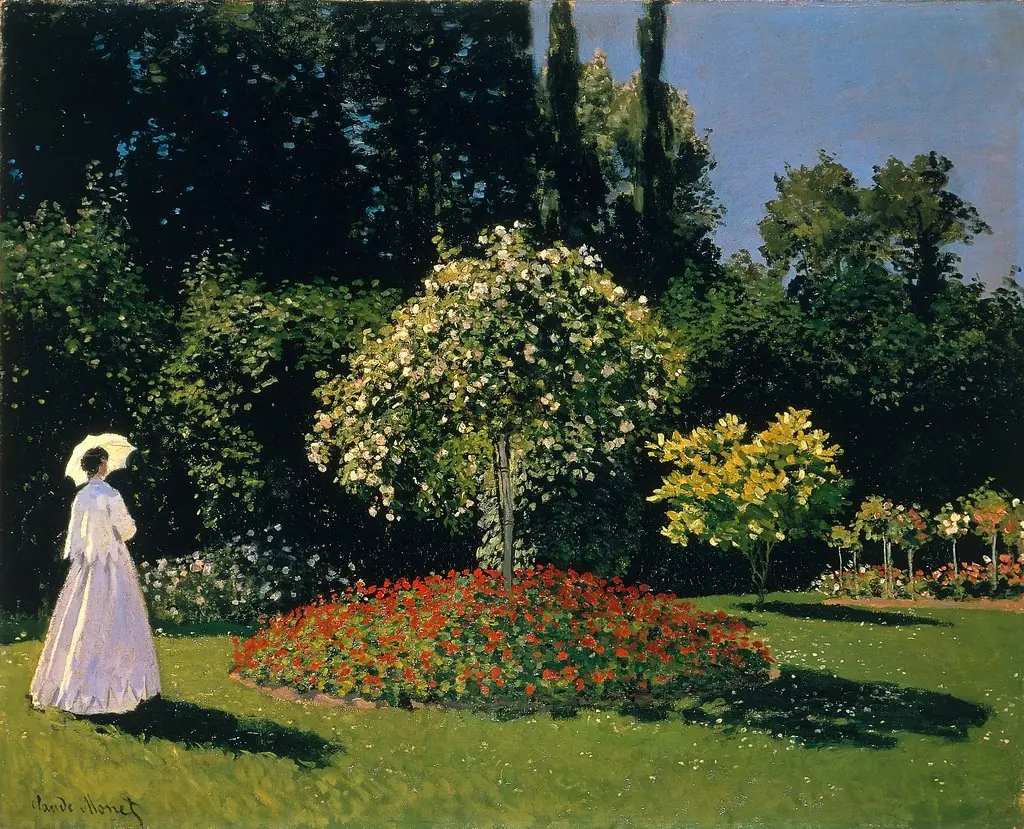 Woman in the Garden
 John Lewis Brown with Wife and Daughter
 Sunday at the Bois de Boulogne
 The Monet Family in Their Garden at Argenteuil
 Young Woman Knitting
 At Mouquin's
 At Mouquin's