Artwork
Dire que je vais être... exposé...
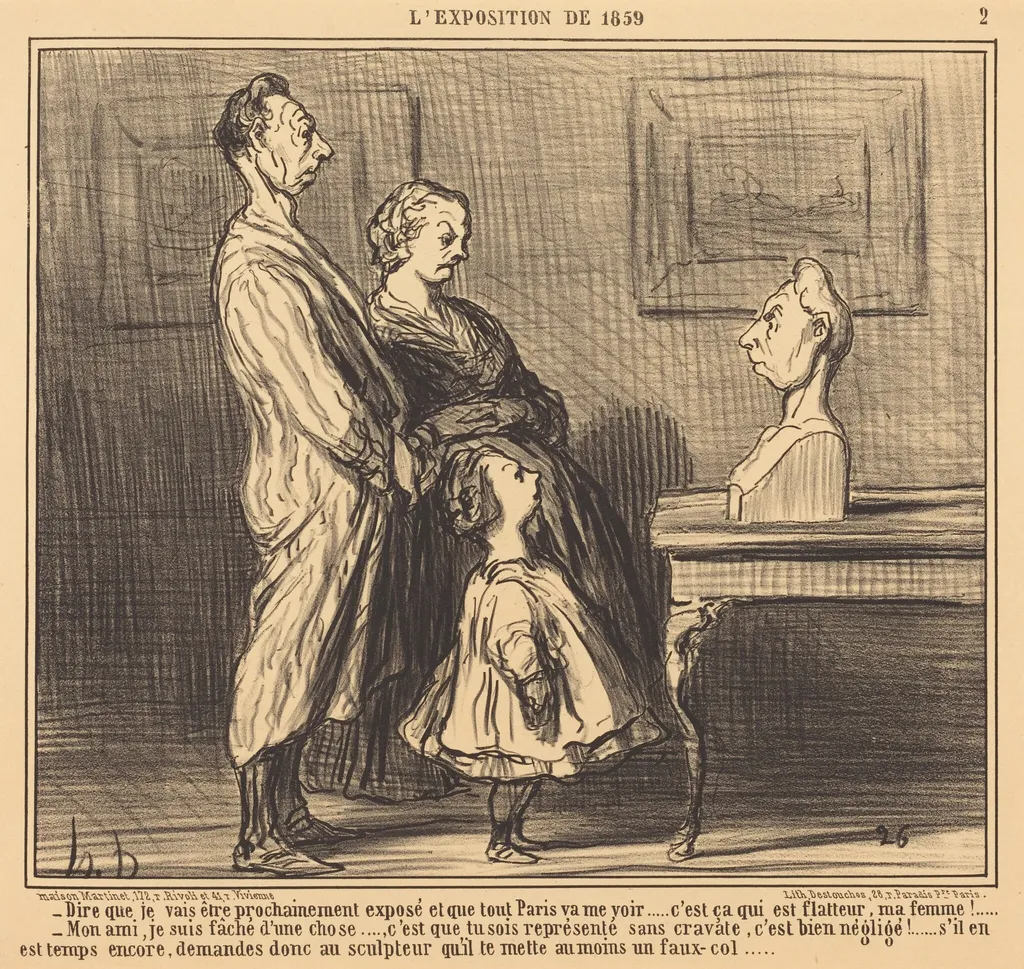
Dire que je vais être... exposé... is an ink print by the Impressionist artist Honoré Daumier. It dates from 1859 and is held in the collection of the National Gallery of Art. Created in 1859, this black lithograph on wove paper presents a domestic interior populated by a man, a woman, and a child.
- Inscription
- Inscribed:lower left in stone: h.D; lower right in stone: 26; upper center in plate: L'EXPOSITION DE 1859; upper right in plate: 2; lower left in plate: Maison Martinet, 172, r. Rivoli et 41, r. Vivienne; lower right in plate: Lith. Destouches, 28, r. Paradis Pre. Paris.; across bottom in plate: _Dire que je vais être prochainement exposé et que tout Paris va me voir ..._; by later hand, lower left in graphite: 3136 ii/ii; by later hand. lower right in graphite: R[?]
About this work
Overview
Created in 1859, this black lithograph on wove paper presents a domestic interior populated by a man, a woman, and a child. The figures stand before a plain wall and a modest pedestal bust, while a window admits a faint glow. The composition is rendered with swift, sketch‑like lines that emphasize the scene’s humor and social commentary.
Subject & Meaning
The central male figure appears rigid and irritated, his expression underscored by a caption that jokes about his lack of a cravat, a symbol of respectable attire. The surrounding family members and the modest setting suggest a critique of bourgeois pretensions and the public exposure of personal shortcomings, a common target in the artist’s satirical work.
Technique & Style
Executed as a lithograph, the image relies on black ink applied to a wove paper surface, allowing for fine, rapid strokes that convey immediacy. The artist’s use of loose, gestural lines creates a caricatured effect, while the contrast between dark figures and the light‑filled window heightens the visual punch of the satire.
History & Provenance
The print was produced for the mid‑nineteenth‑century French periodicals La Caricature and Le Charivari, venues through which the creator regularly voiced republican criticism of monarchy, aristocracy, and clergy. Its publication in these widely circulated newspapers ensured a broad readership, reflecting the artist’s strategy of using affordable print media to disseminate political commentary.
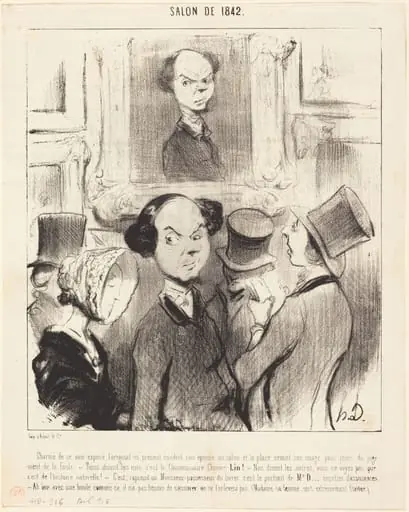
Own this work as a print
Artist & collection
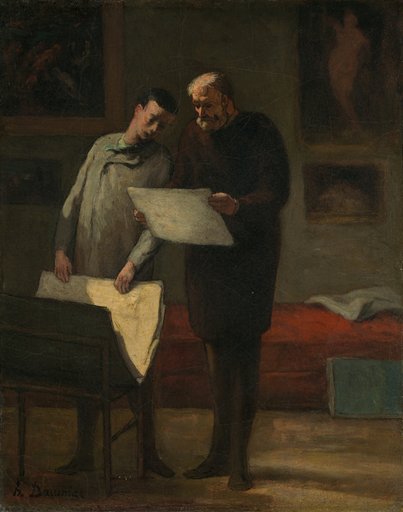
Artist
Honoré-Victorin Daumier (French: ; 26 February 1808 – 10 or 11 February 1879) was a French painter, sculptor, and printmaker, whose many works offer commentary on the social and political life in France, from the…









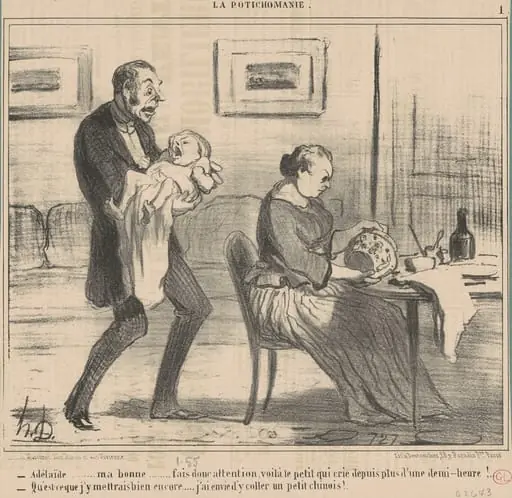 Adélaide ... ma bonne ... fais donc ...
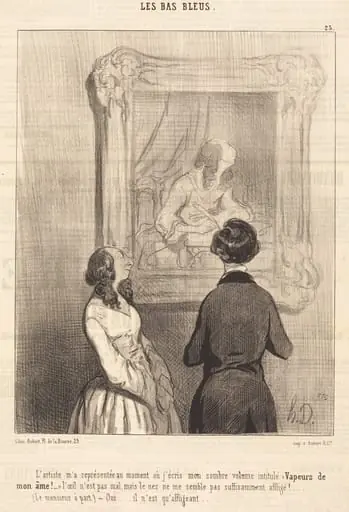 L'Artiste m'a représentée au moment ou j'écris
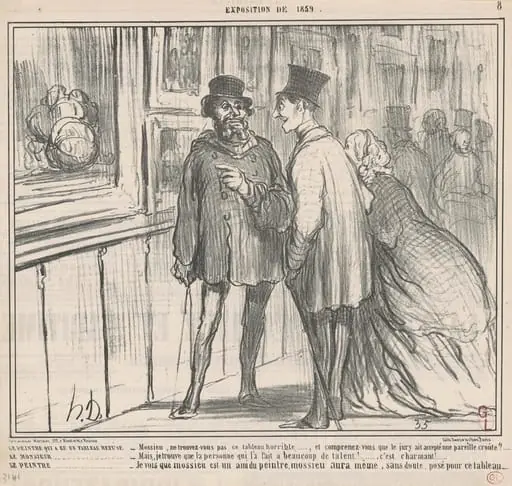 Le peintre qui a eu un tableau refusé ...
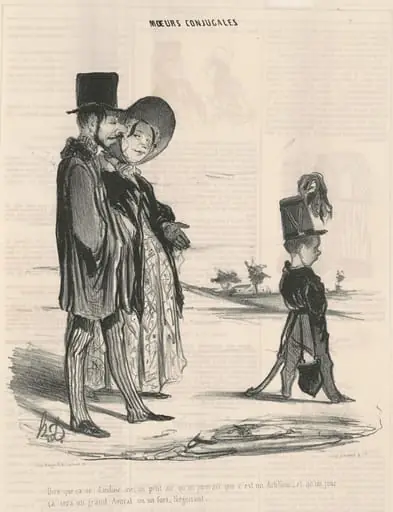 Dire que ça si dandine avec un petit air...
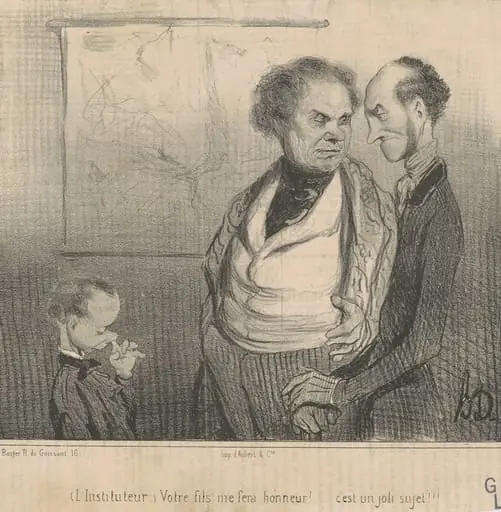 L'instituteur: votre fils me fera honneur!...
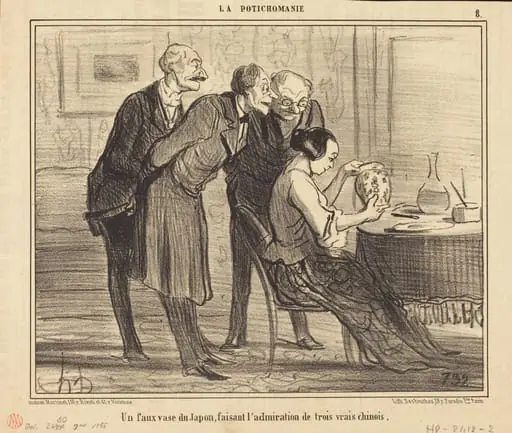 Un Faux vase du Japon faisant...
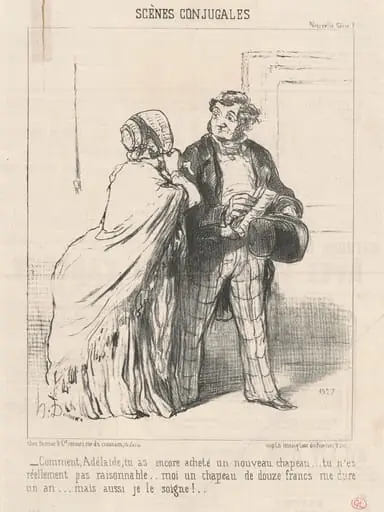 Comment ... tu as encore acheté un ... chapeau ...
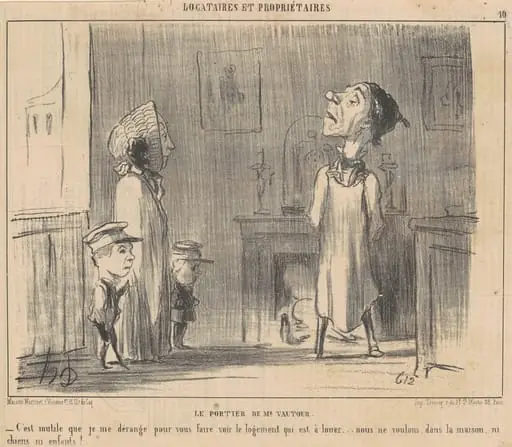 Le portier de Mr Vautour
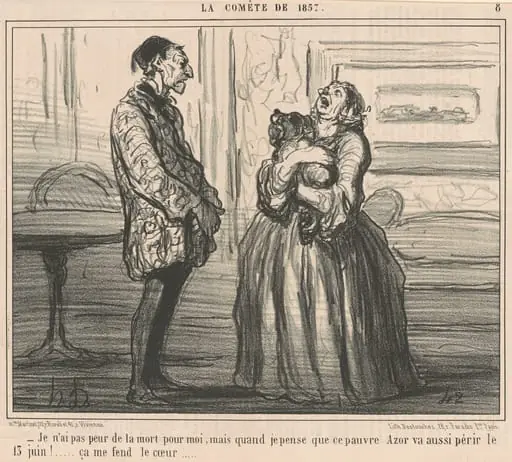 Je n'ai pas peur de la mort pour moi ...
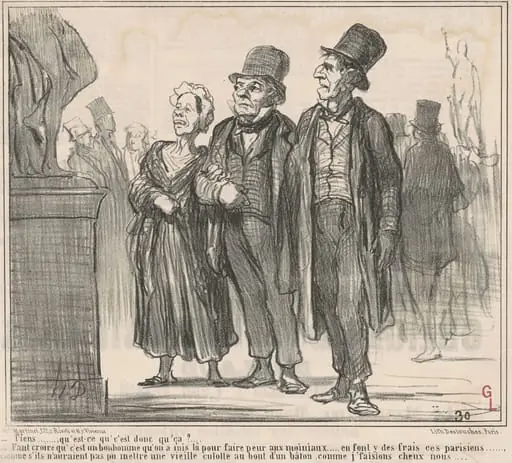 Tiens ... qu'est-ce qu'c'est donc qu'ça? ...