Artwork
Portrait of Pablo de Valladolid
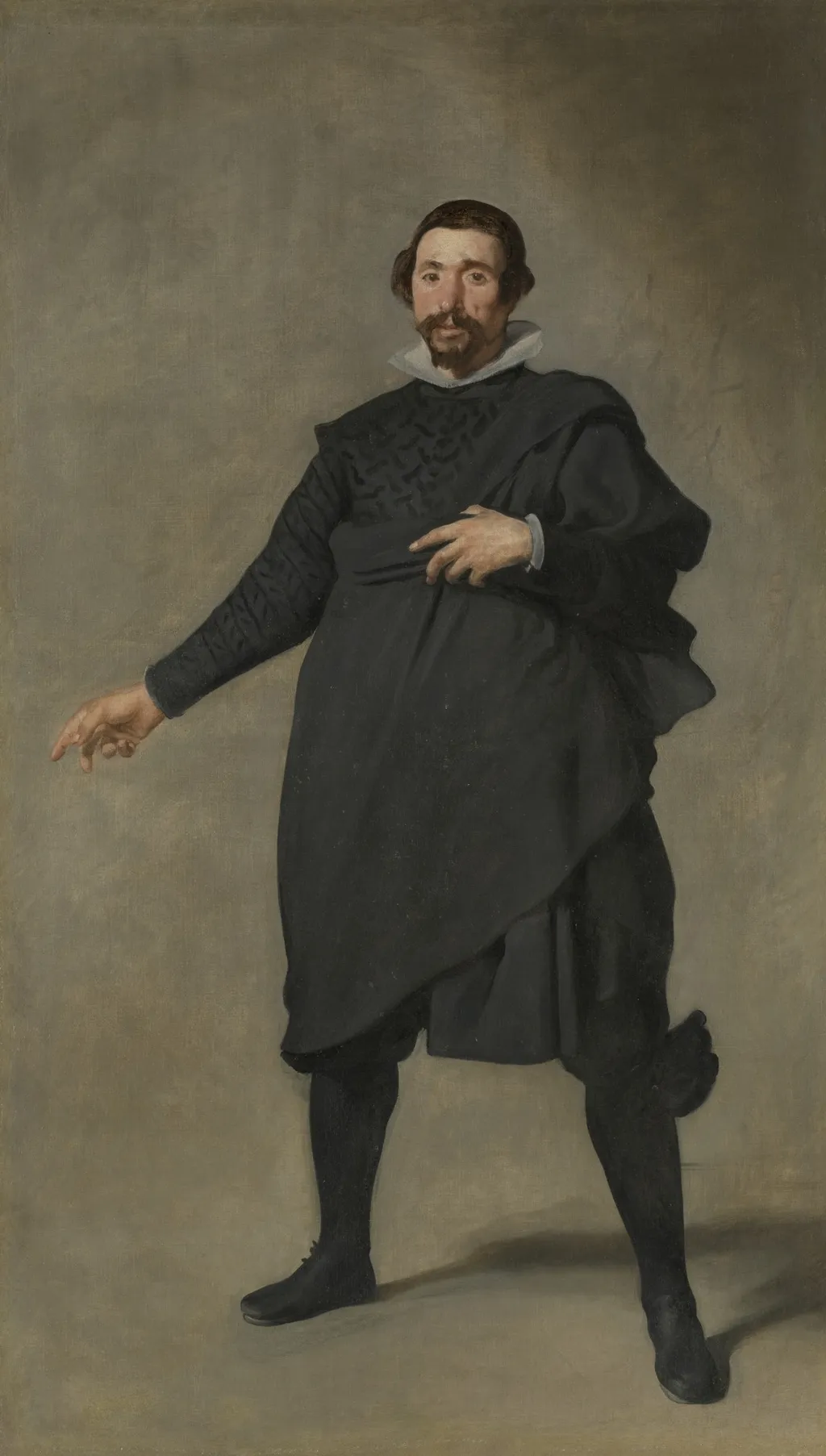
Portrait of Pablo de Valladolid is an oil painting by the Early Baroque Italian artist Diego Velázquez. It dates from 1632 and is held in the collection of the Museo del Prado.
About this work
This painting is a portrait of Pablo de Valladolid. The subject of the painting, Pablo de Valladolid, was a jester and actor at Philip IV's court. He worked at the court from 1632 until his death in 1648, which gives us a sense of the time period and context. You can learn more about the artist who painted this portrait at the Museo del Prado.
Subject & Meaning
The figure is silhouetted against a neutral background that lacks any floor or wall line, defined only by the shadow of his feet.
The portrait shows Pablo de Valladolid (1587-1648), a jester and actor at the court of Philip IV, depicted full‑length and standing with his legs apart, dressed in black, his left hand gripping his cape at the chest and his right arm extended in a declamatory gesture. The figure is silhouetted against a neutral background that lacks any floor or wall line, defined only by the shadow of his feet. This absence of setting was noted as revolutionary by Julián Gállego, who observed that Velázquez employed techniques usually reserved for heavenly subjects, such as a saint in levitation on a golden ground, to portray the buffoon. Painted for secondary rooms of the royal palaces, the work allowed the artist greater freedom than formal royal portraits, enabling him to test new expressive means while presenting the jester as a lively, almost transcendent figure.
Technique & Style
The portrait is an oil painting on canvas measuring 209 cm by 123 cm, created between 1632 and 1635. Velázquez applied thin layers of brown pigment, made from black iron oxides, white lead, calcite and traces of vermilion, over a neutral background, and the surface shows visible pentimenti, especially in the left leg which was originally longer. The figure is rendered in full length, standing with legs apart, dressed in black, holding a cape across his chest with his left hand and extending his right arm in a declamatory gesture; the silhouette is sharply outlined against the background, which has darkened over time from a reported luminous grey to an ochre hue due to varnish and inadequate preservation. Contemporary accounts, including Édouard Manet’s 1865 commentary, highlight the revolutionary treatment of space, where the sitter appears to float without a defined setting, a technique more typical of celestial or saintly visions. Technical analysis by Carmen Garrido confirms the original brown background and the use of similar preparatory methods as those employed in Velázquez’s other court jester portraits.
History & Provenance
The work was painted by Diego Velázquez around 1632-1633 for the Buen Retiro Palace in Madrid, where it first appears in a 1701 inventory as a portrait of a jester called Pablillo de Valladolid by Velázquez, valued with its black frame at 25 doubloons. After later inventories in the Royal Palace of Madrid (1772, 1794), it was transferred in 1816 to the Real Academia de San Fernando under the title "Portrait of a mayor," and entered the Museo del Prado in 1827, listed in its 1828 catalogue as "Unknown Portrait." Portrait of Pablo de Valladolid is held in the Museo del Prado, where it has been since 1827. It was previously recorded in the 1701 inventory of the Buen Retiro Palace as "portrait of Vn Bufón Con golilla called Pablillo, the one from Valladolid by Velázquez", valued at 25 doubloons, and later appeared in the 1772 and 1794 inventories of the Royal Palace of Madrid alongside the portrait of the jester Don Juan de Austria. The work entered the Real Academia de Bellas Artes de San Fernando in 1816 under the title "Portrait of a mayor" and was listed in the Prado’s 1828 catalogue as "Unknown Portrait". The painting was moved to its present location in 1827. Exhibition history includes its mention in Édouard Manet’s 1865 correspondence about the work and its inclusion in The Metropolitan Museum of Art exhibition catalog.
Context
This portrait is widely regarded as a turning point in Velázquez’s court portraiture. By eliminating the traditional setting and grounding the figure in an atmospheric void, he shifted emphasis from social rank to pure presence and gesture, a strategy that anticipated modernist experiments in spatial compression. Critics from Édouard Manet onward have singled out its radical suppression of background as revolutionary; Manet called it “the most astonishing piece of painting that has ever been made,” praising the way air seems to surround the figure. Scholars such as Julián Gállego have framed the work as a conceptual leap, comparing its neutral void to the pictorial strategies of celestial visions or saintly levitation, thereby locating court jesters within the elevated language of religious imagery. Technical studies confirm the original background was a deep brown obtained from iron oxides and lead white, later degraded by discolored varnishes, underscoring the fragility of the artist’s innovations.
Legacy
The painting's legacy is defined by its revolutionary technique, particularly the elimination of a traditional background to isolate the figure in space. This approach was described by art historian Julián Gállego as a radical departure, likening the jester's presentation to a saint in levitation rather than a court portrait. The work gained significant modern acclaim after Édouard Manet visited Spain in 1865. Manet wrote to Henri Fantin-Latour that the piece was perhaps the most astonishing painting ever made, specifically praising the way the background seemed to disappear into air surrounding the figure. Although the painting was cataloged as an "Unknown Portrait" in the Museo del Prado in 1828, Manet's recognition helped reframe its reputation as a masterpiece of modernity. The work remains a key example of Velázquez's ability to experiment with expressive resources in informal settings.
Artist & collection
Artist
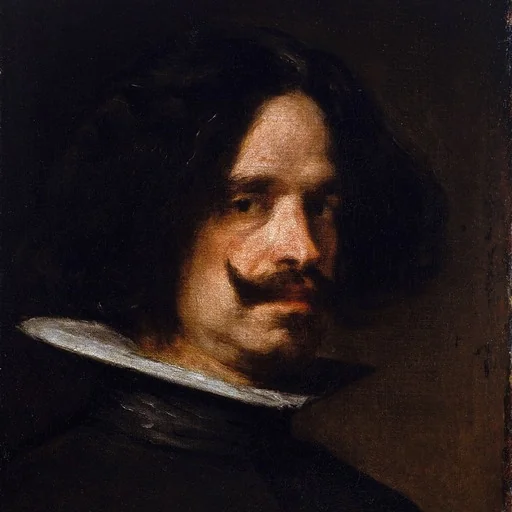
Diego Rodríguez de Silva y Velázquez was a Spanish Baroque painter, the leading artist in the court of King Philip IV of Spain and Portugal, and of the Spanish Golden Age.

- Portrait of Jacob Pietersz Olycan (1596-1638)
 Portrait of Íñigo Fernández de Velasco
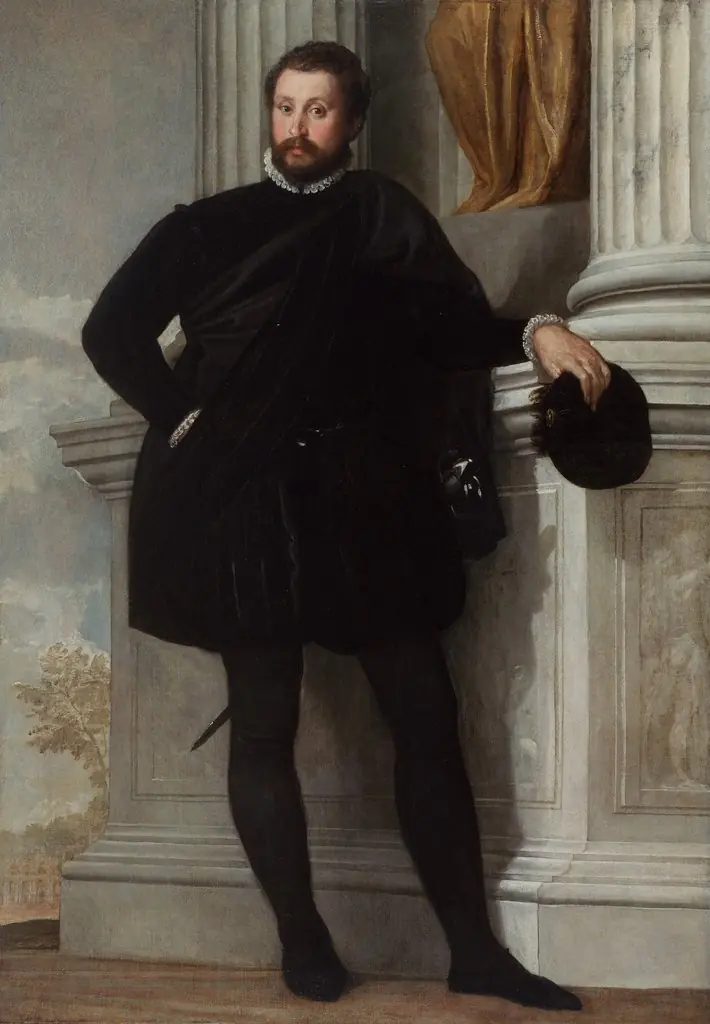 Portrait of a Man
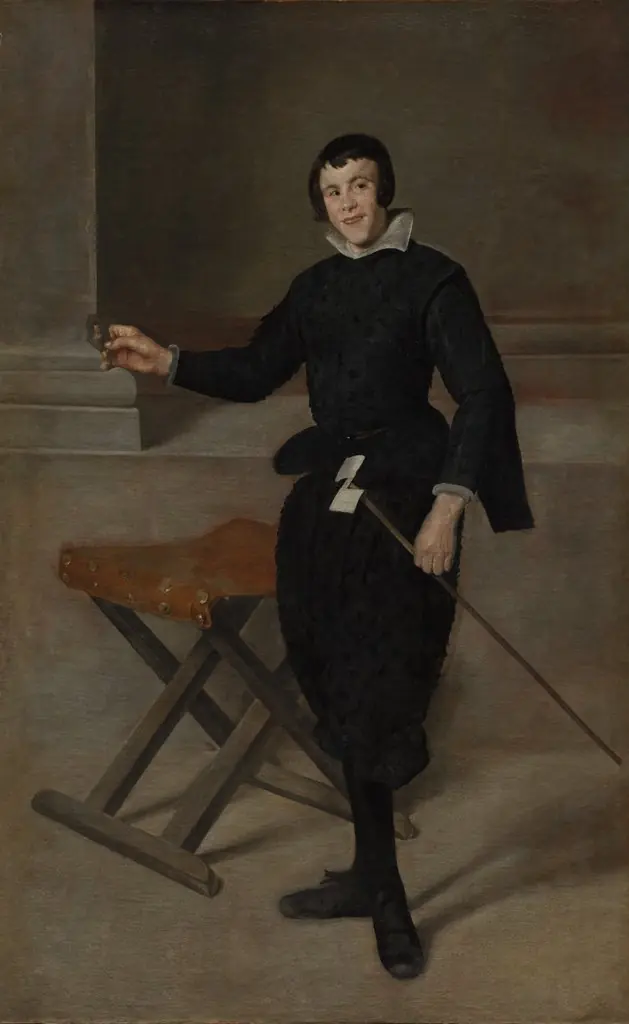 Portrait of the Jester Calabazas
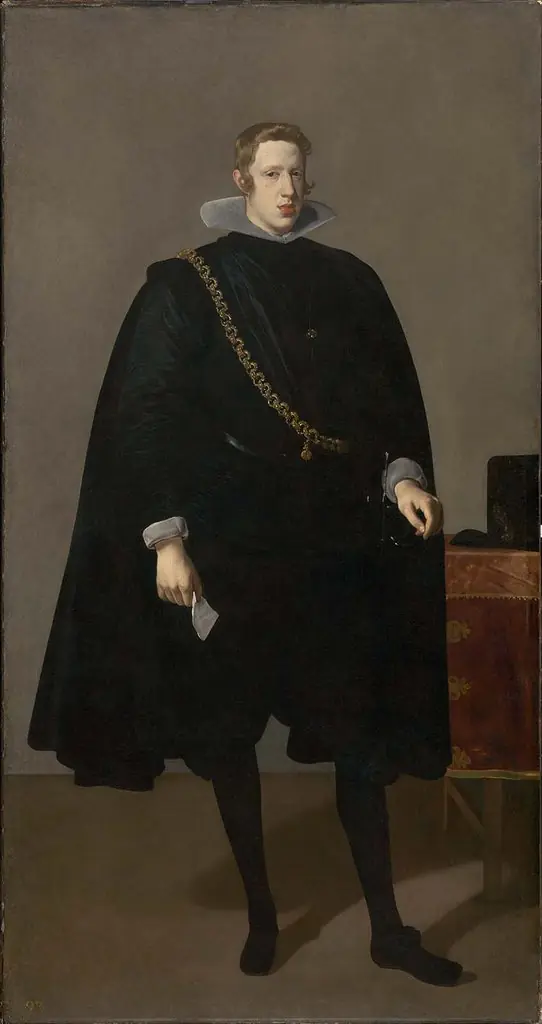 Philip IV, King of Spain
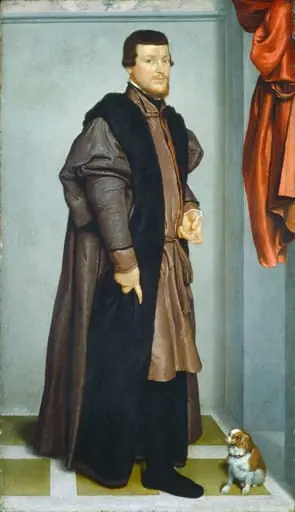 Gian Federico Madruzzo
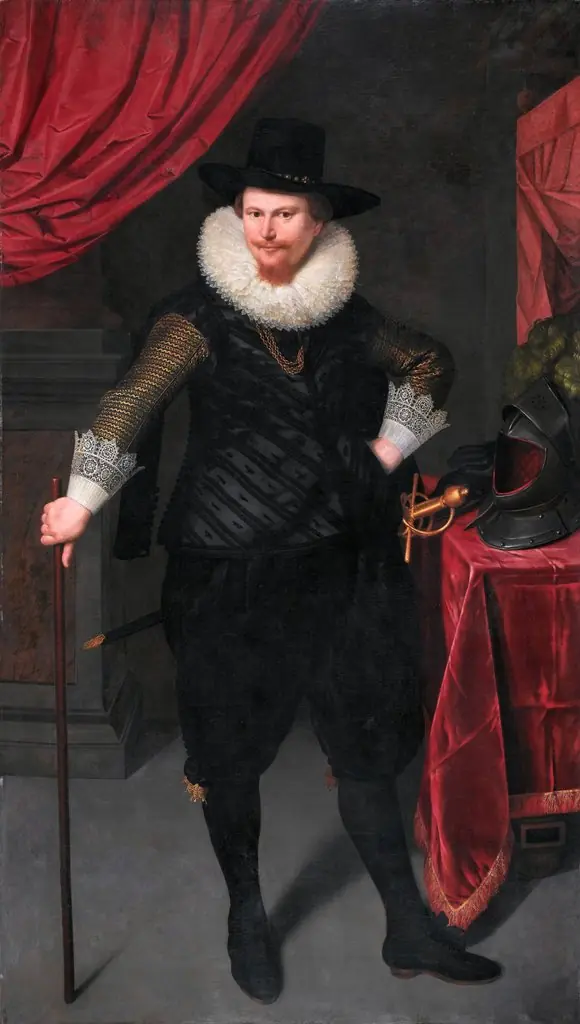 Portrait of Laurens Reael
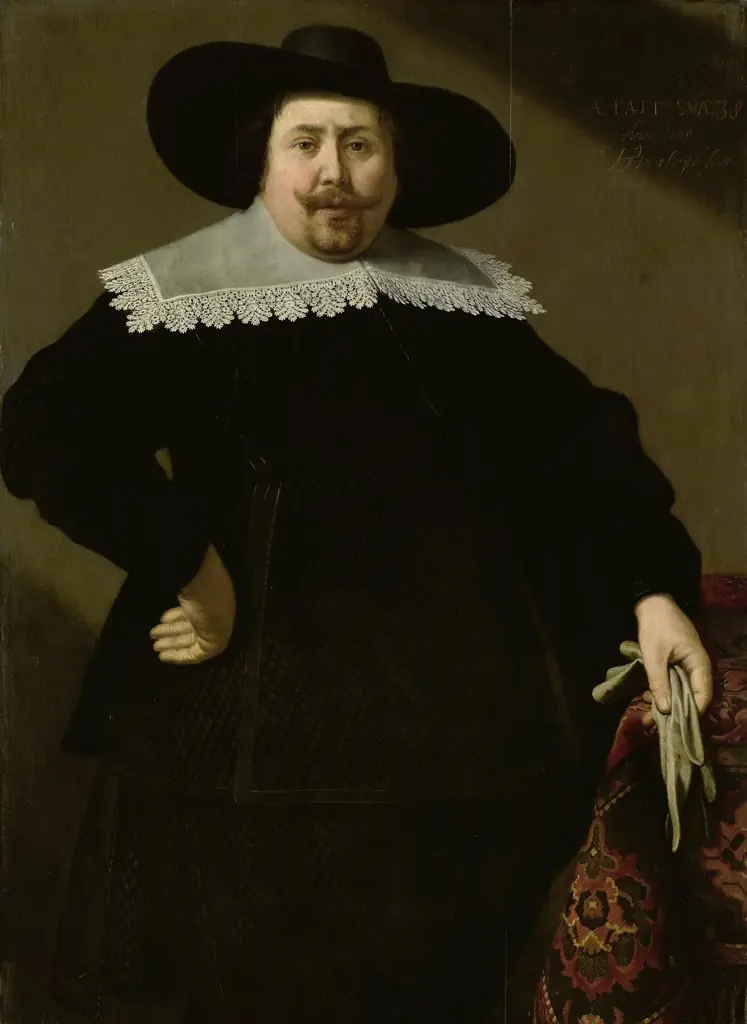 Portrait of Philips Denijs (1604-66)
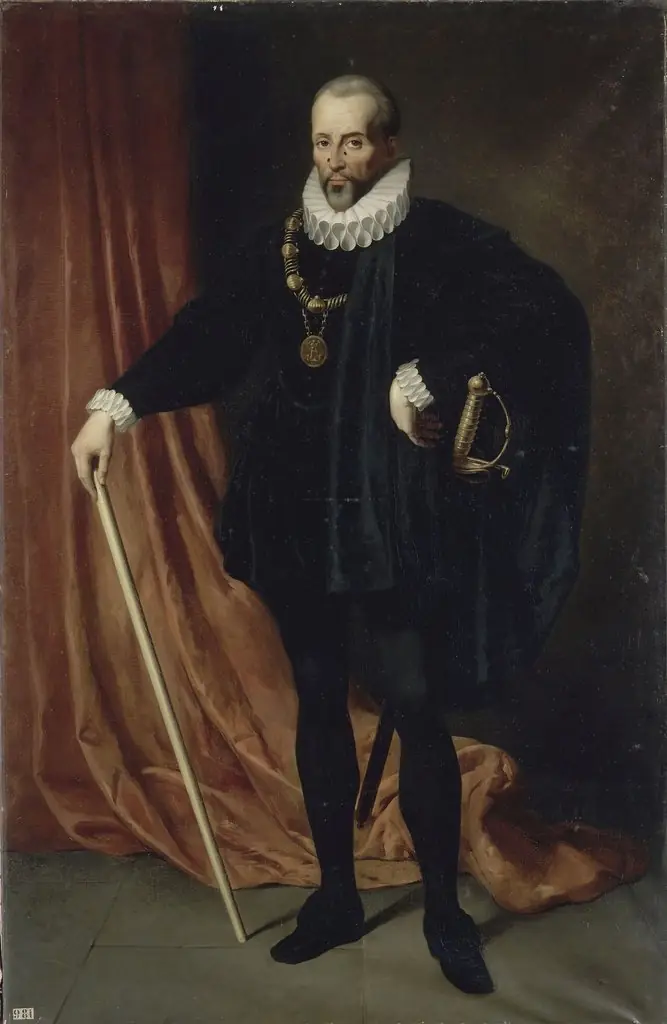 Blaise de Montesquiou, seigneur de Montluc, maréchal de France
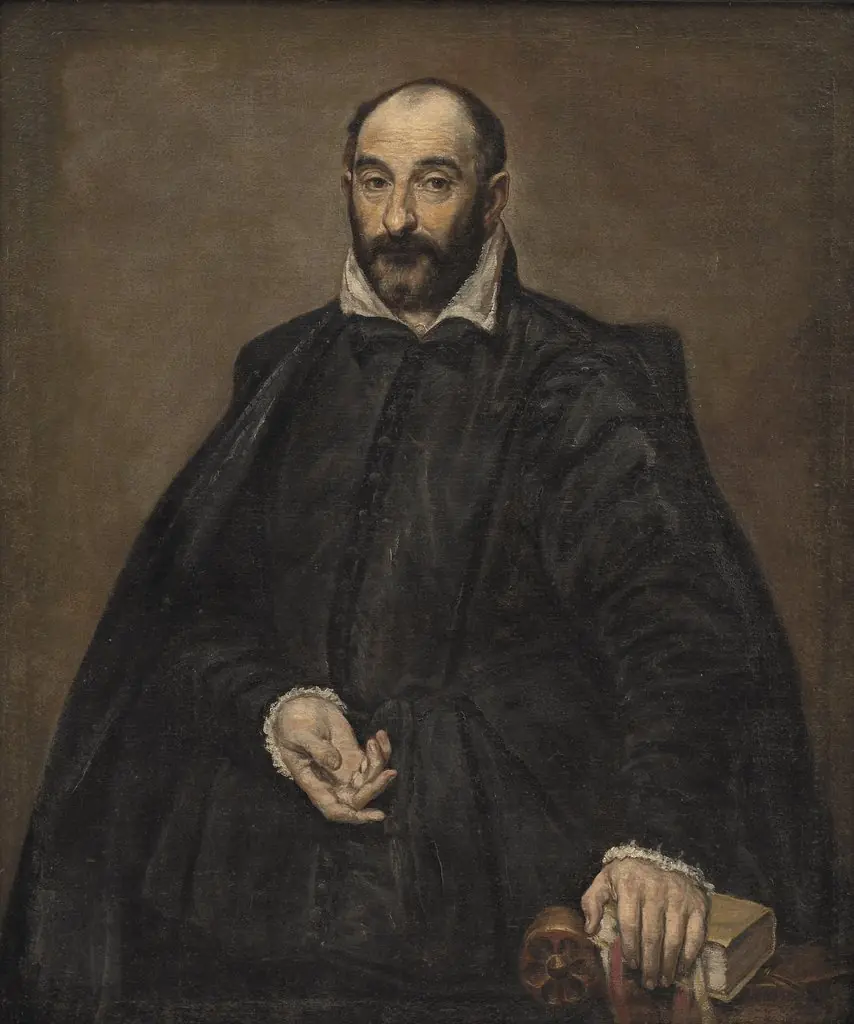 Portrait of a Man
 Portrait of Laurens Reael
 Portrait of a Man