Artwork
Marchesa Elena Grimaldi Cattaneo
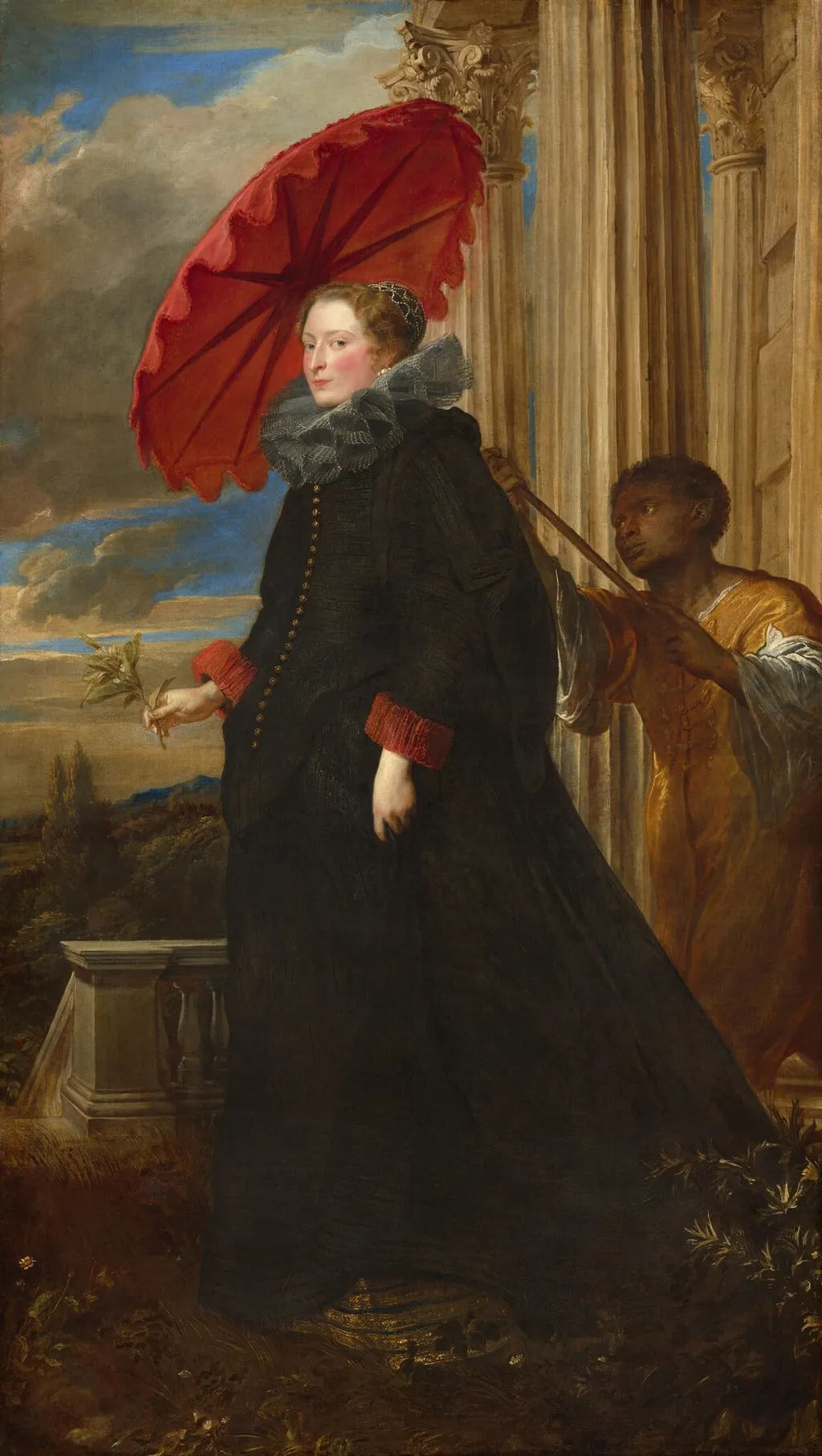
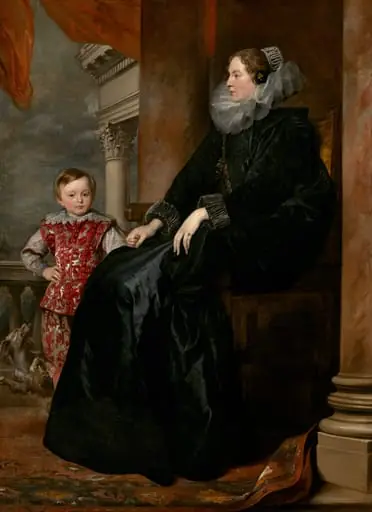
Marchesa Elena Grimaldi Cattaneo is an oil painting by the Baroque artist Anthony van Dyck. It dates from 1623 and is held in the collection of the National Gallery of Art.
About this work
Technique & Style
The intense scarlet of the parasol is set against her aristocratic pallor and offsets the deep tones of her dress, whose cuffs are picked out in the same red.
Painted in oil on canvas and measuring approximately 242.9 by 138.5 cm, the portrait is a full-length Genoese Baroque composition dated 1623. Van Dyck's working method involved drawing the sitter's face from life, recorded in a surviving preparatory oil sketch of Elena's head, while the remainder of the figure was completed in the studio using mannequins dressed in the noblewoman's actual garments. The marchesa advances regally across a terrace in a dark gown reflecting Spanish fashion adopted in Genoa, accompanied by a black servant in refined livery who shades her with a vivid red parasol.
The intense scarlet of the parasol is set against her aristocratic pallor and offsets the deep tones of her dress, whose cuffs are picked out in the same red. Behind her, slender Corinthian columns reinforce the composition's verticality and a slight sotto in sù perspective, while an atmospheric landscape opens to the left, evoking Venetian portrait conventions and alluding to the breadth of the Cattaneo estates. She holds an orange blossom in her right hand, a motif of possible nuptial or fertility significance.
The handling synthesizes Rubens's Genoese portraiture, particularly the Spinola Doria portrait, with Venetian models such as Titian's so-called Lavinia, producing a poised, monumental image regarded as an early masterpiece of Van Dyck's portrait practice.
History & Provenance
The portrait was commissioned by Elena Grimaldi Cattaneo’s husband, Giacomo Cattaneo, shortly after Van Dyck’s arrival in Genoa in 1621, and is dated by scholars to 1623–early 1624 based on stylistic analysis and documented ties between the Cattaneo family and the artist during this period. The work remained within the Cattaneo family for nearly three centuries: after Giacomo’s death it passed by inheritance through successive generations, Filippo and Gio. Giacomo Cattaneo, then Nicolò Cattaneo, and later Giambatista and Nicola Cattaneo, until it was sold in 1906 to Antonio Monti, acting on behalf of Paris dealers Trotti et Cie., and entered a three-way joint account with Colnaghi (London) and Knoedler (New York).
It was acquired in 1908 by Peter A.B. Widener and, following his death, given to the National Gallery of Art, Washington, in 1942 through Joseph E. Widener’s gift.
The painting has been held by the National Gallery of Art in Washington, D.C. since 1942, when it entered the collection as a gift from Joseph E. Widener through the Estate of Peter A.B. Widener (NGA accession 1942.9.92). Prior to that, it had been acquired in 1908 by Peter A.B. Widener at Lynnewood Hall, Elkins Park, Pennsylvania, following joint-account dealings in 1906–07 involving Antonio Monti of Ferrara, Trotti et Cie. of Paris, P. & D. Colnaghi of London, and M. Knoedler and Co. of New York. Before leaving Italy in 1906, the work remained with the Cattaneo della Volta Collection in Genoa, descending through the family from Giacomo Cattaneo through his sons Filippo and Gio. Giacomo Cattaneo, their great-nephew Nicolò Cattaneo, Giambatista Cattaneo (by 1780), and Nicola Cattaneo (by 1827).
Context
Within Van Dyck scholarship, the Marchesa Elena Grimaldi Cattaneo is regarded as one of the earliest portraits executed by the painter in Genoa, dated by stylistic and circumstantial evidence to 1623 or early 1624. Italian-language scholarship situates the commission within Van Dyck's broader Genoese portrait practice, noting that the Cattaneo family, active in textile commerce, may have had prior contacts with Van Dyck through Antwerp and through a documented 1616 Cattaneo involvement in financing Rubens's Decius Mus tapestry project. The work is frequently discussed in relation to Rubens's Portrait of Brigida Spinola Doria, whose preparatory drawing Van Dyck is thought to have studied, while the sitter's pose and bearing are linked to Titian's so-called Lavinia in Dresden.
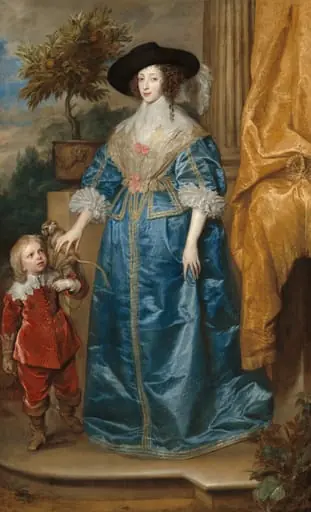
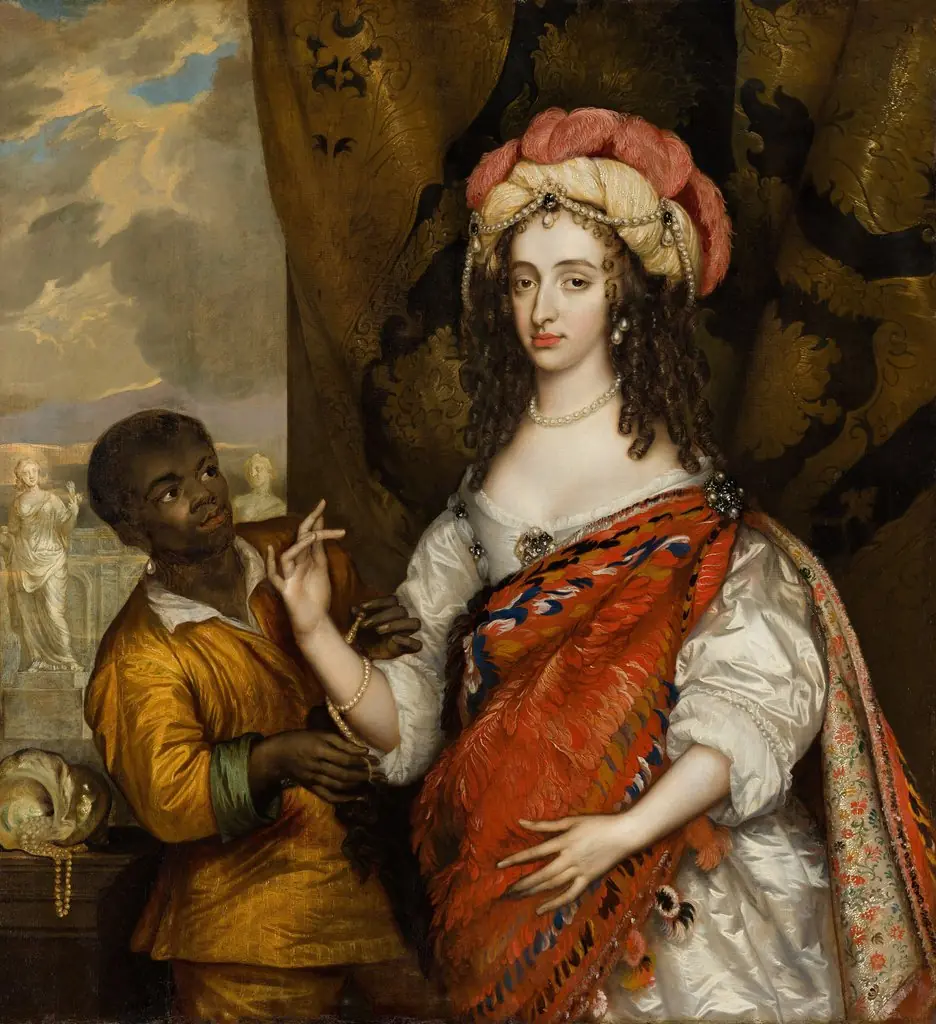
The painting is described as an indisputable youthful masterpiece of Van Dyck's portraiture and a work of absolute prominence within Baroque portraiture generally, with its compositional formula reused in later English-court portraits such as those of Henrietta Maria with Sir Jeffrey Hudson (1633) and Henrietta of Lorraine with a Black Servant (1634). It is classified within the Flemish Baroque movement and held at the National Gallery of Art, Washington.
Legacy
The portrait of Marchesa Elena Grimaldi Cattaneo is recognized as a pivotal early work that set a precedent for Van Dyck’s aristocratic portraiture, a point repeatedly highlighted in scholarship as a reference for later paintings such as the 1633 portrait of Henrietta Maria. Its continuous presence in the National Gallery of Art’s collection since 1942 has cemented its status as a cornerstone of the artist’s legacy. The painting remained in the Cattaneo family for nearly three centuries, reflecting the high esteem in which it was held by contemporary collectors.
These factors together shape its enduring reputation as a model of Baroque portraiture and a touchstone for studies of Van Dyck’s development.
Overview
Painted in 1623, Marchesa Elena Grimaldi Cattaneo is a full-length portrait by Sir Anthony van Dyck, executed in oil on canvas during the artist's Genoese period. The work depicts the Genoese noblewoman standing in a garden setting, characterized by a confident, aristocratic pose. She wears a voluminous black silk gown with red cuffs and a wide lace collar, contrasting with the pale skin of her face and hands.
A young page, dressed in a yellow tunic, stands behind her holding a red parasol to shield her from the sun, a gesture that emphasizes her high social status. The composition is anchored by a stone balustrade and classical architecture in the background, set against a cloudy sky and distant landscape. This portrait exemplifies Van Dyck's ability to capture the elegance and authority of the Genoese aristocracy, blending Flemish attention to texture with the grand manner of Italian portraiture.
It remains one of the most celebrated images of the artist's time in Italy, establishing his reputation for creating sophisticated, psychologically resonant likenesses of the European elite.
Subject & Meaning
The painting depicts Marchesa Elena Grimaldi Cattaneo, positioned formally before a classical stone structure. A young boy, likely a page, holds a vibrant red parasol above her, a detail that underscores her elevated status. Her dark, richly textured gown, adorned with red cuffs and a delicate lace collar, contrasts with the boy's yellow robe, collectively conveying an atmosphere of sophistication and social prominence.
Artist & collection
Artist
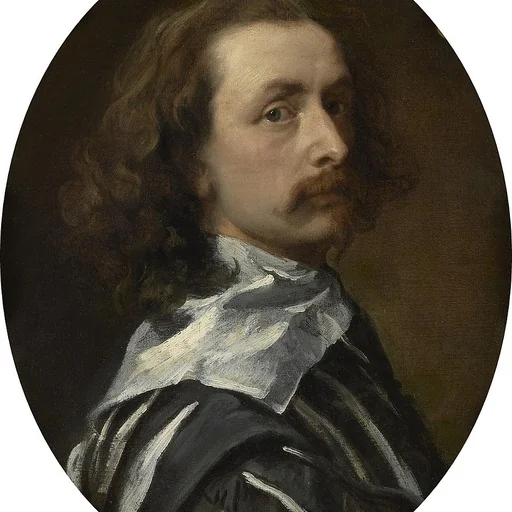
Sir Anthony van Dyck (; Dutch: Antoon van Dijck; 22 March 1599 – 9 December 1641) was a Flemish Baroque artist, who became the leading court painter in England after success in the Spanish Netherlands and Italy.